 English
 Spanish
 Portuguese
 French
 Italian
 Remote Mower
Mowing flat, accessible lawns is relatively straightforward. Maintaining vegetation on slopes, embankments, uneven ground, rough grassland, and other difficult terrain is a completely different challenge.
For professional landscaping companies, agricultural contractors, municipalities, and vegetation-management teams, equipment selection must go beyond engine power.
Traction, stability, maneuverability, cutting performance, operator positioning, and maintenance all influence how effectively a machine can perform in real working conditions.
This is why the tracked mower is attracting increasing attention.
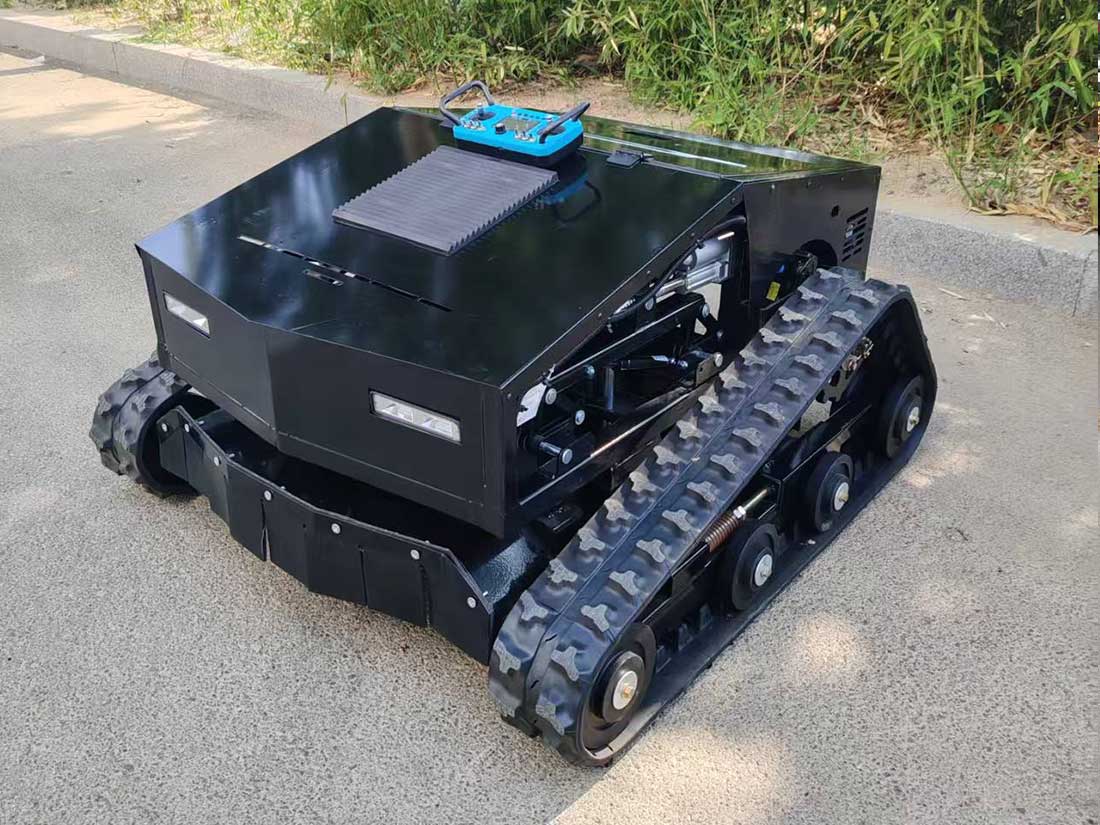
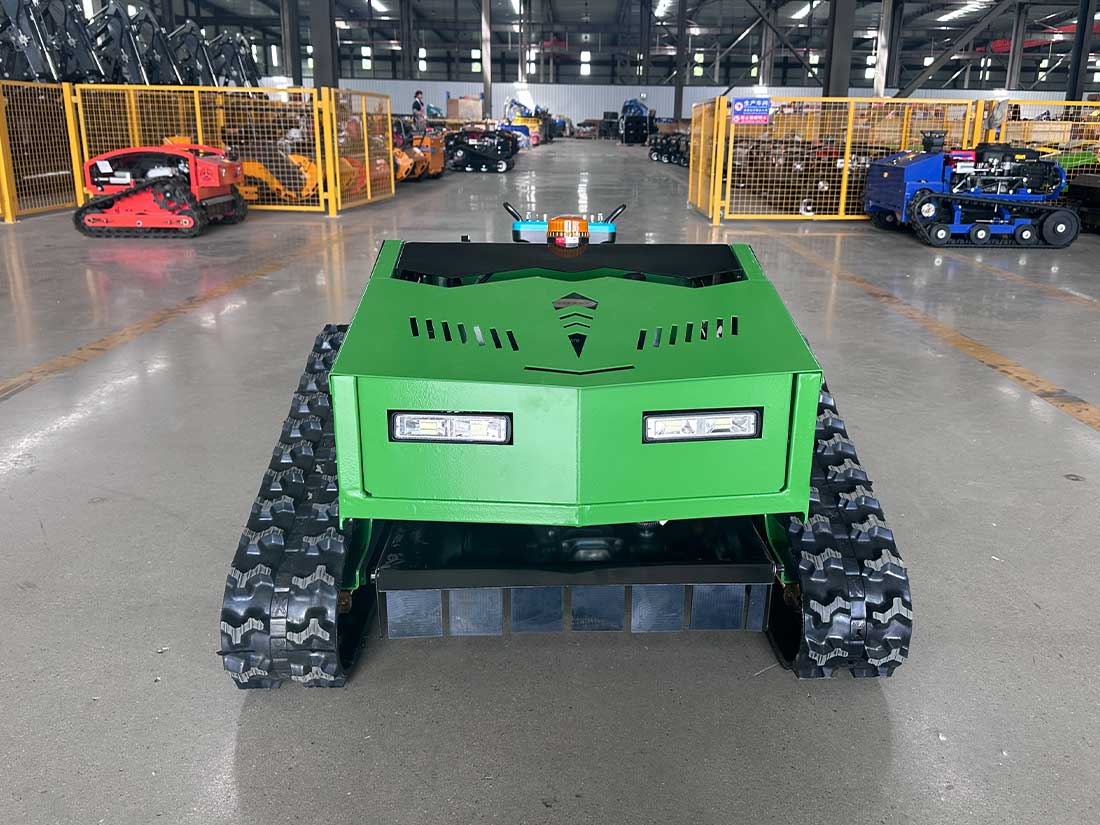
A modern tracked mower can combine tracked mobility with remote operation and professional cutting equipment, creating a flexible solution for applications where conventional mowing equipment may be less convenient.
When integrated into remote-controlled mowing equipment, tracked platforms can give professional operators another way to approach slopes, uneven terrain, embankments, large green areas, and difficult-access vegetation.
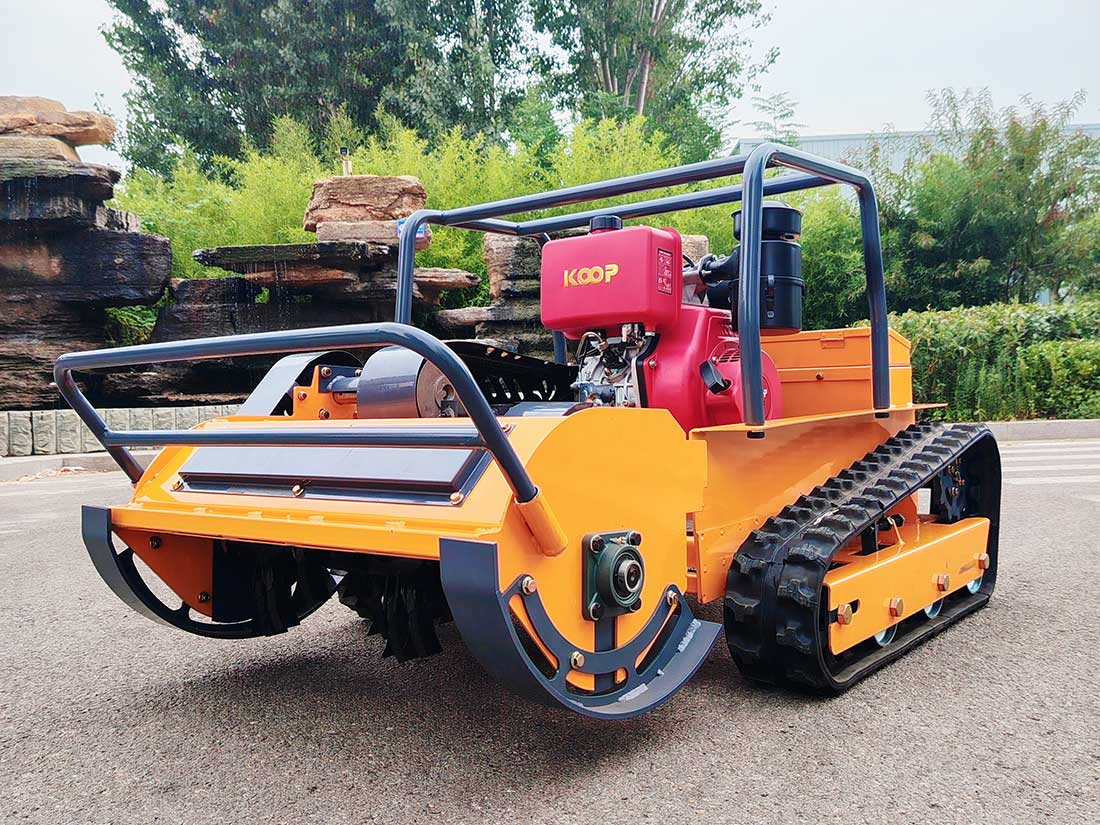
What Is a Tracked Mower?
A tracked mower is a mowing machine that uses tracks instead of conventional wheels as its primary ground-contact system.
Tracks can provide a different mobility configuration, making them particularly relevant when traction, controlled movement, and ground contact are important considerations.
When a tracked mower is equipped with a wireless remote-control system, the operator can control the machine from a suitable position while maintaining visual contact with the working area.
This can be valuable when the operator needs to manage vegetation on a slope or in an area where continuously walking alongside the machine is less practical.
However, the track system is only one part of the equipment.
A professional tracked mower should be evaluated as a complete mowing platform that combines:
Track mobility
Traction
Stability
Cutting performance
Remote control
Maneuverability
Operator visibility
Maintenance accessibility
The right combination depends on the intended application.
Why Slopes Are Challenging for Traditional Mowing Equipment
Slopes introduce several variables that do not exist to the same extent on flat ground.
A machine operating on a slope may need to deal with changes in elevation, uneven surfaces, reduced traction, vegetation variation, and obstacles.
The operator also needs to consider machine stability and the safest possible operating position.
For these reasons, selecting a tracked mower for slope work should begin with the terrain rather than the product brochure.
Professional users should assess:
Slope characteristics
Ground conditions
Traction requirements
Machine stability
Center of gravity
Machine width
Turning requirements
Vegetation
Manufacturer operating limits
A remote-controlled tracked mower can allow the operator to control the machine from a selected position after evaluating the site.
This does not eliminate the risks associated with slope mowing, but it can provide greater flexibility in how the operation is organized.
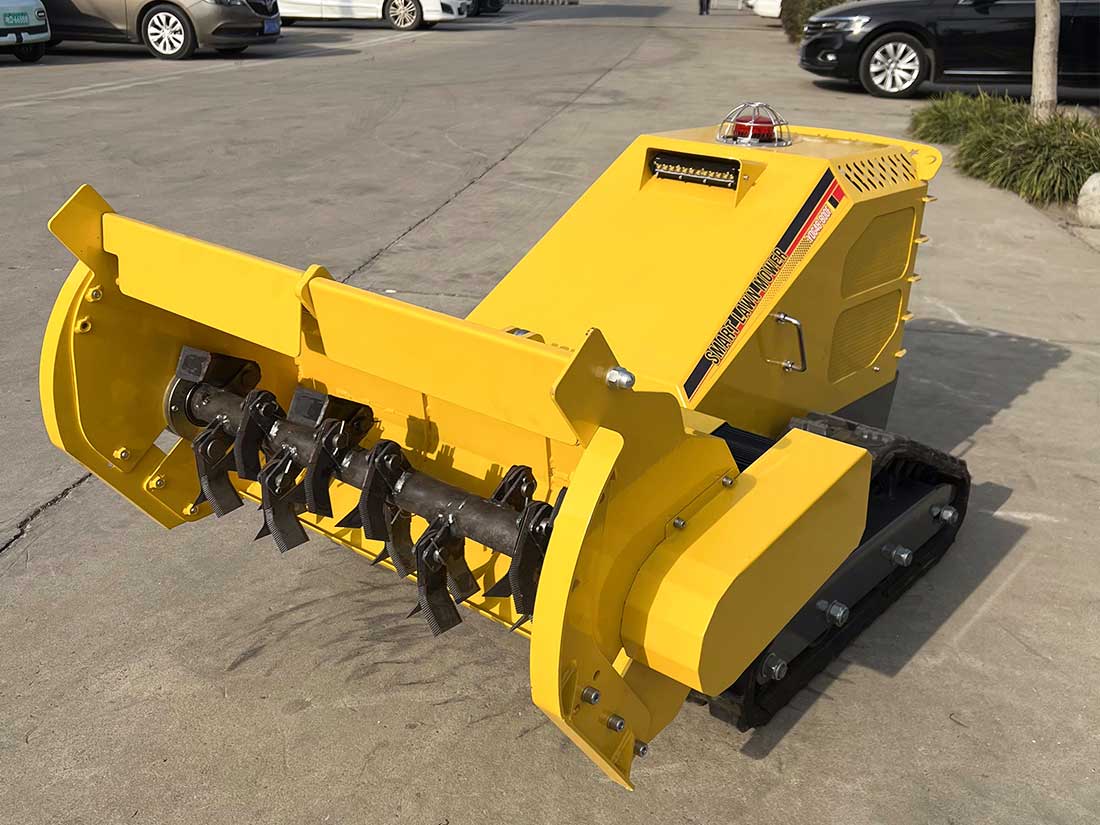
How Remote Control Changes Mowing Operations
The combination of tracks and remote control is one of the most important characteristics of specialized mowing equipment.
A remote-controlled tracked mower allows the operator to remain at a suitable distance from the machine while maintaining visual contact.
This can be particularly useful when the equipment is working on:
Slopes
Embankments
Rough terrain
Dense vegetation
Difficult-access areas
Large green spaces
Instead of physically following every movement of the machine, the operator can control its direction and mowing functions remotely.
The practical advantage is not simply convenience.
Remote operation can change how the operator positions themselves relative to the machine and the terrain.
For professional users, this can provide another option when planning difficult mowing tasks.
Tracked Mower for Slopes and Embankments
Slopes and embankments are among the most common applications considered for remote-controlled tracked mowing equipment.
A tracked mower can be evaluated when the working area requires a combination of traction, mobility, and controlled movement.
For example, an embankment may contain dense grass, uneven soil, drainage features, and changing elevations.
A professional operator should first inspect the area and identify potential hazards.
The machine can then be operated according to the manufacturer's specifications and the site's safety requirements.
Important factors include:
Traction
The machine must have suitable traction characteristics for the intended terrain.
Stability
The machine's stability characteristics must be appropriate for the operating environment.
Maneuverability
The ability to change direction and maintain controlled movement can be important on irregular terrain.
Cutting capability
The cutting system must be appropriate for the vegetation being managed.
Remote control
The operator should be able to control the machine accurately while maintaining visual contact.
A tracked mower that performs well in all five areas can be a strong candidate for difficult-terrain applications.
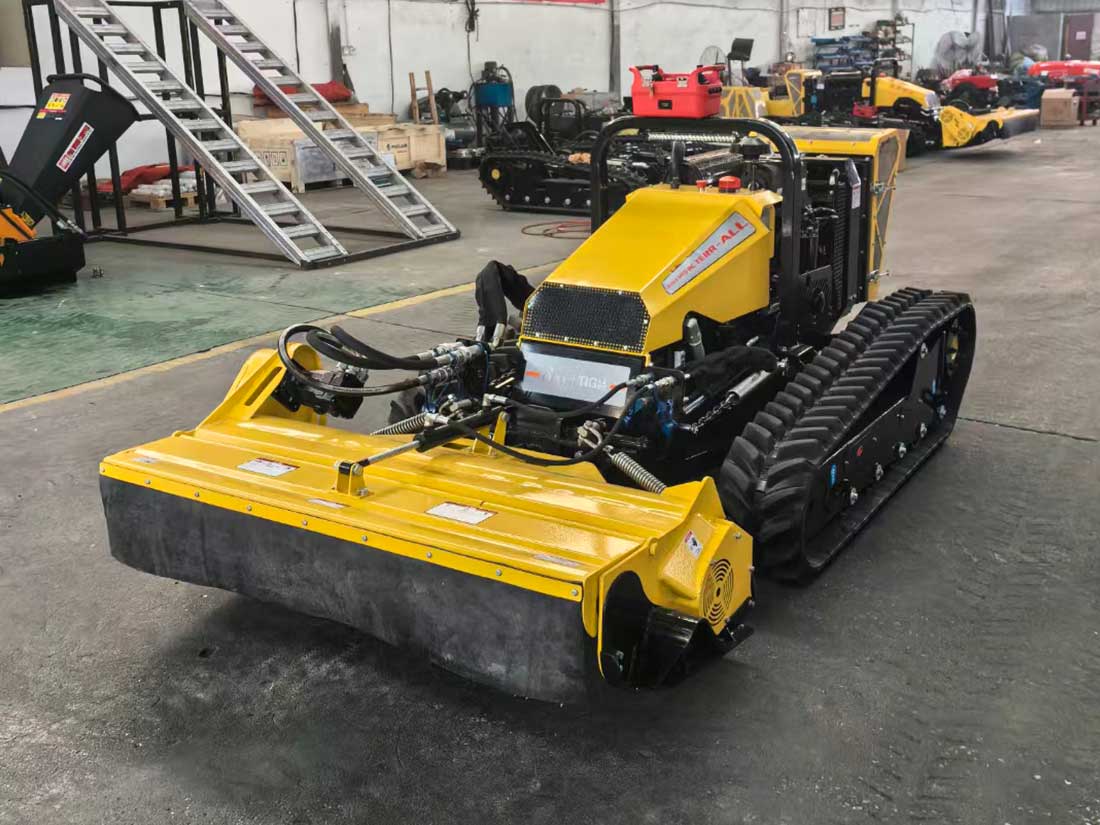
Tracked Mower for Uneven Terrain
Not every difficult mowing area is a steep slope.
Uneven terrain can include small elevation changes, holes, roots, rocks, rough grass, wet areas, and natural obstacles.
These conditions can create challenges for conventional wheeled equipment.
A tracked mower can be considered when ground contact and mobility are important parts of the application.
Tracked platforms can provide a different approach to navigating irregular terrain.
However, professionals should not assume that every tracked machine is suitable for every surface.
The correct approach is to compare the machine's specifications with the actual conditions of the working site.
This is one of the most important principles in professional equipment selection:
Choose the machine for the application, not simply for its headline specification.
Tracked Mower for Dense and Tall Vegetation
Difficult terrain is often associated with difficult vegetation.
Professional operators may encounter tall grass, weeds, brush, and dense plant material in areas that are not regularly maintained.
This makes the cutting system a critical part of the tracked mower.
Before selecting equipment, buyers should determine:
Vegetation height
Vegetation density
Type of vegetation
Required cutting height
Required cutting finish
Cutting width
Mowing frequency
Attachment requirements
A high-powered engine does not automatically mean better cutting results.
The cutting system must be appropriate for the material being processed.
A well-configured tracked mower therefore needs an appropriate relationship between power, cutting system, traction, and mobility.
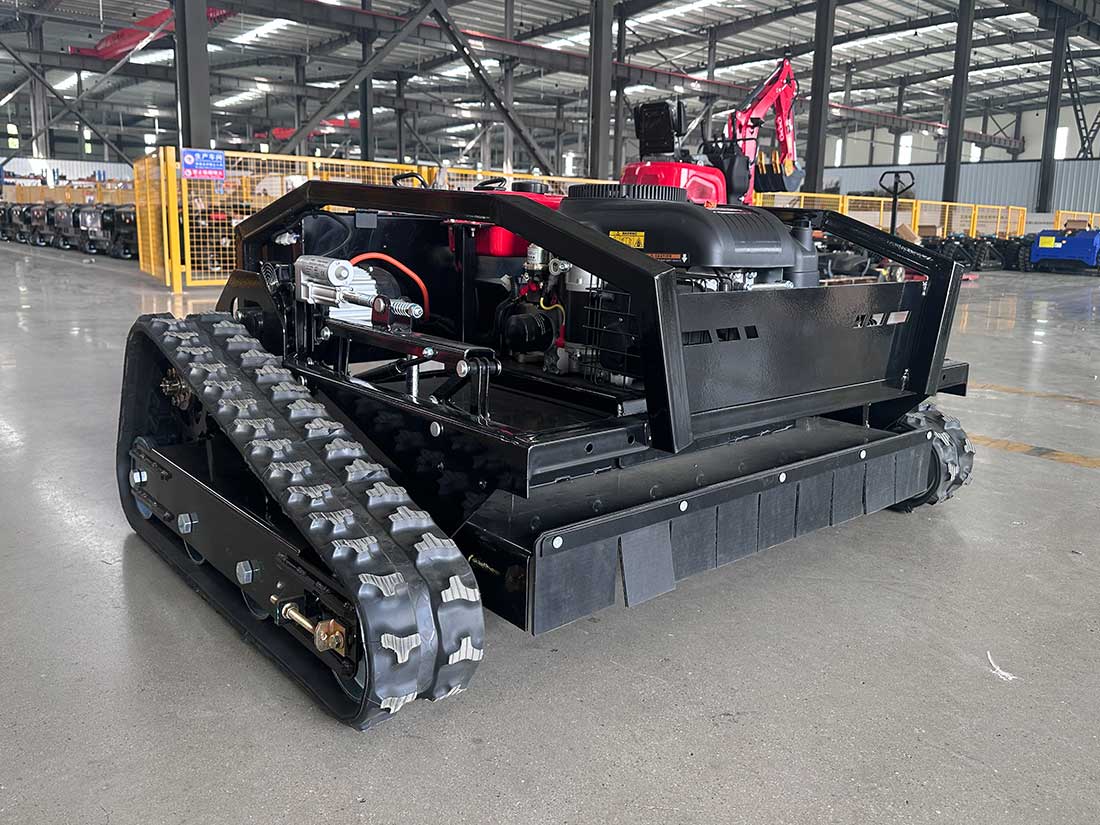
Tracked Mower for Landscaping Professionals
Professional landscaping projects can contain multiple terrain types within the same property.
A commercial site may include flat lawns, slopes, trees, paths, embankments, and areas of dense vegetation.
This creates a practical reason for landscaping companies to consider specialized equipment.
A tracked mower can complement conventional lawn mowers by handling sections where tracked mobility and remote operation may offer advantages.
The goal is not necessarily to replace every existing mower.
Instead, professional contractors can build an equipment strategy around different applications.
For example:
Conventional equipment for accessible flat lawns.
Specialized equipment for dense vegetation.
Remote-controlled tracked equipment for selected difficult terrain.
This approach can help companies use each machine where its characteristics provide the greatest practical value.
Tracked Mower for Agriculture and Orchards
Agricultural properties can also present challenging mowing conditions.
Farm roads, field boundaries, orchards, non-cultivated areas, and sloped sections may require regular vegetation management.
A remote-controlled tracked mower can be considered when mobility and operator positioning are important.
Orchards are a particularly interesting application because the working area can include trees, narrow passages, uneven ground, and vegetation around agricultural infrastructure.
In these environments, maneuverability becomes important.
Before selecting a tracked mower, agricultural operators should consider:
Soil conditions
Terrain
Vegetation
Available working space
Required cutting width
Access requirements
Mowing frequency
Available attachments
The machine should be matched to the agricultural task rather than selected solely according to horsepower.
Tracked Mower for Roadside Vegetation
Roadside vegetation management can present another demanding application.
Roadside areas may include slopes, drainage channels, embankments, rough ground, and limited-access vegetation.
A tracked mower can be considered for applications where mobility and remote operation are relevant.
However, roadside mowing requires additional planning.
Operators need to consider traffic, visibility, work-zone procedures, local requirements, and the manufacturer's operating instructions.
Remote-controlled mowing equipment should therefore be incorporated into a complete site-management and safety plan.
The machine itself is only one part of the operation.
Why Cutting Performance Still Matters
A common mistake when evaluating a tracked mower is focusing too heavily on mobility.
Mobility is important, but it is only half of the equation.
The machine also needs an appropriate cutting system.
Different vegetation-management tasks can require different cutting approaches.
Short grass on a maintained property is different from tall vegetation on an agricultural boundary.
For this reason, professional buyers should evaluate:
Terrain + Vegetation + Mobility + Cutting System + Control
The best tracked mower is not necessarily the machine with the most powerful engine.
It is the machine whose complete configuration matches the working conditions.
Tracked Mower vs Wheeled Mower
Both tracked and wheeled mowing equipment have their place in professional operations.
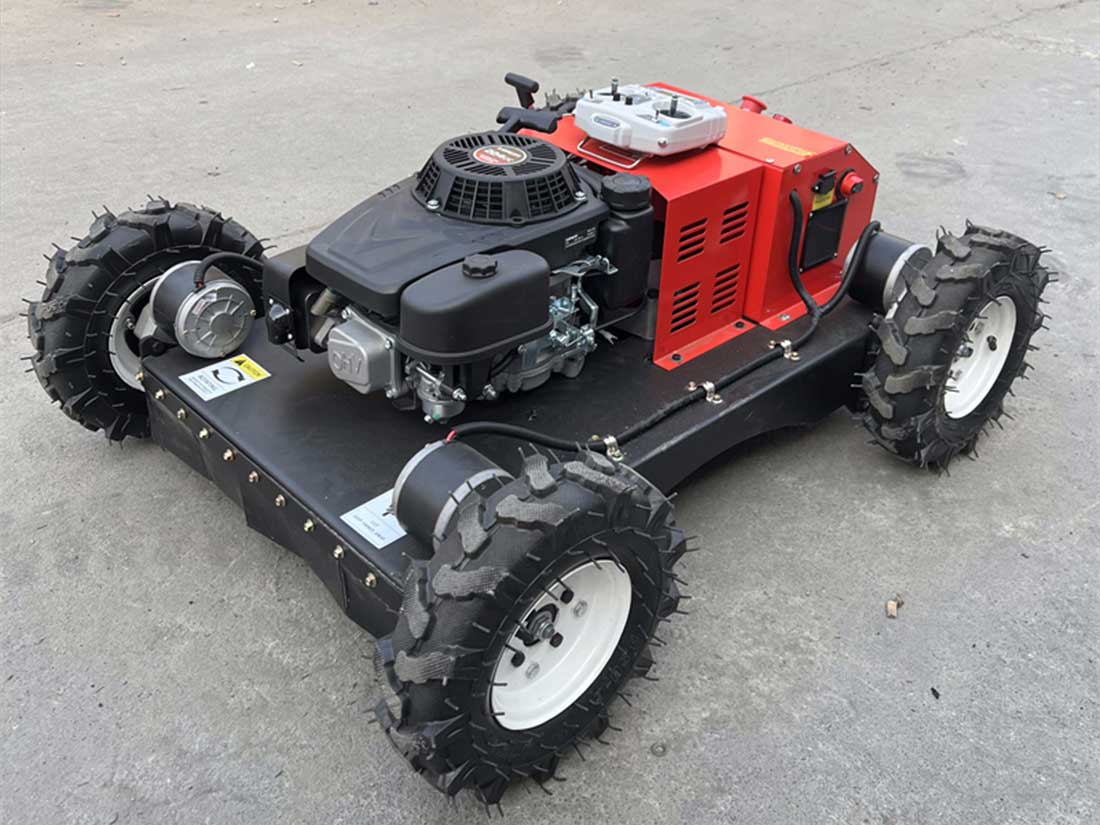
Wheeled mowers can be highly effective on flat, accessible surfaces.
A tracked mower may be worth considering when terrain conditions make traction, ground contact, and controlled mobility more important.
The comparison should therefore be based on application.
| Working condition | Wheeled mower | Tracked mower |
|---|---|---|
| Flat lawn | Highly suitable | Suitable |
| Large accessible lawn | Highly suitable | Suitable |
| Uneven ground | Application dependent | Worth evaluating |
| Slopes | Application dependent | Particularly relevant |
| Embankments | Application dependent | Worth evaluating |
| Difficult-access areas | Application dependent | Potential advantage |
| Remote operation | Model dependent | Common in specialized equipment |
This does not mean that a tracked mower is automatically better.
The right solution depends on terrain, vegetation, workload, machine specifications, and operator requirements.
Safety Considerations for a Tracked Mower
Remote operation changes operator positioning, but it does not remove operational risk.
Before using a tracked mower, professionals should inspect the working area.
A proper assessment should consider:
Ground stability
Slope conditions
Obstacles
Vegetation
Drainage features
People and animals
Machine operating limits
Operator visibility
Emergency procedures
Maintaining visual contact with the remote-controlled tracked mower is particularly important.
Operators should also follow the manufacturer's instructions and never exceed the machine's specified operating limits.
Remote-controlled mowing equipment should be viewed as part of a complete safety strategy rather than as a substitute for professional risk assessment.
How to Choose the Right Tracked Mower
Selecting the right tracked mower starts with understanding the job.
Step 1: Analyze the Terrain
Identify slopes, embankments, uneven surfaces, obstacles, and access limitations.
Step 2: Identify the Vegetation
Determine whether the machine will cut short grass, tall grass, weeds, brush, or mixed vegetation.
Step 3: Evaluate Mobility
Consider traction, stability, maneuverability, machine width, and the ability to navigate the working area.
Step 4: Review the Cutting System
Make sure the cutting system is appropriate for the vegetation and desired result.
Step 5: Evaluate Remote Control
The control system should provide practical operation and allow the operator to maintain appropriate visibility.
Step 6: Check Maintenance
Review access to tracks, cutting components, moving parts, wear components, and other service points.
Step 7: Consider the Complete System
The right tracked mower should provide an appropriate balance of:
Traction + Stability + Mobility + Cutting Performance + Remote Control + Maintenance
This complete-system approach is particularly important for professional buyers.
Maintaining a Tracked Mower
Professional mowing equipment requires regular maintenance.
A tracked mower should be inspected according to the manufacturer's maintenance recommendations.
Operators should pay attention to:
Cutting components
Tracks
Drive components
Moving parts
Protective components
Fasteners
Machine structure
Remote-control equipment
Wear components
Vegetation should be removed appropriately after operation to make inspection easier.
Regular preventive maintenance can help identify wear before it becomes a larger operational problem.
For companies using remote-controlled mowing equipment professionally, maintenance should be treated as part of the overall equipment-management strategy.
Why the Tracked Mower Represents a Smarter Approach
The growing interest in the tracked mower reflects a broader change in professional mowing.
Operators are increasingly looking for machines that can adapt to real working conditions rather than simply providing high power.
A remote-controlled tracked platform can combine several important characteristics:
Controlled mobility
Suitable traction
Remote operation
Professional cutting capability
Flexible application
Operator positioning
Specialized attachments
This combination can be particularly relevant for difficult terrain.
The goal is not to make every mowing operation more complicated.
It is to provide the right equipment when the terrain requires a different approach.
The Future of Remote-Controlled Mowing Equipment
Remote-controlled mowing equipment is part of a wider movement toward more specialized vegetation-management machinery.
The future of the tracked mower is likely to focus increasingly on application-specific design.
Potential areas of development include:
More specialized cutting attachments
Improved track systems
Better remote-control interfaces
More flexible machine configurations
Easier maintenance
Greater integration between mobility and cutting systems
For professional users, this means equipment selection will increasingly focus on the entire working process.
The question will not simply be:
“How powerful is the mower?”
Instead, professionals will ask:
“How effectively can this machine handle my terrain, vegetation, and operating requirements?”
Conclusion
A tracked mower offers a different approach to professional mowing by combining tracked mobility with cutting capability and, in many specialized models, remote operation.
For slopes, embankments, uneven terrain, agriculture, landscaping, dense vegetation, and selected roadside applications, this combination can provide valuable operational flexibility.
However, the smartest solution is not necessarily the machine with the highest power or the most advanced specification.
The smarter approach is to select a tracked mower that matches the actual terrain, vegetation, workload, mobility requirements, and safety procedures.
For professional remote-controlled mowing equipment and tracked mowing solutions designed for difficult terrain, slopes, agriculture, landscaping, and large-area vegetation management, explore JY Lawn Mower.
With appropriate equipment selection, professional operating procedures, and regular maintenance, a tracked mower can become an effective part of a modern vegetation-management strategy.