 English
 Spanish
 Portuguese
 French
 Italian
 Remote Mower
Professional mowing is changing.
As landscaping companies, agricultural contractors, vegetation-management teams, municipalities, and property managers face more demanding working environments, traditional mowing equipment is no longer the only option.
Slopes, embankments, uneven ground, dense vegetation, roadside areas, orchards, and large green spaces can all require a different approach.
This is where the tracked mower is attracting increasing attention.
A modern tracked mower can combine tracked mobility with remote-controlled operation and professional cutting equipment, creating a solution designed for applications where traction, maneuverability, and operator positioning are important.
Rather than focusing only on engine power or cutting width, professional users are increasingly evaluating mowing equipment as a complete system.
That system can include:
Tracked mobility
Remote control
Traction
Stability
Cutting performance
Maneuverability
Maintenance accessibility
Application-specific attachments
For difficult terrain, this combination can make a significant difference in how mowing operations are planned and performed.
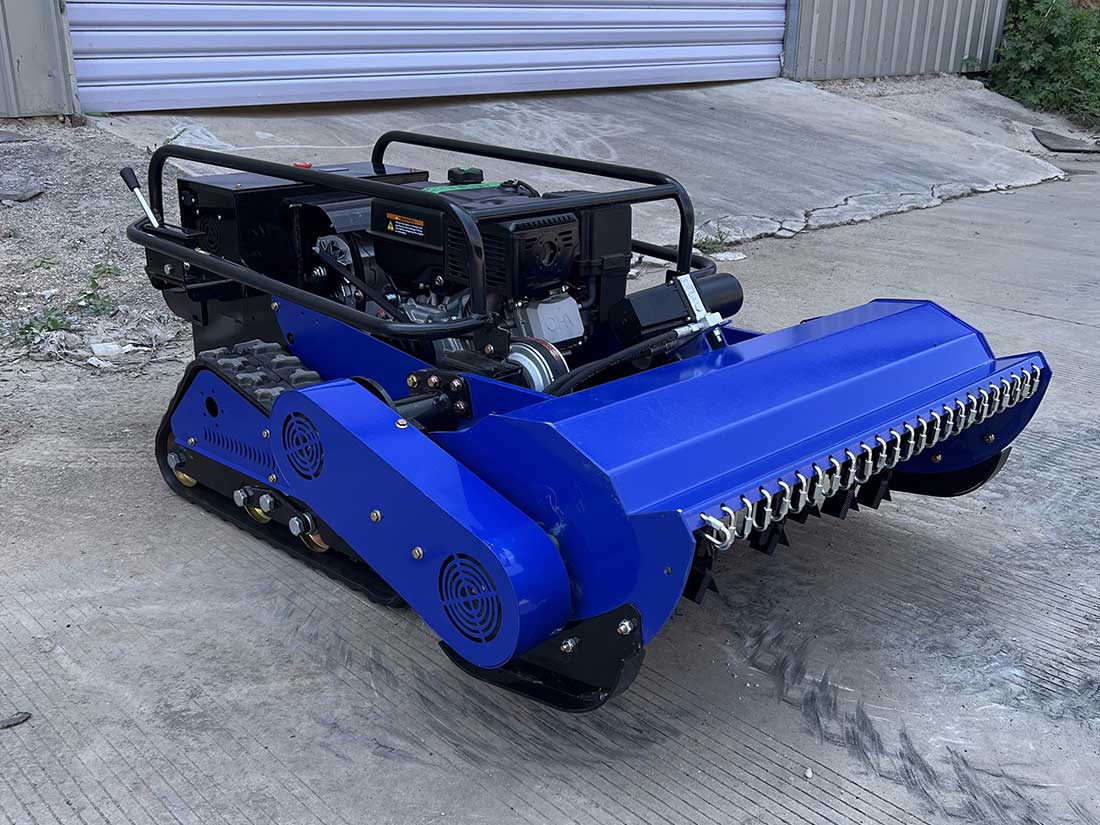
What Is a Tracked Mower?
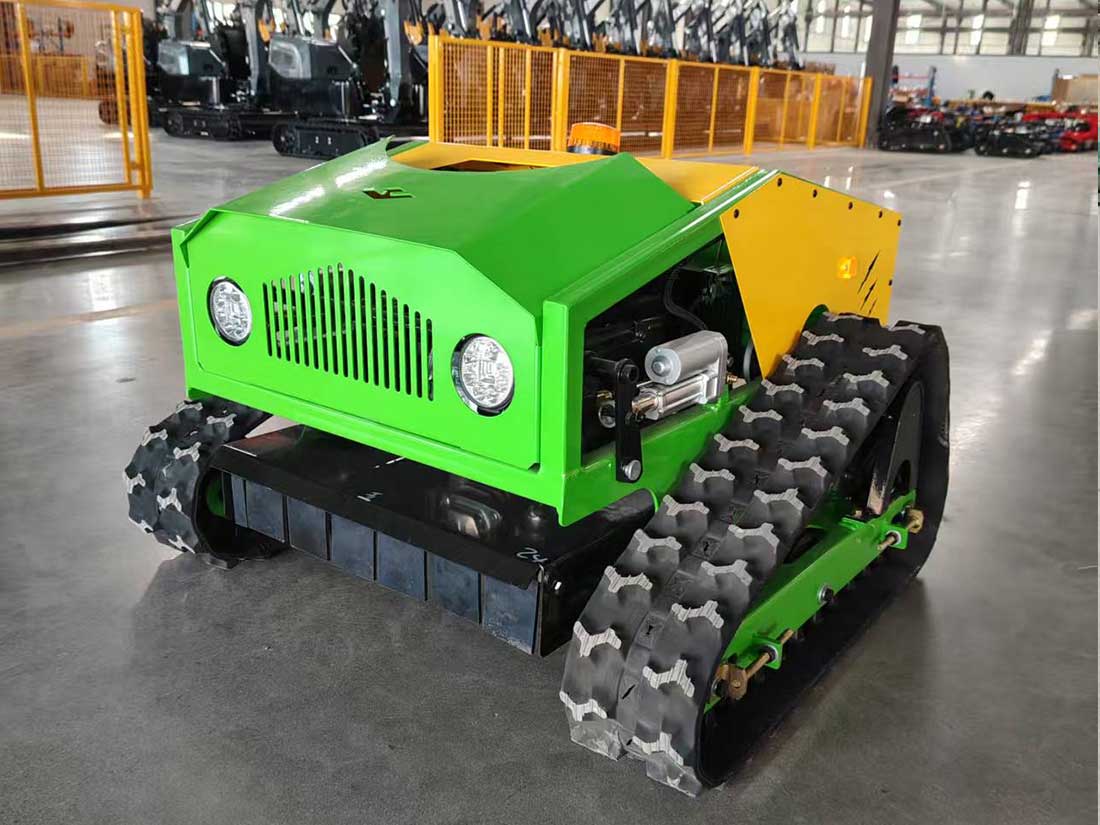
A tracked mower is a mowing machine that uses tracks rather than conventional wheels as its primary ground-contact system.
The tracked platform can provide a different approach to mobility, particularly when the working environment includes uneven ground, slopes, or surfaces where traction and controlled movement are important considerations.
When combined with a remote-control system, a tracked mower becomes part of a broader category of remote-controlled mowing equipment.
The operator can control the machine from a suitable position while maintaining visual contact with the equipment and working area.
This operating method can be particularly useful when the terrain makes it inconvenient or undesirable for the operator to remain immediately beside the machine.
However, the tracks and remote-control system are only part of the solution.
The actual performance of a tracked mower depends on how its mobility system, cutting system, control system, and overall machine design work together.
Why Tracked Mowers Are Becoming More Popular
There are several reasons why the tracked mower is gaining attention among professional users.
1. Better Adaptation to Difficult Terrain
Flat lawns are relatively straightforward.
Difficult terrain is not.
A professional mowing operation may involve:
Steep or moderate slopes
Embankments
Uneven ground
Rough grass
Dense vegetation
Drainage channels
Obstacles
Areas with limited access
In these situations, the machine needs more than cutting capability.
It needs controlled mobility.
A tracked mower can be an attractive option when traction and ground contact are important parts of the application.
The exact suitability of the machine, however, always depends on its specifications and the actual conditions of the working site.
2. Remote Operation Changes the Working Method
One of the biggest developments in professional mowing is the integration of remote control.
A remote-controlled tracked mower allows the operator to control movement and mowing functions from a distance.
This can provide greater flexibility in selecting the operator's position.
For example, when working on an embankment, the operator can assess the terrain first and then select a suitable operating position.
The remote-control system can then be used to guide the tracked mower through the working area while maintaining visual contact.
Remote control does not remove operational risks, but it can change how the mowing task is organized.
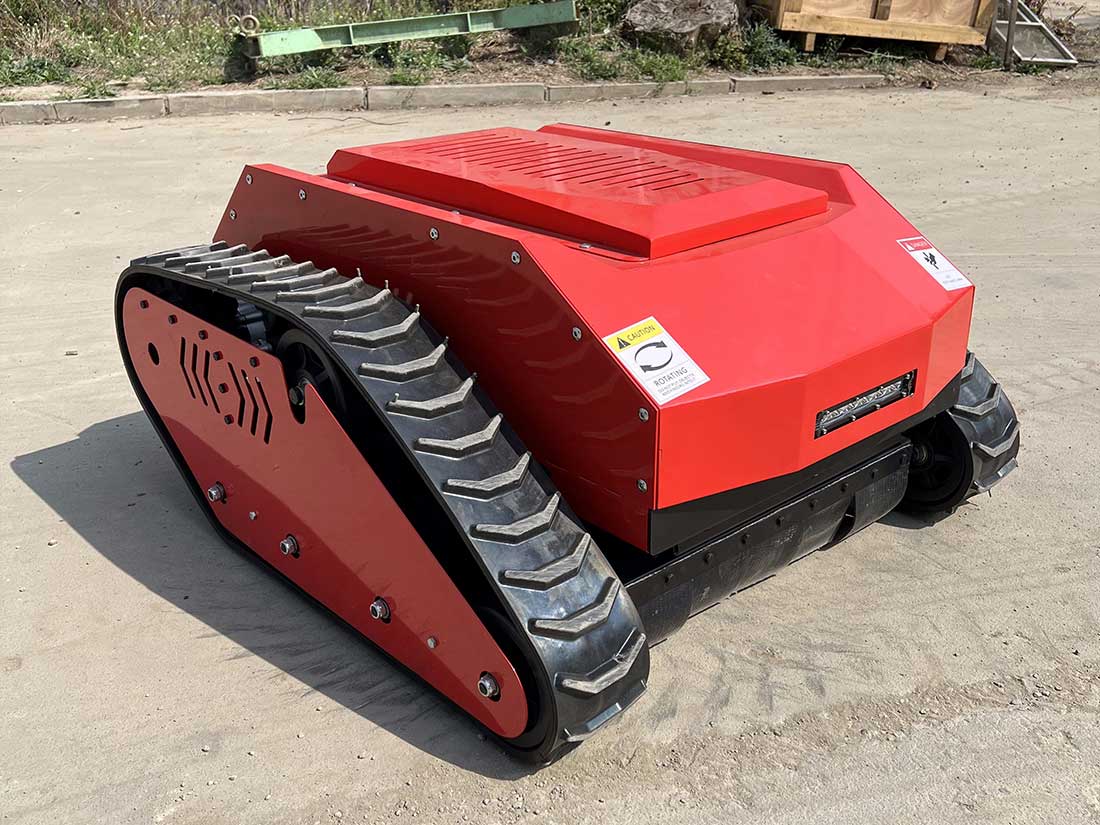
Tracked Mower for Slopes
Slopes are among the most demanding applications for professional mowing equipment.
A slope can involve changing elevation, uneven ground, vegetation variation, and limited access.
For this reason, a tracked mower used on slopes should be evaluated according to the complete operating environment.
Professionals should consider:
Traction
Stability
Center of gravity
Track configuration
Machine width
Maneuverability
Cutting system
Remote-control usability
Manufacturer operating limits
The ability to operate remotely can also change the relationship between the operator and the machine.
Instead of physically following the tracked mower across every part of the slope, the operator can control it from a selected position.
However, operators must always follow the manufacturer's limits and professional safety procedures.
Tracked Mower for Uneven Terrain
Uneven terrain presents a different challenge from a simple slope.
A working area may contain:
Small elevation changes
Holes
Rocks
Roots
Dense vegetation
Wet areas
Rough ground
Obstacles
In this environment, mobility becomes a major factor.
A tracked mower should therefore be evaluated as both a cutting machine and a mobile working platform.
Tracked mobility can be relevant where controlled ground contact and traction are important.
But buyers should avoid assuming that every tracked machine is automatically suitable for every type of terrain.
The correct approach is to compare the machine's specifications with the actual conditions of the property.
Tracked Mower and Professional Landscaping
Landscaping companies often manage properties with several different terrain types.
A single project may include:
Lawns
Slopes
Trees
Pathways
Embankments
Dense vegetation
Open green spaces
A tracked mower can provide an additional solution for sections where conventional wheeled equipment is less convenient.
This does not necessarily mean replacing traditional mowers.
Instead, professional contractors can build a more flexible equipment strategy in which different machines are used for different applications.
A traditional mower may be more efficient on an accessible flat lawn, while a tracked mower may be considered for difficult sections.
This application-based approach can help businesses select equipment according to actual working conditions rather than relying on a single machine for every task.
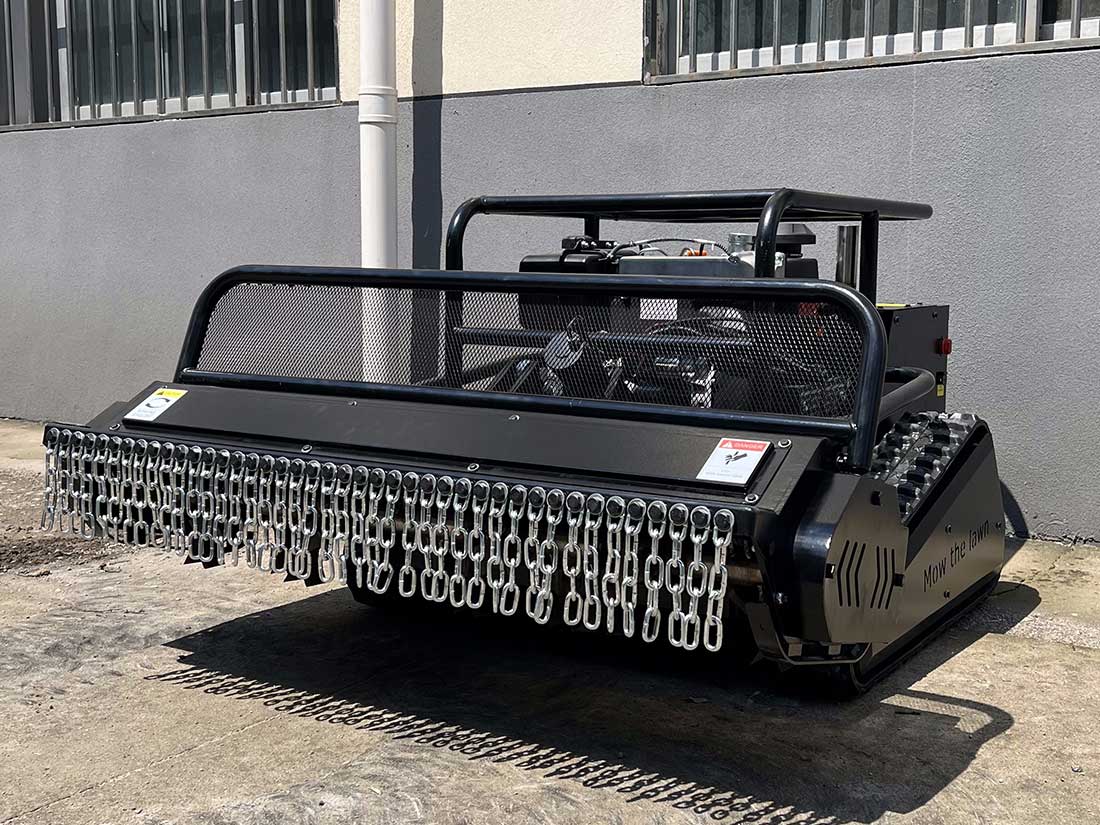
Tracked Mower for Agriculture and Orchards
Agricultural properties can also benefit from specialized mowing equipment.
Farm roads, field boundaries, orchards, non-cultivated areas, and sloped sections may require periodic vegetation management.
A remote-controlled tracked mower can be considered when access, mobility, and operator positioning are important factors.
Orchards are a particularly interesting example.
The working area may contain trees, narrow passages, uneven ground, grass, and other obstacles.
In such conditions, maneuverability becomes an important consideration.
The right tracked mower should therefore be selected according to:
Terrain
Soil conditions
Vegetation
Working width
Access requirements
Frequency of mowing
Available attachments
The machine should be matched to the agricultural application rather than selected only on the basis of horsepower.
Tracked Mower for Dense and Tall Vegetation
Professional mowing is not always about maintaining short lawn grass.
Vegetation-management contractors may also work with tall grass, weeds, brush, and dense plant material.
This makes the cutting system a critical component of the machine.
A tracked mower designed for professional applications should be evaluated according to the type of vegetation it is expected to manage.
Important factors include:
Vegetation height
Density
Plant type
Cutting height
Cutting width
Required finish
Frequency of operation
Attachment compatibility
A powerful engine does not automatically guarantee good mowing performance.
The cutting system must be appropriate for the material being cut.
For this reason, professionals should evaluate the cutting system together with the mobility characteristics of the tracked mower.
Tracked Mower for Roadside Vegetation
Roadside vegetation management is another application where remote-controlled mowing equipment can be useful.
Roadside areas may contain:
Slopes
Embankments
Drainage channels
Uneven ground
Dense vegetation
Restricted access areas
A tracked mower can be considered for selected roadside applications where traction, mobility, and remote operation are important.
However, roadside mowing requires additional attention to site safety.
Operators need to consider traffic conditions, work-zone procedures, visibility, local requirements, and the manufacturer's operating instructions.
The machine should be treated as part of a complete vegetation-management operation rather than as a standalone piece of equipment.
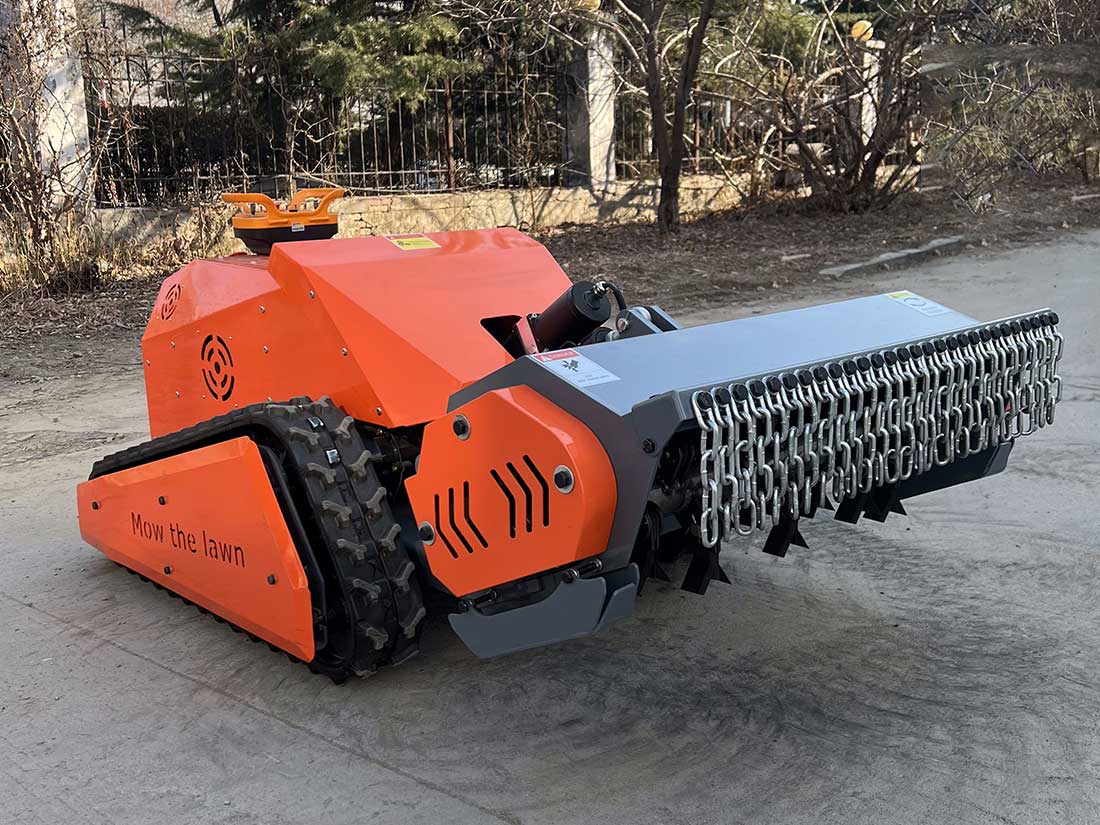
The Importance of the Cutting System
When choosing a tracked mower, mobility is only one part of the decision.
The cutting system can determine whether the machine is appropriate for a particular application.
Different jobs can require different cutting approaches.
For example, maintaining short grass in a landscaped area is different from clearing tall vegetation on an agricultural property.
Professional buyers should therefore ask:
What type of vegetation will the machine actually cut?
This question can be more useful than simply asking how powerful the engine is.
A properly matched tracked mower should provide a balance between cutting capability, mobility, control, and operating requirements.
Tracked Mower vs Traditional Wheeled Mower
There is no single mower that is perfect for every application.
Traditional wheeled mowers remain highly useful for accessible and relatively flat surfaces.
A tracked mower, on the other hand, can provide different mobility characteristics that may be valuable on uneven terrain and selected difficult applications.
The right choice depends on the job.
| Application | Traditional Wheeled Mower | Tracked Mower |
|---|---|---|
| Flat lawn | Very suitable | Suitable |
| Large accessible lawn | Very suitable | Suitable |
| Uneven terrain | Application dependent | Often worth evaluating |
| Slopes | Application dependent | Particularly relevant |
| Embankments | More application limitations | Worth evaluating |
| Difficult-access areas | Application dependent | Potential advantage |
| Remote operation | Model dependent | Common in specialized systems |
This comparison should not be interpreted as meaning that a tracked mower is automatically better.
The correct machine depends on the actual site, vegetation, workload, and operating requirements.
Safety Considerations
Remote-controlled mowing equipment can change operator positioning, but it does not eliminate risk.
Before using a tracked mower, operators should inspect the work area.
Important checks include:
Terrain stability
Slope characteristics
Obstacles
Vegetation conditions
Ground conditions
Presence of people
Presence of animals
Machine operating limits
Visibility
Emergency procedures
Maintaining visual contact with the remote-controlled tracked mower is also important during operation.
Operators should always follow the manufacturer's instructions and use the machine within its specified operating limits.
Remote control should be viewed as one part of a broader safety strategy.
How to Choose the Right Tracked Mower
Selecting a tracked mower should start with the application.
Step 1: Analyze the Terrain
Determine whether the machine will work on flat ground, slopes, embankments, rough terrain, or mixed surfaces.
Step 2: Identify the Vegetation
Understand the height, density, and type of vegetation that needs to be managed.
Step 3: Evaluate Mobility Requirements
Consider access points, obstacles, turning requirements, and terrain conditions.
Step 4: Review the Cutting System
Make sure the cutting system matches the intended application.
Step 5: Evaluate Remote Control
The remote-control system should provide practical and precise operation for the working environment.
Step 6: Check Maintenance Requirements
Review access to wear components, cutting parts, tracks, moving components, and other service points.
Step 7: Consider the Complete Machine
The best tracked mower is not necessarily the one with the highest power.
It is the machine that provides the most appropriate combination of:
Mobility + traction + stability + cutting performance + remote control + maintenance
for the actual job.
Maintenance of a Tracked Mower
Professional mowing equipment requires regular maintenance regardless of whether it is remotely controlled.
A tracked mower should be inspected according to the manufacturer's recommended maintenance schedule.
Operators should pay particular attention to:
Cutting components
Tracks
Drive components
Moving parts
Protective components
Fasteners
Machine structure
Remote-control equipment
Wear components
Grass and vegetation should also be removed appropriately after operation to make inspection easier.
Preventive maintenance can help identify wear before it develops into a larger problem.
For professional users, maintaining the tracked mower properly is an important part of ensuring that the machine remains ready for future mowing operations.
Why Remote-Controlled Mowing Equipment Is Changing the Industry
The rise of remote-controlled mowing equipment reflects a broader change in professional vegetation management.
Operators increasingly need machines that can work in environments where traditional mowing methods may be less convenient.
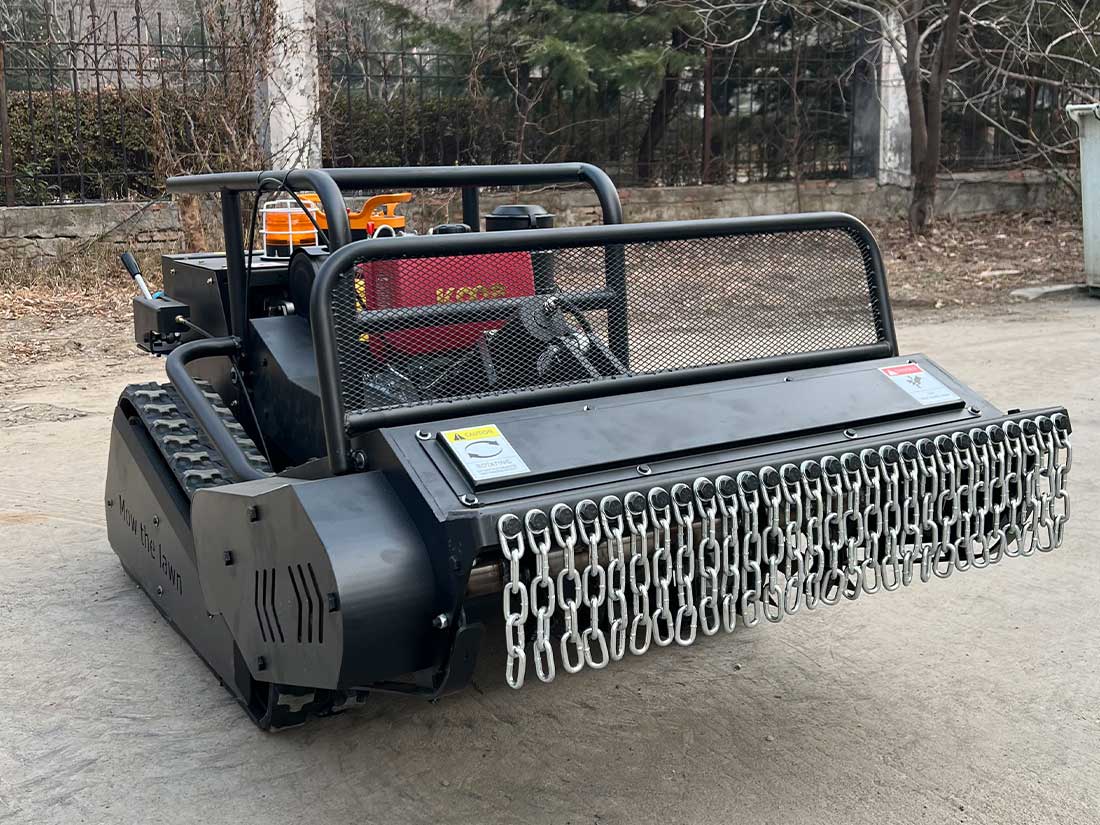
The tracked mower fits into this trend because it can combine a mobile tracked platform with remote operation and professional cutting capability.
The result is a machine concept focused on application rather than simply on power.
For landscaping contractors, agricultural operators, municipalities, and vegetation-management companies, this can create additional flexibility when planning mowing operations.
The Future of the Tracked Mower
The future of the tracked mower is closely connected to the development of more adaptable professional mowing equipment.
Remote-control technology is one part of this evolution.
Other developments include:
Specialized cutting attachments
Improved tracked platforms
More application-specific configurations
Better operator controls
Flexible mowing systems
Easier maintenance
Greater integration between mobility and cutting
The professional mowing market is increasingly focused on machines designed around real working conditions.
The future tracked mower will not simply be judged by engine power.
Professionals will increasingly consider how effectively the machine can move through difficult terrain, manage different vegetation types, and provide practical remote operation.
Conclusion
The tracked mower is becoming an increasingly interesting option for professional mowing applications because it combines tracked mobility with the possibilities of remote-controlled mowing equipment.
For slopes, embankments, uneven terrain, agriculture, landscaping, dense vegetation, and selected roadside applications, this combination can provide a more flexible approach to vegetation management.
However, choosing the right tracked mower requires more than comparing horsepower.
Professionals should evaluate terrain, vegetation, traction, stability, cutting performance, remote-control capability, maintenance, and safety requirements together.
The goal is not simply to find a powerful machine.
The goal is to find a tracked mower that matches the real conditions of the job.
For professional remote-controlled mowing equipment and solutions designed for slopes, difficult terrain, landscaping, agriculture, and large-area vegetation management, explore the solutions available from JY Lawn Mower.
With the right equipment, appropriate operating procedures, and application-focused selection, a tracked mower can become a valuable part of a modern professional mowing strategy.