 English
 Spanish
 Portuguese
 French
 Italian
 Remote Mower
Mowing flat lawns is relatively straightforward, but maintaining steep slopes, uneven fields, orchards, roadside embankments, and overgrown areas requires equipment designed for much more demanding conditions. When traction, stability, accessibility, and operator safety become priorities, choosing between a conventional mower and a tracked mower can have a major impact on productivity.
Traditional wheeled mowers remain an excellent choice for many standard landscaping applications. However, a tracked mower combined with remote-controlled technology can provide important advantages when the terrain becomes challenging.
So, which machine is better for difficult terrain? The answer depends on the application, but for many professional slope and rough-terrain mowing jobs, a tracked mower offers a more specialized solution.
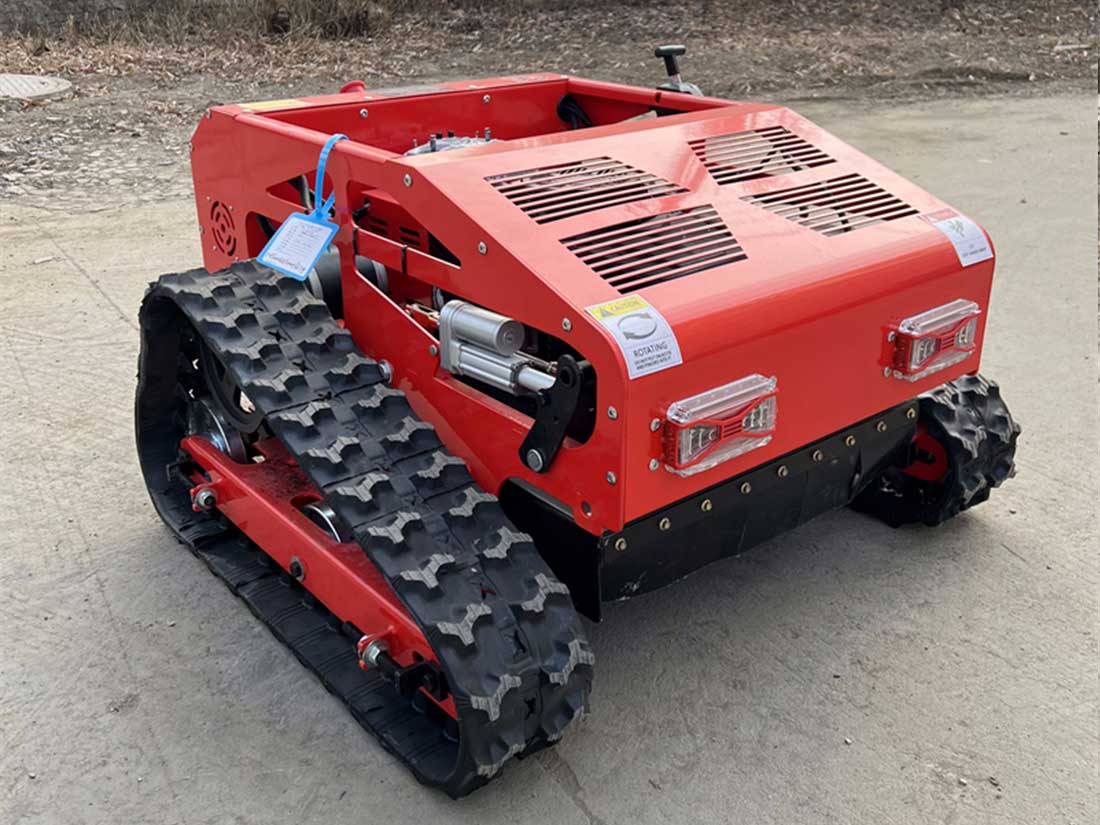
What Is a Tracked Mower?
A tracked mower uses continuous tracks rather than traditional wheels to move across the ground. The tracks create a larger contact area, helping distribute machine weight and maintain traction across uneven surfaces.
Modern versions can also be integrated with remote-controlled mowing equipment. Instead of sitting on the machine, an operator can control the tracked mower remotely from an appropriate observation position.
This combination of tracked mobility and remote operation is particularly valuable for professional mowing applications involving:
Steep slopes
Uneven terrain
Roadside embankments
Orchards and vineyards
Rough grassland
Drainage ditches
Parks and large landscapes
Areas with tall or dense vegetation
The purpose is not simply to replace a traditional lawn mower. A tracked mower is designed to solve terrain and accessibility problems that conventional equipment may struggle to handle.
Traditional Mower: Where Does It Work Best?
Before comparing the two technologies, it is important to recognize the strengths of traditional mowers.
Wheeled lawn mowers are widely used because they are practical, familiar, and cost-effective for standard applications. They can be highly productive on relatively flat and accessible grass surfaces.
For residential lawns, sports fields, gardens, and other well-maintained areas, a traditional mower may provide everything an operator needs.
Traditional equipment can also offer advantages such as:
Simple operation
Familiar maintenance procedures
Broad availability
Lower initial investment for some models
Easy transportation
Strong performance on suitable terrain
Therefore, the question is not whether a traditional mower is obsolete. It is whether its design matches the working environment.
When terrain becomes steep, slippery, irregular, or difficult to access, the advantages of a tracked mower become increasingly relevant.
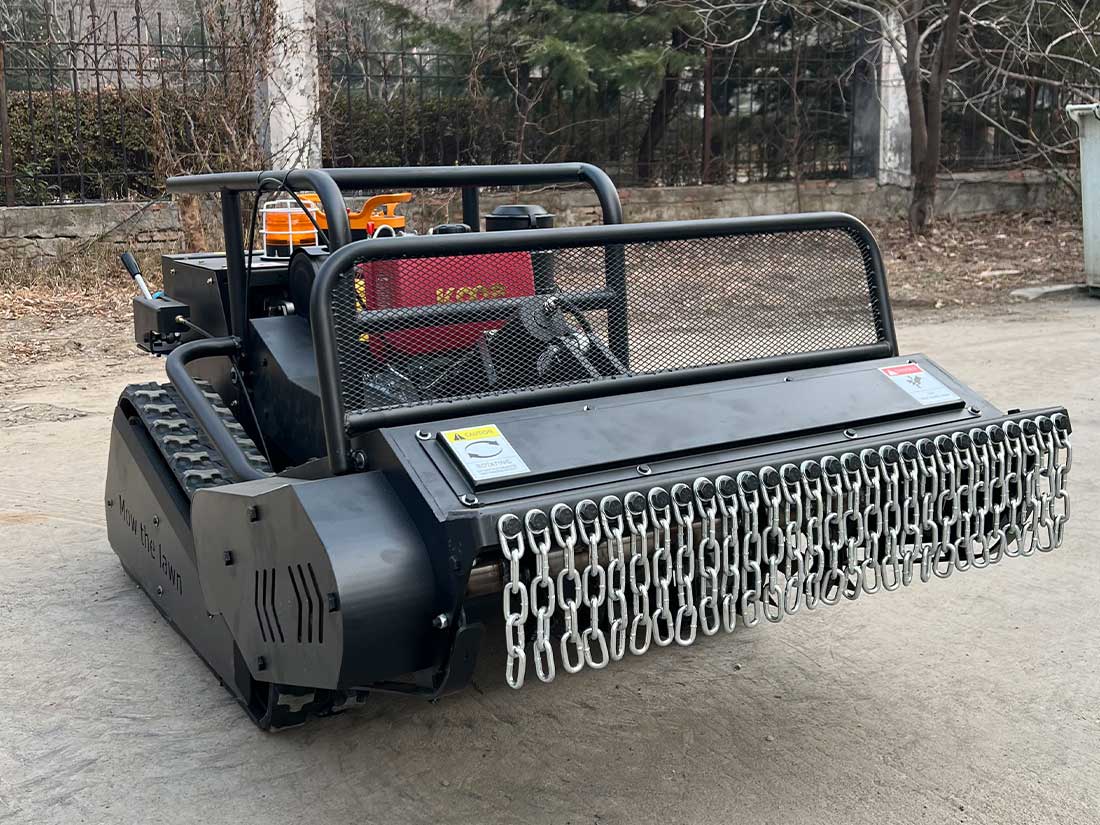
Tracked Mower vs Traditional Mower: Traction
Traction is one of the most important differences between wheeled and tracked equipment.
A conventional mower depends on its tires to maintain contact with the ground. On steep or loose terrain, wheel slip can become a problem. Wet grass, mud, loose soil, and uneven surfaces can further reduce traction.
A tracked mower distributes its weight over a larger contact area. The continuous-track configuration can help the machine maintain ground contact and move more effectively across challenging surfaces.
This does not mean every tracked machine can operate on every slope. Terrain angle, soil conditions, machine weight, center of gravity, track design, and manufacturer specifications must always be considered.
For demanding applications, however, the traction characteristics of a tracked mower can provide a meaningful operational advantage.
Stability on Slopes
Slope mowing is one of the clearest situations where equipment selection matters.
Operating a conventional ride-on mower across a steep slope can expose the operator to significant risks, particularly if the machine loses traction or becomes unstable. Even walk-behind equipment can become difficult to control when the terrain is steep or irregular.
A remote-controlled tracked mower changes the operating model.
The operator does not need to sit directly on the machine while it works on the slope. Instead, remote-controlled mowing equipment allows the operator to control the machine from a suitable position away from the mower.
This separation can reduce operator exposure to certain hazards while allowing the machine to reach areas that would be uncomfortable or unsuitable for conventional mowing.
Operators must still follow site-specific risk assessments and the manufacturer's operating limits. Remote control is an important safety feature, but it does not eliminate terrain-related risks.
Cutting Performance Comparison
Mobility is only part of the equation. The mower must also deliver reliable cutting performance.
A tracked mower can be equipped with different cutting systems depending on the intended application. Professional users may select equipment based on vegetation height, grass density, cutting width, cutting height, and the type of material being processed.
Traditional mowers also offer a wide range of cutting systems and remain highly effective for maintained turf.
For example:
Traditional mower:
Best suited to regular lawn maintenance, landscaped areas, and relatively uniform grass.
Tracked mower:
More suitable for applications where cutting performance must be combined with difficult-terrain mobility.
For dense vegetation, rough grass, or overgrown areas, buyers should evaluate the mower's power output and cutting-system design rather than relying on the machine category alone.
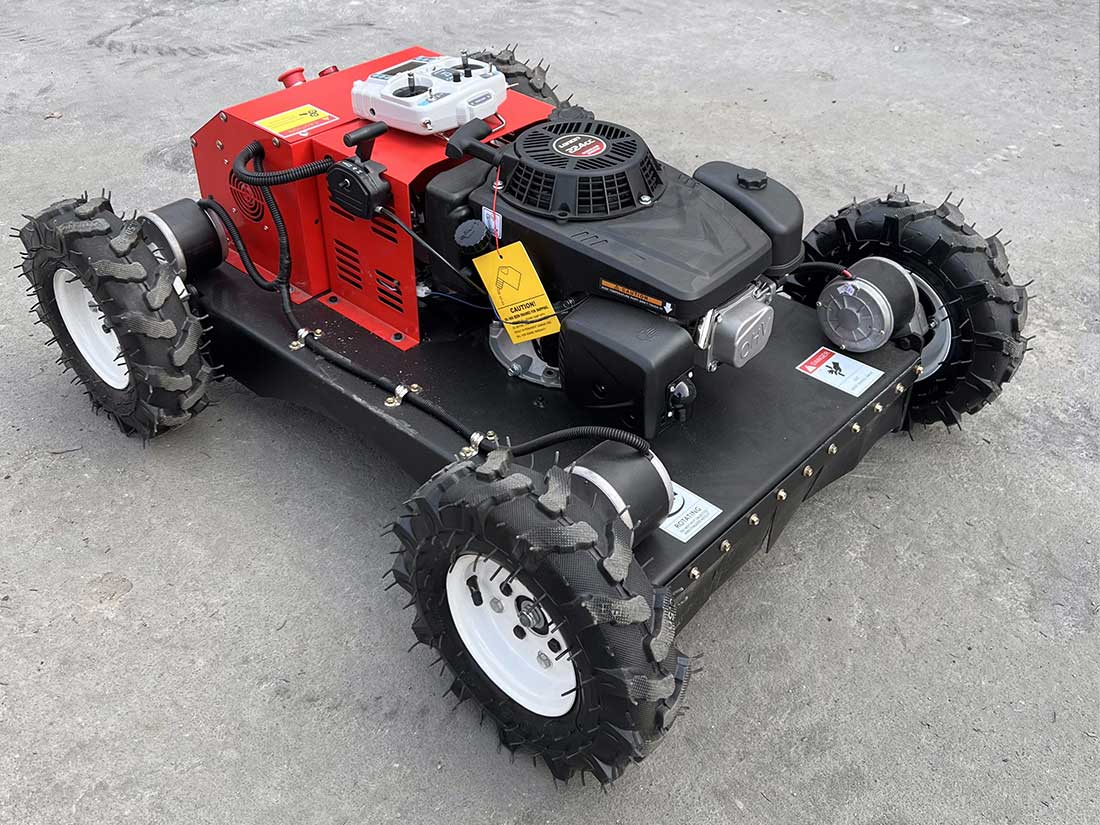
Remote Operation: A Major Difference
One of the strongest advantages of a remote-controlled tracked mower is the ability to operate without riding on the machine.
Remote-controlled mowing equipment allows the operator to manage machine movement and mowing functions from a distance, depending on the system configuration.
This can be particularly useful when mowing:
Steep embankments
Hillsides
Ditches
Areas close to obstacles
Rough vegetation
Locations with limited access
With conventional ride-on machinery, the operator must remain physically on the machine. A tracked mower with remote control provides a different approach: the machine handles the terrain while the operator remains in a position where visibility and situational awareness can be maintained.
Which Machine Is More Efficient?
Efficiency depends heavily on the working environment.
On a flat lawn, a traditional mower may be faster and more economical. There is little reason to deploy specialized tracked equipment when conventional machinery can complete the job efficiently.
On difficult terrain, however, a tracked mower can potentially reduce the operational limitations associated with conventional equipment.
Instead of spending additional time finding safe access routes, manually clearing difficult areas, or using multiple types of equipment, a remote-controlled mowing system can allow contractors to address challenging terrain with a purpose-built machine.
For professional landscaping businesses, roadside maintenance contractors, agricultural operators, and vegetation-management teams, this flexibility can translate into improved workflow efficiency.
Maintenance and Operating Considerations
When comparing a tracked mower with a traditional mower, maintenance should also be part of the purchasing decision.
Tracked machines contain components such as tracks, rollers, drive systems, and additional undercarriage parts that require appropriate inspection and maintenance. Traditional wheeled mowers have their own maintenance requirements, including tire, steering, transmission, and drivetrain components.
Professional operators should establish routine inspection procedures covering:
Cutting blades
Track or tire condition
Drive components
Hydraulic systems where applicable
Engine or battery system
Remote-control system
Emergency-stop functions
Fasteners and protective components
A well-maintained tracked mower can provide dependable performance, but preventative maintenance is essential for commercial equipment working in harsh environments.
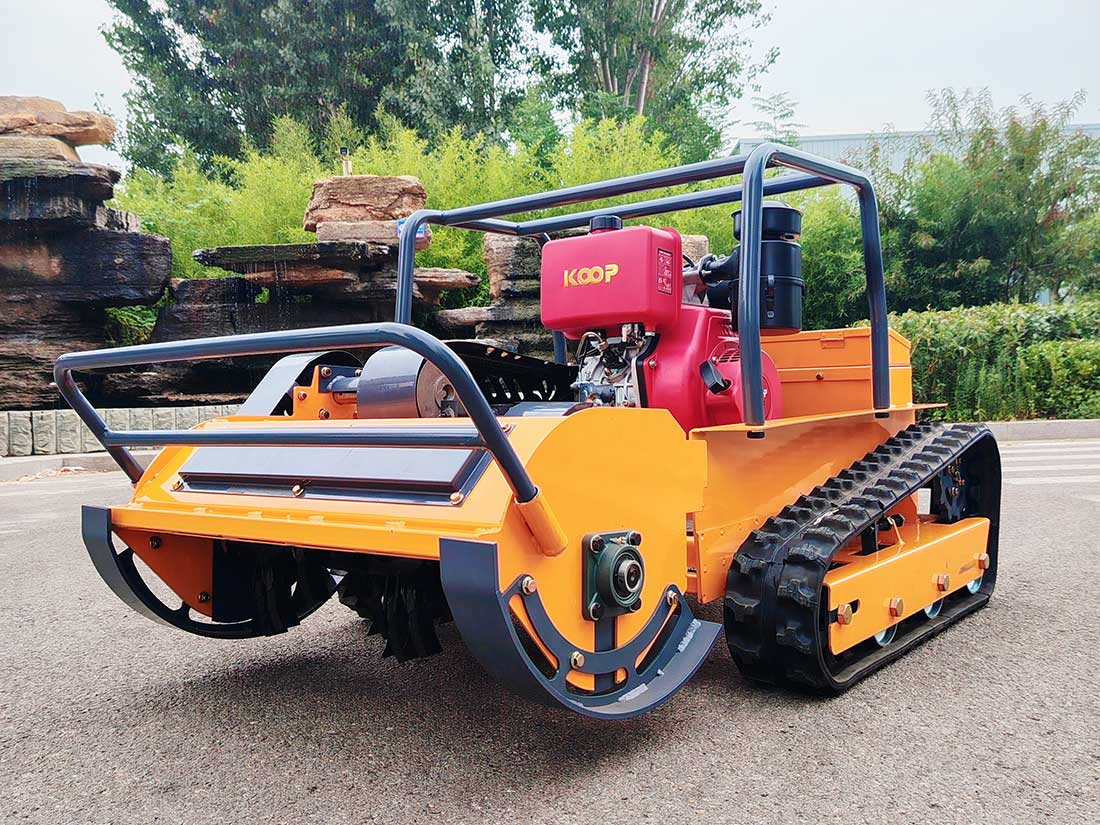
Cost vs. Capability
The initial purchase price is another important consideration.
A traditional mower may have a lower purchase cost and can be the more sensible investment for simple mowing applications. A tracked mower, particularly one equipped with sophisticated remote-control technology, may require a higher initial investment.
However, professional buyers should evaluate total operational value rather than price alone.
Consider:
Labor requirements
Productivity
Terrain accessibility
Operator exposure
Equipment utilization
Maintenance costs
Transportation requirements
Expected service life
If a machine enables a contractor to safely and efficiently complete jobs that would otherwise require more labor or specialized equipment, its higher initial cost may be justified.
Which Is Better for Different Applications?
There is no universal winner between a traditional mower and a tracked mower. The best choice depends on the terrain and job requirements.
| Application | Traditional Mower | Tracked Mower |
|---|---|---|
| Flat residential lawn | Excellent | Usually unnecessary |
| Maintained park lawn | Excellent | Useful for selected areas |
| Steep slope | Limited | Strong option |
| Uneven terrain | Limited to moderate | Strong option |
| Roadside embankment | Application-dependent | Strong option |
| Orchard terrain | Moderate | Strong option |
| Tall or dense vegetation | Model-dependent | Model-dependent |
| Remote operation required | Generally unavailable | Excellent option |
| Difficult-access areas | Limited | Strong option |
The table demonstrates an important point: a tracked mower is not necessarily better for every mowing job. It is better suited to specific environments where traction, stability, maneuverability, and remote operation provide measurable benefits.
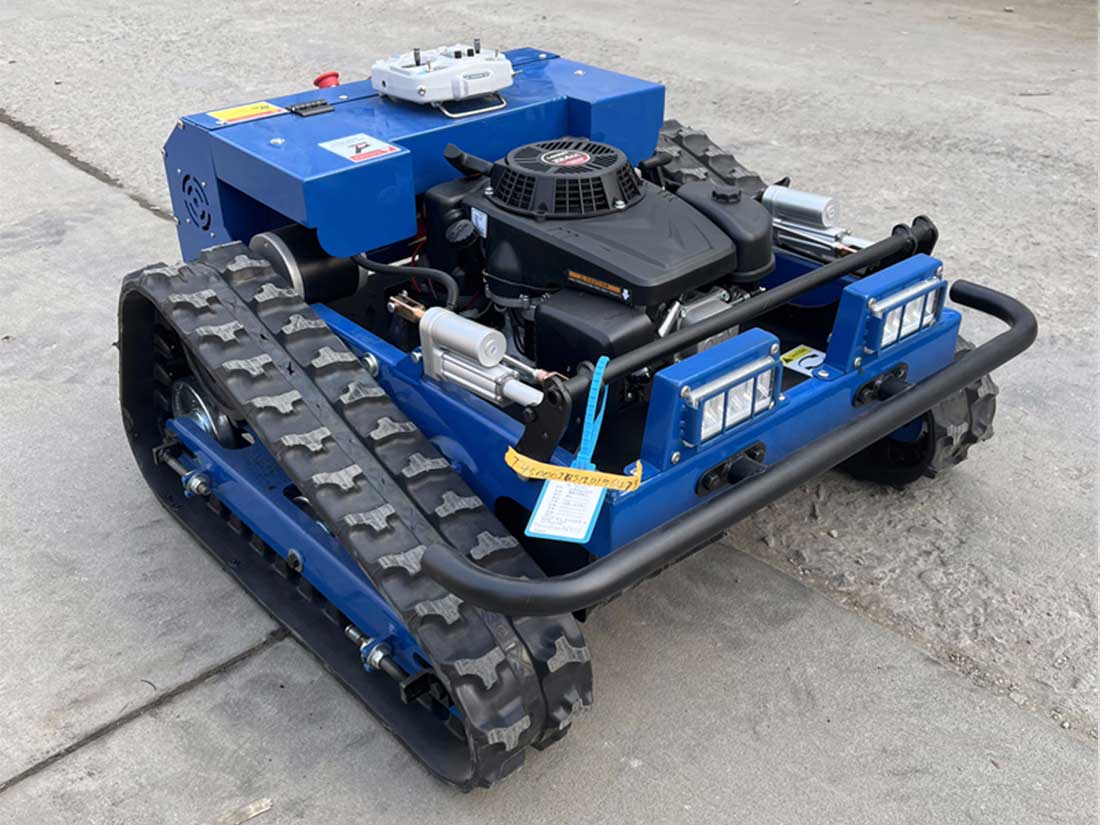
Why Professionals Are Considering Tracked Mowers
The development of remote-controlled mowing equipment reflects a wider trend toward safer and more efficient vegetation management.
Professional operators increasingly need equipment capable of working in places where conventional machinery is difficult to use. A tracked mower addresses this need by combining specialized mobility with powerful cutting capability.
For contractors working on slopes, roadside vegetation, agricultural land, or rough landscapes, the ability to remotely control a tracked machine can make difficult jobs more manageable.
The technology is especially attractive when equipment must repeatedly operate in challenging environments rather than occasionally entering them.
How to Choose the Right Tracked Mower
If you are considering a tracked mower, begin with the actual worksite rather than the machine specifications alone.
Ask the following questions:
What is the maximum slope angle?
Is the terrain dry, wet, muddy, rocky, or soft?
What type of vegetation needs to be cut?
How tall and dense is the vegetation?
How wide must the cutting path be?
Is remote operation required?
How far must the operator control the machine?
Are there narrow access routes or obstacles?
How frequently will the machine be used?
What maintenance and service support are available?
These questions help identify whether a tracked mower is genuinely appropriate for the application.
Final Verdict: Tracked Mower or Traditional Mower?
For conventional flat-ground lawn care, a traditional mower remains a practical and proven solution. It can deliver excellent results without the additional complexity of specialized tracked technology.
For steep slopes, rough fields, uneven ground, roadside embankments, orchards, and other challenging environments, however, a tracked mower can offer substantial advantages.
When combined with remote-controlled mowing equipment, the benefits extend beyond traction. Operators can control the machine remotely, access difficult terrain, and improve the overall workflow while maintaining a safer operating position.
The smartest choice is therefore not simply the machine with the most power or the lowest price. It is the equipment that matches the terrain, vegetation, safety requirements, and productivity goals of the job.
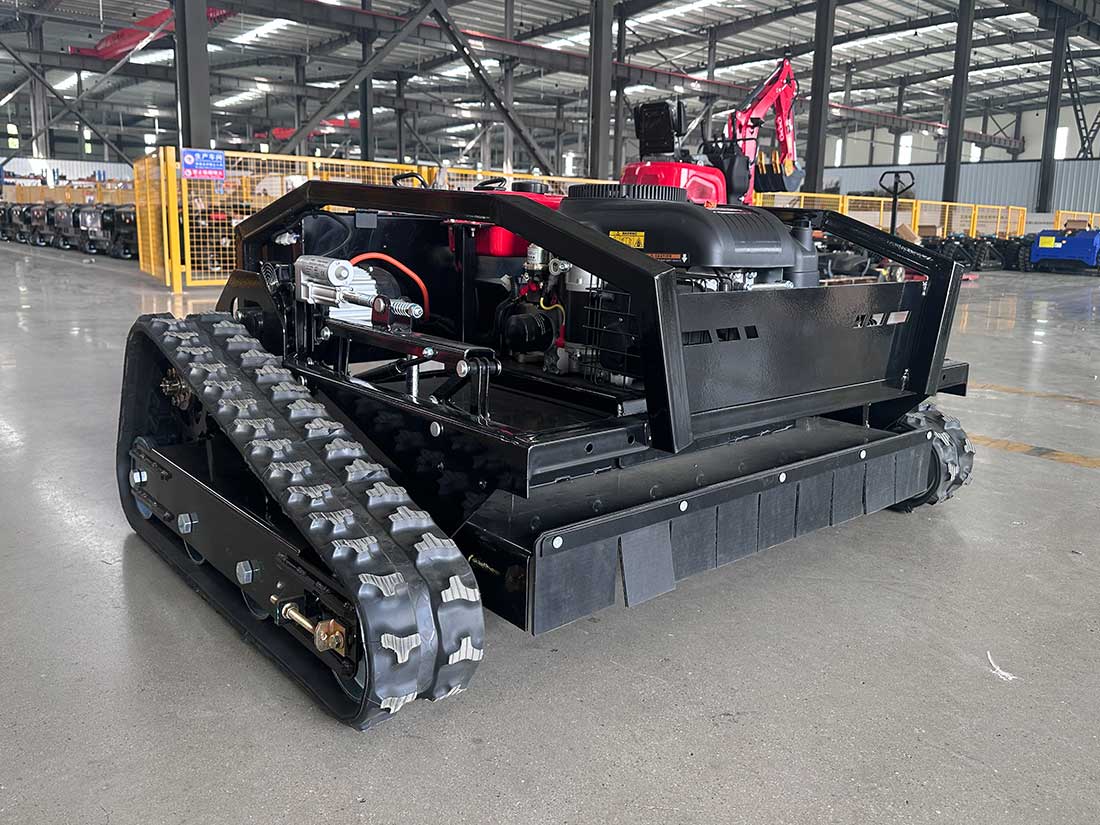
Explore Remote-Controlled Mowing Equipment from JY Lawn Mower
If your business needs professional mowing equipment for slopes, rough terrain, orchards, roadside vegetation, or other demanding applications, exploring specialized remote-controlled solutions is worthwhile.
JY Lawn Mower provides remote-controlled mowing equipment designed for challenging mowing environments. Its range of solutions can help professional users evaluate options based on terrain conditions, cutting requirements, and operational needs.
For more information about tracked mower solutions and remote-controlled mowing equipment, visit:
JY Lawn Mower Official Website
Whether you choose a traditional mower or a tracked mower, the key is selecting equipment that is appropriate for the job. For difficult terrain where traction, remote operation, accessibility, and operator safety are critical, a modern tracked mower can be a smarter investment for professional vegetation management.