 English
 Spanish
 Portuguese
 French
 Italian
 Remote Mower
Managing vegetation across large areas is a demanding task for landscaping contractors, agricultural operators, roadside maintenance teams, property managers, and land-management professionals. Large fields, parks, orchards, solar farms, roadside corridors, embankments, and undeveloped properties can require frequent mowing while presenting significant challenges related to terrain, labor, productivity, and operator safety.
For these applications, a tracked mower can provide a practical alternative to conventional mowing equipment. When combined with remote-controlled technology, a tracked mower can help professional operators access difficult terrain while maintaining greater control over the mowing process.
The growing adoption of remote-controlled mowing equipment reflects an important shift in professional vegetation management: instead of relying exclusively on traditional ride-on machinery, contractors can use specialized machines designed for challenging terrain and remote operation.
What Makes a Tracked Mower Suitable for Large Areas?
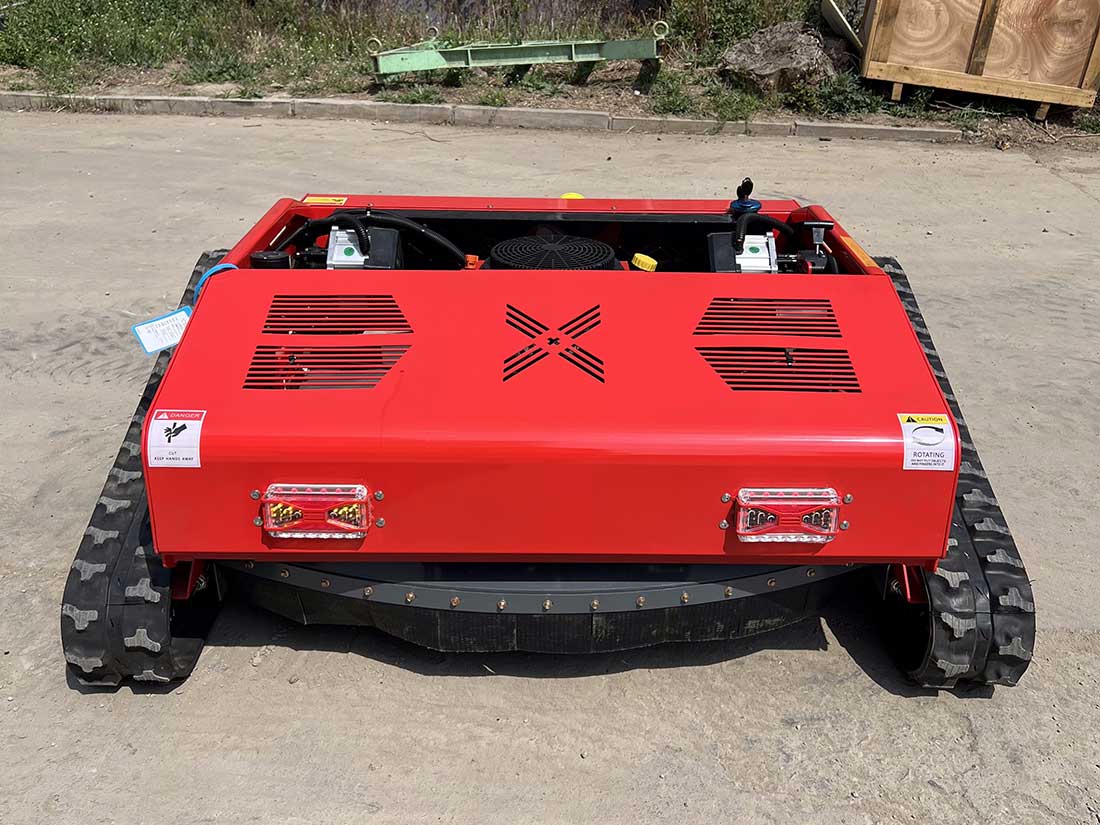
A tracked mower is designed with a continuous-track undercarriage rather than conventional wheels. This configuration can provide increased ground contact and traction, making tracked equipment particularly useful when working across uneven or demanding surfaces.
Large properties rarely consist entirely of perfectly flat grass. Even a seemingly simple mowing project may include:
Slopes and inclines
Uneven ground
Soft soil
Tall vegetation
Rough grass
Ditches and embankments
Obstacles and narrow passages
Areas with limited vehicle access
A tracked mower is designed to address these conditions while providing a dedicated platform for vegetation cutting.
For professional operators, the value of tracked equipment is not simply its ability to move. The goal is to combine mobility, cutting performance, maneuverability, and operational efficiency in a single machine.
The Role of Remote-Controlled Mowing Equipment
Remote operation is one of the most important developments in modern vegetation management.
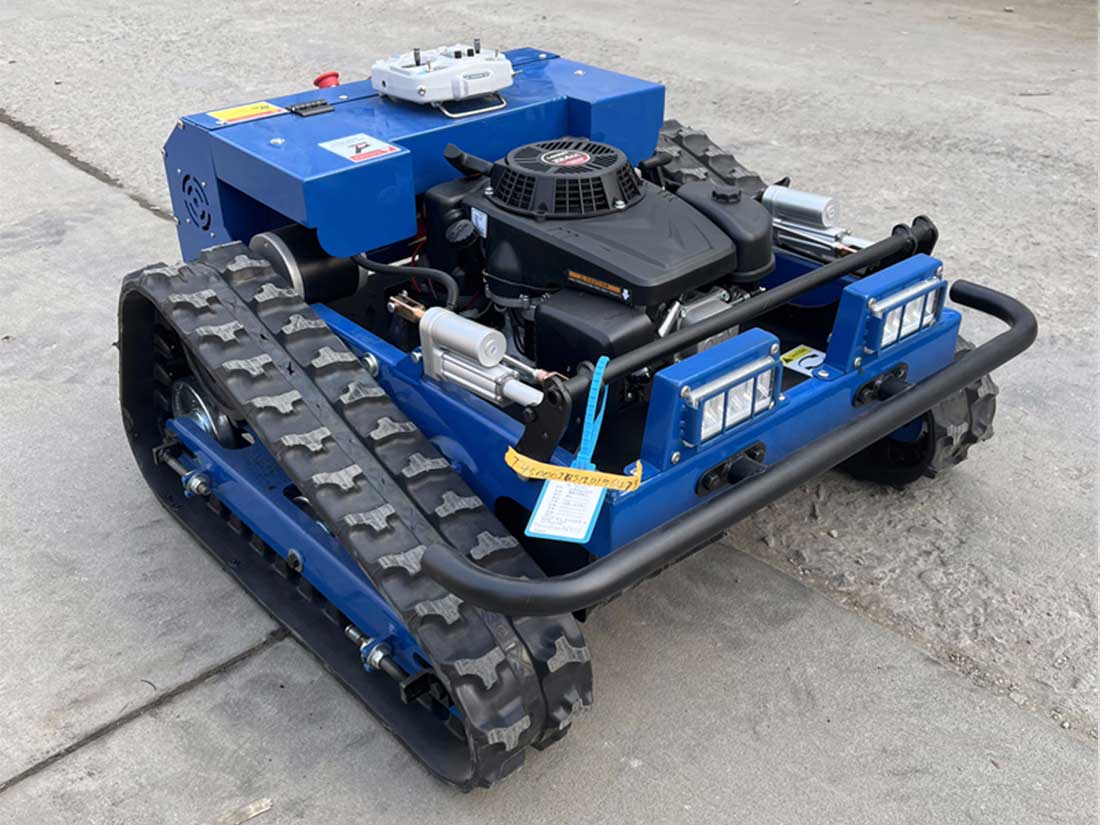
With remote-controlled mowing equipment, an operator can control a tracked mower from a distance rather than riding directly on the machine. Depending on the machine configuration, the operator may control driving, steering, speed, and cutting functions through a remote-control system.
This operating method is particularly useful when working in areas where putting an operator directly on the mower would be undesirable.
Examples include:
Steep grass slopes
Roadside embankments
Deep drainage areas
Rough fields
Dense vegetation
Areas containing potential obstacles
Large properties requiring extended mowing operations
Remote control does not remove the need for professional safety procedures. Operators should always maintain appropriate visibility, respect manufacturer operating limits, inspect the work area, and follow site-specific risk assessments.
However, the combination of a tracked mower and remote control can significantly change how difficult mowing tasks are approached.
Large-Area Vegetation Management Requires More Than Cutting Power
When managing hundreds of acres, large parks, commercial properties, or extensive agricultural land, cutting power is only one part of the equation.
Professional vegetation management also involves:
Accessibility: Can the equipment reach the required areas?
Productivity: How much ground can be covered during each operating period?
Terrain capability: Can the machine maintain traction across uneven or sloping ground?
Labor efficiency: How many operators are required?
Safety: Can personnel remain away from potentially hazardous operating areas?
Consistency: Can the machine maintain predictable cutting performance across changing conditions?
A tracked mower can contribute to each of these considerations when properly matched to the application.
Tracked Mower Advantages for Large Properties
1. Improved Ground Contact
The continuous tracks of a tracked mower provide a broad contact area with the ground. This can help distribute machine weight and maintain traction in conditions where conventional tires may struggle.
This is particularly relevant for large properties with mixed terrain, where the machine may move from firm grass to uneven or softer surfaces during the same project.
2. Better Access to Challenging Areas
A large property can contain sections that are difficult to reach using conventional ride-on equipment.
A tracked mower can provide an additional level of terrain accessibility, allowing maintenance teams to address slopes, uneven ground, and other areas that might otherwise require specialized manual work.
3. Remote Operation
Remote operation allows the operator to control the tracked mower without sitting directly on the machine.
For professional vegetation management, this can be particularly valuable when mowing steep terrain or areas where maintaining physical distance from the equipment improves the operator's working position.
4. Flexible Applications
A tracked mower can be used in a variety of professional environments, including agriculture, landscaping, roadside maintenance, industrial properties, and large-scale land management.
This flexibility can increase equipment utilization across multiple projects.
Applications Across Large Areas
Agricultural Land
Farmers and agricultural contractors often need to manage grass and vegetation between crops, around field boundaries, along slopes, or in areas that are difficult for conventional tractors to access.
A tracked mower can provide a compact and maneuverable alternative for selected vegetation-management tasks.
In orchards, for example, terrain may change significantly across a single property. Rows of trees can also limit access for larger equipment. Remote-controlled mowing equipment can provide additional flexibility when maintaining grass and vegetation between trees.
Roadside Vegetation Management
Roadside maintenance requires equipment capable of operating near embankments, drainage areas, and irregular ground.
A tracked mower equipped with an appropriate cutting system can be useful for managing roadside vegetation while allowing the operator to control the machine remotely.
For contractors responsible for long roadside corridors, equipment selection can have a direct effect on productivity and project scheduling.
Solar Farms
Solar farms present a unique vegetation-management challenge. Grass and weeds must be controlled to maintain site accessibility and reduce vegetation-related maintenance issues.
A tracked mower can be useful where solar panels are installed across uneven ground or where narrow working corridors make larger equipment impractical.
Compact remote-controlled mowing equipment can also provide greater maneuverability around infrastructure when the machine is appropriately configured for the site.
Parks and Large Landscapes
Public parks, private estates, recreational properties, and commercial landscapes can cover extensive areas with varying terrain.
Instead of relying on one type of mower for every section, professional teams can deploy a tracked mower in locations where specialized terrain capability provides the greatest value.
This creates a more flexible fleet strategy: conventional equipment can handle flat open areas, while tracked remote-controlled machines address difficult sections.
Productivity: Where the Business Case Becomes Important
For professional contractors, equipment should ultimately improve the economics of vegetation management.
A tracked mower can contribute to productivity by reducing the limitations imposed by difficult terrain. If a machine can reach an area that previously required manual trimming or multiple pieces of equipment, the overall workflow can become more efficient.
Consider a large property containing both flat fields and steep embankments. A conventional mower may perform efficiently on the flat areas but struggle on the embankments.
Rather than forcing one machine to perform every task, contractors can use conventional equipment for suitable areas and deploy a tracked mower for difficult sections.
This application-specific approach can help improve equipment utilization and reduce unnecessary downtime.
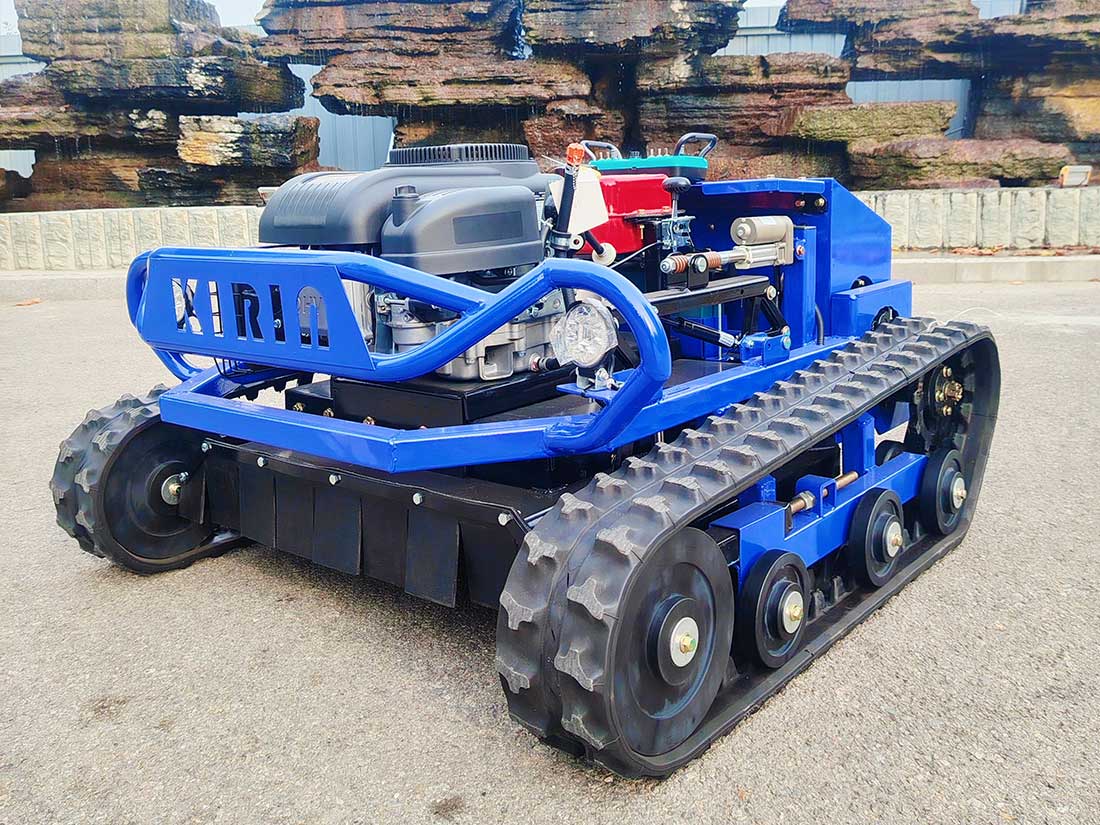
Choosing the Right Cutting System
A tracked mower is only as effective as its cutting configuration.
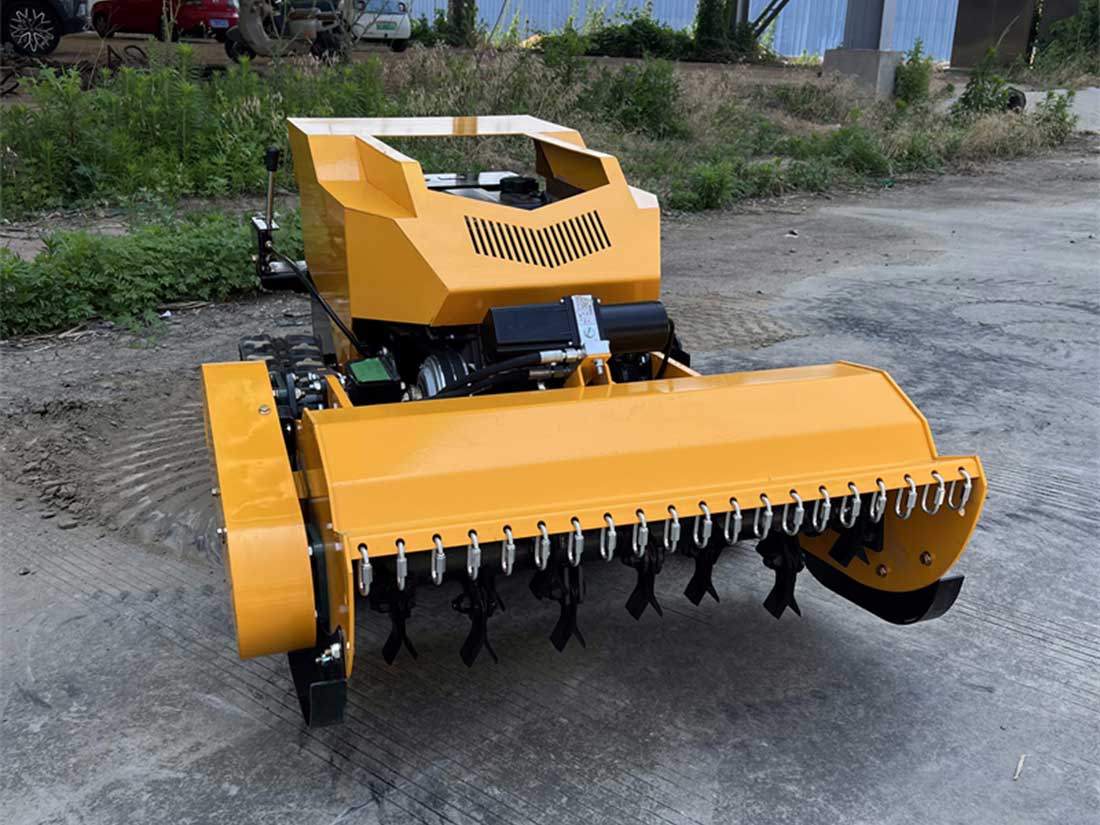
Professional users should select the cutting system according to the vegetation being managed. Fine grass, tall weeds, heavy brush, and rough vegetation can require different blade designs and cutting mechanisms.
Key specifications to consider include:
Cutting width
Cutting height
Blade configuration
Motor or engine power
Hydraulic capacity where applicable
Vegetation density
Expected mowing frequency
Terrain conditions
For large-area operations, cutting width and productivity are important, but they should never be evaluated separately from terrain capability.
A wider deck may increase productivity on open ground, while a more compact configuration may be preferable where obstacles or narrow passages are common.
How Remote-Controlled Mowing Changes Workforce Management
Labor availability has become an important consideration for professional landscaping and vegetation-management businesses.
Remote-controlled mowing equipment can allow a trained operator to manage a tracked mower from a suitable position instead of physically riding on the machine.
This does not mean that one operator can automatically replace an entire mowing team in every application. Actual labor requirements depend on terrain, vegetation, machine specifications, transportation, safety procedures, and project size.
However, remote operation can create opportunities to redesign workflows around specialized equipment rather than relying entirely on manual labor.
For contractors managing large areas, that flexibility can be valuable.
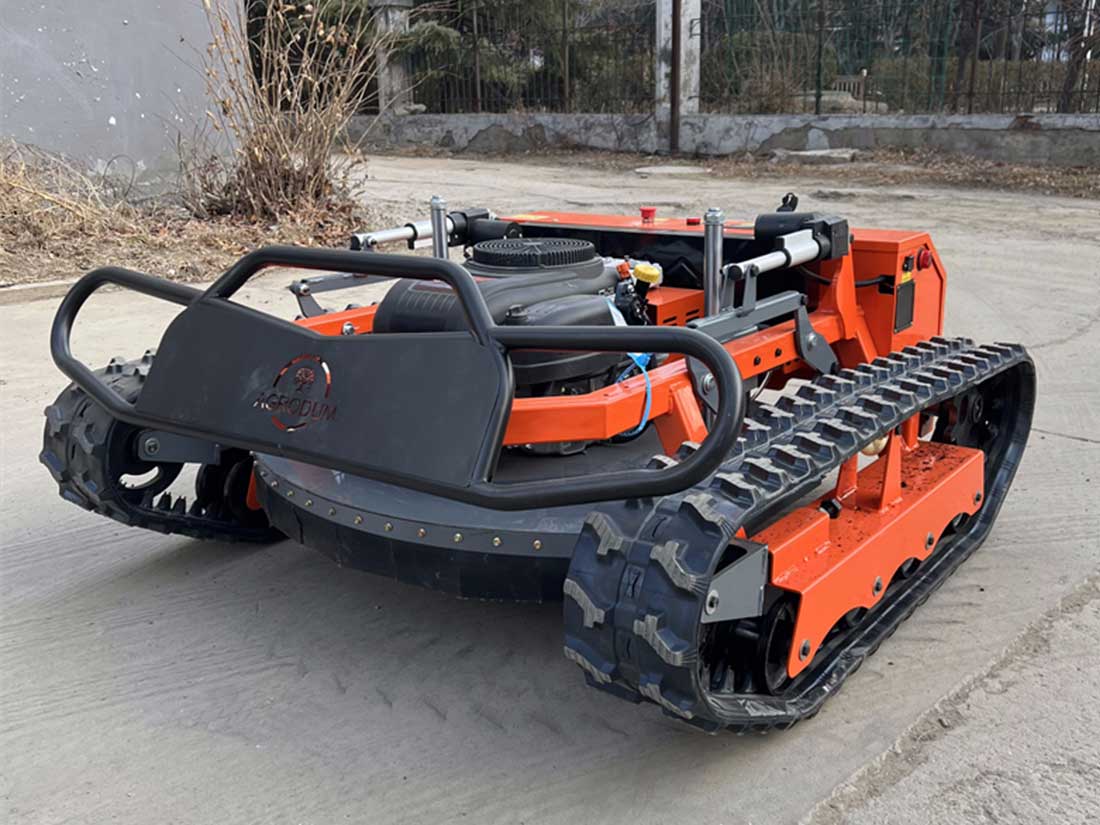
Maintenance Matters in Large-Scale Operations
A tracked mower working across large areas can accumulate significant operating hours. Preventative maintenance is therefore essential.
Professional maintenance programs should include regular inspection of:
Tracks and undercarriage components
Cutting blades
Drive systems
Hydraulic components
Engine or battery system
Remote-control equipment
Fasteners
Safety and emergency-stop systems
Before every major mowing project, operators should also inspect the work area for rocks, wire, debris, holes, drainage structures, and other potential hazards.
Good maintenance practices help reduce unexpected downtime and support consistent machine performance throughout the operating season.
Tracked Mower vs. Conventional Equipment
Traditional tractors, ride-on mowers, and other wheeled machines remain highly effective for large flat areas.
The advantage of a tracked mower becomes more apparent when terrain conditions complicate conventional operations.
| Factor | Conventional Mower | Tracked Mower |
|---|---|---|
| Flat open fields | Excellent | Excellent |
| Steep terrain | Application-dependent | Strong option |
| Uneven ground | Moderate | Strong option |
| Roadside embankments | Application-dependent | Strong option |
| Remote operation | Usually unavailable | Available on suitable models |
| Compact access | Model-dependent | Strong option |
| Large open-area productivity | Excellent | Model-dependent |
| Challenging terrain | Limited by design | Specialized capability |
The comparison shows why a tracked mower should not necessarily be viewed as a replacement for every conventional machine. Instead, it can complement existing equipment and take responsibility for jobs where tracked mobility and remote control provide a clear advantage.
How to Select a Tracked Mower for Professional Use
Before purchasing a tracked mower, professional buyers should analyze their actual operating conditions.
Important questions include:
What percentage of the property is flat versus sloped?
What is the steepest terrain the machine must handle?
What types of vegetation need to be cut?
How frequently will mowing be required?
Are there obstacles such as trees, solar panels, fences, or drainage structures?
What cutting width is appropriate?
Is remote operation necessary?
What is the required operating range?
How easy is routine maintenance?
What technical and after-sales support is available?
The right answer will vary by application. A professional tracked mower should be selected based on the complete operating environment rather than a single specification.
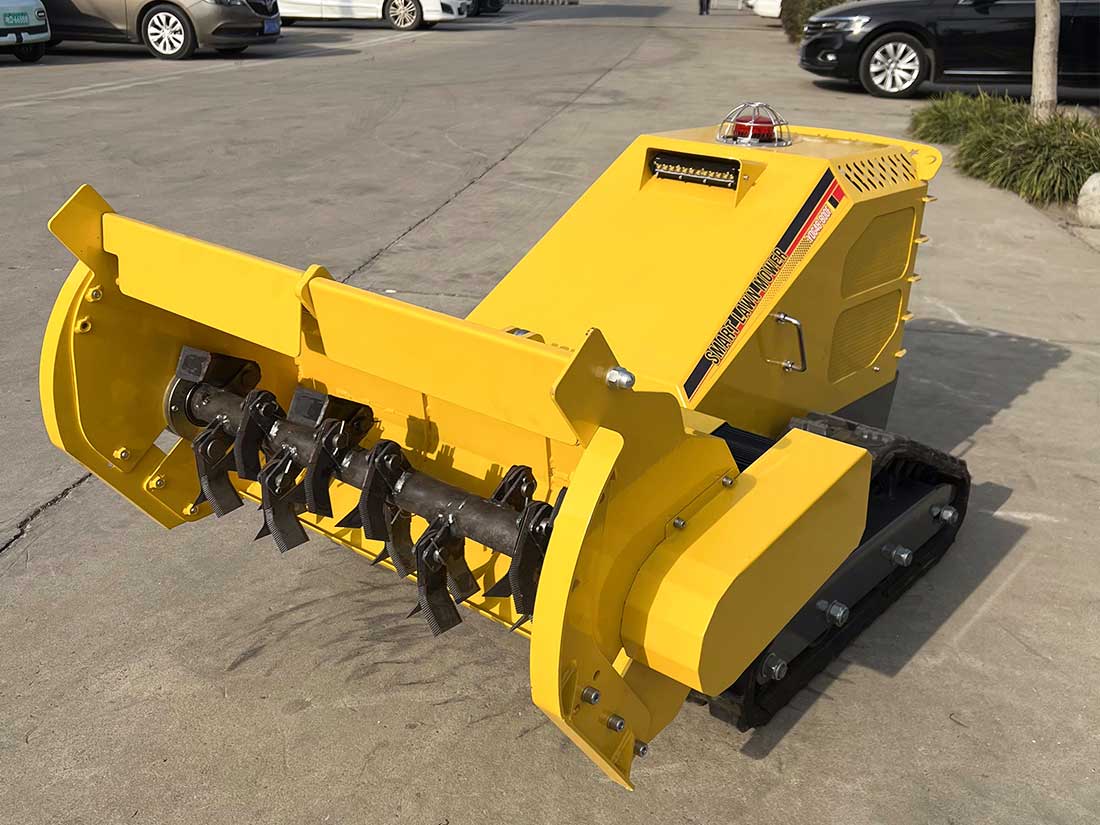
The Future of Professional Vegetation Management
The vegetation-management industry is moving toward equipment that combines automation, remote control, specialized mobility, and improved operator ergonomics.
A tracked mower represents an important part of this evolution. When integrated with remote-controlled mowing equipment, it provides professionals with a tool designed for difficult terrain while supporting more flexible work practices.
As large properties become more demanding to maintain, contractors need equipment that can work beyond the limitations of conventional lawn-care machinery.
The objective is not technology for its own sake. The objective is better productivity, greater accessibility, and safer, more controlled mowing operations.
Explore Tracked Mower Solutions from JY Lawn Mower
If you are responsible for large-scale vegetation management and regularly encounter slopes, rough terrain, orchards, roadside areas, solar farms, or other challenging landscapes, specialized remote-controlled mowing equipment may be worth considering.
JY Lawn Mower focuses on remote-controlled mowing solutions for demanding applications. Its equipment range can help professional users explore options for terrain management, vegetation cutting, and large-area mowing.
To learn more about tracked mower solutions and remote-controlled mowing equipment, visit the official JY Lawn Mower website:
JY Lawn Mower Official Website
For professional vegetation management, the best machine is not necessarily the largest or most powerful one. It is the machine that matches the terrain, vegetation, access conditions, safety requirements, and productivity goals.
For large areas containing difficult terrain, a tracked mower combined with remote-controlled operation can provide a smarter and more flexible approach to modern vegetation management.