 English
 Spanish
 Portuguese
 French
 Italian
 Remote Mower
Maintaining grass and vegetation on slopes, embankments, uneven ground, and other difficult areas is one of the most demanding jobs in professional land management. Conventional equipment can become difficult to position and operate when terrain changes quickly, access is limited, or the working area presents additional safety challenges.
This professional application scenario demonstrates how a modern Lawn mower equipped with remote-controlled mowing technology can provide a more controlled approach to difficult-terrain vegetation management.
For professional contractors, landscapers, agricultural operators, municipalities, and roadside maintenance teams, choosing the right Lawn mower is not simply about cutting grass. It requires consideration of terrain, cutting performance, operator control, machine mobility, maintenance, and overall job-site safety.
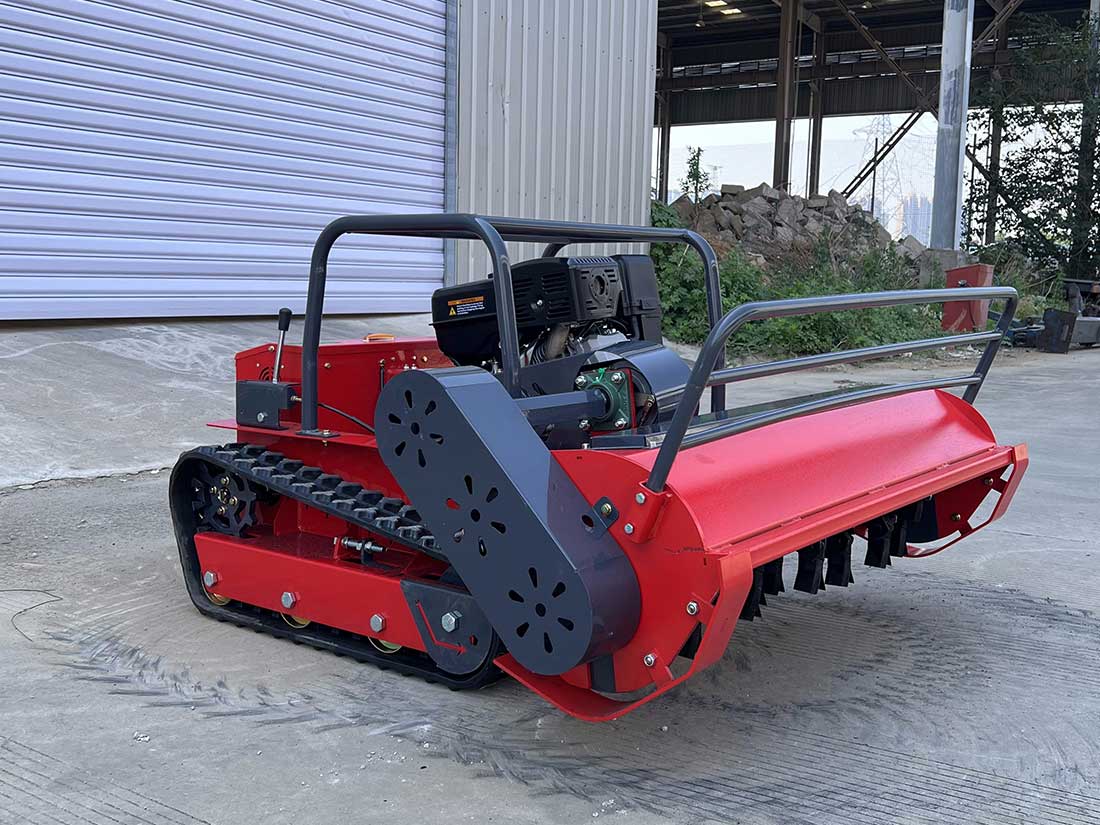
The Difficult-Terrain Challenge
A professional Lawn mower working on challenging terrain needs to handle conditions that are very different from those found on a flat residential lawn.
Slopes may have changing gradients, uneven surfaces, loose soil, tall vegetation, rocks, drainage channels, or restricted access. A conventional Lawn mower may require the operator to work directly beside or behind the machine, which can make certain locations more difficult to manage.
This is where remote-controlled mowing equipment becomes particularly valuable.
A remote-controlled Lawn mower allows the operator to control the machine from a suitable position away from the cutting unit. Instead of relying solely on the operator's physical position, the mowing system can be directed according to the terrain and working conditions.
The result is a more flexible mowing workflow for professional applications.
Case Scenario: Remote-Controlled Mowing on Uneven Ground
Consider a professional vegetation-management project involving a large area with a mixture of relatively accessible grassland, uneven ground, slopes, and vegetation along difficult-to-reach boundaries.
The objective is straightforward: maintain the area effectively while maintaining appropriate operator control and minimizing unnecessary exposure to difficult working conditions.
The work begins with a site assessment.
Before operating the Lawn mower, the team identifies slopes, obstacles, access routes, vegetation density, drainage areas, and potential hazards. This assessment determines where remote-controlled mowing equipment can be used most effectively.
The operator then establishes a suitable operating position and begins mowing with the remote-controlled Lawn mower.
Instead of continuously following the machine across the working area, the operator can control movement and cutting functions remotely while maintaining visibility of the machine and surrounding terrain.
This operating method is especially useful when mowing areas where direct access is inconvenient or where maintaining a suitable distance from the machine improves the overall working process.
Why Remote Control Changes the Mowing Process
The main advantage of a remote-controlled Lawn mower is not simply the presence of a remote control.
The real benefit comes from combining remote operation with purpose-built mobility, cutting technology, and professional machine design.
A remote-controlled Lawn mower can give operators greater flexibility when approaching:
- Slopes and embankments
- Uneven ground
- Large grass-covered areas
- Difficult-to-access vegetation
- Agricultural areas
- Parks and landscaped spaces
- Roadside vegetation
- Areas requiring controlled mowing operations
Professional mowing equipment is increasingly associated with landscaping, agriculture, roadside maintenance, and difficult-terrain applications, making remote-controlled solutions particularly relevant to contractors and organizations managing demanding outdoor environments.
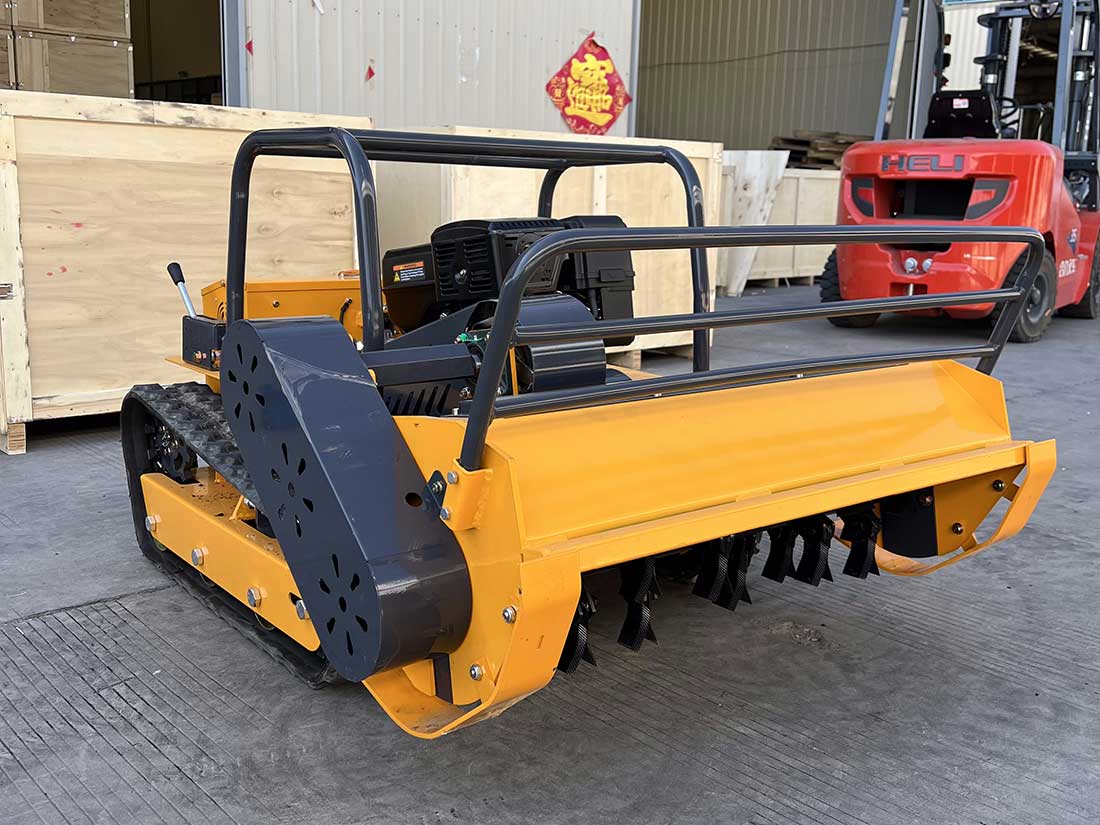
Control and Precision on Difficult Terrain
A professional Lawn mower needs more than cutting power. Operators also need predictable machine movement and accurate control.
On uneven ground, mowing patterns can become inconsistent if the machine cannot maintain stable movement. A remote-controlled Lawn mower gives the operator direct control over machine positioning, allowing the mowing path to be adjusted according to changing site conditions.
Precision is particularly important around:
- Drainage channels
- Property boundaries
- Trees and landscaping features
- Roadside edges
- Sloped areas
- Obstacles
- Irregular vegetation zones
By combining a suitable cutting attachment with a remote-controlled platform, the Lawn mower can be configured for different vegetation-management requirements.
This is one reason professional buyers should evaluate the complete mowing system rather than focusing on a single specification.
Safety Considerations
Safety should always remain a fundamental part of any Lawn mower operation.
Remote control does not remove all hazards. Instead, it can provide an alternative operating method that allows the operator to maintain separation from the machine while maintaining visual control.
Before using a remote-controlled Lawn mower, professional operators should inspect the terrain, identify obstacles, establish exclusion zones, and follow the manufacturer's operating limitations.
People, animals, vehicles, and unauthorized personnel should remain away from the active work area.
For roadside applications, additional traffic-management procedures may also be required. The Lawn mower should be treated as professional machinery, and operators should receive appropriate training before working on slopes or other demanding terrain.
Choosing the Right Cutting System
The cutting attachment is another important consideration when selecting a professional Lawn mower.
Different vegetation conditions require different cutting approaches. Grass maintenance on a managed landscape may have different requirements from dense vegetation, agricultural growth, roadside vegetation, or rough terrain.
A professional buyer should therefore consider:
- Vegetation type – What material will the Lawn mower cut?
- Terrain – Is the machine working on flat, uneven, or sloped ground?
- Cutting width – Is the priority maneuverability or coverage?
- Attachment design – Which cutting system matches the vegetation?
- Machine mobility – Can the Lawn mower navigate the site effectively?
- Remote-control range and usability – Can the operator maintain reliable control?
- Maintenance requirements – Are wear components easy to inspect and service?
These factors are often more important than simply selecting the machine with the largest engine or widest cutting deck.
Lawn mower Applications Beyond Slopes
Although difficult terrain is an important application, a remote-controlled Lawn mower can also support a wide range of professional mowing operations.
Landscaping
Landscape contractors may use professional Lawn mower equipment to maintain large green spaces, commercial properties, parks, and landscaped areas.
Remote operation can be useful when the site includes irregular terrain or areas where conventional mowing access is inconvenient.
Agriculture
Agricultural contractors and land managers may require a Lawn mower for vegetation control around fields, orchards, boundaries, and other outdoor areas.
A remote-controlled platform can provide additional flexibility when the terrain or vegetation makes conventional mowing less practical.
Roadside Maintenance
Roadside vegetation management is another important professional application. Road maintenance teams may need specialized Lawn mower equipment to manage vegetation along roads, embankments, and difficult roadside areas.
The broader industry focus on advanced roadside mowing equipment demonstrates the growing importance of professional mowing technology for municipalities, contractors, landscaping companies, and agricultural operators.
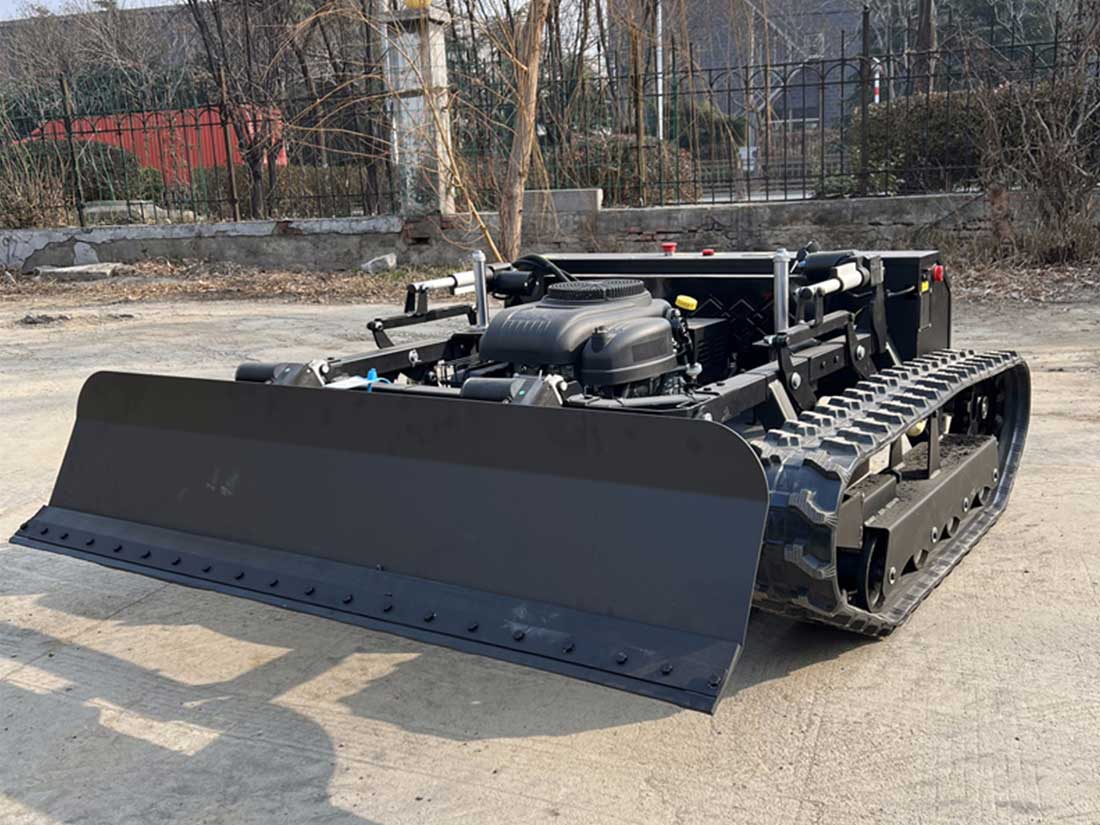
What Professionals Should Learn From the Case
The key lesson from this Lawn mower case study is that difficult terrain requires a complete equipment strategy.
Buying a Lawn mower based only on cutting power can overlook important operational factors.
A professional solution should consider the relationship between:
Machine mobility + cutting system + remote control + terrain + operator visibility + maintenance
When these elements are properly matched, remote-controlled mowing equipment can become a valuable tool for professional vegetation management.
The best Lawn mower is therefore not necessarily the biggest or most powerful machine. It is the machine that matches the actual working environment and provides the control, cutting capability, mobility, and serviceability required for the job.
Maintenance Still Matters
Even advanced remote-controlled mowing equipment requires regular inspection and maintenance.
After operating a Lawn mower, professional teams should inspect cutting components, tracks or wheels, guards, fasteners, hydraulic or electrical systems where applicable, and other wear points according to the manufacturer's maintenance recommendations.
Cutting attachments should be kept in appropriate condition because worn or damaged components can affect cutting quality and machine performance.
Cleaning vegetation and debris from the Lawn mower after operation can also help simplify inspections and identify potential problems before the next job.
A consistent preventive-maintenance program helps professional operators keep equipment ready for demanding mowing applications.
Remote-Controlled Lawn Mower vs. Conventional Equipment
Traditional mowing equipment remains useful for many applications, particularly on accessible and relatively flat terrain.
However, a remote-controlled Lawn mower can offer a different operating approach when the job involves difficult terrain, restricted access, or demanding vegetation-management conditions.
The comparison should therefore not be viewed as simply "old technology versus new technology."
Instead, professional users should ask:
Which Lawn mower provides the most appropriate solution for this specific site?
For flat residential lawns, a conventional mower may be sufficient. For demanding commercial, agricultural, roadside, or sloped applications, remote-controlled mowing equipment may provide additional operational flexibility.
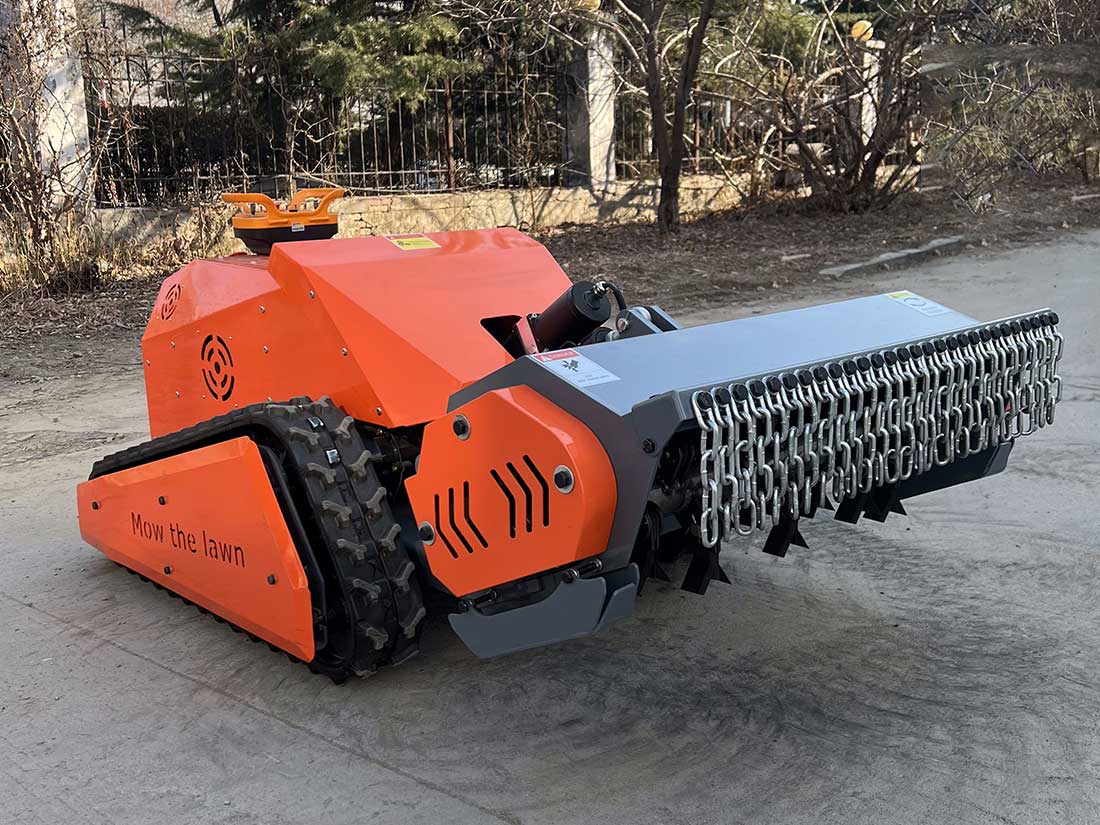
The Future of Professional Lawn Mower Technology
The development of smarter Lawn mower technology is changing how professional vegetation management is approached.
Remote operation, improved machine mobility, specialized cutting attachments, and more intelligent control systems are helping professional users consider new approaches to difficult mowing tasks.
The long-term trend is not simply about making a Lawn mower more powerful. It is about making professional mowing equipment more adaptable to real working environments.
For contractors and land managers, that means evaluating equipment based on the entire job rather than a single specification.
Final Thoughts
This Lawn mower case study shows why remote-controlled mowing equipment deserves serious consideration for difficult-terrain applications.
When slopes, uneven ground, roadside vegetation, agricultural areas, or large green spaces create operational challenges, a remote-controlled Lawn mower can provide a more flexible way to approach professional mowing.
The right Lawn mower should combine appropriate cutting performance, terrain capability, operator control, practical maintenance, and professional safety procedures.
For businesses looking for remote-controlled mowing equipment and professional Lawn mower solutions, explore the available equipment and applications at JY Lawn Mower.
A properly selected Lawn mower is more than a grass-cutting machine—it is part of a complete vegetation-management system designed around the terrain, application, and demands of the professional operator.