 English
 Spanish
 Portuguese
 French
 Italian
 Remote Mower
Introduction
Overgrown roadside embankments are among the more demanding areas in professional vegetation management. Uneven ground, slopes, dense grass, limited access, and changing surface conditions can make routine mowing considerably more challenging than maintaining a flat lawn.
For contractors responsible for highways, country roads, public green spaces, agricultural properties, and large landscapes, selecting the right equipment is therefore critical.
This case study examines how an embankment mower, particularly when combined with remote-controlled mowing technology, can provide a more flexible approach to maintaining difficult roadside vegetation.
The professional mowing industry is increasingly focused on smarter and more specialized solutions for landscaping, agriculture, roadside maintenance, and challenging terrain. Your supplied material specifically identifies roadside mowing equipment and the movement toward more efficient mowing technology for these applications.
The Challenge: Overgrown Roadside Embankments
Imagine a professional vegetation-management contractor responsible for maintaining a long roadside corridor.
The grass has become overgrown, sections of the embankment are uneven, and some areas are difficult to reach using conventional mowing equipment.
The contractor needs a solution that can address several requirements at once:
- Efficient vegetation cutting
- Controlled movement on uneven terrain
- Appropriate operation on slopes
- Flexible operator positioning
- Reliable performance during repeated maintenance
- Practical access to difficult areas
This is the type of application where an embankment mower becomes particularly relevant.
Rather than treating roadside vegetation like a conventional lawn, professional teams need to consider terrain, access, machine stability, traction, cutting requirements, and operating procedures together.
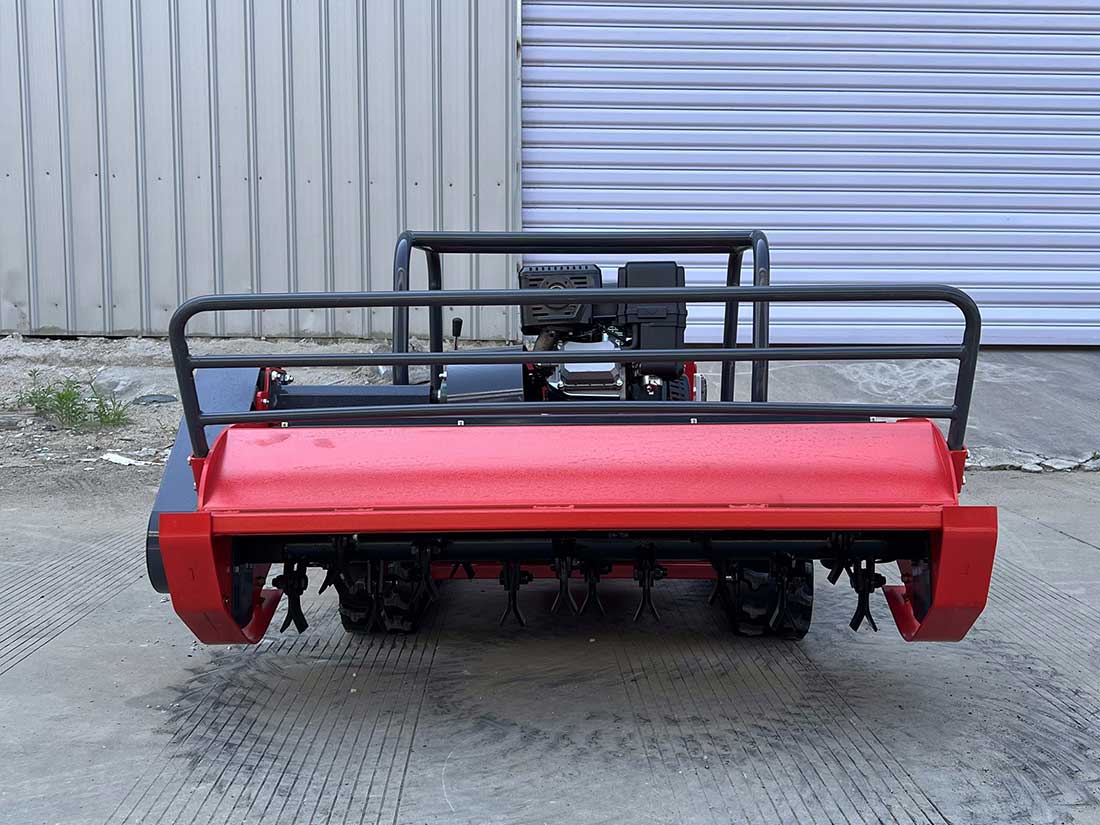
Why an Embankment Mower Can Make a Difference
An embankment mower is designed around the challenges associated with sloped and difficult vegetation-management areas.
When remote-controlled technology is incorporated into the equipment, the operator can control the mower from a separate position.
This can provide greater flexibility when working on difficult embankments.
Remote-controlled mowing equipment can allow the operator to manage:
- Machine direction
- Forward and reverse movement
- Travel speed
- Cutting operation
- Positioning
The exact functions depend on the equipment configuration and manufacturer.
The important point is that remote operation changes the way the operator interacts with the embankment mower.
Case Study Scenario: Restoring an Overgrown Roadside Embankment
Consider a hypothetical professional maintenance project involving an overgrown roadside embankment.
The area contains tall grass, uneven ground, moderate slopes, and several obstacles.
The contractor begins with a site inspection.
Step 1: Assess the Terrain
Before deploying the embankment mower, the team evaluates:
- Slope characteristics
- Ground firmness
- Surface irregularities
- Drainage areas
- Potential obstacles
- Vegetation density
- Access routes
This information determines how the equipment should be used.
Step 2: Establish a Safe Operating Zone
The operator identifies an appropriate position from which the remote-controlled embankment mower can remain visible throughout the operation.
People, vehicles, and other potential hazards should be kept outside the working zone.
Step 3: Position the Machine
The embankment mower is moved into the appropriate starting position.
The operator then checks the remote-control system and machine condition before beginning mowing.
Step 4: Begin Remote-Controlled Mowing
The operator controls the machine remotely while monitoring its movement and cutting operation.
On suitable terrain, this can provide a practical way to approach vegetation that would otherwise be difficult to access.
Step 5: Inspect the Finished Area
After mowing, the team checks the area for missed vegetation, obstacles, or other issues.
The machine is then inspected and prepared for its next operation.
Remote Control Adds Operational Flexibility
One of the most significant advantages of combining an embankment mower with remote-controlled technology is operator positioning.
On challenging terrain, the operator does not necessarily need to remain directly on the machine.
Instead, remote operation allows the operator to control the equipment from a suitable location while maintaining visual awareness of the machine.
This can be particularly relevant for:
- Steep roadside areas
- Uneven embankments
- Difficult-to-access green spaces
- Large vegetation-management sites
- Areas requiring specialized mowing equipment
Remote control should not be confused with autonomous operation. The machine still requires responsible human control and appropriate site management.
Traction Is Critical on Embankments
A professional embankment mower needs appropriate traction for its intended environment.
Slope conditions can vary significantly.
Dry, firm grass can behave differently from wet or loose ground. Uneven surfaces can also influence machine movement.
Professional equipment selection should therefore consider:
Ground Conditions
Assess whether the surface is dry, wet, loose, rocky, or irregular.
Inclination
The machine must remain within the manufacturer's specified slope capability.
Drive Configuration
The traction system should be appropriate for the expected terrain.
Weight Distribution
Machine balance can influence stability and maneuverability.
These factors should be considered before selecting an embankment mower for roadside maintenance.
Cutting Performance for Overgrown Vegetation
Overgrown roadside embankments may contain grass and other vegetation that has not been maintained regularly.
The appropriate cutting system depends on the vegetation being managed.
A professional embankment mower should therefore be selected according to:
- Grass height
- Vegetation density
- Stem thickness
- Mowing frequency
- Required finish
- Terrain conditions
A machine suitable for frequently maintained grass may not necessarily be appropriate for heavily overgrown vegetation.
Professional users should always match the cutting system to the intended application.
Efficiency in Roadside Vegetation Management
Roadside vegetation maintenance can involve large areas that require repeated cutting.
The supplied industry material specifically identifies roadside mowing equipment as an important professional application and highlights efficiency and smarter mowing technology as key themes.
In this context, an embankment mower can become part of a broader maintenance strategy.
The goal is not simply to increase cutting speed.
Professional efficiency also involves:
- Reducing unnecessary machine movement
- Planning the mowing route
- Choosing suitable equipment
- Maintaining consistent cutting quality
- Reducing avoidable downtime
- Performing preventive maintenance
A well-planned operation can make better use of both the machine and the operator.
Embankment Mower for Roadside Maintenance
Roadside embankments are particularly suitable for considering specialized mowing equipment because access can be complicated.
A conventional mower may not always provide the desired combination of access, control, and operator positioning.
An embankment mower equipped for remote operation can provide another option.
Potential applications include:
- Highway embankments
- Country-road verges
- Drainage slopes
- Railway-adjacent vegetation areas where permitted
- Public green-space slopes
- Agricultural embankments
- Large estate boundaries
Actual suitability depends on the specific machine, terrain, vegetation, and applicable safety requirements.
Safety Must Come Before Productivity
The term "safer" should never be interpreted as "risk-free."
Even a remote-controlled embankment mower requires careful operation.
Before mowing, professional teams should:
- Inspect the entire working area.
- Identify obstacles and unstable ground.
- Check weather and surface conditions.
- Confirm that people and animals are clear.
- Inspect the mower.
- Test the remote-control system.
- Maintain appropriate visibility.
- Stay within manufacturer operating limits.
Particular attention should be given to slopes, wet ground, hidden obstacles, and areas close to roads or traffic.
Remote-controlled mowing equipment can change the operator's position, but professional safety procedures remain essential.
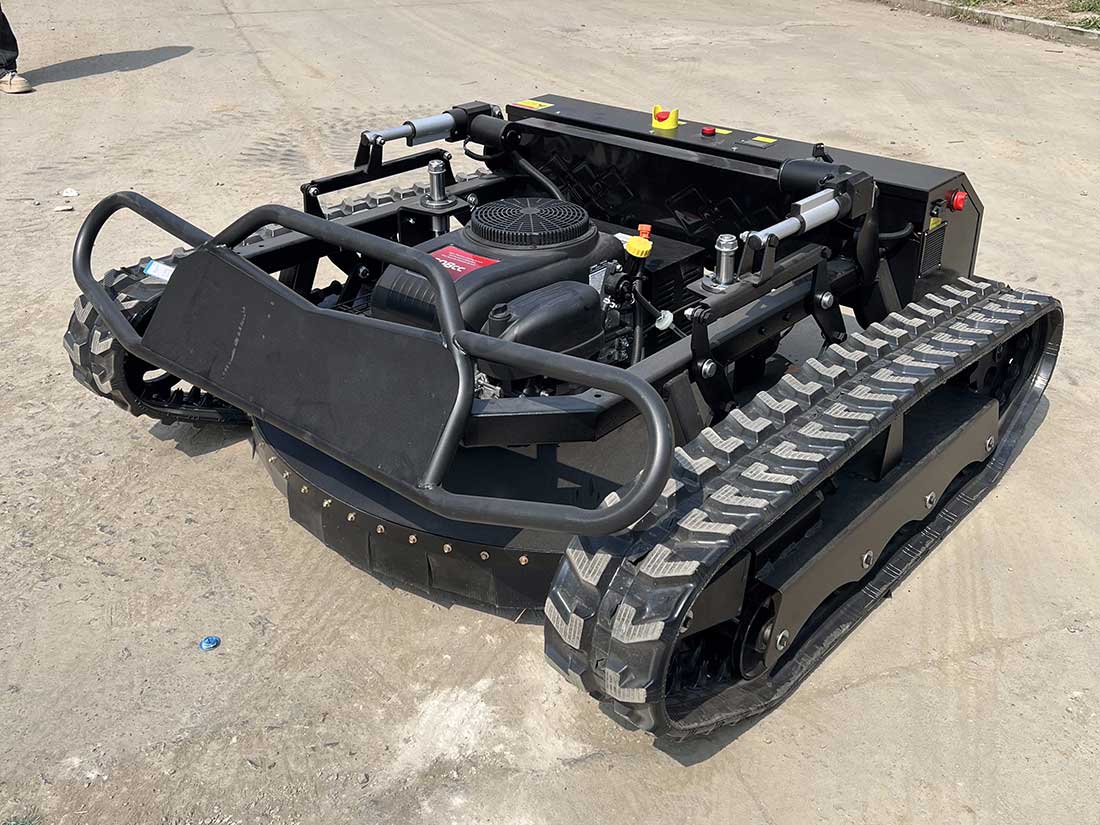
The Role of Professional Experience
An embankment mower is only as effective as the way it is selected and operated.
Experienced vegetation-management teams understand that the same machine can behave differently depending on terrain and conditions.
For example, a dry embankment with short grass presents a different operating environment from a wet slope covered with tall vegetation.
This is why professional equipment selection should consider the complete application rather than relying on one specification.
A practical assessment should include:
Terrain → Vegetation → Access → Traction → Cutting System → Remote Control → Maintenance
This approach can help contractors make more informed equipment decisions.
Embankment Mower vs. Conventional Lawn Mower
A standard lawn mower is primarily designed for maintained grass and relatively accessible terrain.
An embankment mower, by contrast, is considered for applications where terrain and access create additional challenges.
The difference becomes especially relevant when a project includes:
| Requirement | Conventional Lawn Mower | Embankment Mower |
|---|---|---|
| Flat lawn | Suitable | Suitable depending on model |
| Sloped terrain | Application-dependent | Designed for specialized applications |
| Uneven ground | Limited depending on design | More suitable when properly specified |
| Roadside vegetation | Application-dependent | Specialized option |
| Remote operation | Usually unavailable | Available on suitable remote-controlled models |
| Difficult access | Potential limitation | Designed around demanding applications |
This is not a universal performance comparison. Equipment capabilities vary considerably between manufacturers and models.
The correct choice should always be based on the actual project.
Remote-Controlled Mowing Equipment and Smart Maintenance
The development of remote-controlled mowing equipment is part of a wider shift toward smarter professional maintenance.
The source material emphasizes the growing role of smarter mowing technology in professional applications such as landscaping, agriculture, and roadside maintenance.
A remote-controlled embankment mower fits naturally into this development.
Instead of viewing mowing as a simple cutting task, professional teams can approach it as a complete operational process involving:
- Site planning
- Machine selection
- Remote operation
- Safety management
- Maintenance
- Productivity monitoring
This broader approach can help businesses use specialized equipment more effectively.
Maintenance and Long-Term Reliability
Regular maintenance is essential for any professional embankment mower.
Before and after operation, teams should follow the manufacturer's recommended inspection and maintenance procedures.
Areas that may require attention include:
- Cutting components
- Drive system
- Tracks or wheels
- Remote-control equipment
- Fasteners
- Lubrication points
- Protective components
The exact maintenance schedule depends on the machine.
For professional contractors, availability of replacement parts and technical support should also be considered when evaluating an embankment mower.
Long-term equipment reliability is closely connected to proper maintenance.
What Contractors Should Consider Before Buying
Before investing in an embankment mower, professional buyers should answer several questions.
What type of embankments will be maintained?
Identify the typical slope, surface, and access conditions.
What vegetation will be cut?
Grass, weeds, and heavier vegetation may require different cutting systems.
How frequently will the machine operate?
Frequent commercial use places greater demands on durability and maintenance.
Is remote control necessary?
Determine whether remote operation provides a meaningful advantage for the intended sites.
What support is available?
Evaluate spare parts, maintenance resources, technical assistance, and manufacturer support.
This process helps ensure that the selected embankment mower matches the actual requirements of the business.
A More Efficient Approach to Overgrown Roadside Embankments
Returning to the case study, the contractor's objective is not simply to clear the vegetation once.
The goal is to establish a repeatable maintenance process.
With an appropriately selected embankment mower, the contractor can organize future operations around:
Inspection → Planning → Remote Mowing → Quality Check → Maintenance
This structured workflow can help turn difficult roadside vegetation management into a more systematic professional task.
The equipment itself is only one part of the solution. Operator training, site preparation, maintenance, and proper working procedures are equally important.
Why Remote-Controlled Embankment Mowing Is Gaining Attention
The combination of an embankment mower and remote-control technology addresses several concerns faced by professional vegetation-management teams.
It offers the potential for:
- More flexible operator positioning
- Specialized access to difficult terrain
- Better control of mowing operations
- Greater adaptability across challenging sites
- Integration with modern professional mowing workflows
The supplied material's focus on smarter roadside mowing equipment and professional applications supports the broader industry trend toward specialized and more efficient mowing solutions.
Explore Professional Remote-Controlled Mowing Equipment
If your company maintains roadside embankments, slopes, large green areas, agricultural properties, or other difficult terrain, selecting the right embankment mower can make an important difference to your maintenance strategy.
For information about professional mowing equipment and remote-controlled mowing solutions, visit:
JY Lawn Mower – Professional Remote-Controlled Mowing Equipment
JY Lawn Mower provides information about mowing equipment designed for professional vegetation-management applications.
Conclusion
The embankment mower is a specialized solution for vegetation management where slopes, uneven ground, roadside access, and overgrown vegetation make conventional mowing more challenging.
When paired with remote-controlled mowing technology, an embankment mower can provide professional operators with greater flexibility in positioning and machine control.
The case of an overgrown roadside embankment demonstrates an important principle: successful vegetation management depends on the complete operating system, not simply the cutting machine.
Terrain assessment, appropriate equipment selection, traction, cutting capability, remote control, operator training, safety procedures, and maintenance all contribute to successful results.
For professional landscaping contractors, roadside maintenance teams, agricultural operators, municipalities, and property managers, remote-controlled mowing equipment can offer a modern approach to difficult vegetation-management tasks.
To explore professional mowing solutions and learn more about remote-controlled equipment, visit: