 English
 Spanish
 Portuguese
 French
 Italian
 Remote Mower
Slopes and uneven ground are among the most challenging environments for professional vegetation management. Uneven surfaces, changing terrain, restricted access, and dense vegetation can make conventional mowing operations more complicated and demanding.
This professional application scenario shows how a modern Lawn mower combined with remote-controlled mowing equipment can provide a smarter approach to difficult terrain.
For landscaping contractors, agricultural operators, municipalities, roadside maintenance teams, and professional land managers, selecting the right Lawn mower is about much more than cutting grass. Terrain adaptability, operator control, cutting performance, mobility, maintenance, and safe operating procedures all need to be considered.
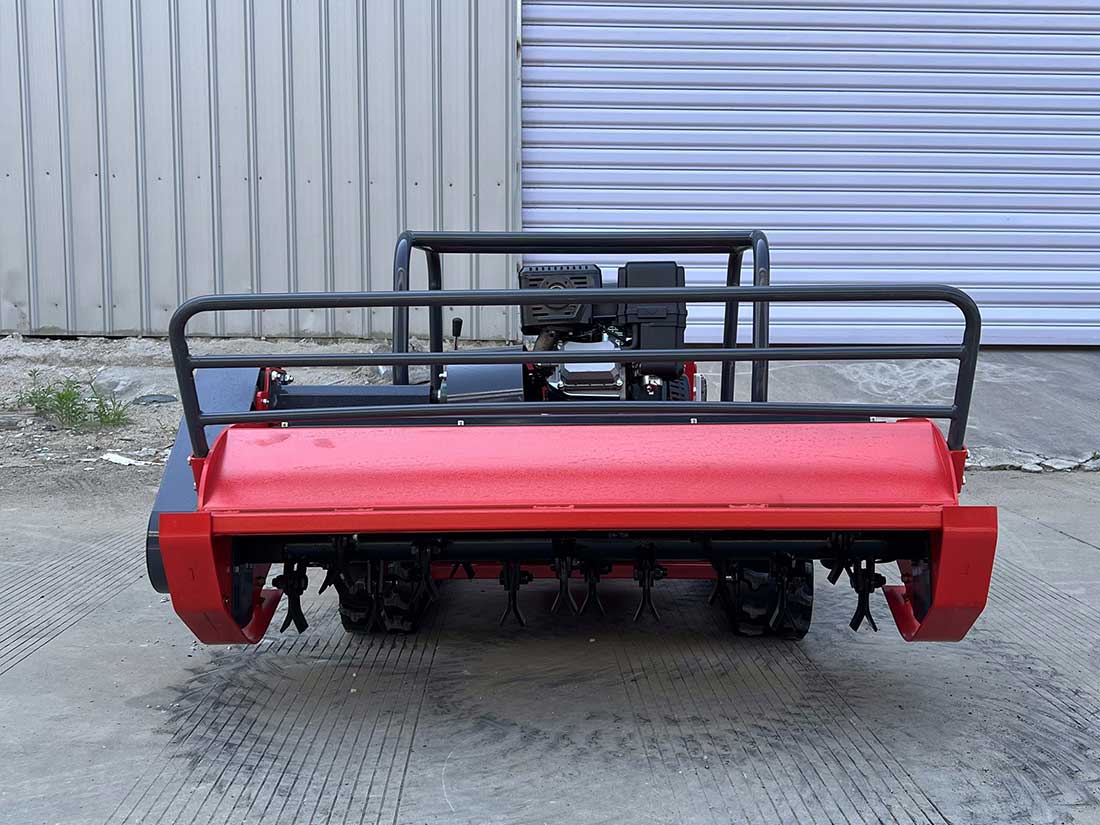
The Challenge: Mowing Slopes and Uneven Ground
A conventional Lawn mower performs most predictably when operating on accessible and relatively even surfaces. Difficult terrain introduces additional considerations.
Slopes can change continuously, while uneven ground may include bumps, depressions, loose soil, stones, tall vegetation, drainage channels, and obstacles. These conditions require equipment that can be selected and operated according to the specific characteristics of the site.
For professional users, a remote-controlled Lawn mower offers an alternative operating method.
Instead of requiring the operator to remain immediately alongside the machine, remote-controlled mowing equipment allows the operator to control the Lawn mower from a suitable position while maintaining visual awareness of the machine and working area.
This can make remote-controlled technology particularly useful for challenging mowing applications.
The Professional Solution
In this application scenario, the work begins with a site assessment.
Before operating the Lawn mower, the professional team evaluates the terrain, identifies slopes and obstacles, considers vegetation conditions, and determines suitable access and operating positions.
The remote-controlled Lawn mower is then selected according to the requirements of the site.
The objective is not simply to maximize cutting power. Instead, the equipment needs to provide an appropriate balance between mobility, cutting capability, control, and practical service requirements.
Once the work area is prepared, the operator can control the Lawn mower remotely and adjust its movement according to the terrain.
This creates a more flexible mowing workflow for areas where conventional equipment may be less convenient.
Why Remote-Controlled Technology Matters
The major advantage of remote-controlled mowing equipment is the combination of machine mobility and remote operation.
A remote-controlled Lawn mower can allow the operator to maintain a suitable distance from the machine while controlling its movement and mowing operation.
This approach can be valuable when working on:
- Slopes
- Uneven ground
- Embankments
- Large green areas
- Difficult-to-access vegetation
- Agricultural land
- Parks and landscaped areas
- Roadside vegetation
Professional mowing equipment is relevant to landscaping, agriculture, roadside maintenance, and difficult-terrain applications, making remote-controlled solutions an important option for professional vegetation-management operations.
Lawn mower Control on Uneven Terrain
A professional Lawn mower needs reliable control when the terrain changes.
On uneven ground, the operator may need to continuously adjust the machine's direction and working path. A remote-controlled Lawn mower provides direct control from the operator's remote-control system, allowing the mowing path to be adapted to the site.
This is particularly useful around:
- Trees and landscaping features
- Drainage areas
- Property boundaries
- Uneven vegetation zones
- Sloped sections
- Roadside edges
- Other obstacles
The goal is consistent, controlled mowing rather than simply moving the machine as quickly as possible.
For professional contractors, this distinction is important. A suitable Lawn mower should be selected according to the actual working conditions rather than based on a single specification.
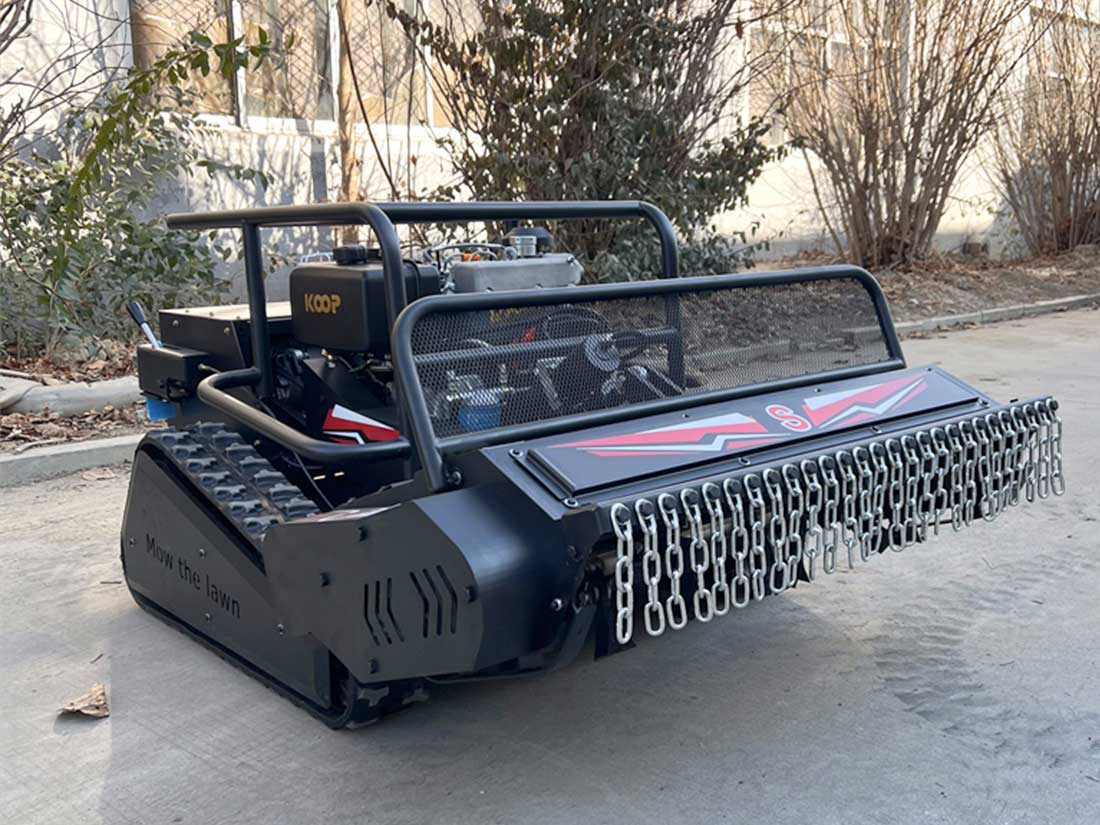
A Smarter Approach to Slope Mowing
Slope mowing requires careful planning.
Before using a Lawn mower on a slope, operators should understand the terrain, identify potential hazards, check the manufacturer's operating limits, and establish appropriate exclusion areas.
Remote-controlled mowing equipment can change the operator's position relative to the machine, but remote operation does not eliminate hazards.
Professional operators should always maintain visual control, keep people and animals away from the working area, and follow the manufacturer's instructions.
This disciplined approach allows the Lawn mower to become part of a professional mowing system rather than simply another piece of equipment.
Choosing the Right Cutting System
Not every Lawn mower is suitable for every type of vegetation.
Grass, dense vegetation, brush, agricultural growth, and roadside vegetation can have different cutting requirements. The cutting attachment should therefore be matched to the intended application.
When evaluating a professional Lawn mower, consider:
1. Terrain
Determine whether the machine will operate on flat areas, slopes, uneven ground, embankments, or mixed terrain.
2. Vegetation
Identify the type and density of vegetation that needs to be controlled.
3. Cutting System
Select a cutting attachment appropriate for the vegetation and desired finish.
4. Mobility
Consider how effectively the Lawn mower can move through the working environment.
5. Remote Control
Evaluate whether the remote-control system provides practical control and visibility for the intended operation.
6. Maintenance
Check access to wear components and follow the manufacturer's recommended maintenance schedule.
These factors provide a much more useful basis for equipment selection than focusing only on engine output or cutting width.
Lawn mower Applications in Professional Landscaping
Professional landscaping is one of the important application areas for modern Lawn mower equipment.
Large parks, commercial landscapes, public green spaces, and managed properties can contain a combination of flat areas and difficult sections.
A remote-controlled Lawn mower can provide additional flexibility when contractors encounter uneven ground or areas that are difficult to access using conventional machines.
The same principle applies to other professional vegetation-management operations.
Agricultural Applications
Agricultural operators frequently manage large outdoor areas where terrain and vegetation can vary considerably.
A professional Lawn mower may be used as part of vegetation-management work around fields, orchards, boundaries, and other agricultural environments.
Remote-controlled mowing equipment can be considered when operators need greater flexibility in managing difficult or irregular sections of land.
The appropriate solution depends on the terrain, vegetation, machine configuration, and specific operating requirements.
Roadside and Embankment Maintenance
Roadside maintenance presents another demanding application for professional Lawn mower equipment.
Roadside vegetation can occur along slopes, drainage areas, embankments, and boundaries where access may be restricted.
For contractors and municipalities, specialized roadside mowing equipment can help address these professional vegetation-management requirements. The available industry material specifically positions professional mowing equipment for roadside maintenance and other challenging outdoor applications.
Remote-controlled Lawn mower technology can therefore be evaluated as part of a broader roadside vegetation-management strategy.
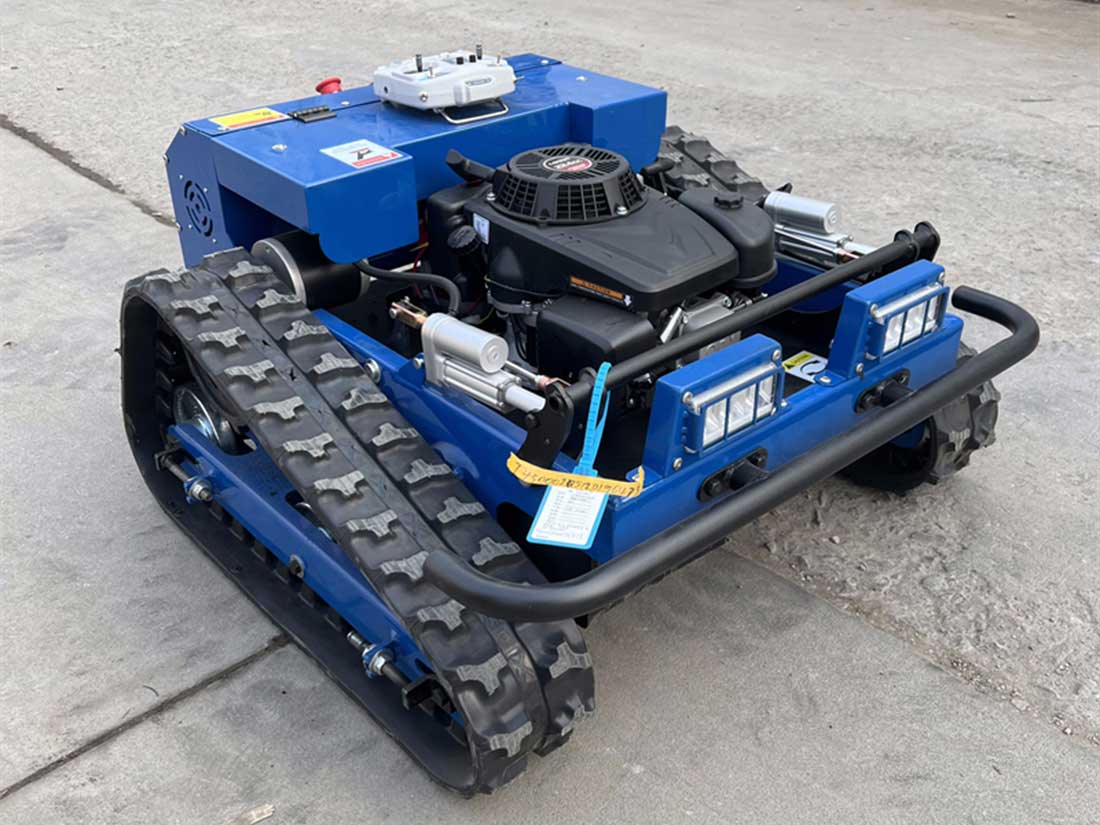
What Makes This Approach Smarter?
The success of a professional Lawn mower operation should not be measured only by how quickly grass is cut.
A smarter approach considers the entire workflow:
Site assessment → machine selection → cutting-system selection → remote operation → controlled mowing → inspection → maintenance
This process helps operators match the Lawn mower to the actual conditions of the job.
Remote-controlled mowing equipment can contribute to this approach by providing greater flexibility in operator positioning and machine control.
For demanding terrain, that flexibility can be just as important as cutting performance.
Maintenance for Reliable Lawn Mower Performance
Even the most advanced Lawn mower requires proper maintenance.
After operation, professional teams should inspect the cutting system, machine structure, tracks or wheels where applicable, guards, fasteners, hydraulic or electrical components where applicable, and other wear points according to the manufacturer's recommendations.
Vegetation and debris should also be removed appropriately so that the Lawn mower can be inspected before the next operation.
Regular maintenance helps identify wear or potential problems before they become larger operational issues.
For professional contractors, preventive maintenance is an essential part of maintaining equipment availability and predictable mowing performance.
Remote-Controlled Lawn Mower vs. Conventional Mowing
Conventional mowing equipment remains appropriate for many flat and accessible applications.
However, a remote-controlled Lawn mower provides a different operating strategy for difficult terrain.
The key question is not whether remote-controlled equipment is always better.
Instead, professional buyers should ask:
Which Lawn mower best matches the terrain, vegetation, working environment, and operational requirements?
For simple lawns, conventional equipment may be sufficient.
For slopes, uneven ground, embankments, roadside vegetation, agricultural areas, and other challenging applications, remote-controlled mowing equipment may provide useful additional flexibility.
Professional Lessons From the Application
This Lawn mower success scenario demonstrates an important principle in professional mowing: equipment should be selected around the job rather than the other way around.
A powerful Lawn mower is not automatically the best solution.
Professionals should evaluate:
- Terrain conditions
- Cutting requirements
- Machine mobility
- Remote-control capability
- Operator visibility
- Safety procedures
- Maintenance requirements
- Long-term operating needs
When these factors are considered together, a remote-controlled Lawn mower can become part of a more efficient and adaptable vegetation-management strategy.
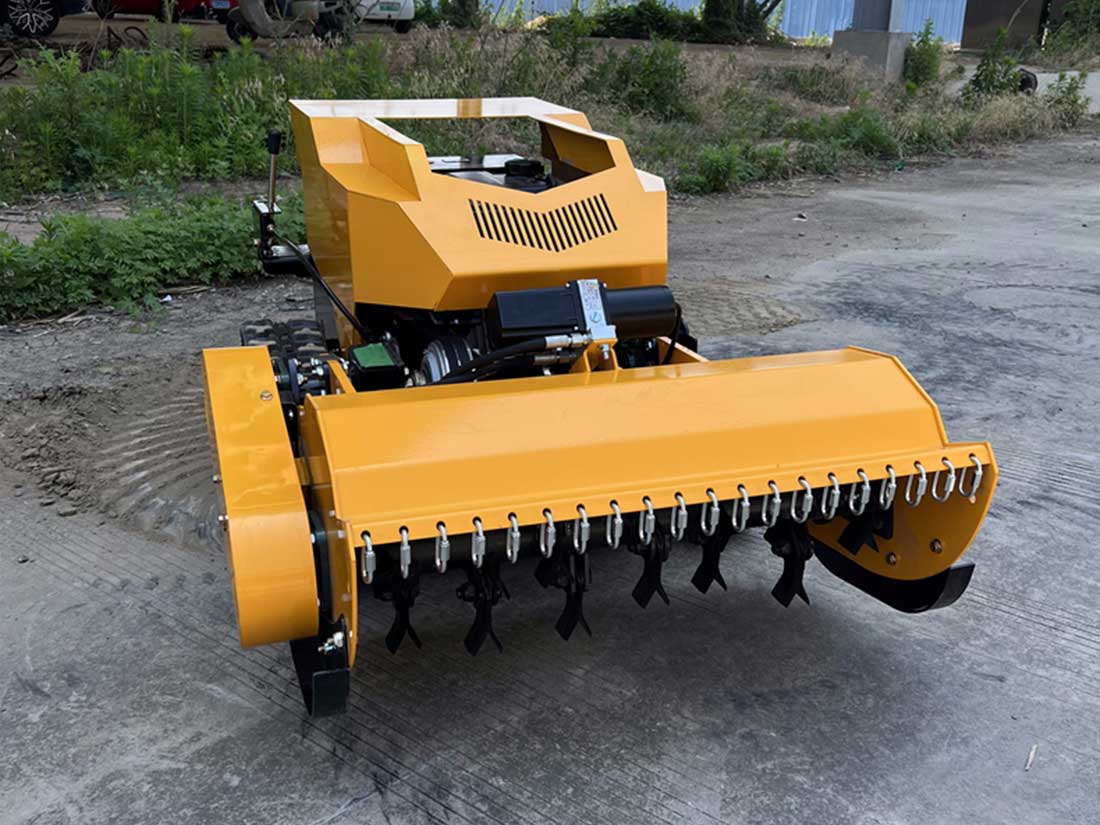
The Future of Lawn Mower Technology
The professional mowing industry is moving toward smarter and more adaptable equipment.
Remote control, specialized cutting systems, improved mobility, and professional machine design are changing how operators approach difficult terrain.
The future of the Lawn mower is therefore not simply about producing more power.
It is about developing equipment that can work effectively within real-world conditions.
For professional users, this means choosing a Lawn mower based on the complete application rather than relying on one specification.
Final Conclusion
Slopes and uneven ground require careful equipment selection and professional operating procedures.
This Lawn mower application scenario demonstrates how remote-controlled mowing equipment can provide an alternative approach to challenging vegetation-management work.
A remote-controlled Lawn mower can offer greater flexibility for professional applications involving slopes, uneven terrain, agricultural areas, landscaping projects, and roadside maintenance.
The right Lawn mower should combine appropriate cutting performance, terrain capability, operator control, mobility, serviceability, and safe operating practices.
If you are evaluating remote-controlled mowing equipment for professional applications, explore the solutions available from JY Lawn Mower.
With the right equipment strategy, a Lawn mower becomes more than a basic grass-cutting machine—it becomes an important component of a professional vegetation-management system designed for challenging terrain.