 English
 Spanish
 Portuguese
 French
 Italian
 Remote Mower
Mowing difficult terrain is one of the most demanding jobs in professional vegetation management. Steep slopes, uneven ground, dense vegetation, roadside embankments, orchards, and large landscapes can make conventional mowing slow, physically demanding, and difficult to control.
This is where the remote controlled lawn mower has become an increasingly valuable piece of professional mowing equipment. By allowing the operator to control the machine from a safer position while the mower works directly on challenging ground, remote-controlled mowing technology can improve control, maneuverability, and operational efficiency.
For landscaping contractors, agricultural operators, roadside maintenance teams, and other professional users, the remote controlled lawn mower is not simply a replacement for a conventional mower. It represents a different approach to managing terrain where operator access, machine stability, and cutting control are critical.
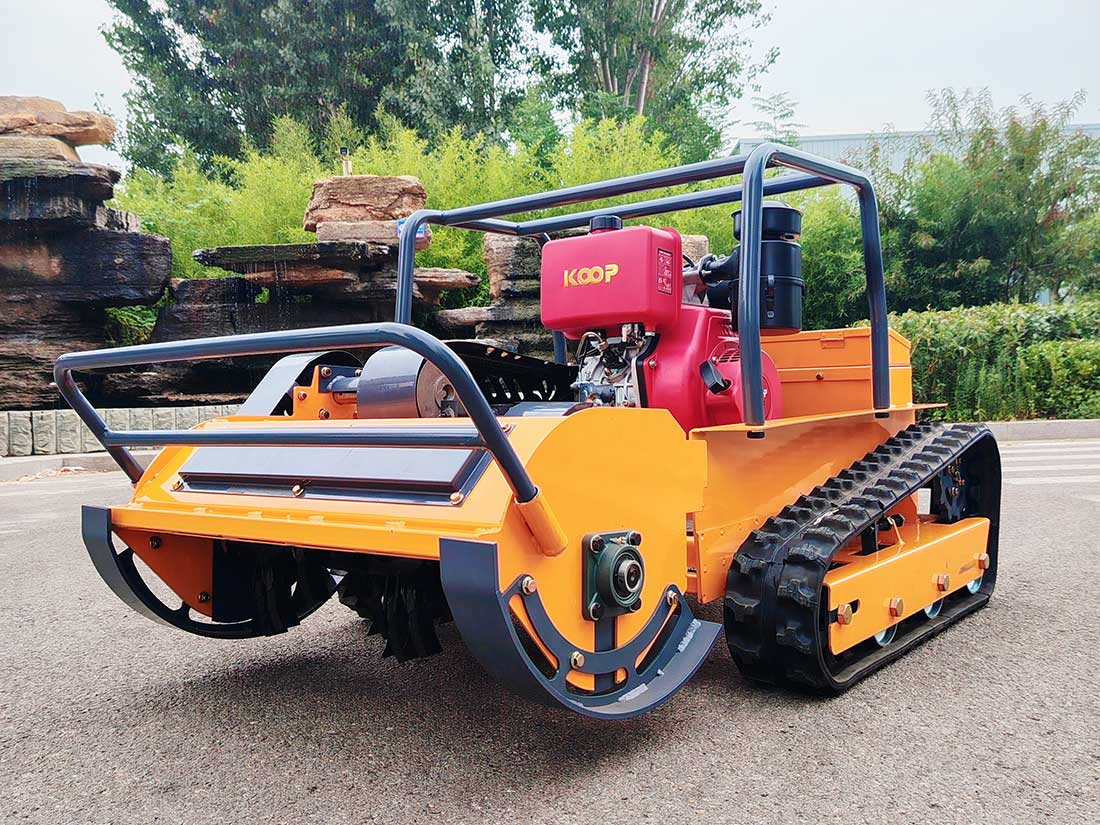
A Professional Application Scenario: Difficult Terrain
Consider a professional vegetation-management project involving a combination of sloping ground, irregular surfaces, tall grass, and areas that are difficult for conventional wheeled equipment to access.
The main challenge is not simply cutting the grass. The operator must also manage traction, machine positioning, cutting consistency, obstacles, and personal safety.
With a conventional walk-behind mower, the operator may need to physically follow the machine across uneven terrain. A ride-on mower may provide greater productivity on open ground but can become less practical when slopes, irregular surfaces, or restricted access become significant factors.
A remote controlled lawn mower changes the working method.
Instead of remaining directly beside or on the machine, the operator can control the mower remotely and maintain a better working position. This separation between operator and cutting machine is particularly valuable when working in locations where direct access is uncomfortable or potentially hazardous.
Why Remote Control Matters on Difficult Terrain
The most important advantage of a remote controlled lawn mower is not the remote itself. The real value comes from combining remote operation with a machine designed for demanding terrain.
Professional remote-controlled mowing equipment typically focuses on several key characteristics:
Strong traction
Stable crawler-based mobility
Precise steering
Responsive remote control
Appropriate cutting power
Robust construction
Ability to work on irregular surfaces
Operator visibility and control from a safer position
These characteristics work together.
A remote control system allows the operator to position the mower accurately without having to stand directly next to the cutting deck. Crawler tracks can help distribute machine weight across the ground and provide useful traction on surfaces where conventional wheels may struggle.
For professionals, this combination is what makes the remote controlled lawn mower particularly suitable for difficult terrain.
Case Study Focus: Slopes and Embankments
Sloped terrain is a classic example of where professional mowing equipment needs to perform differently from equipment designed primarily for flat lawns.
On a slope, machine positioning becomes more important. Uneven ground can create changes in traction, while vegetation density can vary considerably across the same working area.
A professional remote controlled lawn mower allows the operator to remain at a controlled distance while directing the machine across the slope.
This approach can provide several practical benefits.
First, the operator can maintain a better view of the mower and the working area. Second, remote operation reduces the need to physically walk behind a mower on challenging ground. Third, crawler mobility can help the machine maintain contact with the terrain while moving across irregular surfaces.
However, professionals should never assume that every remote-controlled mower can operate safely on every slope. Maximum operating angle, ground conditions, machine configuration, vegetation density, attachments, and weather conditions must all be evaluated before beginning work.
That is an important distinction between professional experience and simply selecting a machine based on a headline specification.
Tackling Uneven and Irregular Ground
Uneven terrain creates another challenge for conventional lawn mowing.
A property may contain depressions, rough patches, exposed roots, loose soil, stones, vegetation changes, and other obstacles. These conditions require more than cutting power. The mower must be capable of maintaining stable movement while the cutting system follows the terrain.
A remote controlled lawn mower equipped with suitable crawler mobility can be particularly useful in these environments.
The operator can adjust the machine's direction and position remotely, allowing more deliberate movement around difficult sections. Instead of trying to force a conventional mower through every part of the property, professionals can adapt the mowing route according to terrain conditions.
This is especially relevant for landscaping contractors managing large or irregular properties.
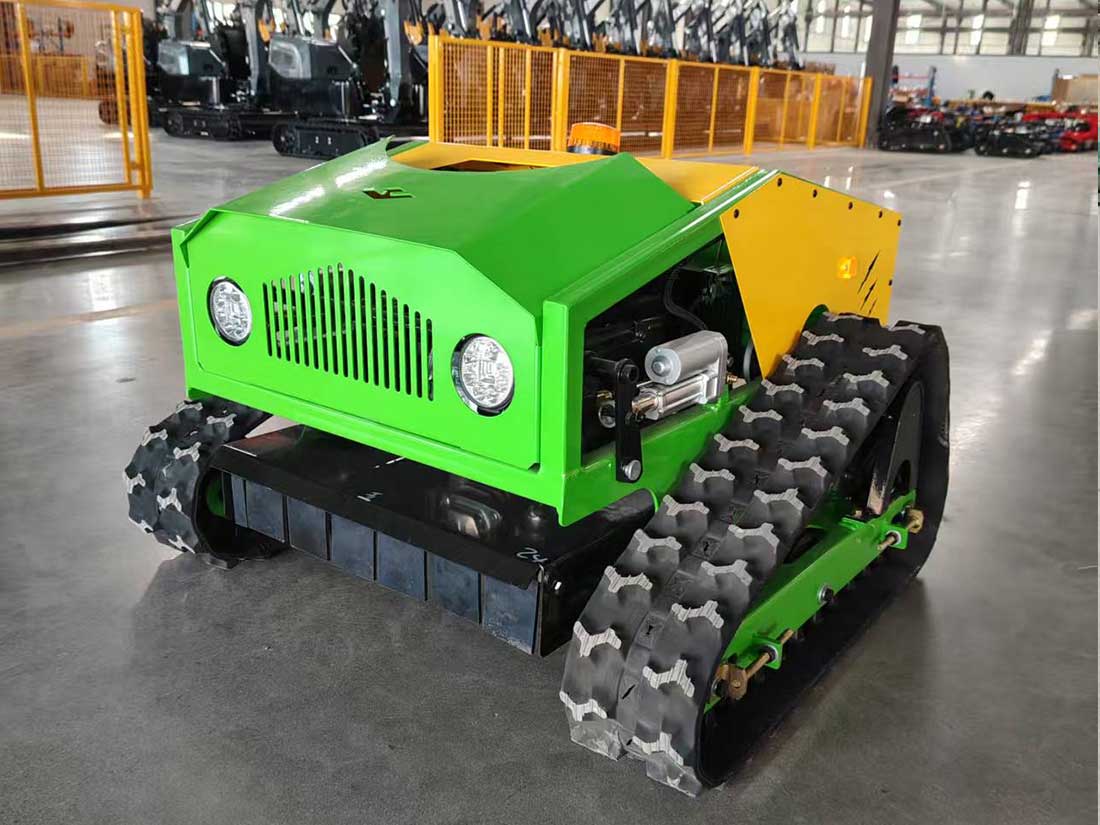
Application in Landscaping
Professional landscaping often involves much more than maintaining flat residential lawns.
Commercial properties, parks, large estates, recreational areas, and undeveloped sections of landscaped land can contain slopes and difficult-to-access vegetation.
A remote controlled lawn mower can become part of a broader professional mowing system for these applications.
The machine can be used for vegetation management in areas where conventional equipment is less convenient, while conventional lawn-care machinery remains available for easily accessible flat areas.
This creates a practical equipment strategy: use the right machine for the right terrain rather than expecting one mower to perform every task equally well.
Application in Agriculture and Orchards
Agricultural environments create another important use case.
Orchards and agricultural properties can contain narrow working areas, uneven ground, slopes, vegetation between trees, and areas that require regular maintenance.
In these environments, maneuverability is often just as important as cutting capacity.
A remote controlled lawn mower gives the operator greater freedom to position the machine while observing obstacles and vegetation from outside the machine's immediate operating area.
For orchard and agricultural contractors, remote-controlled mowing equipment can therefore complement other vegetation-management machinery, particularly when terrain conditions make conventional mowing less convenient.
Roadside and Embankment Maintenance
Roadside vegetation management presents a different set of challenges.
Roadside areas can include slopes, drainage channels, embankments, uneven ground, and vegetation growing close to infrastructure. Professional roadside mowing equipment must therefore combine cutting capability with precise machine control.
The source material highlights roadside mowing equipment as an important professional application for municipalities, landscaping companies, agricultural contractors, and road-maintenance professionals.
In suitable applications, a remote controlled lawn mower can provide a useful solution because the operator does not need to follow the cutting machine directly along the difficult section.
For roadside work, however, safety procedures remain essential. Traffic management, exclusion zones, visibility, machine inspection, and local regulations must always be considered.
Remote operation improves the working method; it does not eliminate the need for professional safety management.
Cutting Performance Still Matters
Remote control alone does not make a mower professional.
A high-quality remote controlled lawn mower must also have a cutting system appropriate to the vegetation being managed.
Professionals should consider:
Cutting width
Blade or flail configuration
Cutting height adjustment
Engine or motor output
Hydraulic capacity where applicable
Cooling system
Transmission design
Deck construction
Availability of replacement components
The correct cutting configuration depends on the application.
Fine grass on a maintained landscape is very different from tall vegetation, rough grass, brush, or roadside growth. Choosing the mower according to the actual vegetation is therefore more important than choosing a machine based only on maximum power.
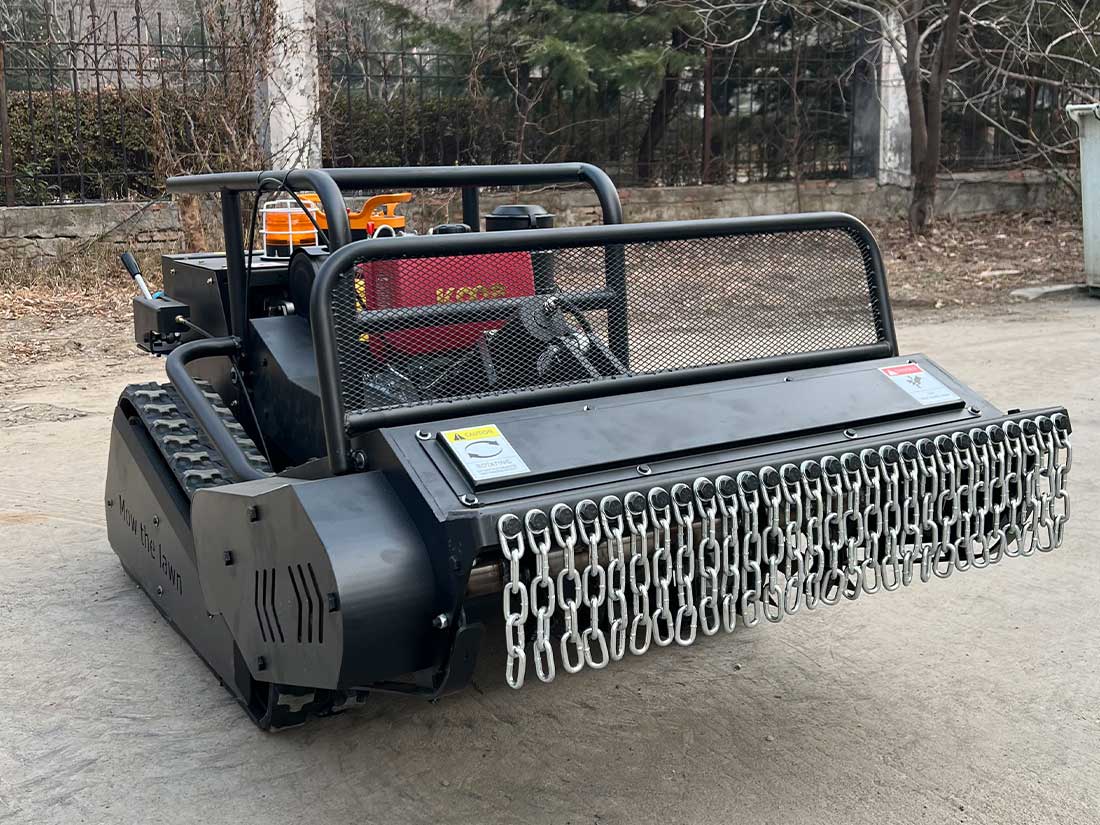
Productivity: More Than Cutting Speed
When professionals evaluate a remote controlled lawn mower, productivity should not be measured solely by theoretical cutting speed.
A better assessment considers the complete workflow.
How quickly can the machine reach the working area?
How easily can it maneuver around obstacles?
How much time does the operator spend repositioning equipment?
How difficult is it to maintain difficult sections?
How much physical effort is required from the operator?
How quickly can the machine be inspected, cleaned, and maintained between jobs?
These factors can have a major influence on real-world productivity.
In professional mowing operations, a machine that is easy to control and practical to deploy can provide greater value than one that simply has a higher nominal cutting speed.
The Importance of Operator Control
Another defining feature of the remote controlled lawn mower is the relationship between the operator and the machine.
Remote control should provide accurate steering and predictable machine response. Professionals need to be able to make small corrections rather than relying on large directional changes.
Good operator control is particularly important around:
Trees
Fences
Drainage channels
Roadside infrastructure
Buildings
Rocks
Uneven ground
Narrow access areas
The more complex the working environment, the more important precise control becomes.
Choosing the Right Remote-Controlled Mowing Equipment
Before purchasing a remote controlled lawn mower, professional users should evaluate the machine according to the actual working environment.
1. Evaluate the terrain
Identify slopes, uneven surfaces, soft ground, obstacles, and restricted access areas.
2. Check traction and mobility
Crawler systems can provide useful stability and traction, but the machine still needs to be appropriate for the specific soil and slope conditions.
3. Match the cutting system to vegetation
Grass, dense weeds, brush, and agricultural vegetation may require different cutting configurations.
4. Evaluate control range and responsiveness
The operator should have reliable control and sufficient visibility of the working area.
5. Consider maintenance
A professional machine should be practical to inspect, clean, lubricate, and service.
6. Consider the complete working system
The mower is only one component. Transport, access, operator training, spare parts, attachments, and maintenance support all affect long-term operating costs.
Maintenance Is Part of Professional Performance
Even the most capable remote controlled lawn mower requires regular maintenance.
After difficult terrain operations, professionals should inspect the undercarriage, cutting system, tracks, hydraulic components where applicable, fasteners, guards, and other high-load components.
Grass and debris should be removed from areas where accumulation could affect cooling or moving components.
Cutting components should also be inspected regularly. Dull or damaged blades can reduce cutting quality and increase unnecessary load on the machine.
Professional operators should follow the manufacturer's maintenance schedule rather than waiting until a mechanical problem appears.
Preventive maintenance is especially important for contractors who depend on mowing equipment for continuous commercial operations.
What This Professional Case Study Demonstrates
The main lesson from this difficult-terrain application is that mowing technology should be selected according to the working environment.
A remote controlled lawn mower is particularly valuable when conventional mowing methods become limited by terrain, access, operator positioning, or maneuverability.
The technology combines remote operation with specialized mobile mowing equipment to create a more controlled approach to vegetation management.
It can be relevant to:
Landscaping companies
Agricultural contractors
Orchard operators
Roadside maintenance teams
Municipal vegetation-management departments
Property-management companies
Professional land-maintenance contractors
For these users, the objective is not simply to purchase a remote-controlled machine. The objective is to develop a safer, more controlled, and more efficient mowing workflow.
Why the Industry Is Moving Toward Remote-Controlled Mowing
The development of professional mowing equipment is increasingly focused on solving practical problems rather than simply increasing machine size.
Difficult terrain is a good example.
Traditional equipment remains highly effective for many flat and accessible areas. But as the working environment becomes steeper, rougher, narrower, or more difficult to access, the advantages of remote-controlled mowing become increasingly relevant.
A remote controlled lawn mower gives professionals another tool for addressing these conditions.
Combined with crawler mobility, appropriate cutting technology, strong construction, and effective operator control, remote-controlled mowing equipment can provide a highly practical solution for challenging vegetation-management tasks.
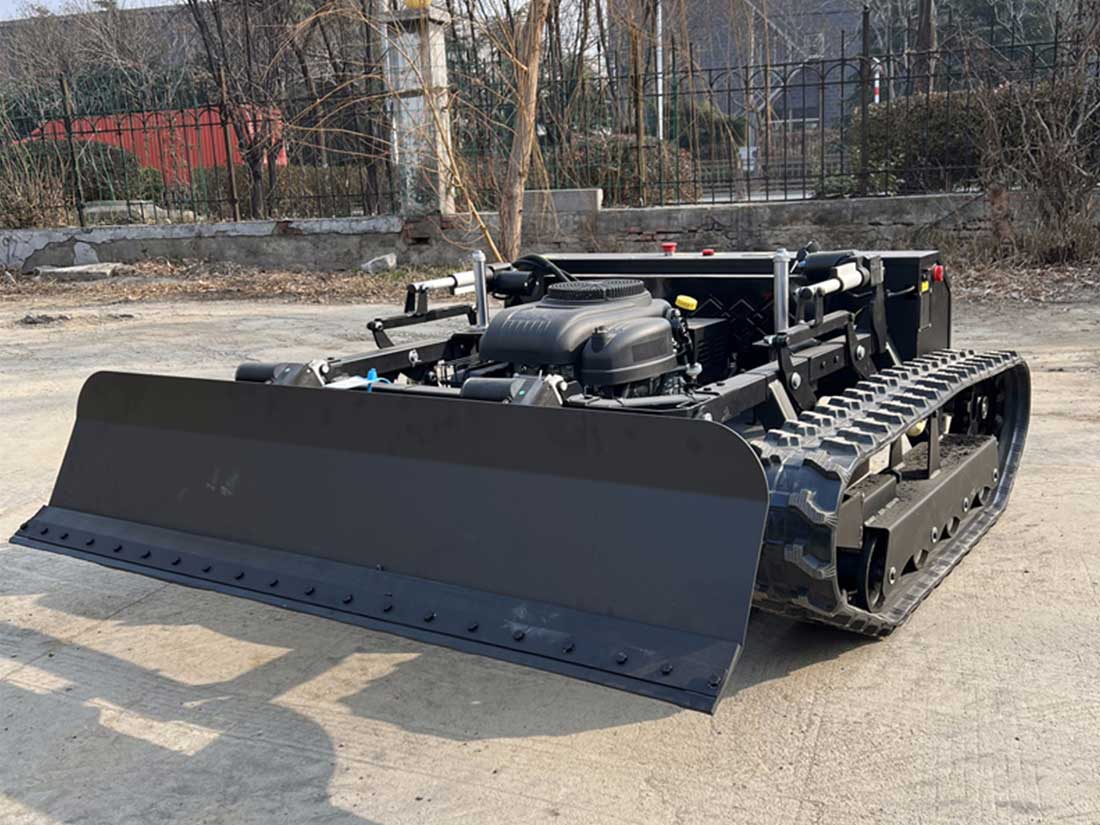
Final Thoughts
The professional value of a remote controlled lawn mower comes from how the entire machine works as a system.
Remote operation can improve operator positioning and control. Crawler mobility can help the machine negotiate difficult surfaces. A suitable cutting system can handle the vegetation. Robust construction can support demanding professional workloads.
Most importantly, these features allow professionals to approach difficult terrain with a machine specifically designed for the working conditions rather than adapting conventional equipment beyond its ideal operating environment.
If your business manages slopes, uneven ground, orchards, roadside vegetation, large landscapes, or other challenging areas, it is worth evaluating modern remote-controlled mowing equipment as part of your professional equipment strategy.
For more information about professional remote-controlled mowing solutions, explore JY Lawn Mower and review the equipment options available for difficult-terrain mowing applications: JY Lawn Mower.