 English
 Spanish
 Portuguese
 French
 Italian
 Remote Mower
Mowing a steep slope or difficult terrain is fundamentally different from maintaining a flat lawn. Uneven ground, loose soil, tall vegetation, obstacles, and changes in elevation can make conventional mowing operations more demanding and increase the risks faced by operators.
For professional landscaping companies, agricultural contractors, municipalities, and roadside maintenance teams, choosing the right machine is therefore not only a question of cutting performance. It is also a question of operator safety, machine stability, control, and productivity.
This is where the remote controlled lawn mower has become an increasingly important solution. By allowing the operator to control the machine from a safe distance, a remote controlled lawn mower can reduce the need for direct exposure to challenging mowing conditions while maintaining precise control over the cutting operation.
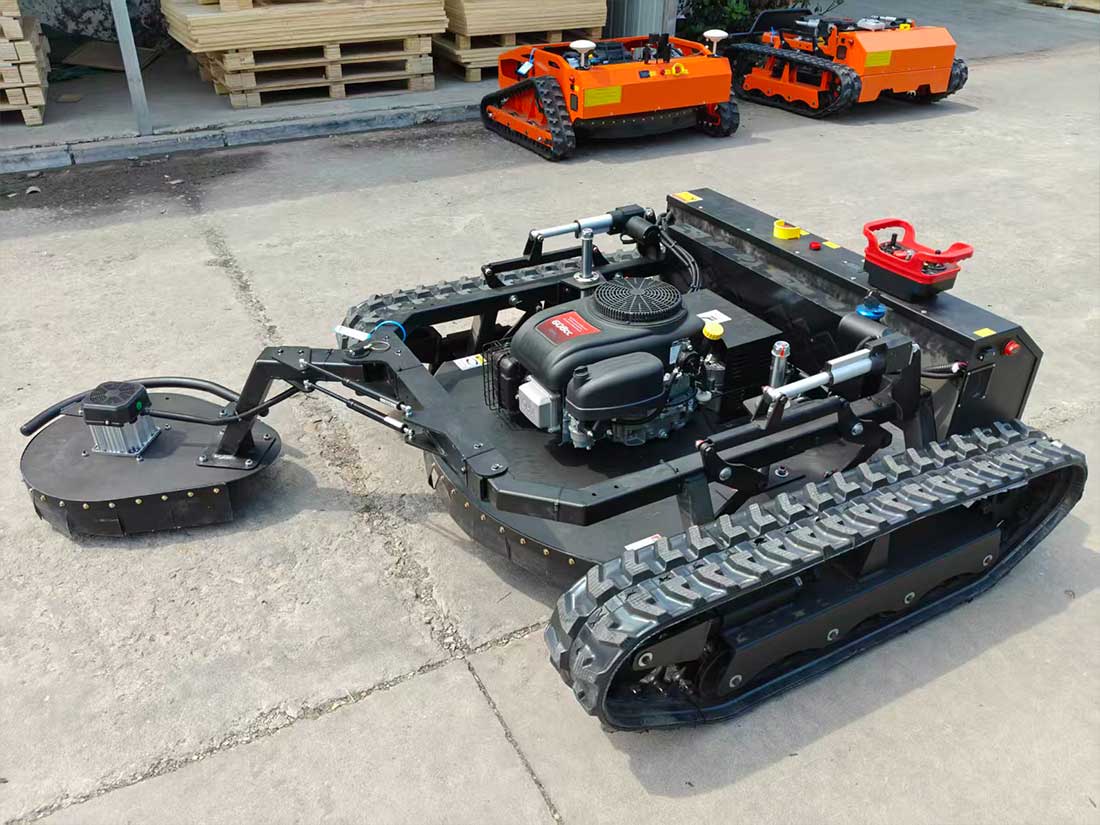
Why Slopes Require Specialized Mowing Equipment
Slopes create several challenges that are not normally encountered on level ground.
As the gradient increases, traction becomes more important. The machine must maintain stable contact with the terrain while moving across or along the slope. At the same time, the operator needs to maintain a clear view of the cutting area and be able to react quickly when the terrain changes.
A conventional walk-behind or ride-on mower can become difficult to manage in such environments. Uneven surfaces can affect steering, traction, and cutting consistency.
A remote controlled lawn mower approaches the problem differently. Instead of requiring the operator to remain immediately beside or on the machine, the operator can control the mower remotely and select a suitable position from which to observe the operation.
This separation between the operator and the cutting machine is one of the most important advantages of remote-controlled mowing technology.
How a Remote Controlled Lawn Mower Improves Operator Safety
Safety is one of the strongest reasons professionals consider a remote controlled lawn mower for demanding terrain.
When mowing a steep embankment, roadside slope, ditch, or uneven field, the operator may be exposed to difficult footing, moving machinery, flying debris, and unpredictable terrain conditions.
With a remote controlled lawn mower, the operator can remain away from the immediate cutting zone while maintaining control of the machine.
The remote-control system can allow the operator to manage functions such as:
Forward and reverse movement
Steering
Travel speed
Cutting operation
Direction changes
Machine positioning
Emergency stopping, depending on the machine configuration
This does not mean remote control eliminates all operating risks. Professional users still need to assess the terrain, maintain appropriate safety distances, follow manufacturer instructions, and receive proper training.
However, a remote controlled lawn mower can fundamentally change the operator's position in relation to the hazard.
Crawler Mobility for Uneven Terrain
Remote control is only part of the equation.
For a remote controlled lawn mower intended for difficult terrain, the machine's mobility system is equally important. Crawler tracks are commonly used on professional slope mowers because they can provide a large contact area with the ground and help maintain traction on irregular surfaces.
Compared with equipment designed primarily for flat lawns, a tracked remote controlled lawn mower can be better suited to environments containing:
Steep slopes
Rough grassland
Uneven fields
Orchard areas
Embankments
Roadside vegetation
Ditches
Areas with limited access
The combination of crawler mobility and remote operation gives professional operators greater flexibility when planning mowing routes.
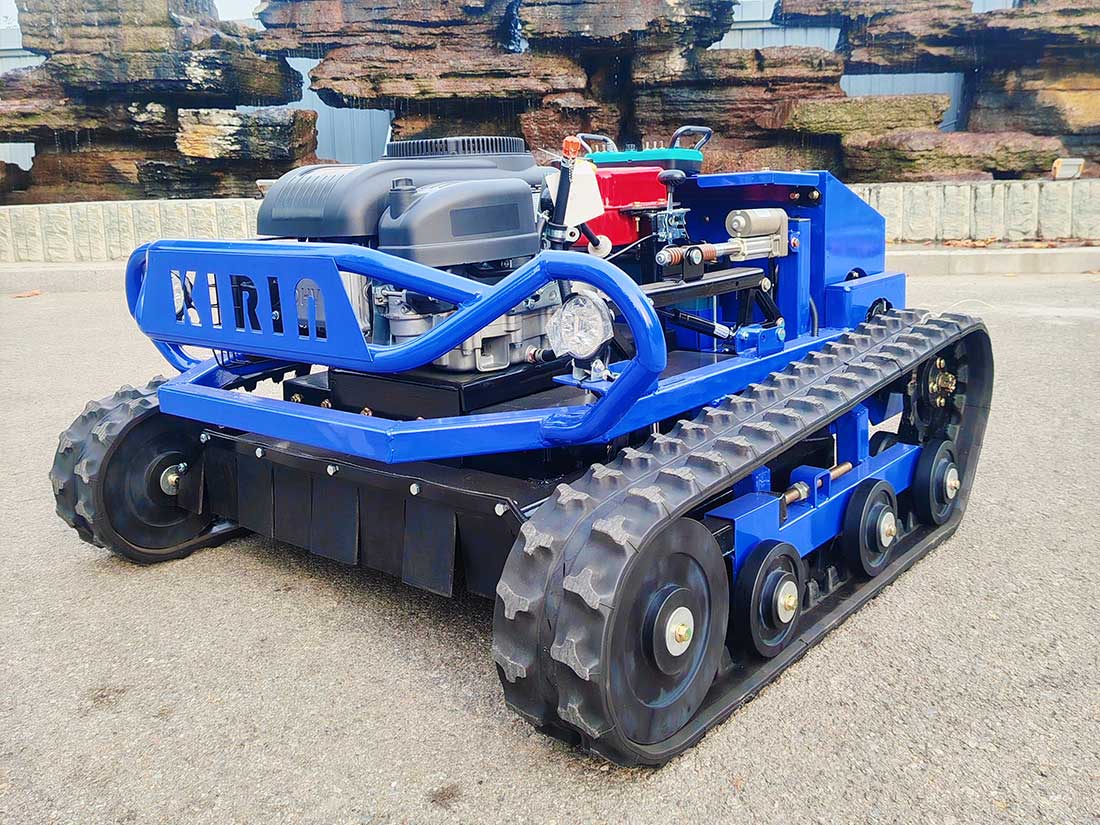
A Professional Approach to Slope Mowing
Experienced mowing contractors understand that the machine is only one part of a safe operation.
Before sending a remote controlled lawn mower onto a difficult slope, the working area should be evaluated carefully.
Important considerations include:
1. Terrain Condition
Inspect the surface for loose soil, stones, holes, tree roots, hidden obstacles, and areas where the ground may have poor load-bearing capacity.
2. Slope Characteristics
The actual gradient and direction of travel should be considered. A machine's permitted operating conditions must always be checked against the manufacturer's specifications.
3. Vegetation
Tall, dense grass requires different cutting performance from short maintained turf. Tough vegetation may require a more robust cutting system.
4. Visibility
The operator should maintain a clear view of the remote controlled lawn mower and the surrounding working area whenever the machine is in operation.
5. Obstacles
Trees, rocks, fences, drainage structures, posts, and other obstacles should be identified before mowing begins.
This systematic approach is one reason professional users increasingly treat a remote controlled lawn mower as a specialized piece of vegetation-management equipment rather than simply another lawn mower.
Better Control on Difficult Ground
Control is especially important when mowing irregular terrain.
A professional remote controlled lawn mower allows the operator to adjust the machine's position without physically following it across every part of the terrain.
For example, when approaching an uneven section, the operator can slow the machine, change its direction, or stop the cutting operation when necessary.
This level of control can be particularly valuable when working near drainage channels, roadside edges, steep embankments, or areas where ground conditions change within a short distance.
The goal is not simply to make the machine remote-controlled. The goal is to create a mowing system that combines mobility, visibility, control, and cutting performance.
Remote Controlled Lawn Mower for Roadside Maintenance
Roadside vegetation management is another professional application where remote-controlled mowing technology can provide practical advantages.
Roadside slopes and embankments can be difficult to access with conventional equipment. Operators must also consider nearby traffic, drainage infrastructure, uneven ground, and limited working space.
A remote controlled lawn mower can help create greater separation between the operator and the mowing machine.
For municipalities, landscaping contractors, and vegetation-management companies, this can make remote-controlled equipment an attractive option for maintaining difficult roadside areas.
Modern professional mowing equipment is increasingly being used across landscaping, agriculture, roadside maintenance, and other challenging environments.
Agricultural and Landscaping Applications
The benefits of a remote controlled lawn mower extend beyond roadside maintenance.
In agriculture, remote-controlled machines can be useful for managing grass and vegetation in orchards, fields, slopes, and areas where conventional tractors or ride-on equipment may be difficult to operate.
In professional landscaping, a remote controlled lawn mower can be considered for large properties, parks, rough grass areas, slopes, and irregular landscapes.
The same basic principle applies across these applications: the machine needs to reach the vegetation, maintain effective cutting performance, and remain controllable while the operator stays in an appropriate position.
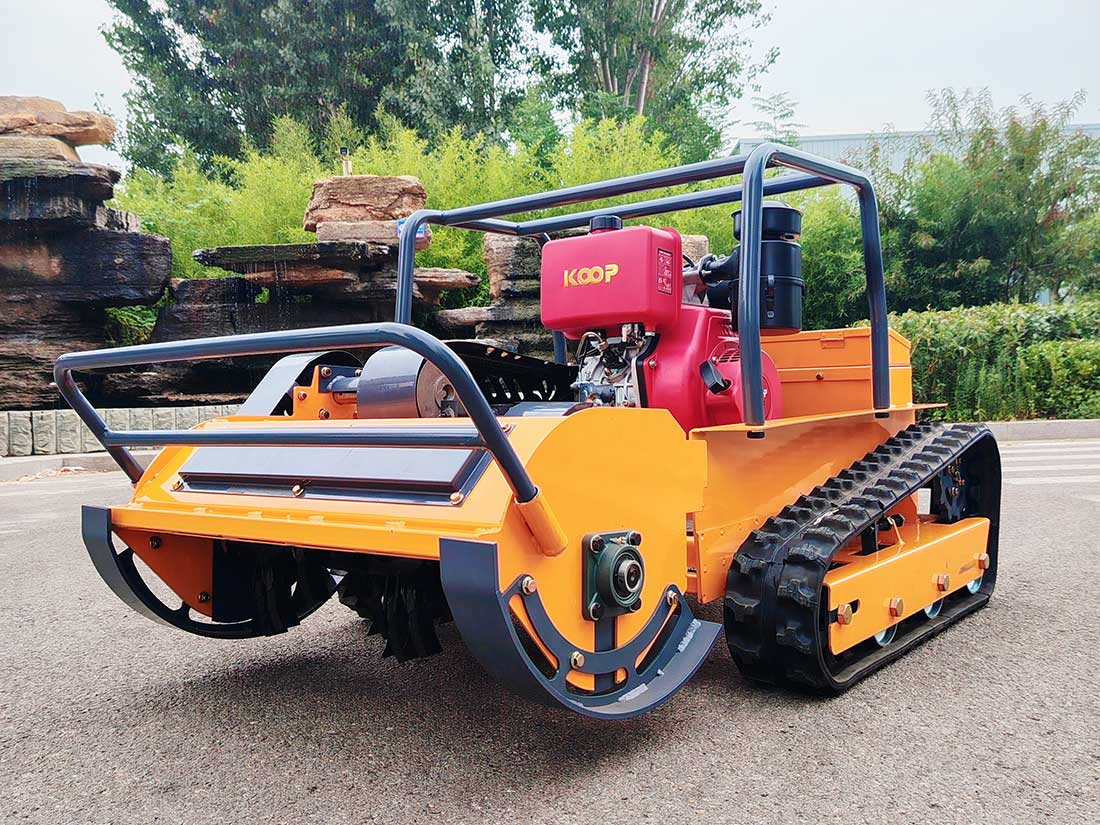
Cutting Performance Still Matters
Safety should never be considered separately from mowing quality.
A remote controlled lawn mower used for professional work must provide an appropriate cutting system for the vegetation being managed.
Depending on the application, professionals may need to consider different cutting technologies, including rotary or flail-style systems.
The right choice depends on factors such as:
Grass height
Vegetation density
Presence of weeds or brush
Required finish quality
Working speed
Terrain conditions
Frequency of mowing
For dense and rough vegetation, a heavy-duty cutting system can be particularly important. For maintained grass areas, cutting precision and finish quality may have greater priority.
Therefore, when selecting a remote controlled lawn mower, buyers should evaluate the complete machine rather than focusing exclusively on its remote-control function.
Productivity and Labor Efficiency
Safety is a major advantage, but productivity is another reason professional contractors are interested in a remote controlled lawn mower.
On difficult terrain, conventional mowing can require additional preparation, slower operation, and greater physical effort from operators.
A properly configured remote controlled lawn mower can allow one trained operator to control the machine while maintaining an appropriate observation position.
This can make the workflow more efficient, particularly when the same machine is used across multiple difficult areas.
The productivity advantage will depend on terrain, vegetation, machine specifications, operator experience, and working conditions. Professional buyers should therefore evaluate performance using their actual application rather than relying solely on theoretical specifications.
Choosing the Right Remote Controlled Lawn Mower
Not every remote controlled lawn mower is designed for the same application.
Before purchasing, professional users should evaluate several technical factors.
Traction and Stability
Check the machine's track system and its suitability for the intended terrain.
Cutting Width
A wider cutting system may increase productivity on large open areas, while a narrower configuration can be advantageous in restricted spaces.
Cutting System
Choose the cutting technology according to the type of grass, weeds, brush, and vegetation that must be managed.
Remote-Control Range and Control
The operator interface should provide precise and intuitive control over machine movement and cutting functions.
Serviceability
Regular maintenance is essential for professional equipment. Easy access to critical components can reduce downtime.
Parts and Technical Support
For commercial users, long-term support can be just as important as the initial machine purchase.
A reliable remote controlled lawn mower should be viewed as a long-term working asset rather than simply a piece of machinery.
Maintenance for Long-Term Performance
Even the most advanced remote controlled lawn mower requires regular inspection and maintenance.
Before operation, professional users should check the cutting components, tracks, transmission system, hydraulic or electrical components where applicable, and safety systems.
After mowing, grass and debris should be removed from areas where accumulation could interfere with machine performance.
Cutting blades or flails should also be inspected regularly. Damaged or excessively worn cutting components can reduce performance and increase operating risks.
For remote-controlled equipment, the remote-control system and communication components should also be maintained according to the manufacturer's recommendations.
Preventive maintenance helps protect machine reliability and reduces unexpected downtime.
The Future of Professional Mowing
The development of the remote controlled lawn mower reflects a broader change in professional vegetation management.
Modern mowing equipment is no longer judged only by horsepower or cutting width. Professionals increasingly consider how technology can improve the entire workflow.
Remote operation, tracked mobility, robust cutting systems, and improved machine control are becoming important components of modern mowing solutions.
For difficult terrain, the value of a remote controlled lawn mower is particularly clear: it allows the operator to control a powerful mowing machine without necessarily entering the most challenging part of the working area.
That combination of safety, control, mobility, and productivity is helping remote-controlled equipment establish a stronger position in professional landscaping, agriculture, roadside maintenance, and vegetation management.
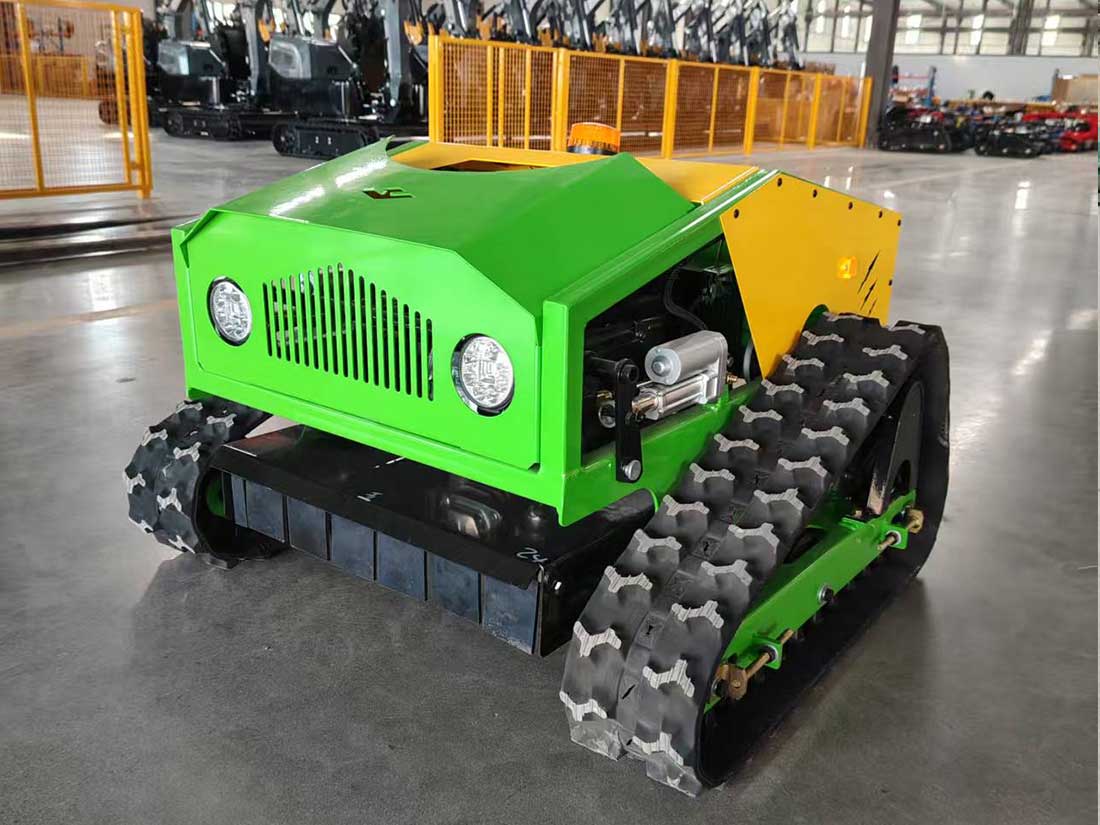
Conclusion
A remote controlled lawn mower can provide a practical solution for professionals who need to maintain slopes, embankments, uneven terrain, roadside vegetation, and other difficult areas.
Its greatest advantage is not simply the ability to operate a mower from a distance. The real value comes from combining remote control with appropriate traction, a professional cutting system, machine stability, precise control, and a well-planned operating procedure.
For companies looking to improve the safety and efficiency of challenging mowing operations, a remote controlled lawn mower deserves serious consideration.
If you are looking for professional remote-controlled mowing equipment for slopes, difficult terrain, landscaping, agriculture, or roadside vegetation management, explore the solutions available from JY Lawn Mower and learn more about its professional equipment range at JY Lawn Mower.