 English
 Spanish
 Portuguese
 French
 Italian
 Remote Mower
Maintaining large landscapes is very different from mowing a small residential lawn. Professional operators may need to manage parks, agricultural properties, roadside vegetation, commercial grounds, orchards, embankments, and extensive areas where terrain conditions can change constantly.
For these demanding applications, productivity depends on more than cutting width or engine power. Operators need equipment that combines power, mobility, control, safety, and efficiency.
A remote controlled lawn mower brings these capabilities together in a single professional mowing solution. By allowing operators to control the machine remotely, a remote controlled lawn mower can reach difficult areas while allowing the operator to remain at a suitable observation position.
As professional vegetation management continues to evolve, the remote controlled lawn mower is becoming an increasingly interesting option for contractors and organizations responsible for maintaining large landscapes.
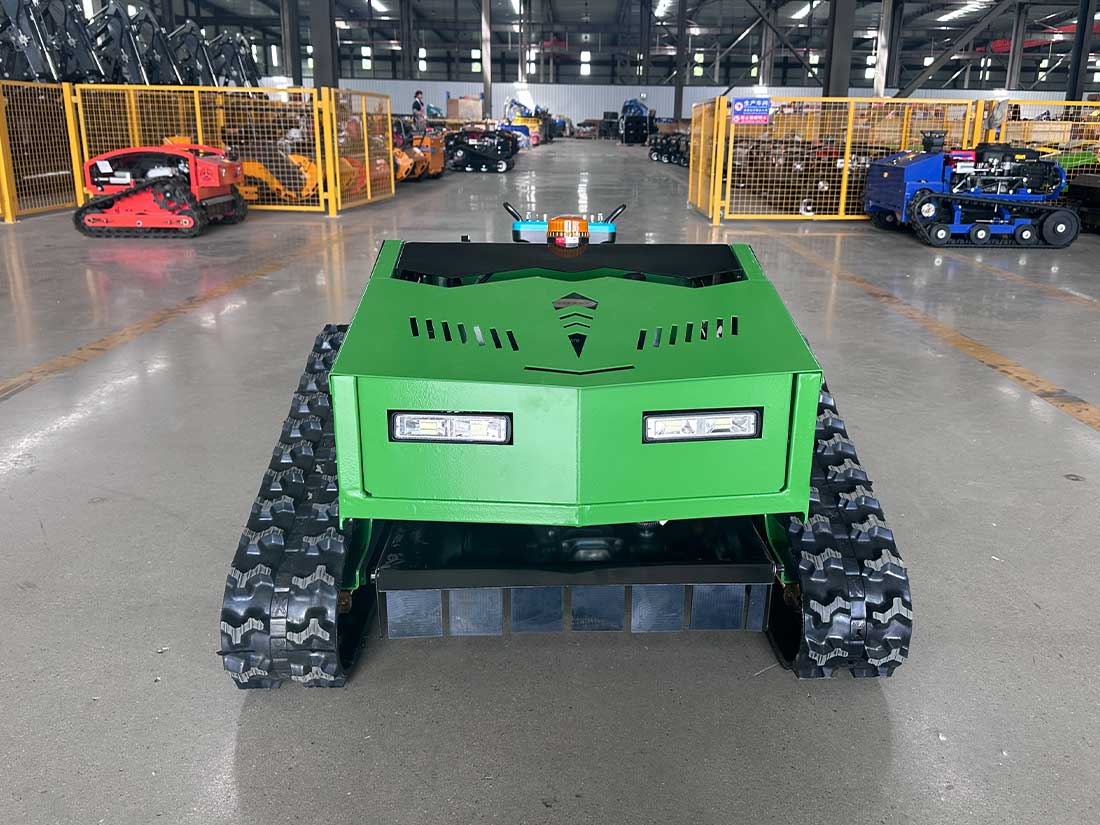
Why Large Landscapes Require Professional Mowing Equipment
Large properties often contain a combination of different mowing conditions.
One section may be relatively flat and open, while another may contain slopes, uneven ground, tall grass, drainage channels, trees, or other obstacles.
Using the same approach across the entire property can be inefficient.
A professional remote controlled lawn mower allows operators to adapt their mowing strategy to changing terrain while maintaining direct control over the machine.
For large-scale landscape management, important factors include:
Cutting capacity
Machine mobility
Terrain adaptability
Operator visibility
Working efficiency
Maintenance requirements
Safety
Long-term operating costs
The best remote controlled lawn mower is therefore not necessarily the machine with the highest theoretical power. It is the machine whose configuration matches the actual working environment.
The Power Advantage of a Remote Controlled Lawn Mower
Large landscapes often require a mower capable of handling substantial amounts of vegetation.
Tall grass, dense growth, weeds, and rough vegetation can place significantly more demands on the cutting system than regularly maintained turf.
A professional remote controlled lawn mower can be equipped with a robust cutting system designed for demanding vegetation-management applications.
Depending on the machine configuration and intended application, professional users may consider rotary or flail-style cutting systems.
The selection should be based on the vegetation, desired finish, terrain, and frequency of mowing.
Power is important, but effective mowing performance also depends on the relationship between the power system, transmission, cutting mechanism, and machine design.
This is where professional experience becomes particularly important when selecting a remote controlled lawn mower.
Remote Control Creates a More Flexible Workflow
One of the defining features of a remote controlled lawn mower is the ability to separate the operator from the machine.
On a large, open lawn, this may primarily provide convenience. On difficult terrain, however, remote operation can become much more significant.
The operator can control the remote controlled lawn mower while standing at an appropriate position with a clear view of the working area.
This can be particularly useful when mowing:
Slopes
Embankments
Rough grassland
Roadside vegetation
Orchard areas
Large commercial properties
Uneven fields
Difficult-to-access green spaces
The result is a different approach to professional mowing. Instead of following the machine closely, the operator can focus on controlling its route and monitoring the cutting process.
Crawler Mobility for Large and Uneven Areas
A large landscape is rarely completely uniform.
Even extensive parks and agricultural properties can contain slopes, soft ground, uneven surfaces, and areas where conventional wheeled equipment becomes less convenient.
A tracked remote controlled lawn mower can provide a useful solution for these conditions.
Crawler tracks distribute the machine's weight across a larger contact area and can provide strong traction when working on appropriate terrain.
For professional users, tracked mobility can be particularly valuable when a remote controlled lawn mower must move between different sections of a property without sacrificing control.
However, operators should always follow the manufacturer's specifications regarding maximum slope, terrain conditions, machine positioning, and operating procedures.
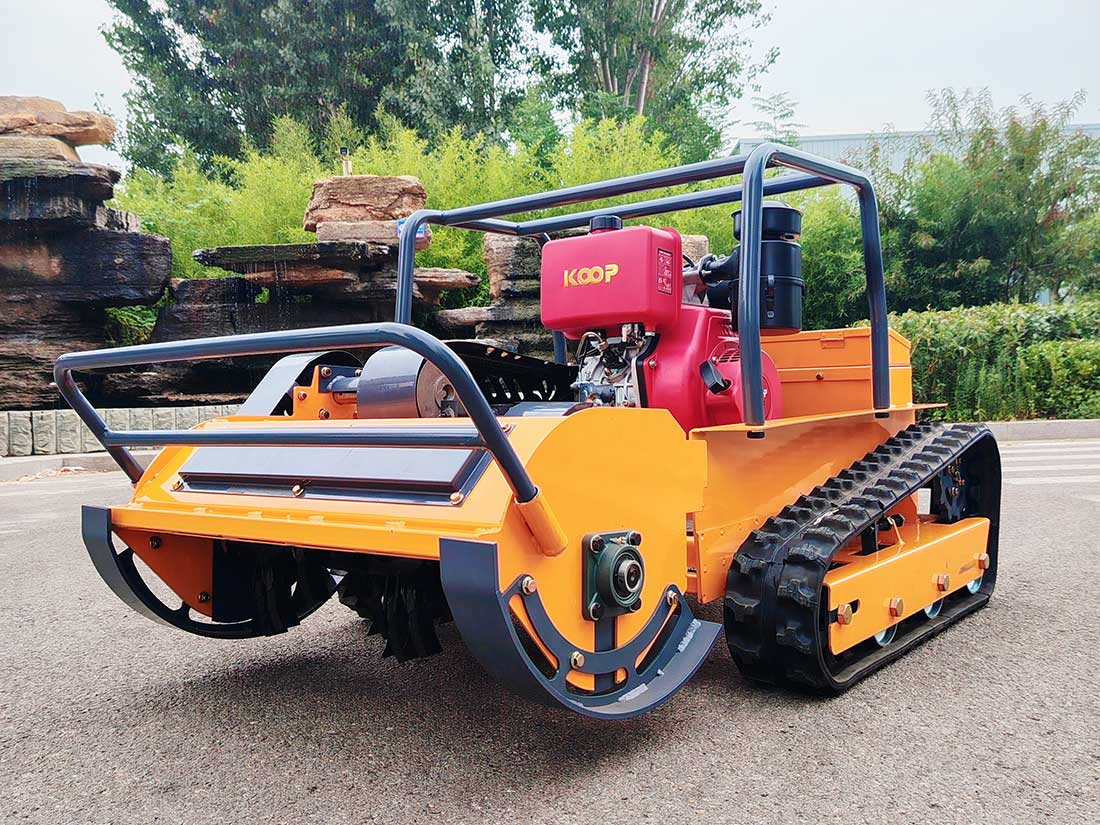
Improving Efficiency Across Large Landscapes
When an area becomes larger, small differences in productivity can have a significant effect on total working time.
A remote controlled lawn mower can contribute to an efficient workflow by combining machine mobility with remote operation.
For example, an operator may plan a systematic mowing route rather than repeatedly repositioning conventional equipment.
A professional workflow can include:
Step 1: Survey the property
Identify slopes, obstacles, access points, vegetation density, and areas requiring specialized attention.
Step 2: Divide the area into working zones
Separate open areas from difficult sections so that the mowing strategy can be adjusted accordingly.
Step 3: Select the appropriate cutting configuration
Match the cutting system to the vegetation and required finish.
Step 4: Establish a safe operating position
The operator should maintain a clear view of the remote controlled lawn mower throughout the operation.
Step 5: Mow systematically
Follow an organized route to reduce unnecessary passes and repositioning.
Step 6: Inspect the finished area
Check the cutting quality and identify areas requiring additional work.
This systematic approach can make a remote controlled lawn mower more valuable than simply using a machine with high horsepower.
Applications in Professional Landscaping
Professional landscaping is one of the natural application areas for a remote controlled lawn mower.
Large parks, estates, commercial properties, recreational areas, and public green spaces can contain extensive grass areas that require regular maintenance.
In these environments, productivity and finish quality must be balanced.
A remote controlled lawn mower can provide flexibility when the landscape includes both open grass areas and sections with difficult access.
For landscaping contractors, the machine can become part of a broader fleet strategy, particularly when different attachments or cutting configurations are available.
The goal is to select equipment that can perform efficiently across the actual conditions encountered by the contractor.
Agriculture and Orchard Vegetation Management
Agricultural properties can present another demanding application for a remote controlled lawn mower.
Orchards, field margins, grass-covered areas, and sloping agricultural land may require regular vegetation management.
Trees and restricted spaces can also make maneuverability important.
A remote controlled lawn mower can allow operators to control the machine around obstacles while maintaining a suitable observation position.
For agricultural contractors, versatility is often an important consideration. A machine that can handle multiple vegetation-management tasks can potentially provide greater value throughout the working season.
Roadside and Embankment Maintenance
Large-scale vegetation management also includes roadsides and embankments.
Professional roadside maintenance requires equipment capable of working around changing terrain and vegetation conditions. Industry applications for professional mowing equipment include roadside maintenance as well as landscaping and agriculture.
A remote controlled lawn mower can be particularly useful on roadside slopes and other areas where direct operator access is less desirable.
Remote operation allows the operator to control the machine from a suitable position while maintaining visibility of the cutting area.
For contractors responsible for roadside vegetation, this combination of mobility and remote control can provide a practical alternative to conventional mowing methods.
Choosing the Right Cutting System
A remote controlled lawn mower should always be selected according to the vegetation it will actually cut.
For example, regularly maintained grass may require a different cutting solution from tall, dense, or rough vegetation.
Rotary cutting systems can be suitable for many general grass-cutting applications, while flail-style systems can be advantageous when vegetation is heavier or rougher.
The correct selection depends on:
Vegetation type
Grass height
Density
Desired cutting finish
Terrain
Working speed
Maintenance schedule
Professional buyers should therefore evaluate the complete remote controlled lawn mower rather than choosing solely according to engine power or advertised cutting width.
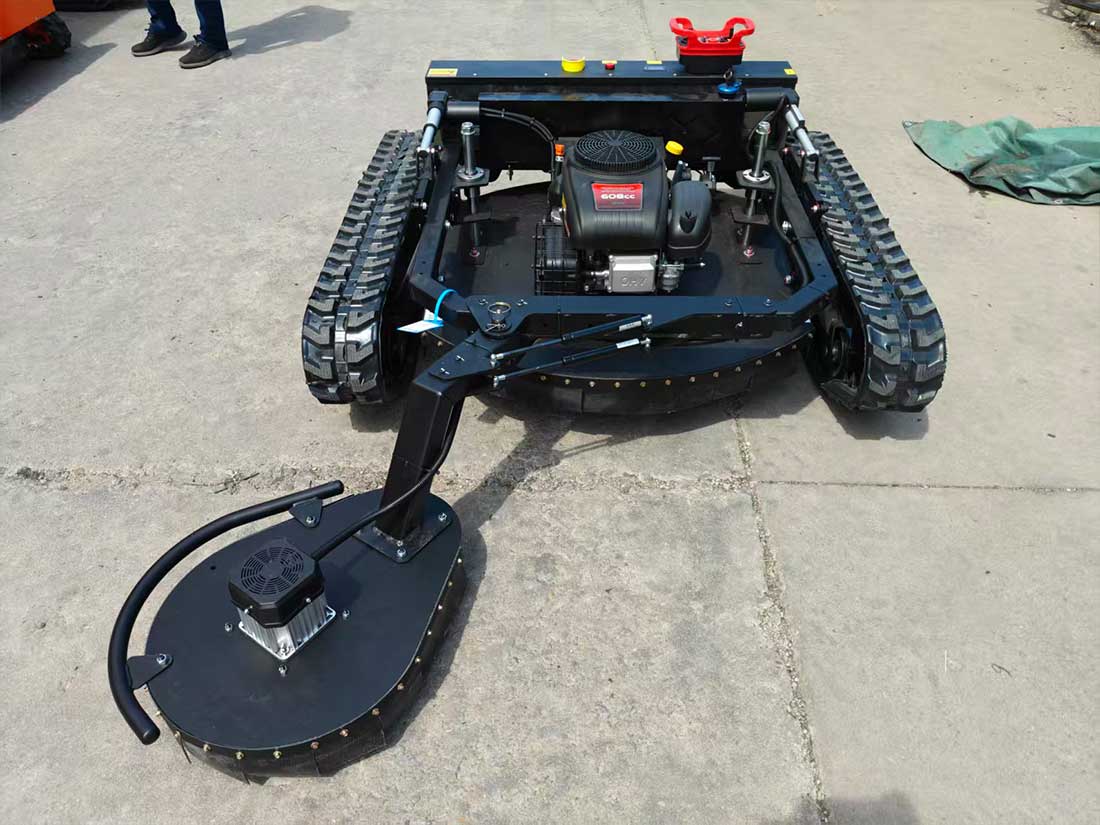
Safety as Part of Productivity
For large-scale mowing operations, safety and productivity should not be treated as separate objectives.
A remote controlled lawn mower can help operators maintain greater separation from the machine, particularly when working in challenging areas.
However, remote control is not a substitute for professional operating procedures.
Before using a remote controlled lawn mower, operators should inspect the working area, identify hazards, understand the machine's operating limits, and maintain an appropriate line of sight.
Training is also essential.
The most effective professional operation combines capable equipment with an experienced operator who understands terrain, vegetation, machine behavior, and safe working practices.
Maintenance and Long-Term Reliability
Large landscapes often require frequent mowing, which means equipment may accumulate significant operating hours.
For this reason, maintenance should be an important part of choosing a remote controlled lawn mower.
Routine inspections should cover areas such as:
Cutting components
Tracks and undercarriage
Drive system
Hydraulic components where applicable
Engine or power system
Fasteners
Safety systems
Remote-control equipment
Grass and debris should be removed regularly, while cutting components should be inspected for wear or damage.
Preventive maintenance can help maintain consistent performance and reduce unexpected downtime.
For commercial users, the availability of technical support and replacement parts should also be considered before investing in a remote controlled lawn mower.
What Makes a Remote Controlled Lawn Mower a Professional Solution?
A professional remote controlled lawn mower is more than a mower with a remote control.
Its value comes from integrating multiple technologies and design features:
Remote operation provides flexible machine control.
Crawler mobility can improve traction on appropriate uneven terrain.
Professional cutting systems allow the machine to handle different vegetation conditions.
Machine stability supports controlled operation on challenging surfaces.
Operator positioning can improve the working environment during demanding mowing tasks.
Versatility allows the equipment to be used across landscaping, agriculture, roadside maintenance, and other vegetation-management applications.
This combination is what makes a remote controlled lawn mower particularly relevant to professional users managing large landscapes.
How to Evaluate a Remote Controlled Lawn Mower Before Buying
Before purchasing a remote controlled lawn mower, professional buyers should consider the complete operating environment.
Ask the following questions:
What type of terrain will the machine encounter?
Flat lawns, slopes, rough fields, and embankments may require different machine configurations.
What type of vegetation needs to be cut?
The cutting system should correspond to the actual vegetation-management requirements.
How large are the working areas?
Large areas place greater importance on cutting width, working speed, maneuverability, and productivity.
How frequently will the machine operate?
Frequent commercial use makes durability, maintenance, serviceability, and spare parts particularly important.
Where will the operator stand?
The remote-control system should allow the operator to maintain a suitable observation position.
Can the machine adapt to different applications?
A versatile remote controlled lawn mower may provide greater value when used across multiple properties and vegetation-management tasks.
The Future of Large-Scale Landscape Maintenance
The development of remote-controlled mowing equipment reflects a broader trend in professional landscape management.
Technology is increasingly being used to address three major challenges: labor efficiency, difficult terrain, and operator safety.
The remote controlled lawn mower combines these priorities into a practical equipment platform.
Instead of relying solely on larger conventional machines, professional contractors can consider specialized equipment designed specifically for difficult mowing environments.
As demand for efficient vegetation management continues to grow, the role of the remote controlled lawn mower is likely to expand across landscaping, agriculture, roadside maintenance, and other professional applications.
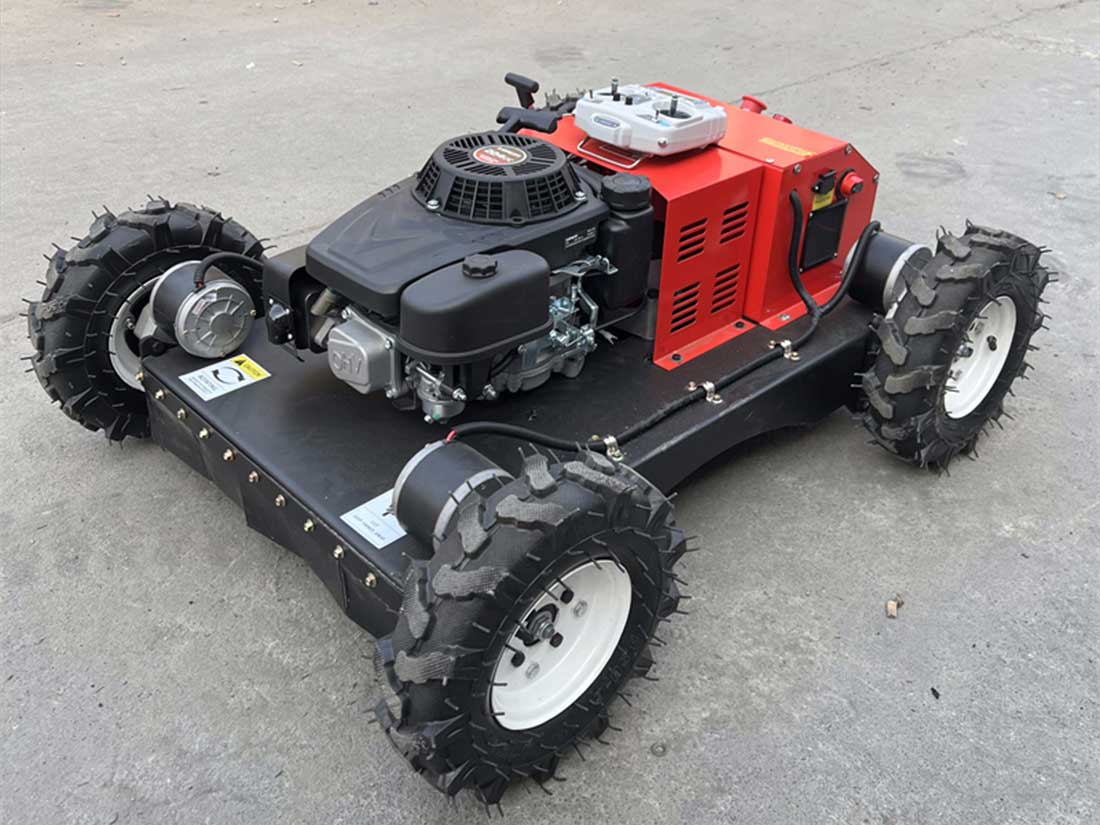
Conclusion
For large landscapes, choosing the right mowing equipment can have a direct influence on productivity, safety, cutting quality, and operating costs.
A remote controlled lawn mower provides a combination of powerful cutting capability, remote operation, mobility, and professional control that makes it particularly suitable for challenging landscape-management applications.
Whether the job involves extensive green spaces, agricultural properties, orchards, roadside vegetation, slopes, or uneven terrain, the right remote controlled lawn mower can provide a more flexible approach to professional mowing.
The key is to match the machine configuration to the actual working conditions rather than selecting equipment based on a single specification.
If you are evaluating professional remote-controlled mowing equipment for large landscapes, difficult terrain, agriculture, landscaping, or roadside vegetation management, explore the solutions from JY Lawn Mower at JY Lawn Mower.