 English
 Spanish
 Portuguese
 French
 Italian
 Remote Mower
Maintaining grass on difficult terrain is very different from mowing a flat residential lawn. Slopes, embankments, uneven ground, dense vegetation, roadside areas, orchards, and large commercial properties can all create additional challenges for professional mowing operations.
For these applications, choosing the right grass mower is not simply about selecting the machine with the highest power.
Professionals need to consider traction, stability, maneuverability, cutting performance, operator control, maintenance, and the specific conditions of the working environment.
This is one reason why remote-controlled mowing equipment is attracting increasing attention.
A modern remote-controlled grass mower combines a mobile mowing platform with wireless operation, allowing the operator to control the machine from a suitable position while maintaining visual contact with the equipment.
For professional landscaping companies, agricultural contractors, vegetation-management teams, and other users working on difficult terrain, this can provide a more flexible approach to mowing.
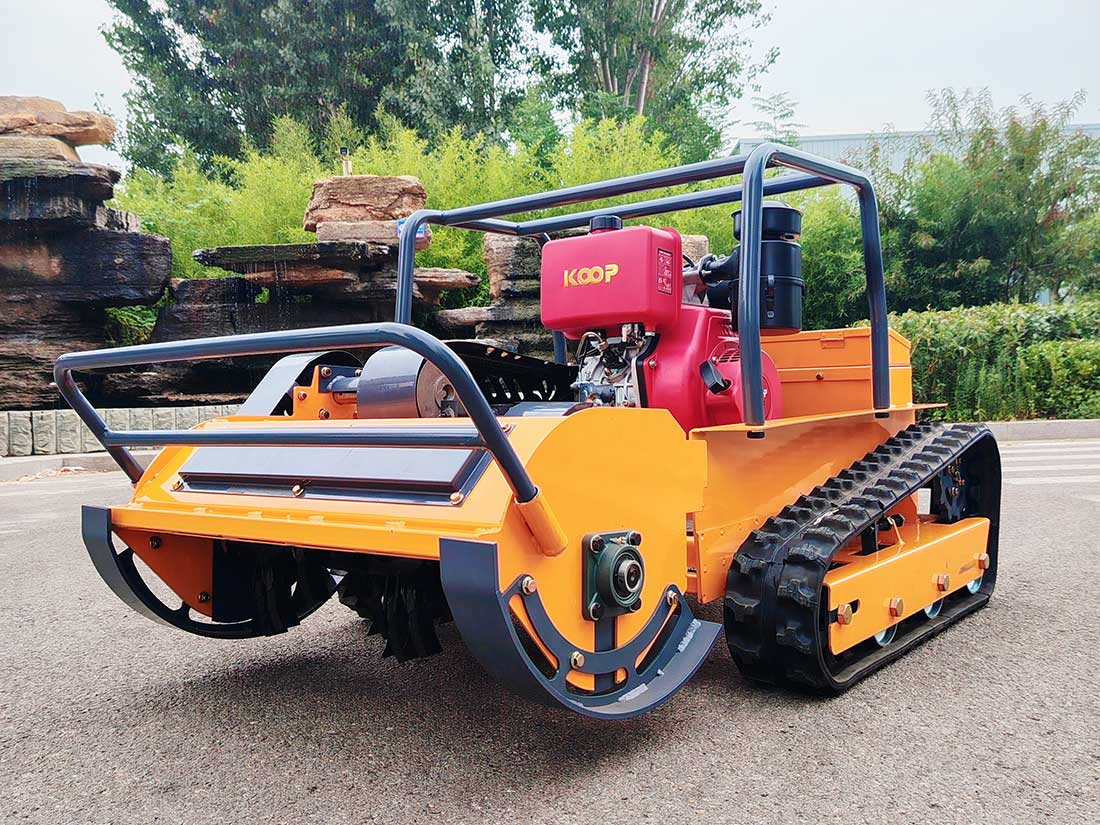
What Is a Grass Mower with Remote Control?
A remote-controlled grass mower is a mowing machine operated through a wireless remote-control system.
Instead of continuously walking beside or behind the machine, the operator can control its movement and mowing functions from a distance.
This operating method can be particularly useful when the working area contains:
Slopes
Embankments
Uneven terrain
Dense grass
Obstacles
Drainage channels
Large open areas
Difficult-to-access vegetation
However, the remote-control system is only one part of the machine.
A professional grass mower must also provide suitable mobility, traction, stability, and cutting capability for the intended application.
The best results come from treating the machine as a complete mowing system rather than focusing on one specification.
Why Difficult Terrain Requires a Different Grass Mower
A conventional grass mower can perform very well on accessible, relatively flat surfaces.
Difficult terrain presents a different set of requirements.
When a machine operates on a slope or uneven surface, traction becomes more important. The machine must maintain controlled movement while the cutting system continues to operate effectively.
On irregular ground, maneuverability is also important.
The operator may need to change direction around trees, drainage channels, rocks, property boundaries, or areas with different vegetation.
This is where a remote-controlled grass mower can provide an alternative operating method.
Instead of requiring the operator to physically follow every movement of the machine, remote operation allows the operator to select a suitable position and control the equipment from there.
The Role of Remote Control in Professional Mowing
Remote control changes how operators interact with a grass mower.
The operator can remain outside the immediate path of the machine while maintaining visual contact and controlling its movement.
This can be particularly useful for specific professional applications involving slopes and difficult terrain.
For example, when maintaining an embankment, the operator can assess the terrain first and then operate the grass mower from an appropriate position.
The remote-control system can also make it easier to adjust the machine's direction and working route as terrain conditions change.
This does not eliminate operational risks, but it can provide greater flexibility in how the mowing operation is organized.
Grass Mower Applications on Slopes
Slopes are one of the applications where remote-controlled mowing equipment can be particularly relevant.
A slope may contain changes in elevation, uneven surfaces, vegetation variation, and obstacles.
A professional grass mower used in such an environment must be evaluated according to the actual terrain.
Important considerations include:
Traction
Stability
Machine width
Center of gravity
Maneuverability
Cutting system
Remote-control range and usability
Manufacturer operating limits
A remote-controlled grass mower can allow the operator to control the machine from a position selected after evaluating the terrain.
However, operators must always follow the manufacturer's specifications and professional safety procedures.
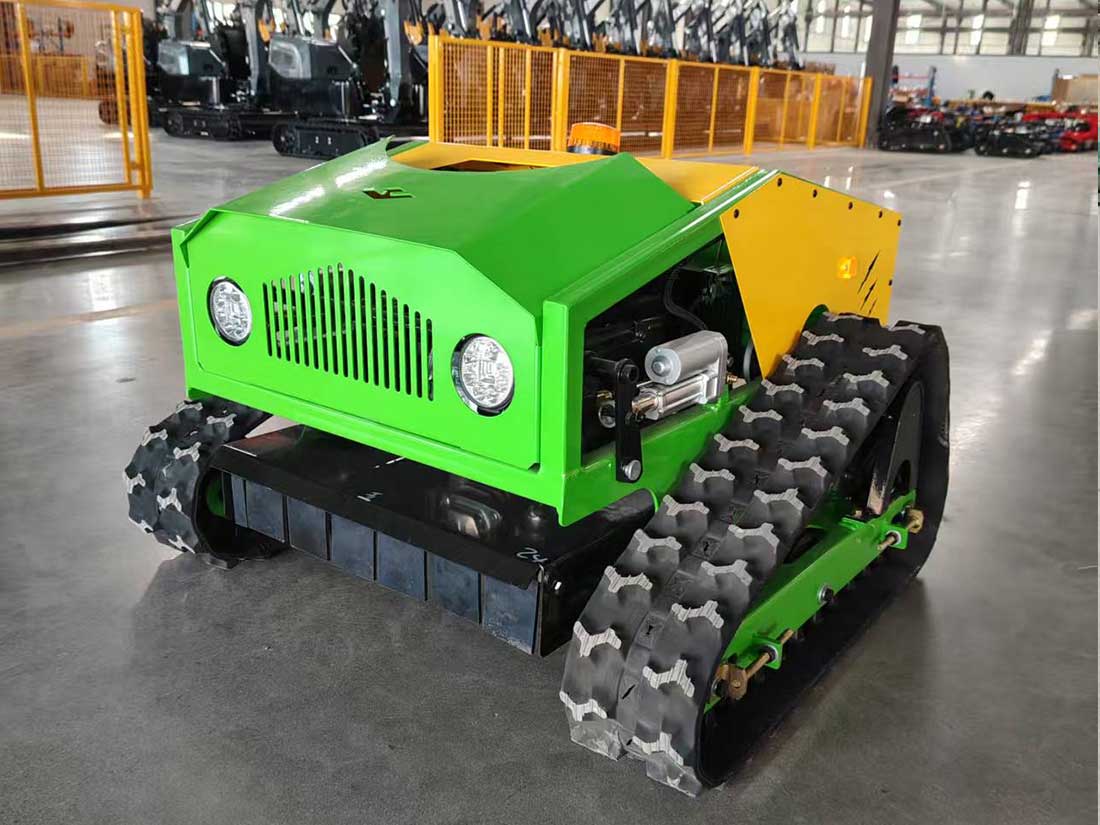
Grass Mower for Uneven Terrain
Uneven terrain presents different challenges from a simple slope.
The machine may encounter changes in ground height, rough surfaces, small obstacles, dense vegetation, and areas with different levels of accessibility.
For this reason, a professional grass mower should be evaluated as a mobility platform as well as a cutting machine.
Tracked remote-controlled mowing equipment can be relevant to applications where ground contact and mobility are important considerations.
However, the suitability of a particular grass mower depends on the actual working environment.
Professionals should assess the terrain before selecting equipment rather than assuming that one machine will be suitable for every type of difficult ground.
Grass Mower for Dense and Tall Vegetation
Not every mowing job involves short, regularly maintained grass.
Professional operators may also need to manage taller or denser vegetation.
In these conditions, the cutting system becomes a critical part of the grass mower.
Before choosing equipment, buyers should consider:
Vegetation height
Vegetation density
Type of plant material
Required cutting finish
Cutting width
Cutting height
Frequency of mowing
Compatibility with available attachments
A powerful engine alone does not determine mowing performance.
The cutting system must be appropriate for the vegetation and the operating conditions.
Mobility and Traction Matter
One of the most important lessons from professional mowing applications is that cutting power is only one part of machine performance.
A grass mower may have strong cutting capability, but if it cannot move effectively across the working area, its practical value is limited.
Professionals should therefore evaluate:
Traction + stability + maneuverability + cutting system + remote control
These elements work together.
A remote-controlled grass mower is most useful when its mobility and cutting system are appropriately matched to the terrain.
Grass Mower for Landscaping Professionals
Landscaping companies often work across properties with different terrain conditions.
A single project may include:
Flat lawns
Slopes
Trees
Paths
Embankments
Dense vegetation
Large open spaces
A remote-controlled grass mower can provide an additional solution for sections where conventional equipment is less convenient.
It does not necessarily replace every traditional mower.
Instead, professional contractors can use a grass mower with remote control as part of a broader equipment strategy.
This application-based approach allows each machine to be used where its characteristics provide the greatest operational value.
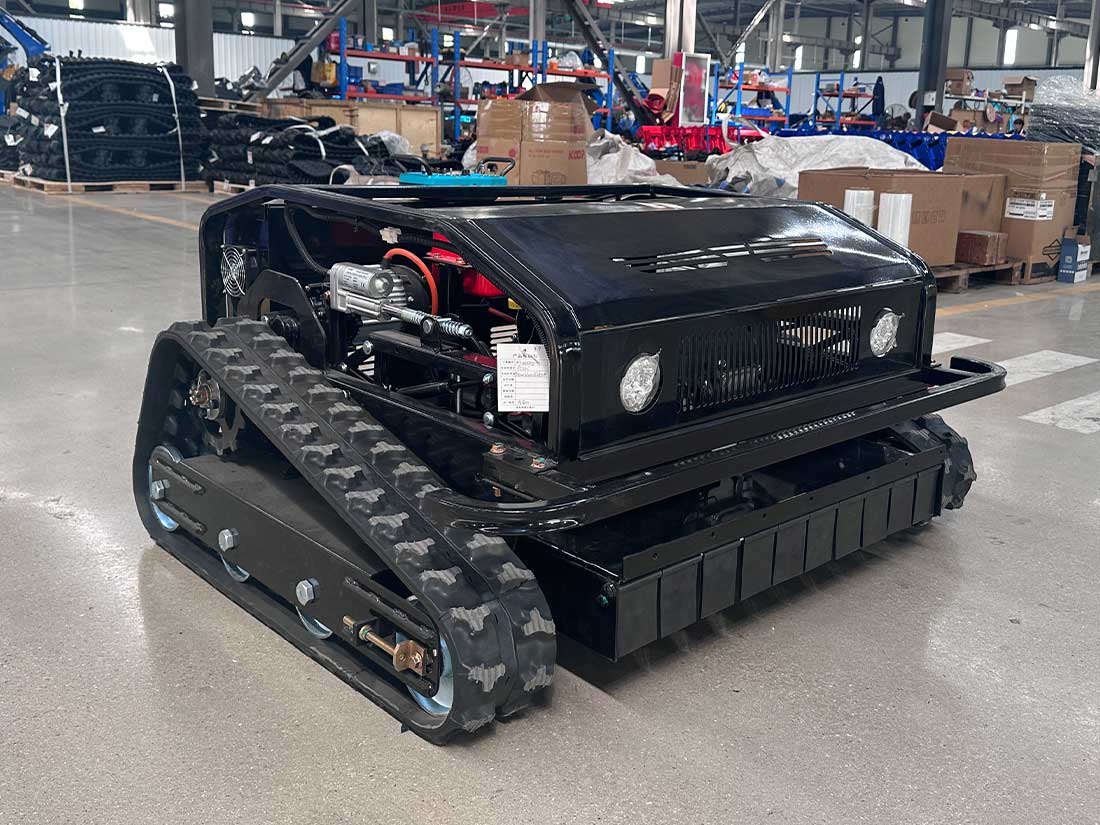
Grass Mower for Agriculture and Orchards
Agricultural properties can also contain areas that require specialized mowing equipment.
Vegetation may need to be managed around:
Orchards
Field boundaries
Farm roads
Access routes
Non-cultivated areas
Sloped sections
Areas between or around agricultural infrastructure
A remote-controlled grass mower can be considered when mobility, terrain access, and operator positioning are important factors.
The correct machine should always be selected according to the type of vegetation, soil conditions, terrain, and frequency of work.
Grass Mower for Roadside Vegetation
Roadside vegetation management presents another demanding application.
Roadside areas can include slopes, drainage channels, embankments, uneven surfaces, and limited-access zones.
A professional grass mower used near roads must therefore be evaluated beyond its cutting capacity.
Operators should consider:
Machine mobility
Stability
Visibility
Working distance
Cutting performance
Traffic conditions
Site-specific safety procedures
Remote-controlled mowing equipment can provide another operating option for certain roadside applications.
The equipment should always be used according to local requirements and the manufacturer's operating instructions.
Safety Considerations for a Remote-Controlled Grass Mower
Remote control can change the operator's position, but it does not remove the need for professional safety procedures.
Before operating a grass mower on difficult terrain, operators should inspect the working area and identify potential hazards.
A professional inspection should consider:
Terrain conditions
Slope characteristics
Obstacles
Ground stability
Vegetation density
Presence of people or animals
Machine operating limits
Operator visibility
Emergency procedures
Maintaining visual contact with the remote-controlled grass mower is also important.
Remote operation should be treated as one part of a complete safety strategy, not as a replacement for proper risk assessment.
Choosing the Right Grass Mower
Choosing a grass mower for difficult terrain should begin with the application rather than the product specification.
Step 1: Understand the Terrain
Determine whether the machine will operate on flat ground, slopes, uneven surfaces, embankments, or mixed terrain.
Step 2: Identify the Vegetation
Different types of grass and vegetation require different cutting systems.
Step 3: Evaluate the Working Area
Consider the total area, access points, obstacles, and terrain variations.
Step 4: Check Mobility
Make sure the grass mower can move effectively through the intended working area.
Step 5: Evaluate Remote Control
The remote-control system should provide practical and precise control for the intended application.
Step 6: Review Maintenance
Check how easily operators can access cutting components, moving parts, wear components, and other service points.
Step 7: Consider the Complete Equipment System
The right grass mower should provide a suitable balance between cutting performance, mobility, control, safety, and maintenance.
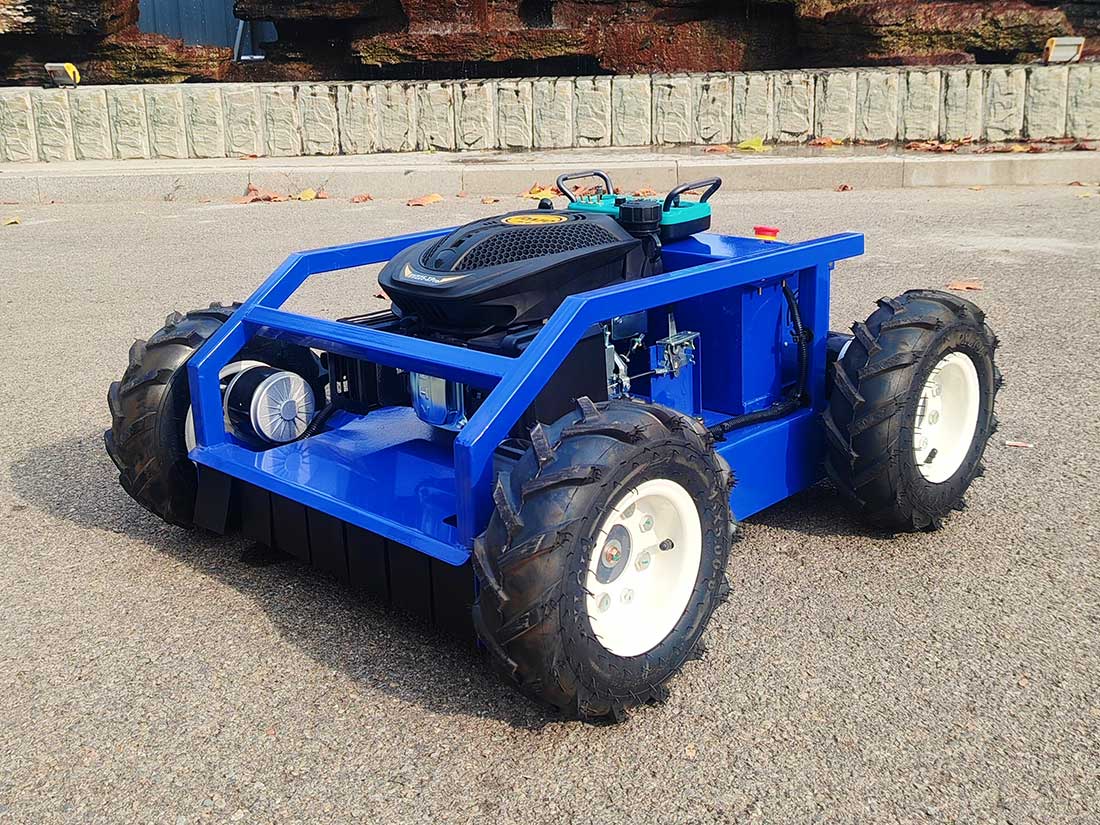
Maintenance of a Remote-Controlled Grass Mower
Regular maintenance remains essential even when the machine is remotely controlled.
A professional grass mower should be inspected according to the manufacturer's recommended maintenance schedule.
Operators should pay particular attention to:
Cutting components
Moving parts
Protective components
Fasteners
Tracks or drive components
Machine structure
Remote-control equipment
Wear components
Grass and other vegetation should be removed appropriately after operation so that the equipment can be inspected properly.
Preventive maintenance helps keep the grass mower ready for future work and can help operators identify wear before it develops into a larger maintenance problem.
Why Remote-Controlled Mowing Equipment Is Becoming More Important
The growing interest in remote-controlled mowing equipment reflects a broader change in professional vegetation management.
Operators are no longer looking only for a basic grass mower.
They are looking for equipment that can adapt to more demanding working environments.
This includes machines that combine:
Remote operation
Strong mobility
Suitable traction
Professional cutting systems
Improved maneuverability
Flexible applications
Practical maintenance
For companies managing large properties or difficult terrain, these characteristics can be more important than a single headline specification.
The Future of the Grass Mower
The future of the grass mower is closely connected to the development of smarter and more adaptable mowing equipment.
Remote control is one part of this evolution.
Other important developments include specialized attachments, improved mobile platforms, more application-specific machine configurations, and better integration between cutting and mobility systems.
The professional mowing market is therefore moving toward equipment that is designed around real working conditions.
The future grass mower will not simply be judged by how much power it produces.
Professionals will increasingly consider how effectively the machine can work across different terrain, vegetation types, and operating environments.
Conclusion
A remote-controlled grass mower can provide a smarter approach to specific difficult-terrain mowing applications.
By combining remote operation with suitable mobility, traction, stability, maneuverability, and cutting capability, this type of equipment can help professional operators approach slopes, uneven terrain, large green areas, landscaping projects, agricultural properties, and selected roadside applications with greater flexibility.
The key is not simply choosing a remote-controlled grass mower.
The key is choosing a machine that matches the actual terrain, vegetation, workload, and operating requirements.
For professional landscaping companies, agricultural contractors, vegetation-management teams, and other operators looking for remote-controlled mowing equipment, application-focused equipment selection is essential.
To explore professional remote-controlled mowing solutions for difficult terrain, slopes, large green areas, agriculture, landscaping, and other demanding applications, visit JY Lawn Mower.
With the right grass mower, appropriate operating procedures, and a clear understanding of the working environment, remote-controlled mowing equipment can become a valuable part of a modern professional vegetation-management strategy.