 English
 Spanish
 Portuguese
 French
 Italian
 Remote Mower
The lawn care industry is entering a new stage of equipment development. As professional operators face larger green areas, difficult terrain, slopes, roadside vegetation, orchards, parks, and other demanding environments, traditional mowing methods are increasingly being complemented by remote-controlled mowing equipment.
At the center of this change is the modern grass mower.
A professional grass mower is no longer simply a machine designed to cut grass. For demanding applications, operators need equipment that combines cutting performance, mobility, traction, stability, maneuverability, and reliable control.
This is where the remote-controlled grass mower is gaining attention.
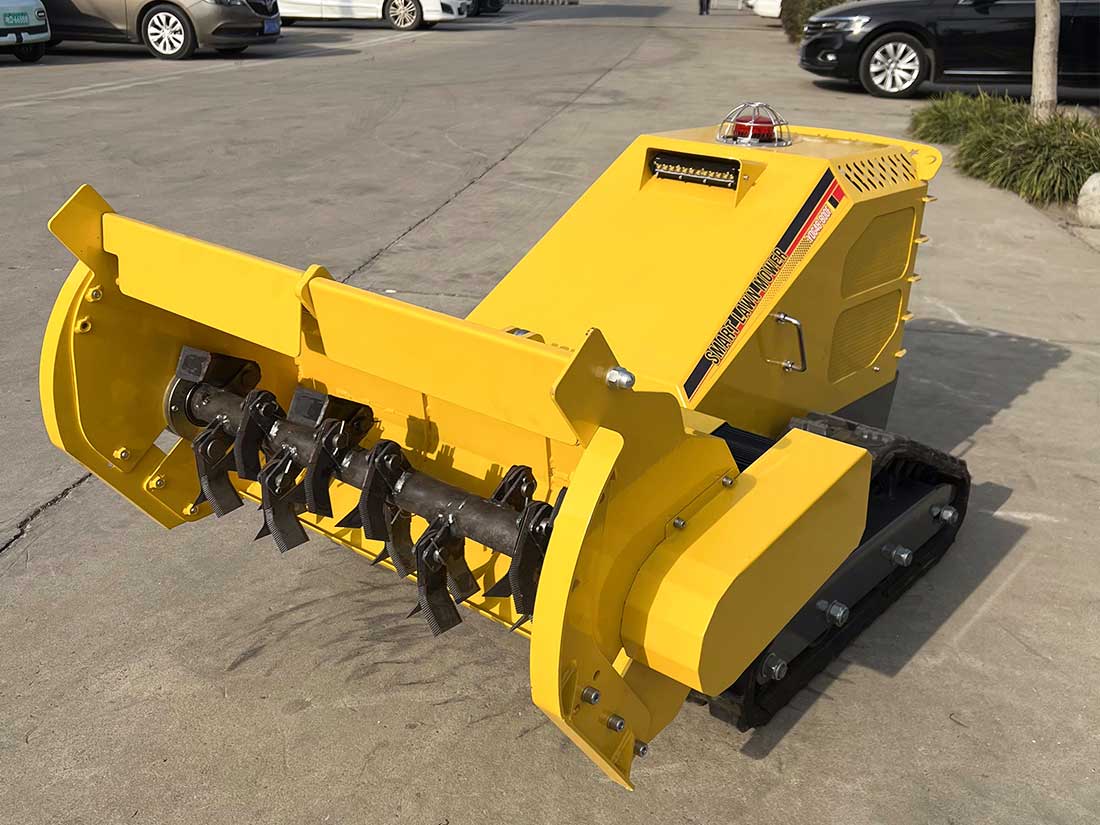
What Is a Remote-Controlled Grass Mower?
A remote-controlled grass mower is a mowing machine operated from a distance using a wireless remote-control system.
Instead of walking directly behind or beside the machine throughout the entire mowing operation, the operator can control its movement and cutting functions remotely while maintaining visual contact with the equipment and working area.
This operating method can be particularly useful when the terrain is difficult to access or contains slopes, uneven surfaces, obstacles, or dense vegetation.
However, the value of a remote-controlled grass mower does not come from the remote control alone.
A professional remote-controlled mowing system combines several important elements:
Remote-control technology
Mobile machine platform
Traction system
Cutting system
Stability
Maneuverability
Operator control
Maintenance accessibility
The integration of these components determines how effectively a grass mower can perform in real working conditions.
Why Are Remote-Controlled Mowers Becoming More Popular?
The growing interest in remote-controlled mowing equipment is closely connected to the changing requirements of professional lawn and vegetation management.
Modern operators may need to maintain areas that include:
Large parks
Commercial properties
Agricultural land
Orchards
Roadside vegetation
Slopes
Embankments
Uneven terrain
Areas with dense vegetation
Difficult-to-access green spaces
In these environments, the operator needs more than a conventional grass mower.
The equipment must be able to adapt to different operating conditions while providing precise control over the mowing process.
1. Better Flexibility on Difficult Terrain
Terrain is one of the most important factors when selecting a professional grass mower.
Flat lawns are relatively straightforward, but slopes, uneven ground, embankments, and irregular terrain can create additional operational challenges.
A remote-controlled grass mower allows the operator to control the machine from a selected position while maintaining visual contact.
This can provide greater flexibility when planning mowing routes across challenging areas.
The machine can be directed around obstacles and along different sections of the terrain without requiring the operator to remain directly beside it throughout the operation.
2. Remote Control Changes the Operating Method
The biggest difference between a conventional mower and a remote-controlled grass mower is the relationship between the operator and the machine.
With conventional equipment, the operator typically moves with the machine.
With remote-controlled mowing equipment, the operator can control the grass mower from a distance.
This can be particularly useful when working around:
Slopes
Ditches
Embankments
Trees
Drainage channels
Roadside vegetation
Irregular ground
The operator can select a suitable position, evaluate the working area, and control the grass mower while maintaining a clear view of the machine.
3. Grass Mower Applications Are Expanding
The professional grass mower is no longer limited to residential lawns.
Remote-controlled mowing equipment can be considered for a wide range of professional applications.
Landscaping
Landscape contractors often maintain parks, commercial properties, public green spaces, and large private properties.
A remote-controlled grass mower can provide an additional equipment option for areas where mobility and remote operation are useful.
Agriculture
Agricultural properties can include large areas of vegetation around orchards, field boundaries, access roads, and other non-cultivated areas.
A professional grass mower can be selected according to the vegetation type, ground conditions, and frequency of mowing.
Roadside Maintenance
Roadside vegetation management can involve slopes, embankments, drainage areas, and restricted access.
In these applications, the grass mower must be evaluated not only for cutting capability but also for mobility, stability, visibility, and operating procedures.
Parks and Large Green Areas
Large public or commercial green areas may contain a combination of flat surfaces, slopes, trees, paths, and irregular vegetation.
A remote-controlled grass mower can offer an alternative approach for specific sections of these properties.
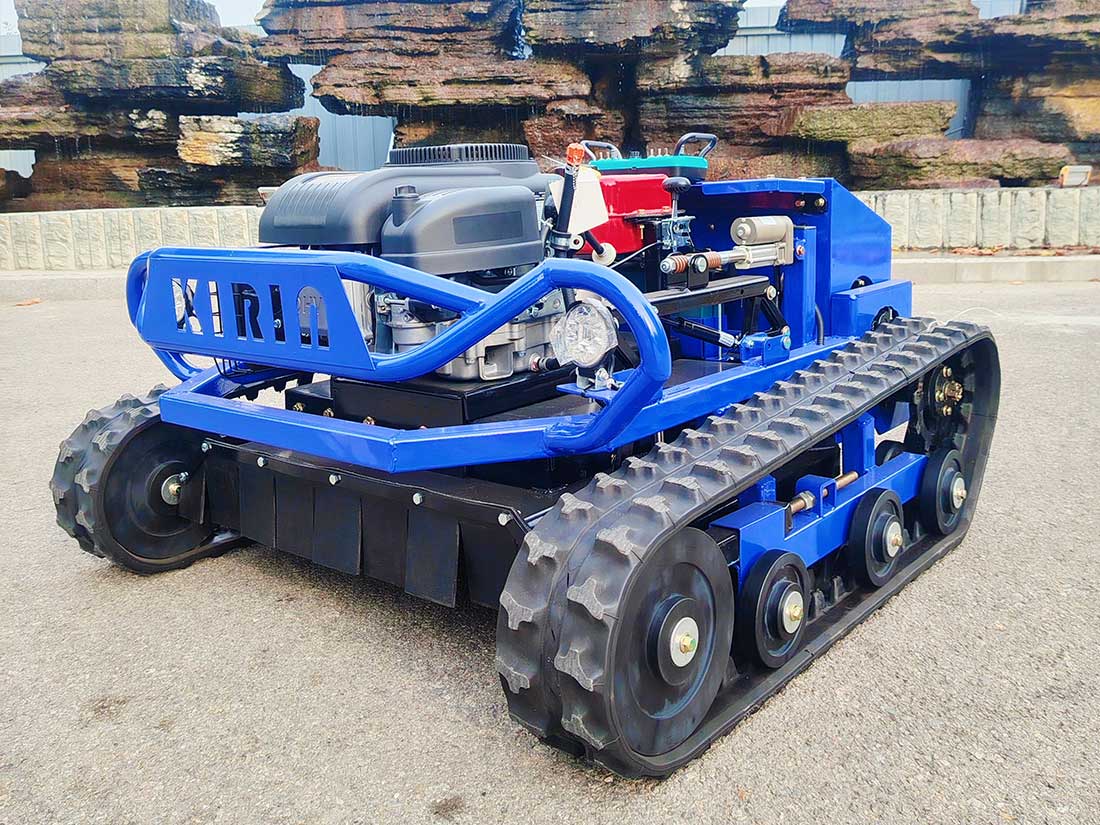
Grass Mower Performance Depends on the Cutting System
A common mistake when selecting a grass mower is focusing only on engine power.
Power is important, but it is only one part of the complete machine.
The cutting system must also match the actual vegetation.
Before choosing a professional grass mower, operators should consider:
Grass height
Vegetation density
Vegetation type
Required cutting finish
Cutting width
Cutting height
Operating frequency
Compatibility with attachments
A machine designed for regular grass maintenance may not be configured for dense or tall vegetation.
For this reason, professional buyers should evaluate the complete mowing system rather than focusing on a single specification.
Mobility Is Just as Important as Cutting Power
A powerful grass mower is not necessarily the right machine for every environment.
If the equipment cannot move effectively across the working area, cutting capacity alone cannot solve the operational problem.
For difficult terrain, professionals should evaluate:
Traction + stability + maneuverability + cutting system + remote control
These factors work together to determine the practical value of a remote-controlled grass mower.
Tracked platforms can be particularly relevant in applications where ground conditions and mobility are important considerations.
However, the suitability of any machine depends on the actual terrain and the operating limits specified by the manufacturer.
Grass Mower Safety on Slopes
Safety is an important consideration when using any grass mower, especially on slopes and difficult terrain.
Remote control can allow the operator to maintain a different physical position relative to the machine, but it does not eliminate operational risks.
Before using a remote-controlled grass mower, operators should:
Inspect the terrain.
Identify obstacles and hazards.
Evaluate ground conditions.
Follow the manufacturer's operating limits.
Maintain an appropriate safety distance.
Keep people and animals away from the working area.
Maintain visual contact with the machine.
Follow established professional safety procedures.
Remote-controlled technology should complement proper risk management rather than replace it.
Why Large Areas Require a Different Mowing Strategy
Maintaining a large property is different from mowing a small residential lawn.
A professional grass mower used on a large area must be considered as part of a complete workflow.
Operators may need to divide the property into different working zones.
For example:
Zone A: Flat grass
Zone B: Slightly uneven terrain
Zone C: Dense vegetation
Zone D: Slopes
Zone E: Areas around obstacles
Each zone may require a different mowing route or operating method.
A remote-controlled grass mower can provide additional flexibility when the machine needs to move between different terrain conditions.
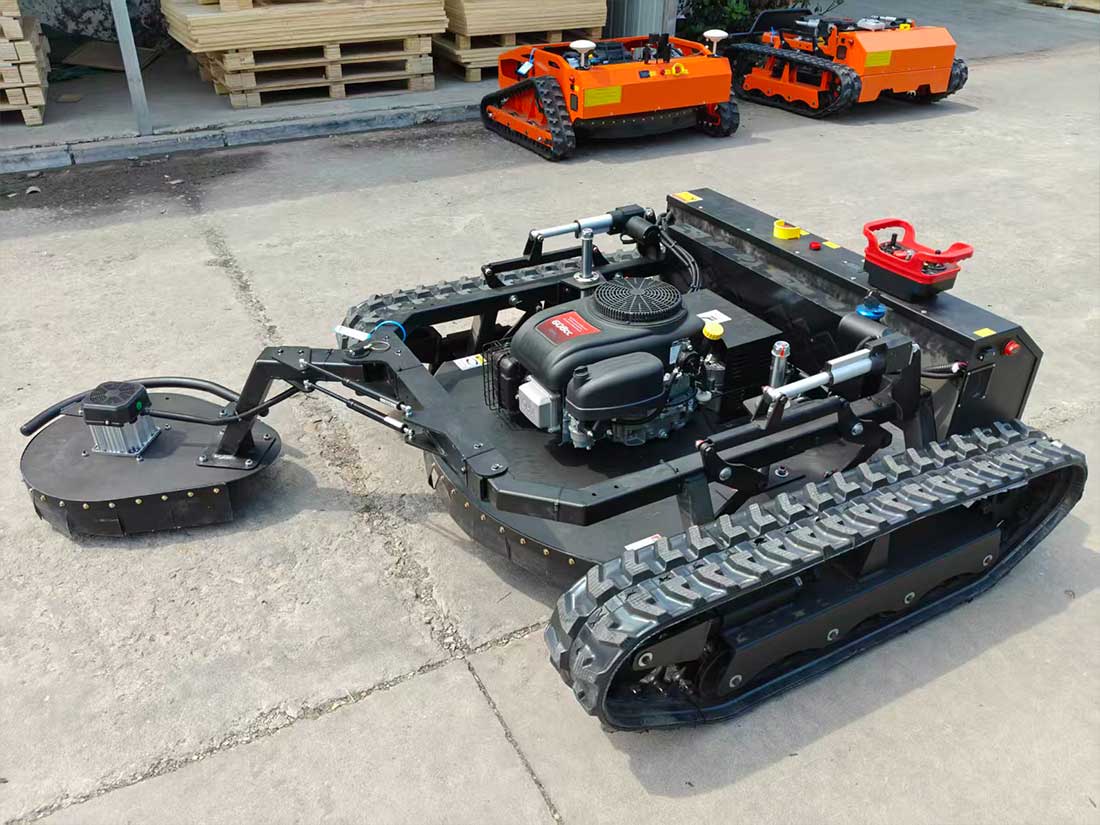
Remote-Controlled Grass Mower vs. Conventional Equipment
Remote-controlled mowing equipment should not automatically be viewed as a replacement for every conventional mower.
Traditional equipment remains useful for many accessible and relatively uniform lawns.
The advantage of a remote-controlled grass mower becomes more relevant when the working environment includes difficult terrain, slopes, obstacles, large areas, or restricted-access locations.
The better question is therefore not:
“Is a remote-controlled grass mower better than a conventional mower?”
The more useful question is:
“Which grass mower is appropriate for the actual working conditions?”
This application-based approach allows professional buyers to select equipment based on real operational requirements.
How to Choose the Right Grass Mower
Choosing the right grass mower requires a structured evaluation.
Step 1: Analyze the Terrain
Determine whether the machine will operate on flat ground, slopes, uneven terrain, embankments, or mixed surfaces.
Step 2: Identify the Vegetation
Different vegetation types require different cutting systems.
Step 3: Evaluate the Working Area
Consider the total area, access routes, obstacles, and terrain variations.
Step 4: Check Mobility
Make sure the grass mower can move effectively through the areas where it is expected to operate.
Step 5: Evaluate the Remote-Control System
The remote-control system should provide practical and precise machine control for the intended application.
Step 6: Review Maintenance Requirements
Check access to wear components, cutting components, moving parts, and other service points.
Step 7: Consider Long-Term Application
A professional grass mower should be selected according to the actual workload rather than only the initial purchase price.
Maintenance of a Remote-Controlled Grass Mower
Remote operation does not eliminate the need for regular maintenance.
A professional grass mower should be inspected according to the manufacturer's recommended maintenance schedule.
Operators should pay attention to:
Cutting components
Moving parts
Protective components
Fasteners
Tracks or drive components
Machine structure
Remote-control equipment
Wear components
After mowing dense vegetation, accumulated material should also be removed appropriately so that the machine can be inspected properly.
Preventive maintenance helps keep the grass mower ready for future operations and can help identify wear before it develops into a larger operational issue.
The Future of Grass Mower Technology
The development of the modern grass mower reflects a broader trend toward smarter professional mowing equipment.
Remote control, mobile platforms, specialized cutting attachments, and improved machine integration are expanding the range of applications available to professional operators.
Future buyers are likely to focus increasingly on the complete system rather than individual specifications.
The most useful grass mower for professional applications will not necessarily be the machine with the highest power rating.
Instead, it will be the machine that provides an appropriate balance between:
Cutting capability
Mobility
Stability
Control
Safety
Maintenance
Application flexibility
Why Remote-Controlled Mowing Equipment Matters
The rise of remote-controlled mowing equipment reflects a practical change in professional vegetation management.
Operators increasingly need machines that can adapt to real-world conditions rather than equipment designed only for simple, uniform lawns.
A remote-controlled grass mower can provide an additional solution for difficult terrain, large green areas, agricultural applications, landscaping, and roadside vegetation management.
The technology is particularly valuable when mobility and operator positioning are important parts of the job.
Conclusion
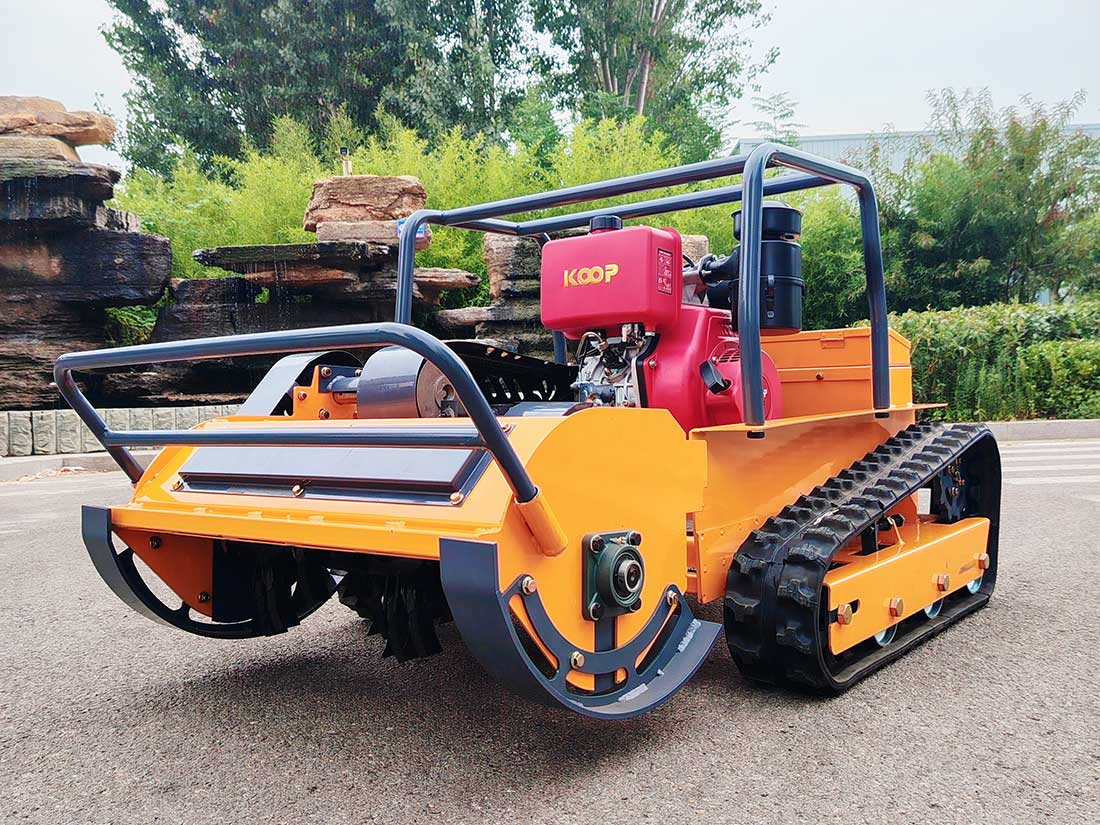
The grass mower is evolving from a simple lawn-cutting machine into a more adaptable professional mowing platform.
Remote-controlled technology is helping expand the potential applications of modern mowing equipment by combining wireless control with mobility, traction, cutting capability, and professional machine design.
For landscaping companies, agricultural operators, contractors, municipalities, and professional vegetation-management teams, a remote-controlled grass mower can be an interesting solution for slopes, uneven terrain, large green areas, roadside vegetation, and other demanding applications.
The key is choosing equipment according to the actual working environment.
Terrain, vegetation, cutting requirements, mobility, safety, control, and maintenance should all be evaluated before purchasing a grass mower.
If you are looking for professional remote-controlled mowing equipment and want to explore solutions for difficult terrain, slopes, large green areas, landscaping, agriculture, and other demanding applications, visit JY Lawn Mower to learn more.
With the right equipment, proper operating procedures, and application-focused machine selection, the modern grass mower can become an important part of a more flexible professional mowing strategy.