 English
 Spanish
 Portuguese
 French
 Italian
 Remote Mower
Vegetation management across large grassland areas can become a demanding task when operators have to deal with uneven terrain, steep slopes, dense vegetation, limited access, and long working hours. In these conditions, conventional mowing equipment may struggle to deliver the combination of productivity, safety, and consistent cutting performance that professional contractors require.
This is where a tracked mower can provide a significant operational advantage. By combining tracked mobility with remote-controlled operation, modern mowing equipment allows operators to work from a safer position while maintaining effective cutting performance across challenging landscapes.
This case study examines a representative professional vegetation-management scenario and explains how a tracked mower integrated with remote-controlled mowing equipment can improve workflow efficiency, terrain accessibility, operator safety, and overall productivity.
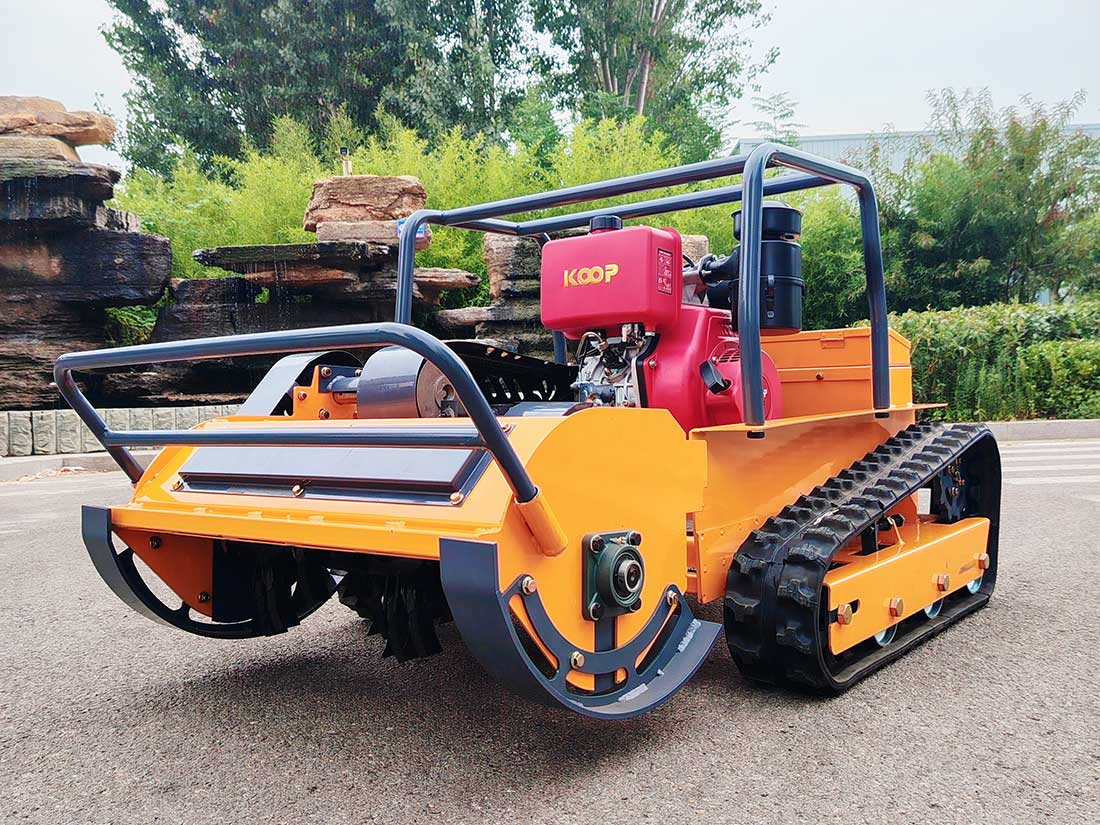
The Challenge: Managing Large and Difficult Grassland Areas
Large grassland properties often appear simple to mow, but professional operators know that terrain conditions can vary considerably across the same site.
A typical difficult mowing project may include:
Large areas of tall or dense grass
Uneven and rough ground
Moderate to steep slopes
Wet or soft soil
Obstacles such as rocks, trees, and drainage channels
Narrow access routes
Areas where conventional machinery is difficult to position
Long mowing cycles requiring significant operator concentration
These conditions can reduce the efficiency of traditional wheeled mowing machines. Operators may need to slow down on slopes, make repeated passes around obstacles, or use additional equipment to reach inaccessible sections.
A tracked mower approaches the problem differently. Instead of relying entirely on conventional wheels, its track system provides continuous ground contact, helping distribute machine weight and improve traction on many types of uneven terrain.
When this tracked platform is combined with remote-controlled mowing technology, the operator can control the machine from a safer location rather than remaining directly on or beside the machine while it works.
Why a Tracked Mower Was Considered
For professional vegetation management, equipment selection should be based on the actual working environment rather than simply engine power or cutting width.
The project considered a tracked mower because the machine needed to perform reliably across changing ground conditions while reducing the physical demands placed on the operator.
Several characteristics made the tracked mower particularly suitable.
1. Improved Ground Contact
A continuous track system can provide a larger contact area with the ground than conventional wheels. This can help the machine maintain traction when working over uneven or soft surfaces.
For grassland management, this is especially useful when the machine encounters small depressions, rough patches, loose soil, or changing terrain profiles.
2. Better Terrain Adaptability
A professional tracked mower is designed for environments where terrain conditions are more demanding than those found on a typical residential lawn.
Depending on the machine configuration, tracked mowing equipment can be used for:
Hillsides
Rough grassland
Orchard areas
Roadside vegetation
Large estates
Utility areas
Solar-site vegetation management
Rural properties
The key advantage is not simply the ability to move over difficult ground, but the ability to maintain a productive mowing workflow while doing so.
3. Remote Operation
Remote control is one of the most important features of modern professional mowing equipment.
With remote-controlled mowing equipment, the operator can stand away from the cutting machine and control functions such as movement, steering, and mowing.
This changes the working method significantly.
Instead of sitting directly on the machine, the operator can position themselves where they have a better overview of the working area and maintain a safer working distance from slopes, obstacles, and moving cutting components.
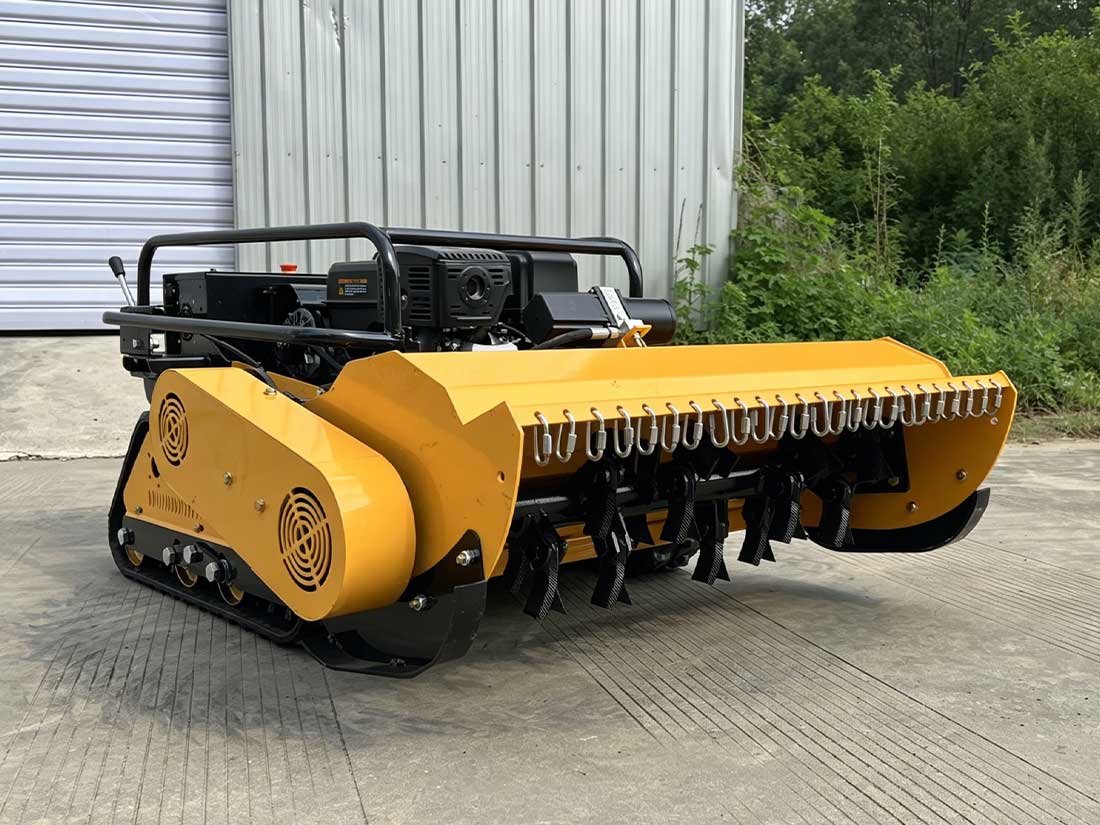
The Representative Case Study
To understand the productivity benefits, consider a representative commercial vegetation-management project involving a large grassland property with uneven sections, tall vegetation, and several sloped areas.
The initial approach used conventional mowing equipment for accessible sections while requiring additional maneuvering and manual planning around more difficult areas.
The introduction of a tracked mower created a more flexible workflow.
Rather than treating difficult terrain as a separate problem, the operator could use the same remote-controlled machine across multiple sections of the property.
The project workflow can be divided into five stages.
Stage 1: Site Assessment
Before mowing began, the working area was assessed for:
Slope gradients
Ground conditions
Vegetation density
Obstacles
Access routes
Drainage areas
Operator positioning
Potential hazards
This is an important professional practice.
A tracked mower is not a substitute for proper risk assessment. Terrain capability, slope limits, ground conditions, machine specifications, and manufacturer operating instructions must always be considered before work begins.
Stage 2: Establishing the Mowing Route
The operator then divided the property into manageable mowing zones.
Instead of repeatedly moving heavy machinery through the entire site, the working route was planned around terrain characteristics and vegetation density.
This approach helped reduce unnecessary repositioning.
For large properties, route planning can have a major effect on productivity. Even a powerful tracked mower can lose efficiency if operators spend excessive time traveling between mowing sections.
Stage 3: Remote-Controlled Mowing
The tracked mower was then used to cut vegetation while the operator controlled the machine remotely.
This was particularly useful on sloped and uneven sections.
The operator could remain in a suitable position while directing the machine across the working area. This reduced the need to physically ride on or stand immediately beside the equipment during mowing operations.
Remote-controlled mowing equipment can therefore improve not only safety but also operator visibility and working flexibility.
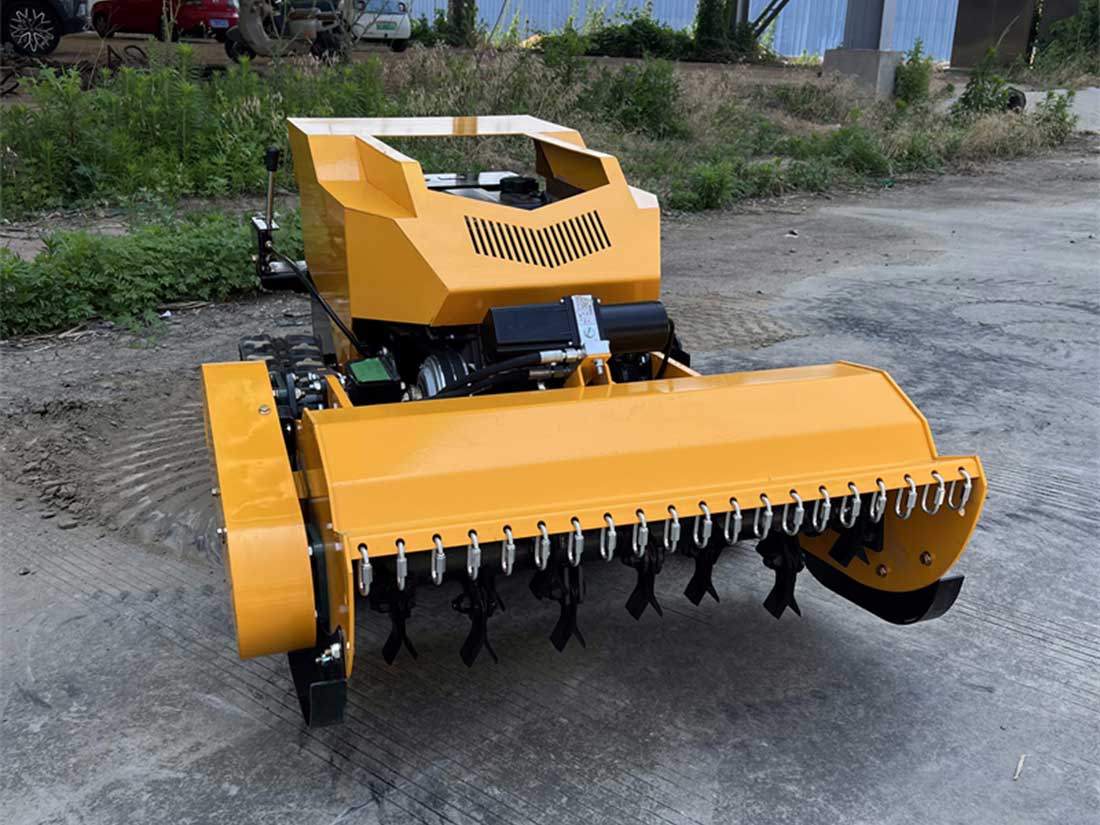
Stage 4: Handling Difficult Sections
The most significant benefit appeared in areas where conventional mowing equipment would require slower maneuvering.
The track system helped the tracked mower maintain mobility across rough ground, while remote operation allowed the operator to control the machine without entering every difficult section.
For tall grass and dense vegetation, the cutting system also needs to be matched correctly to the application. A machine designed for professional vegetation management should have sufficient cutting capacity, power, and structural durability for the expected workload.
Stage 5: Finishing and Quality Inspection
After the primary mowing operation, the property was inspected for missed sections, uneven cutting, and areas requiring a second pass.
This final inspection remains essential regardless of whether a conventional mower or a tracked mower is used.
Professional mowing is not simply about removing vegetation quickly. Consistent cutting quality, site appearance, machine reliability, and completion of the entire working area are equally important.
How Remote-Controlled Mowing Improved Productivity
The biggest lesson from this representative case study is that productivity does not come from one specification alone.
A tracked mower can improve productivity when its mobility, cutting system, remote operation, and workflow are matched to the working environment.
Reduced Time Lost on Difficult Terrain
When a machine can move effectively across uneven ground, operators may spend less time repositioning equipment or finding alternative access routes.
This can make a measurable difference on large sites.
Greater Operator Flexibility
Remote-controlled mowing equipment allows the operator to control the machine from an appropriate position.
This is particularly valuable when working near:
Slopes
Ditches
Rough ground
Dense vegetation
Obstacles
Areas with restricted access
The operator can focus on machine positioning and cutting quality without being physically located on the machine.
Better Use of One Operator
Depending on the machine configuration and worksite, a tracked mower can allow one trained operator to manage mowing tasks that might otherwise require more complex equipment coordination.
However, actual labor savings depend on terrain, vegetation density, machine capacity, operator experience, transportation requirements, and site conditions.
Professional productivity calculations should therefore be based on real operating data rather than theoretical maximum specifications.
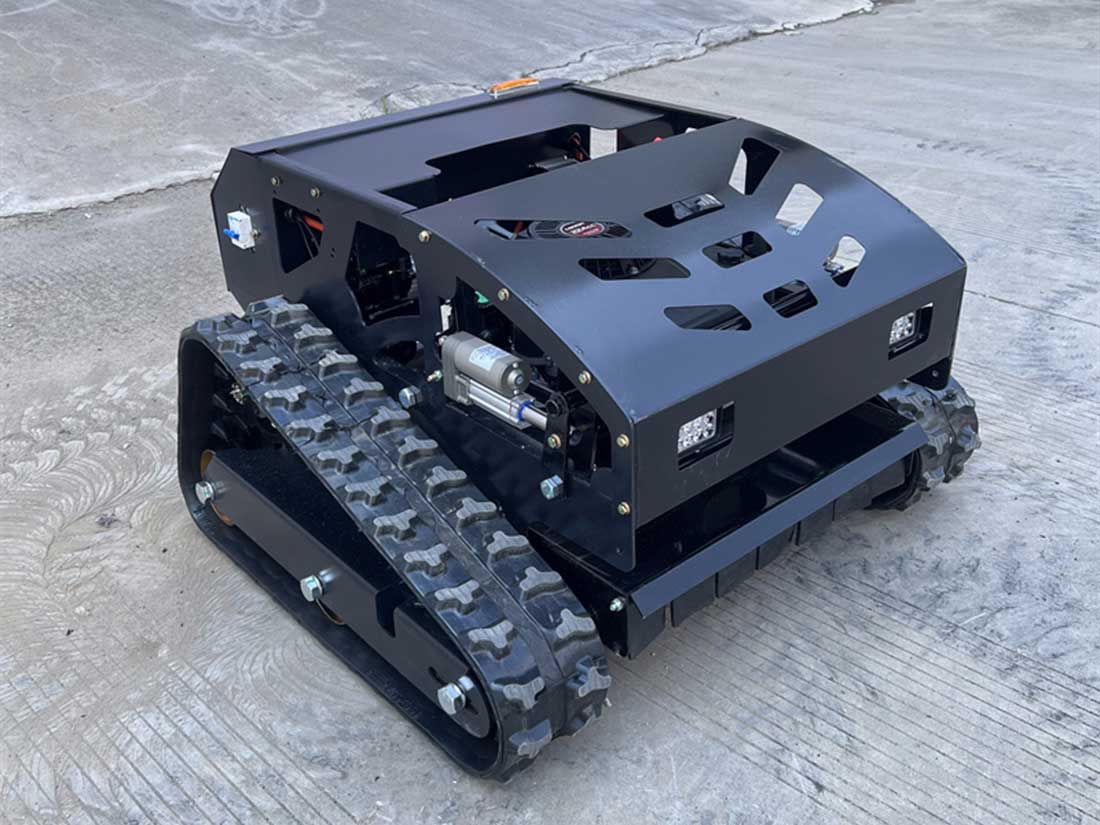
Measuring the Success of a Tracked Mower Project
Professional contractors should evaluate mowing equipment using measurable performance indicators.
Important metrics include:
| Performance Metric | What It Measures |
|---|---|
| Area covered per hour | Overall mowing productivity |
| Total project time | Efficiency from start to completion |
| Operator utilization | How effectively labor time is used |
| Cutting consistency | Quality of vegetation management |
| Machine downtime | Reliability and maintenance impact |
| Repositioning time | Time lost between mowing areas |
| Fuel or energy consumption | Operating efficiency |
| Access capability | Ability to reach difficult sections |
| Number of passes | Cutting efficiency and workflow quality |
These measurements provide a more reliable assessment than simply comparing engine horsepower or cutting width.
A smaller machine with better terrain accessibility can sometimes complete a difficult project more efficiently than a larger machine that cannot easily reach the same areas.
Tracked Mower vs. Conventional Mowing Equipment
The purpose of a tracked mower is not necessarily to replace every conventional mower.
In professional vegetation management, different machines can complement one another.
Traditional wheeled equipment may remain highly effective for flat, open, easily accessible grassland.
A tracked mower, however, can become especially valuable when the project includes difficult terrain.
| Working Condition | Conventional Mower | Tracked Mower |
|---|---|---|
| Flat open grassland | Excellent | Excellent |
| Uneven terrain | Depends on machine | Strong adaptability |
| Sloped areas | Application-dependent | Designed for demanding terrain |
| Rough ground | May require caution | Strong traction potential |
| Narrow access | Machine-dependent | Often highly maneuverable |
| Remote operation | Usually unavailable | Common on professional models |
| Operator positioning | On/near machine | Can operate remotely |
| Difficult vegetation | Depends on cutting system | Configurable for professional use |
The correct choice ultimately depends on the application.
Safety: A Core Advantage of Remote-Controlled Equipment
Safety should be considered alongside productivity.
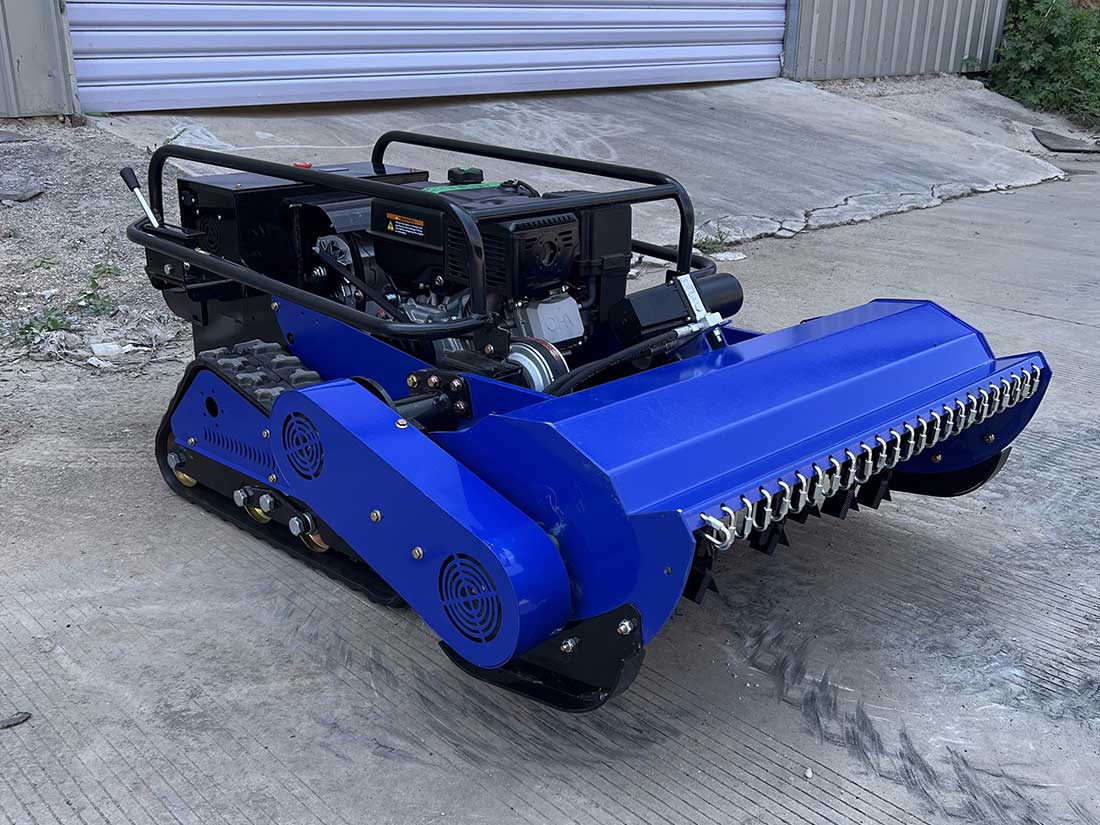
A tracked mower equipped with remote control can help separate the operator from the machine during mowing operations. This can be particularly valuable in environments where working directly on the machine would expose the operator to additional terrain-related risks.
Nevertheless, remote operation does not eliminate hazards.
Operators still need appropriate training and should understand:
Remote-control functions
Emergency-stop procedures
Machine operating limits
Slope limitations
Safe operating distances
Cutting-system hazards
Obstacle risks
Ground-condition changes
Pre-operation inspections
Professional operators should always follow applicable local regulations and the manufacturer's safety instructions.
Choosing the Right Tracked Mower
Not every tracked mower is suitable for every professional application.
When comparing remote-controlled mowing equipment, buyers should evaluate the complete machine rather than focusing on a single specification.
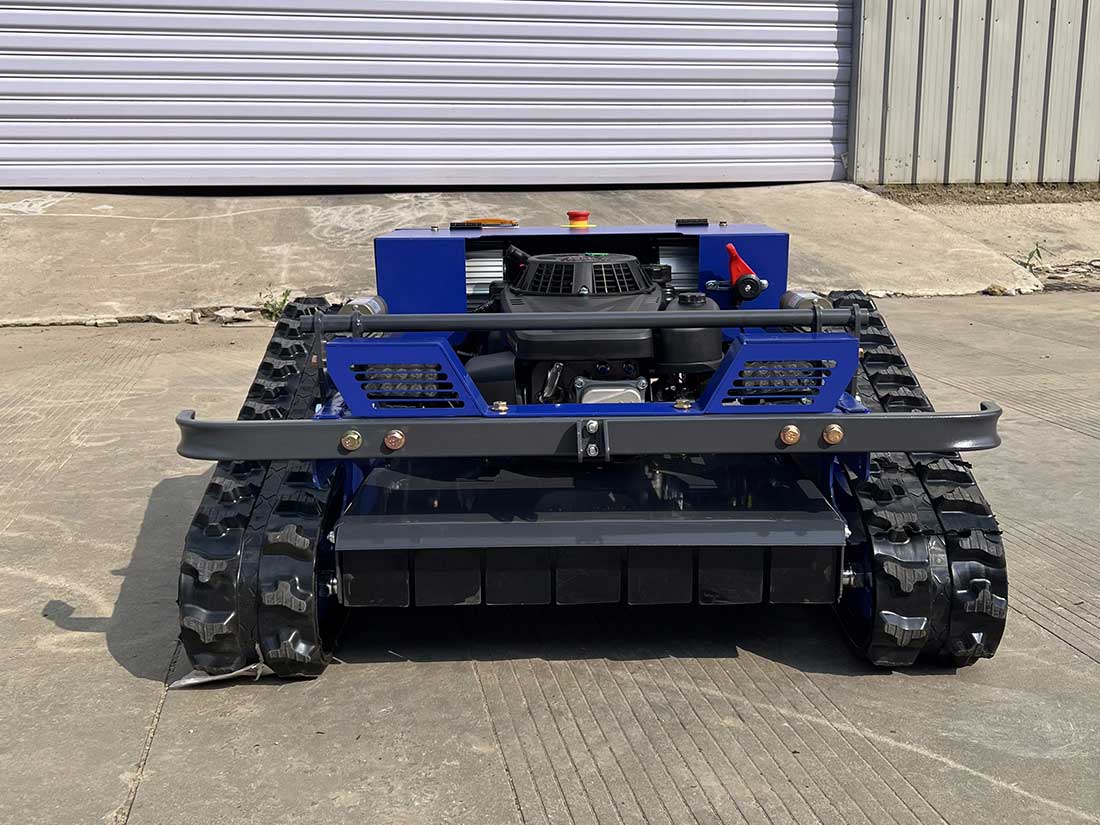
Track Design
Look for a track system engineered for the intended terrain. Track width, ground pressure, traction, durability, and undercarriage construction can all influence performance.
Cutting System
The cutting deck or cutting attachment should match the vegetation.
Fine lawn grass, tall grass, brush, weeds, and heavy vegetation can require different cutting configurations.
Powertrain
Engine or motor output should be considered together with hydraulic performance, cutting load, machine weight, and expected working conditions.
Remote-Control System
The control system should provide reliable machine response and intuitive operation.
For professional users, control precision is particularly important when mowing near obstacles or on slopes.
Serviceability
A machine that is easy to inspect, maintain, and repair can reduce downtime over its working life.
Professional buyers should consider access to spare parts, technical support, routine maintenance requirements, and manufacturer experience.
Long-Term Value Beyond Productivity
The value of a tracked mower should not be judged solely by its purchase price.
A more useful calculation considers the total cost of ownership.
This can include:
Labor requirements
Fuel or energy consumption
Maintenance
Downtime
Transportation
Machine utilization
Productivity
Service life
Replacement parts
If remote-controlled mowing equipment allows a contractor to complete difficult projects more efficiently and with fewer operational constraints, its long-term business value may exceed the initial equipment cost.
Lessons From the Case Study
Several important lessons emerge from this representative tracked mower productivity case study.
First, terrain matters. Equipment that performs well on flat lawns may not be the best solution for slopes, rough fields, or uneven ground.
Second, remote operation changes the workflow. The operator is no longer required to remain directly on the mowing machine, creating additional flexibility for challenging environments.
Third, productivity depends on the complete system. Track design, cutting performance, power, remote control, operator skill, route planning, and maintenance all influence actual results.
Fourth, professional equipment selection should be application-specific. There is no universal mower that is ideal for every landscape.
Finally, measurable results matter. Contractors should evaluate equipment based on completed area, working hours, downtime, cutting quality, operator utilization, and total operating cost.
The Future of Professional Vegetation Management
The development of remote-controlled mowing equipment is changing how professionals approach difficult vegetation-management projects.
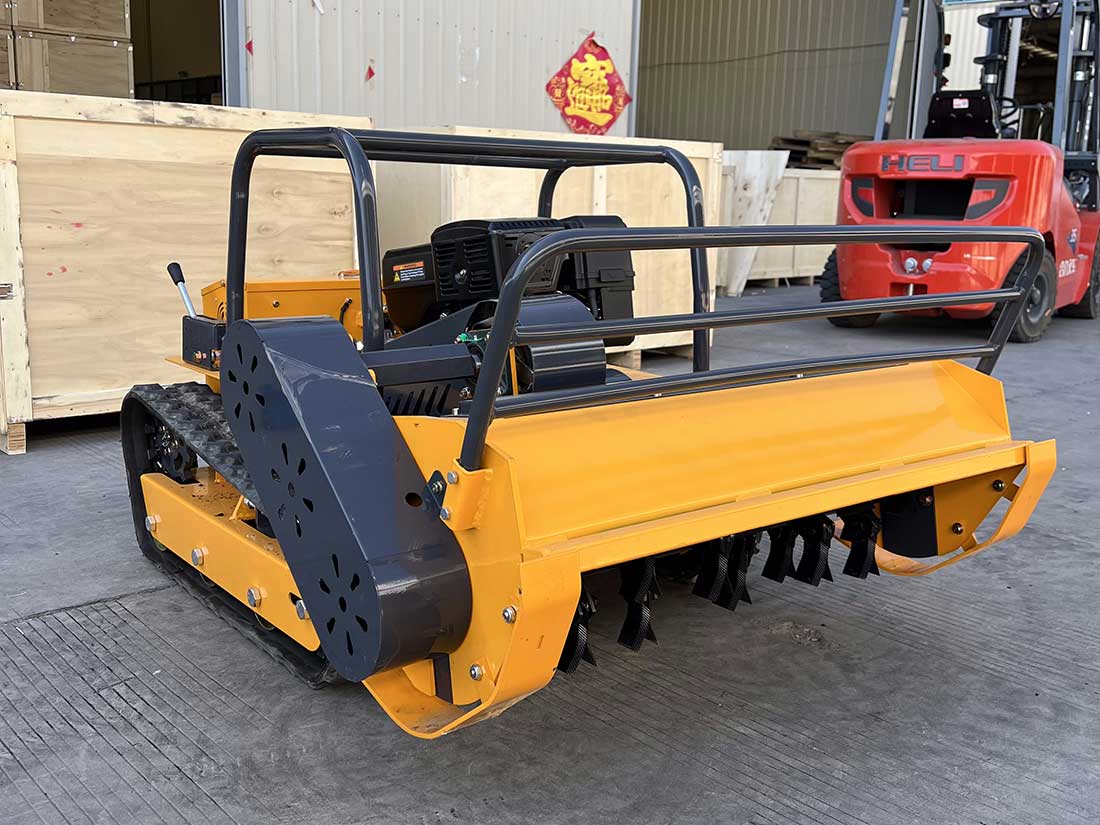
A modern tracked mower combines mobility, cutting technology, and remote operation into one specialized platform. This makes it particularly relevant for industries where terrain conditions make conventional mowing methods less efficient or less practical.
As labor costs rise and safety expectations become increasingly important, professional contractors are looking for equipment that can improve productivity without compromising operational control.
Remote-controlled tracked machines are well positioned to meet this demand.
For contractors managing slopes, large grassland areas, roadside vegetation, orchards, estates, solar farms, and other challenging environments, a tracked mower can provide a practical alternative to conventional mowing equipment.
Conclusion
This case study demonstrates why a tracked mower can become an important productivity tool for professional vegetation management.
By combining continuous-track mobility with remote-controlled operation, the machine can improve access to difficult terrain, provide greater operator flexibility, and support a more efficient mowing workflow.
The strongest results come when the equipment is properly matched to the terrain, vegetation, workload, and operating environment.
For businesses looking to explore professional tracked mower solutions and remote-controlled mowing equipment, JY Lawn Mower provides specialized equipment designed for demanding mowing applications.
Visit JY Lawn Mower to explore remote-controlled mowing equipment
When evaluating your next mowing solution, consider not only cutting power, but also terrain capability, operator safety, maneuverability, maintenance, and total productivity. For challenging vegetation-management projects, the right tracked mower can turn difficult mowing conditions into a more controlled, efficient, and professional operation.