 English
 Spanish
 Portuguese
 French
 Italian
 Remote Mower
Managing large grassland areas is very different from maintaining a small residential lawn. Professional vegetation-management teams may need to cover extensive fields, uneven grassland, roadside areas, embankments, orchards, and other properties where terrain conditions change throughout the worksite.
In these environments, productivity depends on more than cutting power. Equipment must provide reliable traction, maneuverability, efficient mowing performance, and an operating method that helps reduce unnecessary exposure to difficult terrain.
This is where a tracked mower can provide a significant advantage. When combined with remote-controlled mowing equipment, a tracked mower can give professional operators a more flexible way to manage large grassland areas.
The Challenge: Managing Large and Uneven Grassland
Consider a typical professional grassland-management project. The property contains extensive areas of tall grass, sections of uneven ground, gentle slopes, and several areas that are difficult to reach with conventional ride-on mowers.
A conventional mower may perform efficiently across the flat sections. However, productivity can decrease when the machine encounters:
Uneven ground
Wet or soft soil
Slopes and inclines
Tall or dense grass
Narrow access routes
Obstacles
Rough or poorly maintained areas
These conditions create a common problem for vegetation-management contractors: the machine may have sufficient cutting power but lack the terrain capability needed to use that power efficiently across the entire property.
The introduction of a tracked mower changes the approach.
Why a Tracked Mower Was Considered
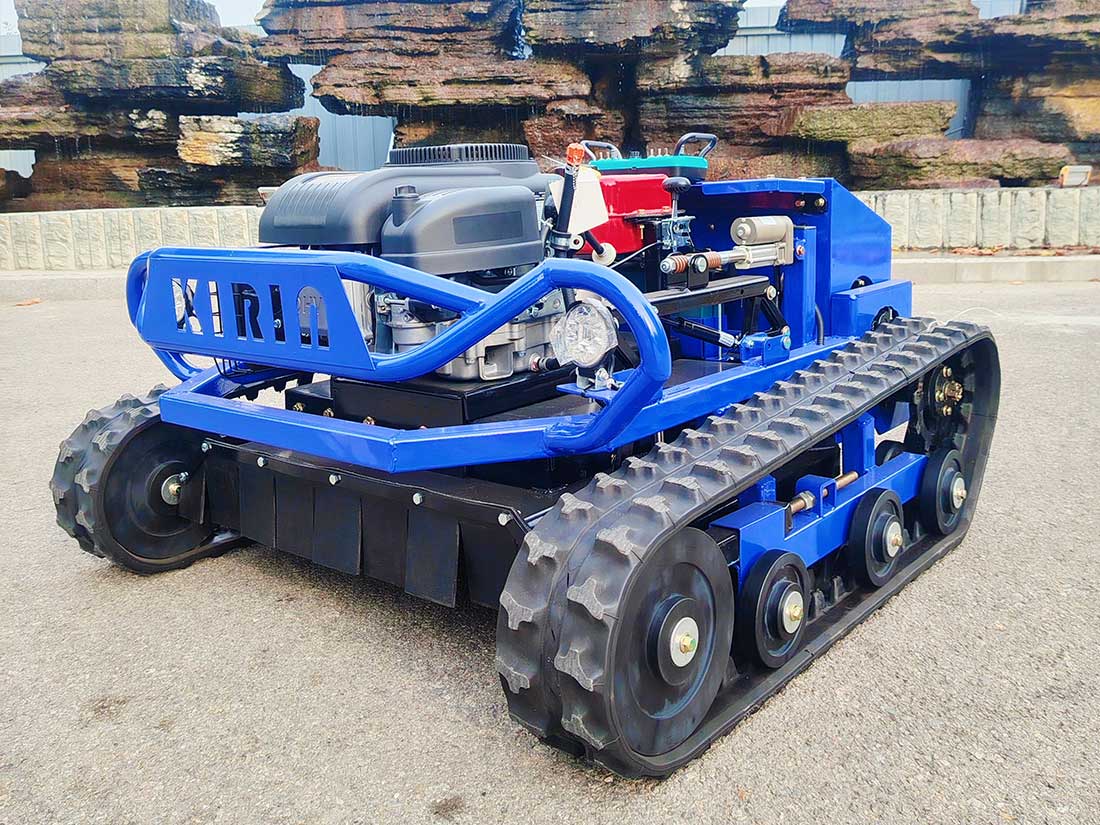
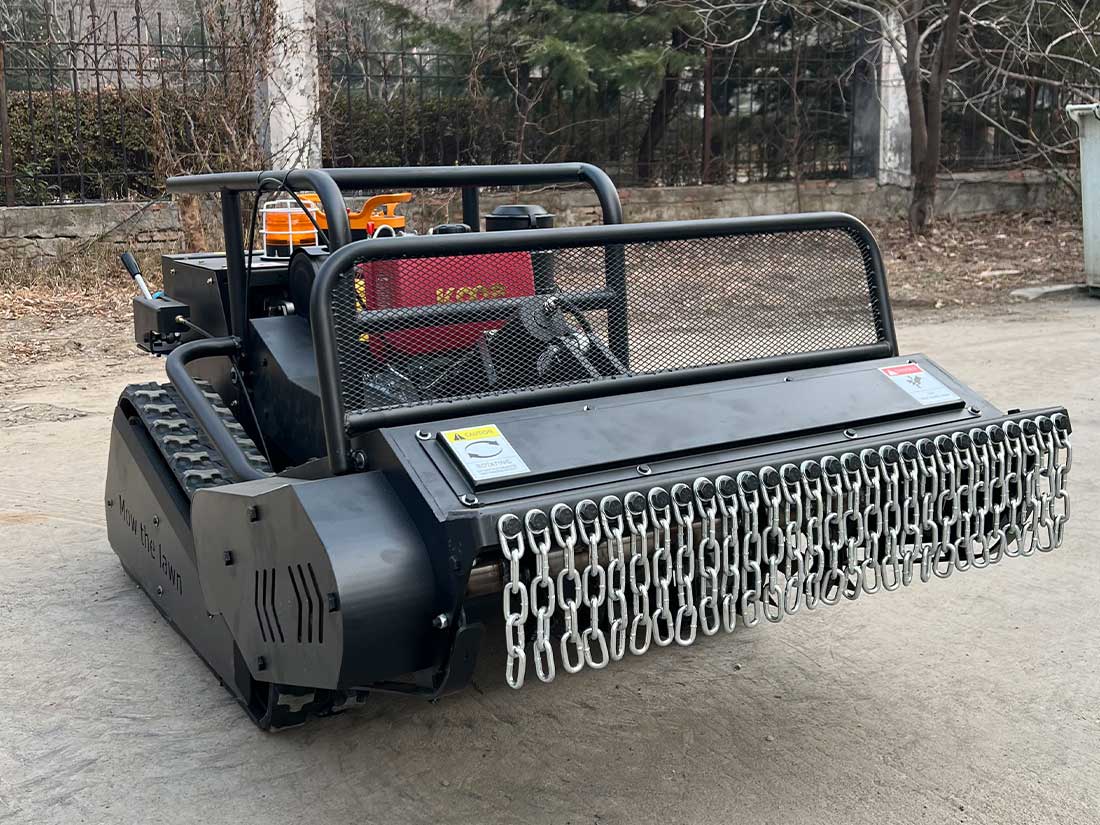
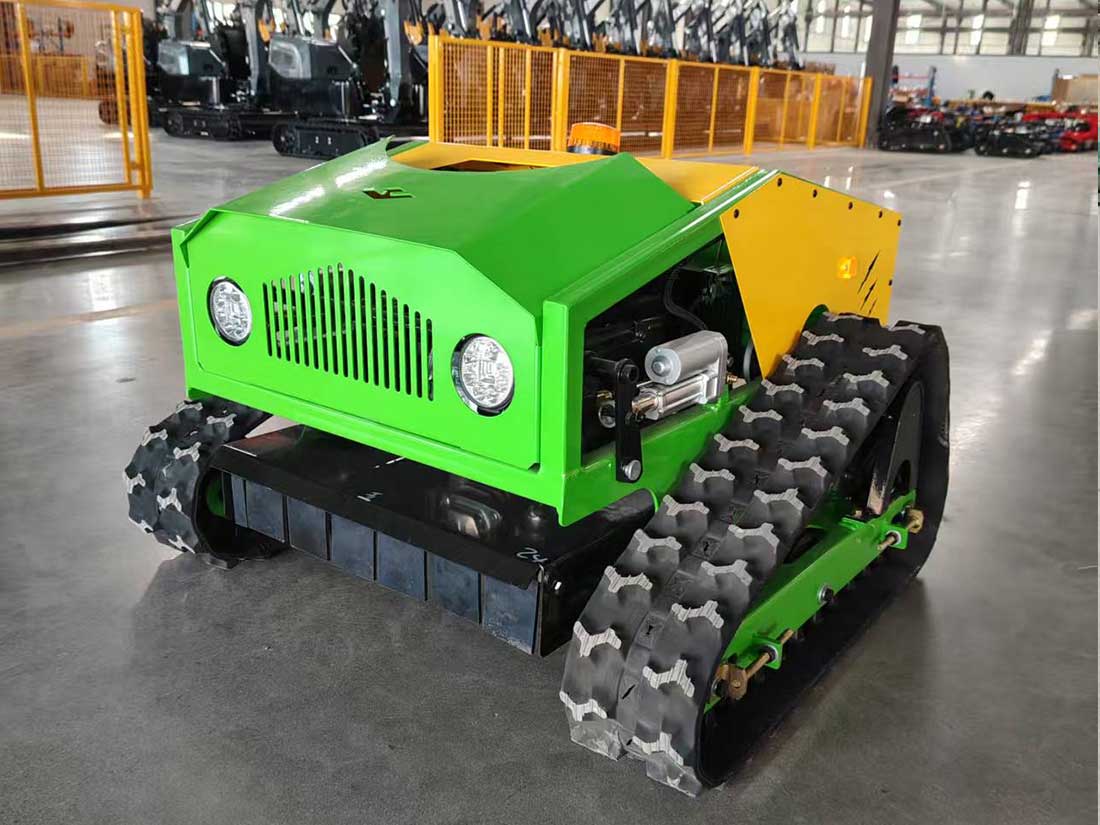
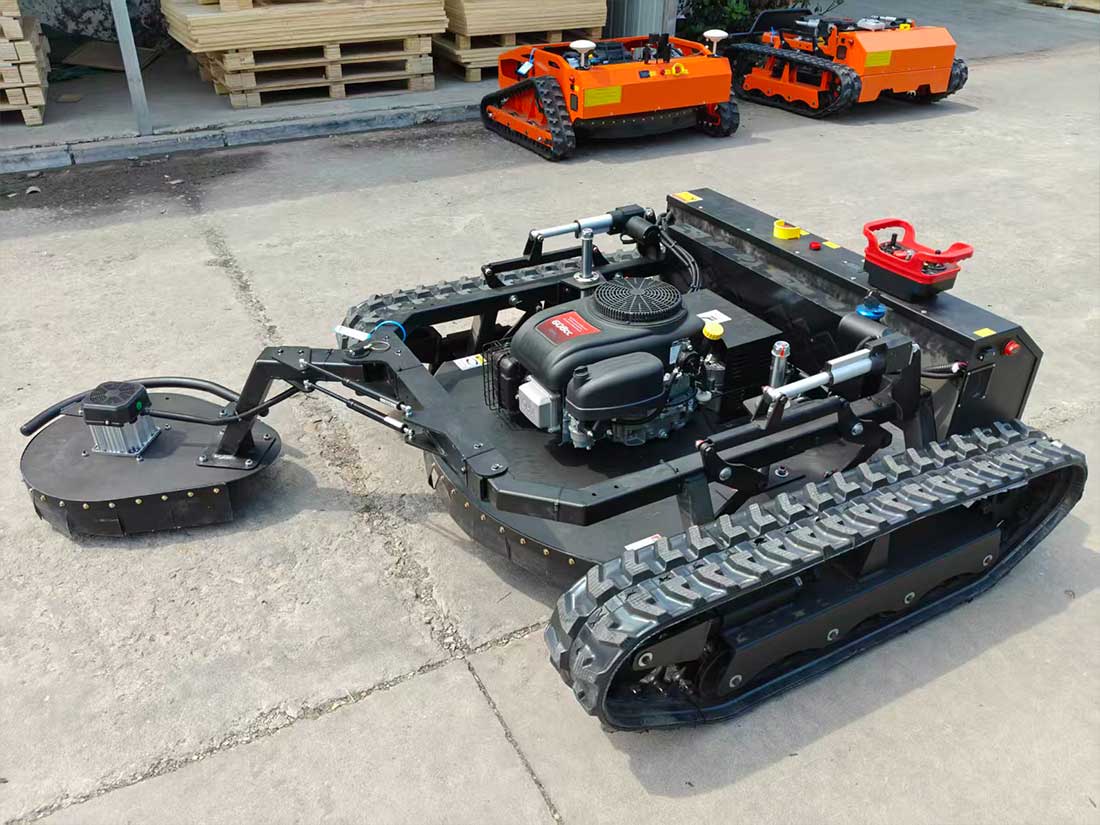
The continuous-track design of a tracked mower provides a larger ground-contact area than conventional wheeled equipment. This can help distribute machine weight and improve traction on suitable uneven or challenging surfaces.
For large grassland projects, this characteristic can be valuable because terrain is rarely consistent from one section to another.
A tracked mower can be particularly useful when the worksite includes a combination of open grassland and difficult sections. Instead of treating the entire property as if it had the same terrain characteristics, operators can use specialized equipment where it offers the greatest advantage.
The objective is not necessarily to replace every conventional mower. Instead, the tracked mower becomes a specialized productivity tool within the overall equipment fleet.
Adding Remote-Controlled Mowing Equipment
The second major element of this approach is remote operation.
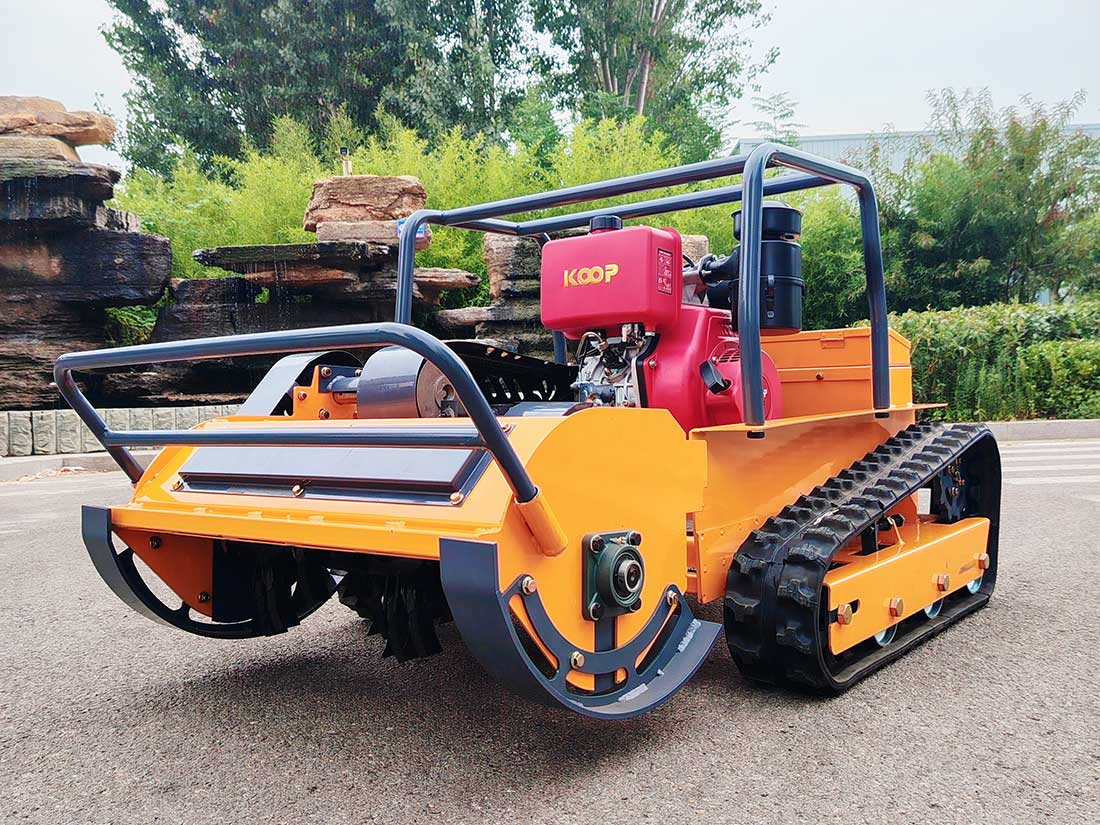
With remote-controlled mowing equipment, an operator can control a tracked mower from a suitable position rather than riding directly on the machine.
Depending on the machine configuration, remote controls can manage functions such as:
Forward and reverse movement
Steering
Travel speed
Cutting operation
Machine positioning
This can be particularly useful when mowing slopes, rough grassland, ditches, or areas where keeping the operator away from the machine provides a more suitable working arrangement.
Remote control does not eliminate the need for professional safety procedures. Operators must maintain adequate visibility, follow the manufacturer's instructions, respect slope limitations, and inspect the work area before operation.
Case Study Scenario: Large Grassland Maintenance
In this representative professional scenario, a vegetation-management team is responsible for maintaining a large grassland property containing both relatively flat areas and sections of uneven terrain.
The team initially uses conventional mowing equipment for accessible sections. However, difficult areas require slower operations and additional planning.
Instead of attempting to use the same equipment everywhere, the team introduces a tracked mower equipped for remote-controlled operation.
The operating strategy is straightforward:
Survey the property before mowing.
Divide the site according to terrain and vegetation conditions.
Use conventional equipment on suitable flat areas.
Deploy the tracked mower on uneven and difficult sections.
Operate the machine remotely from an appropriate observation position.
Monitor cutting quality and machine position continuously.
Perform routine inspection and maintenance after operation.
This approach allows each type of equipment to perform the task it is best suited for.
Improved Access Across Uneven Ground
One of the first benefits observed in this type of application is improved access.
Large grassland properties often contain areas that are technically accessible but inefficient to mow with conventional ride-on equipment.
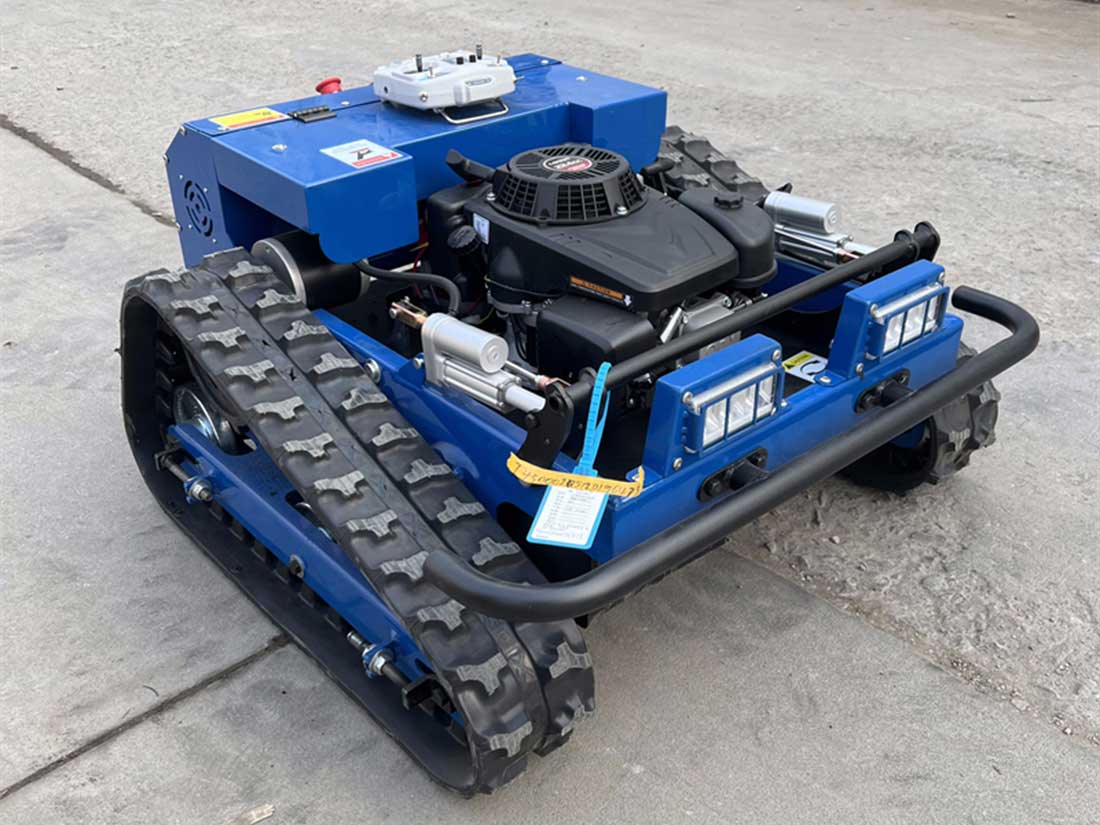
A tracked mower can provide additional mobility on suitable uneven surfaces because its track system maintains continuous contact with the ground.
This does not mean tracked machines are immune to difficult conditions. Extremely wet ground, unstable soil, hidden obstacles, or slopes beyond the manufacturer's rated limits can still create serious operational risks.
Professional equipment selection must therefore begin with a site assessment.
When properly matched to the worksite, however, a tracked mower can help extend the practical mowing range of a professional team.
More Flexible Mowing on Slopes
Sloped grassland creates another challenge.
With traditional ride-on machinery, the operator must remain on the machine while it travels across the slope. Depending on the terrain, this can limit where and how the machine can be used.
Remote-controlled mowing equipment changes this operating arrangement.
A tracked mower can be positioned and controlled remotely while the operator remains in an appropriate observation location.
This can be particularly useful for grass-covered embankments, moderate slopes, drainage areas, and other locations where direct riding operation is less suitable.
The important point is that the machine's rated slope capability must always be followed. Professional operators should never assume that tracked construction alone makes a mower suitable for unlimited slope angles.
Maintaining Cutting Quality Across Large Areas
Productivity is not meaningful if cutting quality suffers.
For professional vegetation management, the cutting system must match the vegetation. Grassland may include short grass, tall grass, weeds, thick vegetation, or seasonal growth with different moisture levels.
A tracked mower should therefore be evaluated according to both its mobility and its cutting configuration.
Important factors include:
Engine or motor power
Cutting width
Blade configuration
Cutting height
Vegetation density
Ground speed
Machine maneuverability
For large open areas, a wider cutting system may improve coverage. In tighter areas, maneuverability may be more important than maximum cutting width.
The correct balance depends on the property.
Labor Efficiency: A Practical Advantage
Large-area mowing can consume substantial labor resources, particularly when difficult terrain requires additional personnel.
A tracked mower with remote operation can help simplify certain workflows by allowing a trained operator to control the machine without physically riding on it.
This does not mean that remote-controlled equipment automatically eliminates labor requirements. Site preparation, transportation, machine monitoring, maintenance, and safety management still require trained personnel.
However, the operating model can become more flexible.
Instead of assigning workers to physically operate equipment in every difficult section, a professional team can use remote-controlled mowing equipment to address selected areas with a specialized machine.
Over an entire mowing season, this flexibility may contribute to improved resource utilization.
Productivity Gains Come from the Complete Workflow
A common mistake when evaluating a tracked mower is focusing only on its maximum cutting speed.
Professional productivity is determined by the entire workflow.
Consider the following factors:
Travel time: How quickly can the machine reach the working area?
Setup time: How easily can the equipment be prepared?
Terrain access: Can the machine reach difficult sections?
Cutting efficiency: Can it maintain suitable cutting performance?
Operator positioning: Can the operator maintain a good view of the machine?
Downtime: How easily can routine maintenance be performed?
A tracked mower can create value when it improves several of these factors simultaneously.
Why Tracked Equipment Can Complement Conventional Mowers
This case study also demonstrates an important principle: professional vegetation management does not have to be a choice between traditional and remote-controlled machinery.
A mixed equipment strategy can be more practical.
Conventional mowers can remain highly effective for large, flat, open grassland. Meanwhile, a tracked mower can be deployed for slopes, uneven terrain, difficult access points, and other specialized sections.
This approach can maximize the utilization of both types of equipment.
For contractors managing diverse properties, this may be more economical than expecting a single machine to perform every type of mowing task.
Maintenance Is Essential for Long-Term Efficiency
A tracked mower working on large grassland areas may accumulate significant operating hours. Preventative maintenance is therefore essential.
Before and after mowing, professional teams should inspect:
Tracks and undercarriage components
Cutting blades
Drive systems
Hydraulic components, where applicable
Engine or battery system
Remote-control functions
Emergency-stop system
Protective components
Fasteners and connections
The mowing area should also be checked for wire, rocks, branches, debris, holes, and other hazards.
Good maintenance is not simply a way to extend equipment life. It can also reduce unexpected downtime during critical mowing periods.
Measuring Success in a Real-World Application
When evaluating whether a tracked mower has improved a grassland-management operation, contractors should look beyond headline specifications.
Useful performance indicators can include:
Area covered per working hour
Total project completion time
Operator utilization
Fuel or energy consumption
Downtime
Maintenance requirements
Number of personnel required
Access to previously difficult areas
Consistency of cutting results
These measurements provide a more reliable assessment of equipment value than simply comparing purchase prices.
The results will naturally vary according to machine configuration, terrain, vegetation, weather, operator experience, and project scale.
Lessons for Professional Vegetation Managers
This representative case highlights several lessons that apply to many large-area mowing projects.
Match the Machine to the Terrain
A powerful machine is not automatically the best machine. Terrain capability must be considered alongside cutting performance.
Use Remote Control Where It Adds Value
Remote operation is particularly useful where direct operation exposes personnel to challenging terrain or limits machine access.
Combine Equipment Strategically
Traditional mowers remain excellent for many flat areas. A tracked mower can complement them by handling specialized sections.
Prioritize Preventative Maintenance
Large-area operations cannot afford unnecessary downtime. Regular inspections and maintenance should be part of the workflow.
Measure Operational Results
Track productivity, coverage, downtime, and labor utilization to determine whether the equipment is delivering measurable business value.
The Future of Large-Area Grassland Management
The evolution of professional mowing equipment is moving toward greater specialization and flexibility.
Remote-controlled mowing equipment is becoming increasingly relevant to contractors who manage slopes, rough grassland, roadside vegetation, orchards, and large properties with mixed terrain.
A tracked mower fits naturally into this development because it combines specialized ground mobility with the potential advantages of remote operation.
The most effective strategy is not simply to automate mowing. It is to use technology where it solves a real operational problem.
For large grassland areas, that problem may be difficult access, uneven terrain, operator positioning, or the need to improve overall workflow efficiency.
Explore Tracked Mower Solutions from JY Lawn Mower
If your organization manages large grassland areas or challenging vegetation-maintenance projects, professional remote-controlled mowing equipment can be worth evaluating.
JY Lawn Mower provides remote-controlled mowing solutions designed for demanding applications, including difficult terrain and professional vegetation management.
Whether you are managing grassland, slopes, roadside vegetation, agricultural land, or other large properties, the right tracked mower can help create a more flexible mowing strategy.
For more information about tracked mower solutions and remote-controlled mowing equipment, visit:
JY Lawn Mower Official Website
A successful large-area mowing strategy is ultimately about matching the right machine to the right task. For challenging grassland where conventional equipment has limitations, a tracked mower combined with remote-controlled operation can provide a practical new approach to professional vegetation management.