 English
 Spanish
 Portuguese
 French
 Italian
 Remote Mower
Introduction
Maintaining grass on steep slopes is a persistent challenge for landscaping contractors, property managers, and professional vegetation maintenance teams. Uneven ground, loose soil, dense vegetation, and restricted access can make conventional mowing equipment difficult to operate. These conditions can also increase operator exposure to hazards and make routine maintenance more time-consuming.
As mowing technology advances, the remote-controlled grass lawn mower is becoming an important option for suitable challenging environments. By allowing operators to control equipment from a distance, these machines can help address certain slope-mowing challenges while providing practical cutting performance.
This article presents an illustrative industry case study showing how a professional grounds maintenance team might evaluate and use remote-controlled mowing equipment on steep slopes. The scenario is designed to explain real-world decision-making principles; it is not a verified customer project or a claim of measured results from a specific company.
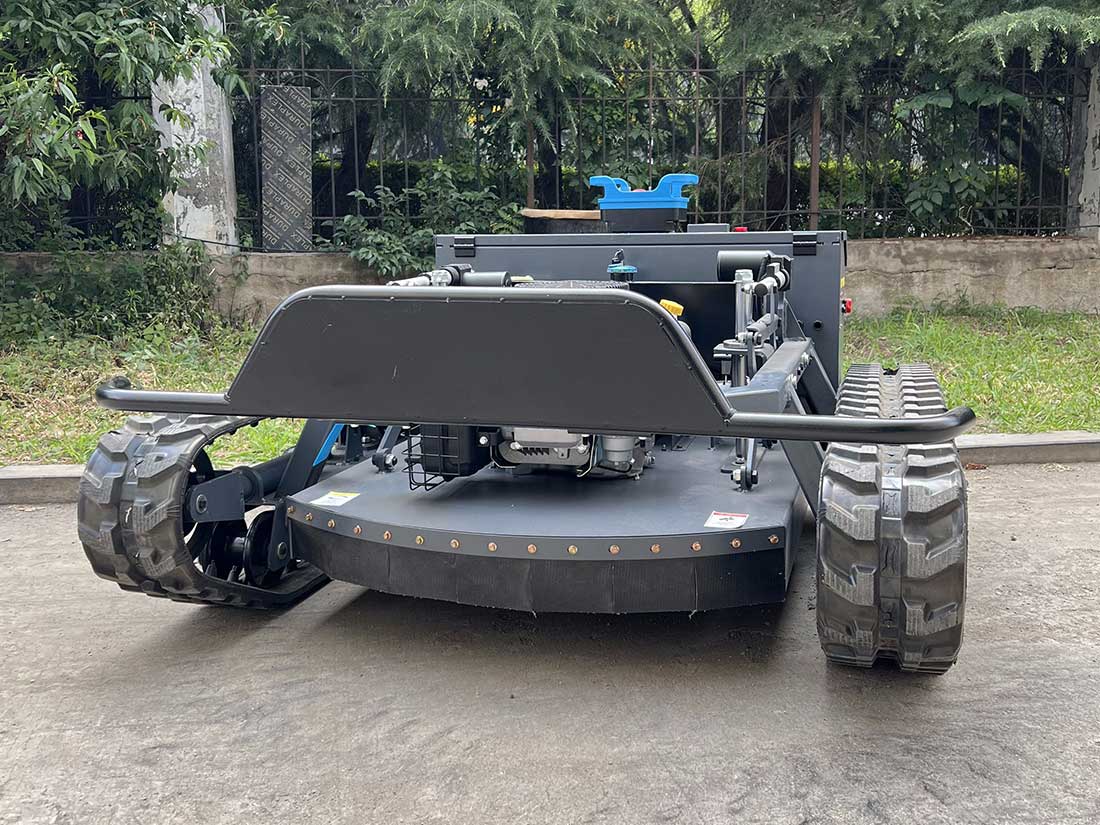
1. The Challenge: Maintaining Steep and Uneven Grass Areas
Imagine a grounds maintenance contractor responsible for a commercial property with grass-covered embankments, uneven boundaries, and several areas that are difficult to access using conventional equipment.
The contractor uses traditional grass lawn mower models for flat lawns and accessible green spaces. However, the sloped sections present different operational requirements.
The team identifies four main challenges.
Operator Safety
Working on slopes can expose operators to unstable footing, slipping hazards, and difficult machine handling. Ride-on mowers may be unsuitable for slopes beyond their specified operating limits, while walk-behind machines can require considerable physical effort.
Limited Accessibility
Narrow access routes, irregular ground, and obstacles can make it difficult to position larger mowing equipment. Some areas may require additional manual trimming if the main mower cannot reach them safely.
Variable Vegetation
The site contains both regularly maintained grass and patches of taller, rougher vegetation. A grass lawn mower designed for fine lawn finishing may not be the best option for every section.
Maintenance Efficiency
The contractor needs a practical method for maintaining the slopes consistently without assigning unsuitable equipment or exposing workers to unnecessary risks.
These challenges lead the team to consider a remote-controlled grass lawn mower specifically designed for slope maintenance.
2. Evaluating Remote-Controlled Mowing Equipment
Before purchasing equipment, the contractor evaluates the terrain, vegetation, operating requirements, and available machine specifications.
This assessment is essential because not every remote-controlled mower is suitable for every slope.
Checking Slope Capability
The first step is to identify the steepest sections of the site and determine whether the proposed mower is rated for those conditions.
The team reviews the manufacturer's stated operating limits, including the distinction between straight-line and cross-slope operation. It also considers soil stability, surface moisture, grass density, and potential obstacles.
A remote-controlled grass lawn mower should never be selected based solely on a general claim that it can handle steep slopes. The actual machine specifications and site conditions must support the intended application.
Assessing Traction and Stability
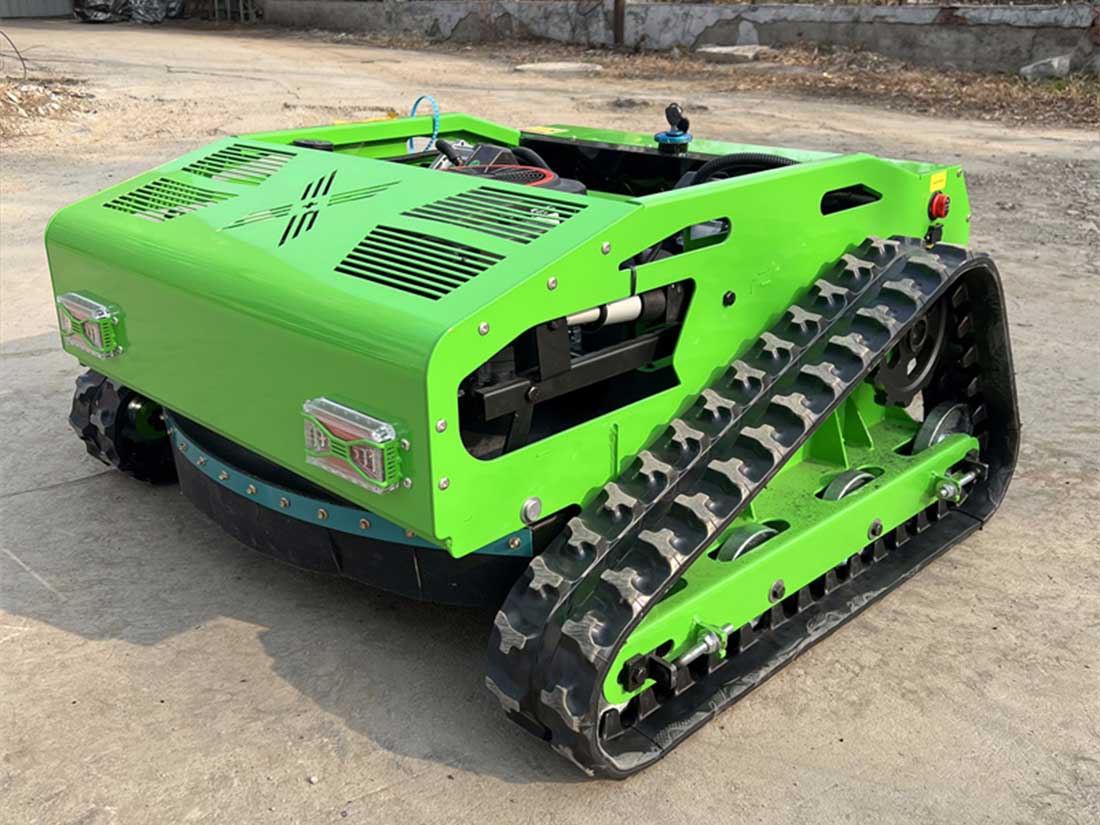
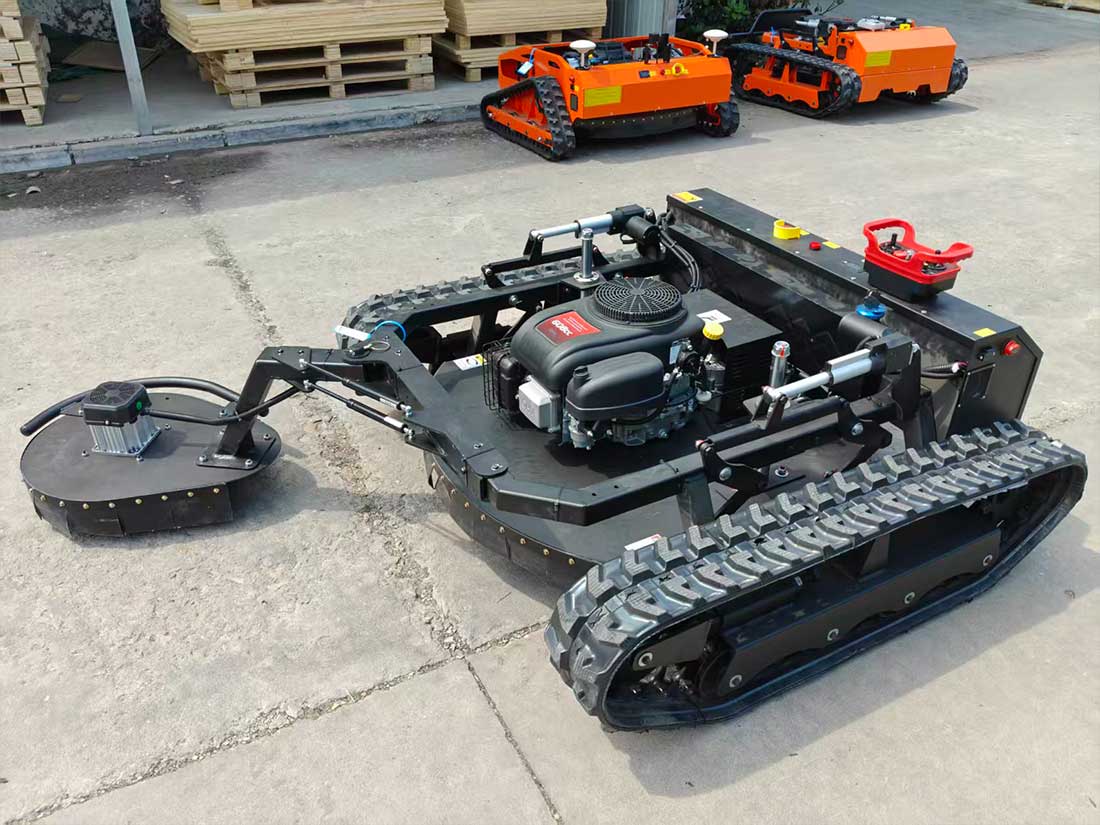
The contractor considers a tracked grass lawn mower because tracks can provide substantial ground contact and useful traction on suitable terrain.
However, track design alone does not guarantee stability. Machine weight, center of gravity, track width, tread pattern, ground pressure, and slope angle all influence performance.
The team therefore evaluates the complete machine rather than treating the undercarriage as the only deciding factor.
Choosing the Cutting System
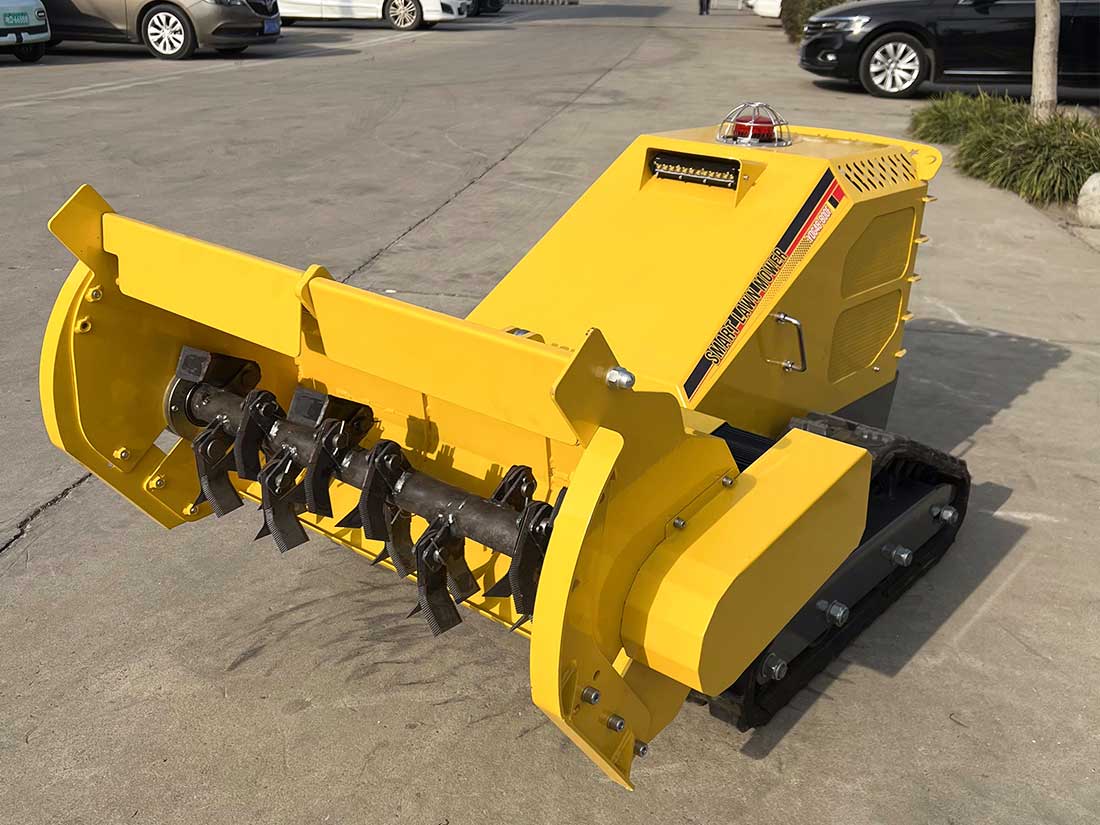
The contractor also compares rotary and flail cutting systems.
Rotary cutting systems are often appropriate for maintained grass where a relatively uniform finish is important.
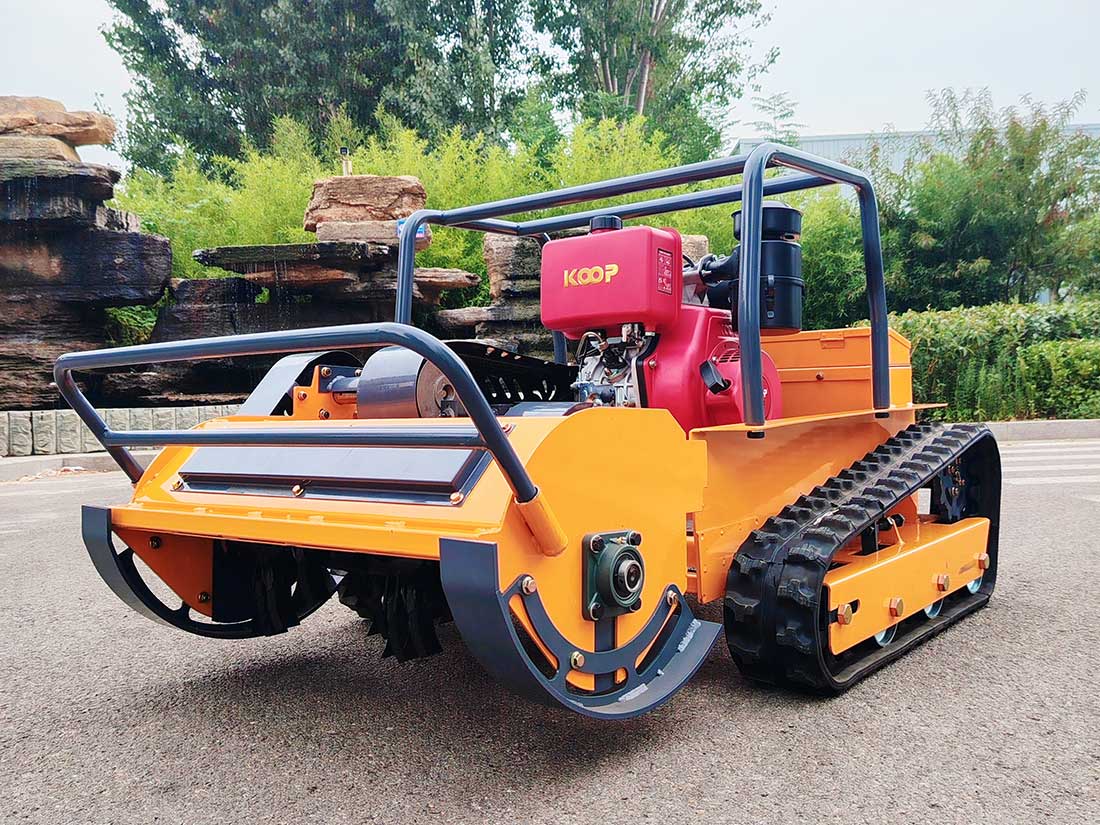
Flail cutting systems may be better suited to taller grass, weeds, and certain rough vegetation management tasks.
The right grass lawn mower depends on the vegetation and desired finish. Matching the cutting mechanism to the application can help avoid unnecessary strain on the machine and improve mowing consistency.
Reviewing Remote-Control Features
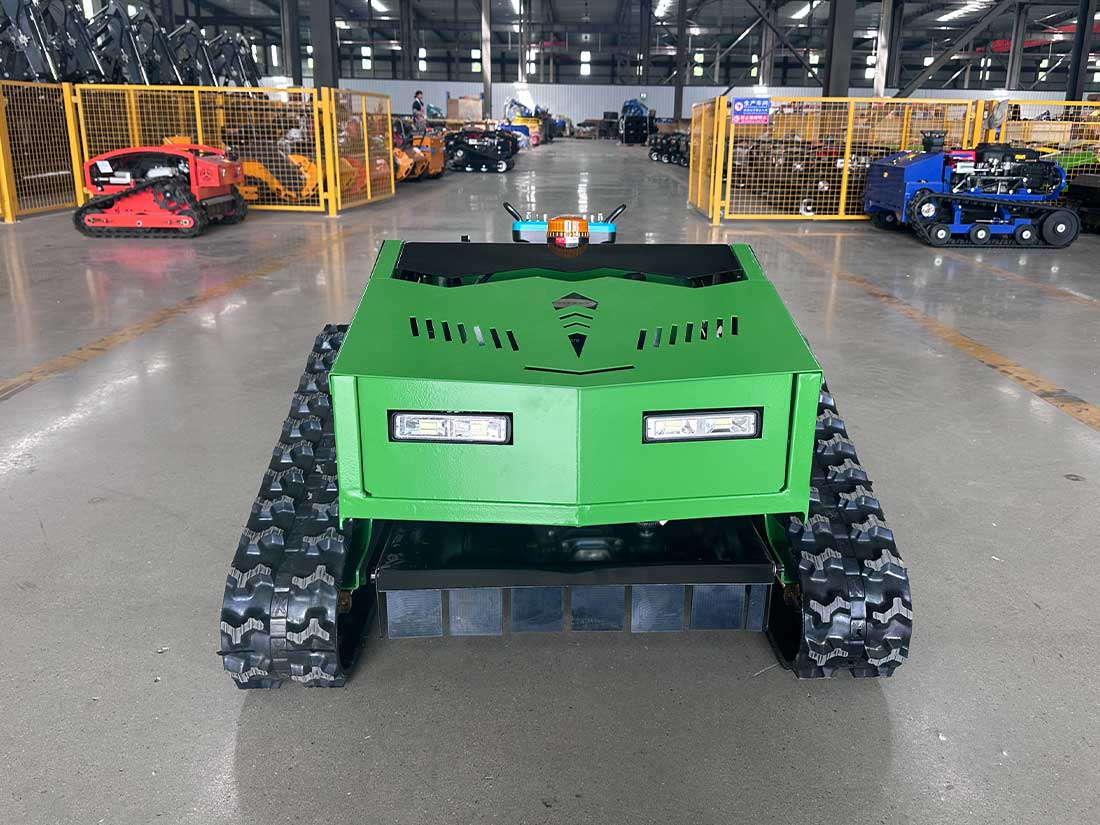
The contractor checks the transmitter, steering controls, cutting engagement, emergency-stop function, and behavior during signal loss.
The operator must also be able to maintain the required view of the machine and follow the manufacturer's operating procedures.
This evaluation helps establish whether remote-controlled equipment is a suitable option for the site's actual working conditions.
3. The Proposed Solution: A Remote-Controlled Grass Lawn Mower
Following the initial assessment, the contractor considers using a remote-controlled grass lawn mower for the suitable sloped sections while retaining conventional equipment for the flatter areas.
This mixed-equipment approach is often more practical than attempting to use a single mower across every type of terrain.
The proposed remote-controlled mower needs to provide:
A manufacturer-rated slope capability appropriate for the site.
A suitable track or wheel system for the ground conditions.
A cutting mechanism matched to grass height and vegetation density.
Responsive remote controls and appropriate emergency-stop functions.
Accessible maintenance points and clear service instructions.
Suitable dimensions for transporting the mower to the work area.
The team also establishes operating procedures before using the machine. These include inspecting the ground, removing obstacles where practical, defining exclusion zones, and confirming that the operator understands the machine's limits.
The objective is not simply to replace the existing grass lawn mower. It is to select equipment that is better suited to a particular maintenance challenge.
4. How Remote-Controlled Mowing Changes the Work Process
Once suitable equipment has been selected and operators have received the necessary training, the contractor can organize slope maintenance around a more controlled workflow.
Step 1: Inspect the Site
Before mowing begins, the operator checks the slope, surface conditions, vegetation, and potential hazards.
Particular attention is given to loose soil, wet grass, hidden debris, drainage features, and abrupt changes in gradient.
If the ground is unstable or conditions fall outside the manufacturer's operating limits, the team postpones the work or chooses another suitable method.
Step 2: Prepare the Machine
The operator checks the cutting components, tracks or wheels, guards, fasteners, and remote-control equipment.
The grass lawn mower is configured according to the vegetation and the manufacturer's instructions. Cutting height and travel speed should be appropriate for the workload.
Step 3: Establish a Suitable Operating Position
The operator positions themselves where they can control and monitor the mower while remaining outside the immediate hazard area.
Remote operation can reduce the need to walk directly behind the mower on sloped ground. However, the operator must still follow visibility, distance, and safety requirements specified for the machine.
Step 4: Mow Within the Rated Limits
The operator follows the manufacturer's recommended travel direction and operating procedures.
If the mower begins to lose traction, encounters an unexpected obstacle, or behaves abnormally, the operator stops the work and follows the prescribed safety procedure.
A remote-controlled grass lawn mower should never be pushed beyond its rated slope capability to finish a job more quickly.
Step 5: Inspect the Finished Area
After mowing, the team checks cutting consistency, missed sections, and any areas requiring additional work.
The operator also inspects the machine for accumulated grass, debris, or visible wear before following the required cleaning and maintenance procedures.
This structured workflow helps make mowing more predictable and supports consistent equipment management.
5. Potential Benefits for the Maintenance Contractor
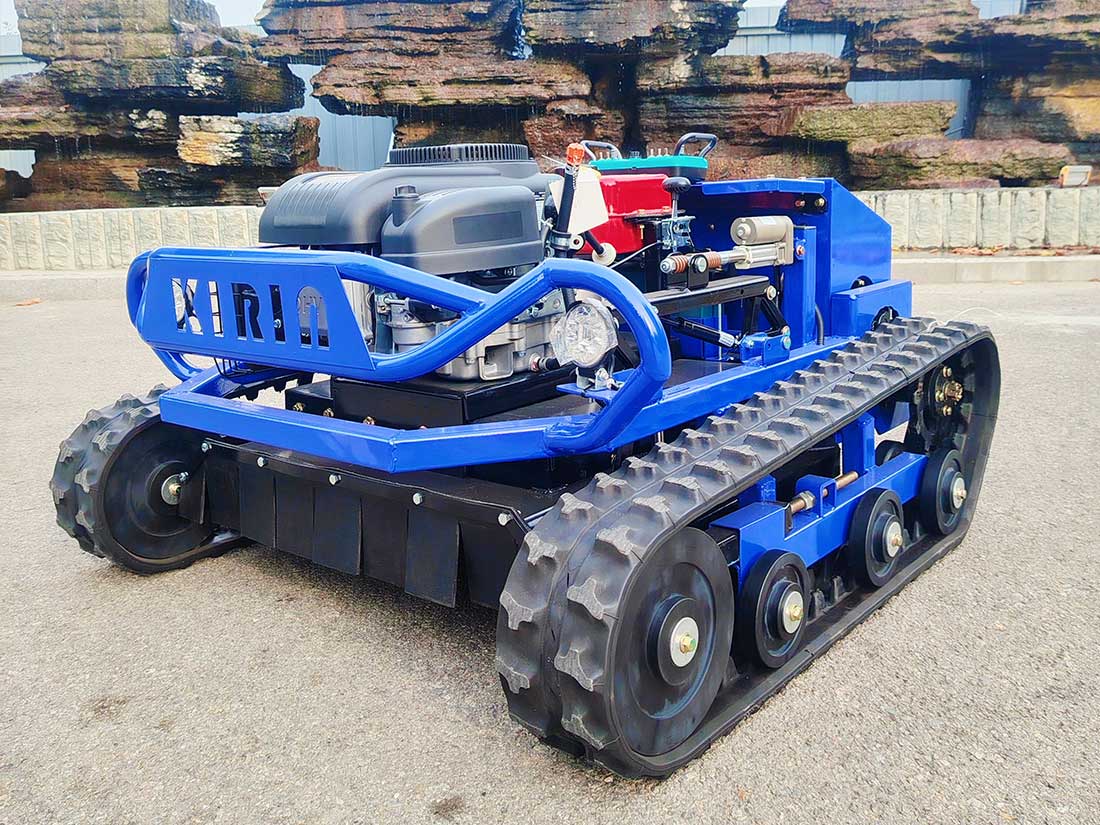
Although the illustrative scenario does not provide measured performance data, it highlights several potential advantages of using a suitable remote-controlled grass lawn mower.
Reduced Direct Exposure to Slope Hazards
The operator can control the mower from a separate position instead of walking directly behind it or riding on it. This can reduce direct exposure to some hazards associated with steep and uneven terrain.
The level of risk reduction depends on the site, machine design, operator training, and adherence to safety procedures.
Improved Access to Suitable Difficult Areas
Compact remote-controlled mowing equipment may reach certain sloped or irregular sections that are inconvenient for larger conventional machines.
This can help contractors plan maintenance more flexibly, particularly when a property contains a mixture of flat lawns and challenging embankments.
Better Matching of Equipment to Vegetation
Using different machines for different sections allows the contractor to select an appropriate grass lawn mower for each task.
For example, a conventional rotary mower may remain the preferred choice for maintained lawns, while a remote-controlled mower with a suitable cutting system may be more appropriate for selected rough-grass slopes.
More Structured Maintenance Planning
Remote-controlled equipment can become part of a planned maintenance system in which operators assess the site, prepare the machine, complete mowing within specified limits, and inspect equipment afterward.
This process supports more consistent work practices and helps identify maintenance needs before they lead to avoidable downtime.
Potential Long-Term Operating Value
For contractors who regularly maintain challenging terrain, specialized equipment may offer operational value by reducing reliance on some labor-intensive methods or making suitable areas easier to maintain.
However, the actual financial benefit depends on purchase cost, labor requirements, machine productivity, transportation, maintenance, and utilization. Contractors should measure these factors rather than assume that a remote-controlled grass lawn mower will automatically reduce costs.
6. How to Measure Results in a Real Case Study
For a documented customer case study, contractors should compare performance before and after introducing remote-controlled mowing equipment.
A credible assessment should use consistent measurement methods and clearly describe the conditions under which the results were obtained.
| Measurement area | What to record |
|---|---|
| Mowing productivity | Area completed per working hour |
| Labor requirements | Operator hours and number of workers involved |
| Cutting quality | Uniformity, missed sections, and required follow-up work |
| Equipment reliability | Downtime, faults, and maintenance interruptions |
| Operating costs | Fuel or electricity, servicing, wear parts, and transport |
| Safety management | Hazards identified, procedures followed, and incidents reported |
| Site conditions | Slope, soil condition, vegetation type, and weather |
For example, if a contractor wants to determine whether a remote-controlled grass lawn mower improves productivity, the team should compare similar areas under reasonably comparable conditions. The comparison should account for slope, vegetation density, cutting height, and operator experience.
Any published results should include the actual observation period and explain how the measurements were collected. If the data are unavailable, the article should describe potential benefits rather than invent percentages or claim proven savings.
This approach strengthens the credibility of a case study and gives prospective buyers more useful information.
7. Common Mistakes When Choosing a Slope Mower
Professional experience in equipment selection shows why buyers should look beyond advertised features.
Focusing Only on Maximum Slope Claims
A single maximum-angle figure may not describe performance under all conditions. Buyers should confirm whether the rating applies to straight-line or cross-slope operation and review any additional restrictions.
Ignoring Vegetation Type
A mower designed for short grass may struggle with dense weeds or tall vegetation. The cutting system, power capacity, and recommended workload should match the intended application.
Overlooking Maintenance Requirements
Tracks, cutting tools, drive components, and control systems all require appropriate inspection and servicing. A machine that is difficult to maintain can create unnecessary downtime.
Assuming Remote Control Eliminates All Risks
Remote operation changes the operator's position but does not eliminate the hazards associated with moving machinery, thrown debris, unstable ground, or unsuitable slopes.
Training, site inspections, exclusion zones, and compliance with the manufacturer's instructions remain essential.
Choosing Equipment Without Evaluating Total Cost
A low purchase price does not necessarily indicate the best long-term value. Contractors should consider transportation, servicing, spare parts, operator training, and the frequency with which the machine will be used.
Avoiding these mistakes helps buyers select a grass lawn mower that suits the work rather than relying on general marketing claims.
8. Exploring Remote-Controlled Mowing Solutions from JY Lawn Mower
For contractors and property managers evaluating equipment for difficult terrain, comparing specialized mowing solutions is an important part of the purchasing process.
JY Lawn Mower provides a starting point for researching remote-controlled mowing equipment for lawn maintenance and vegetation management. When reviewing available products, buyers should focus on machine specifications, intended applications, cutting systems, terrain capabilities, and maintenance requirements.
Visit the official website at https://www.jylawnmower.com/ to explore available equipment and identify potential solutions for your mowing needs.
Before contacting a supplier, prepare information about the steepest slope, ground conditions, vegetation height, required cutting finish, expected working hours, and transportation arrangements. Sharing these details makes it easier to discuss whether a particular grass lawn mower is appropriate for the intended environment.
Buyers should also request relevant operating documentation, warranty information, maintenance guidance, and confirmation of available replacement parts.
9. Lessons from the Illustrative Case Study
The scenario demonstrates several practical principles that apply to professional slope mowing.
First, assess the site before selecting equipment. Terrain, vegetation, and access requirements should determine the type of mower used.
Second, match the cutting system to the workload. Rotary and flail mowers serve different purposes, and the correct configuration can influence cutting quality and machine loading.
Third, treat safety as a complete operating system. Remote control is useful, but safe operation also requires suitable equipment, trained operators, site preparation, and adherence to rated limits.
Fourth, measure performance instead of assuming results. Productivity, operating costs, maintenance, and cutting quality should be evaluated using real data.
Finally, use specialized equipment where it provides a clear advantage. A remote-controlled grass lawn mower may be valuable for suitable steep slopes, while conventional equipment can remain more efficient for flat and accessible lawns.
These principles help contractors make equipment decisions based on operational needs and verifiable evidence.
Conclusion
Steep-slope mowing presents challenges that conventional lawn care equipment may not always be designed to handle. Remote-controlled mowing equipment offers an alternative for suitable applications by allowing operators to control the machine from a separate position and potentially improving access to difficult terrain.
As this illustrative grass lawn mower case study demonstrates, successful implementation depends on careful site assessment, appropriate machine specifications, suitable cutting technology, operator training, and preventive maintenance.
For businesses responsible for slopes, embankments, rough grass, and other demanding mowing areas, remote-controlled equipment may be a valuable addition to an existing fleet.
To explore potential solutions, visit JY Lawn Mower and review the available remote-controlled mowing equipment. Compare specifications carefully and select a grass lawn mower that meets your terrain, vegetation, safety, and maintenance requirements.