 English
 Spanish
 Portuguese
 French
 Italian
 Remote Mower
Introduction: Rethinking Lawn Mower Performance on Challenging Ground
Maintaining grass on steep slopes, roadside embankments, uneven fields, and rugged landscapes presents challenges that ordinary mowing equipment may not be designed to handle. For landscaping contractors, agricultural operators, and professional grounds maintenance teams, selecting the right lawn mower is essential for balancing productivity, cutting quality, operating costs, and safety.
Traditional mowing equipment can perform well on flat, accessible lawns. However, when the terrain becomes steep, irregular, or difficult to reach, operators must pay closer attention to traction, machine stability, vegetation density, and maneuverability.
Remote-controlled mowing equipment offers an alternative for these demanding applications. A purpose-built remote-controlled lawn mower allows operators to control the machine from a suitable position away from the cutting unit, potentially improving access and simplifying certain mowing operations.
This article presents an illustrative case study of how a professional maintenance team could approach steep slopes and uneven terrain using remote-controlled mowing technology. It explores the technical considerations, operating procedures, and performance indicators that help determine whether this type of lawn mower is appropriate for a particular site. The scenario is illustrative, not a claim about a specific customer's verified results.
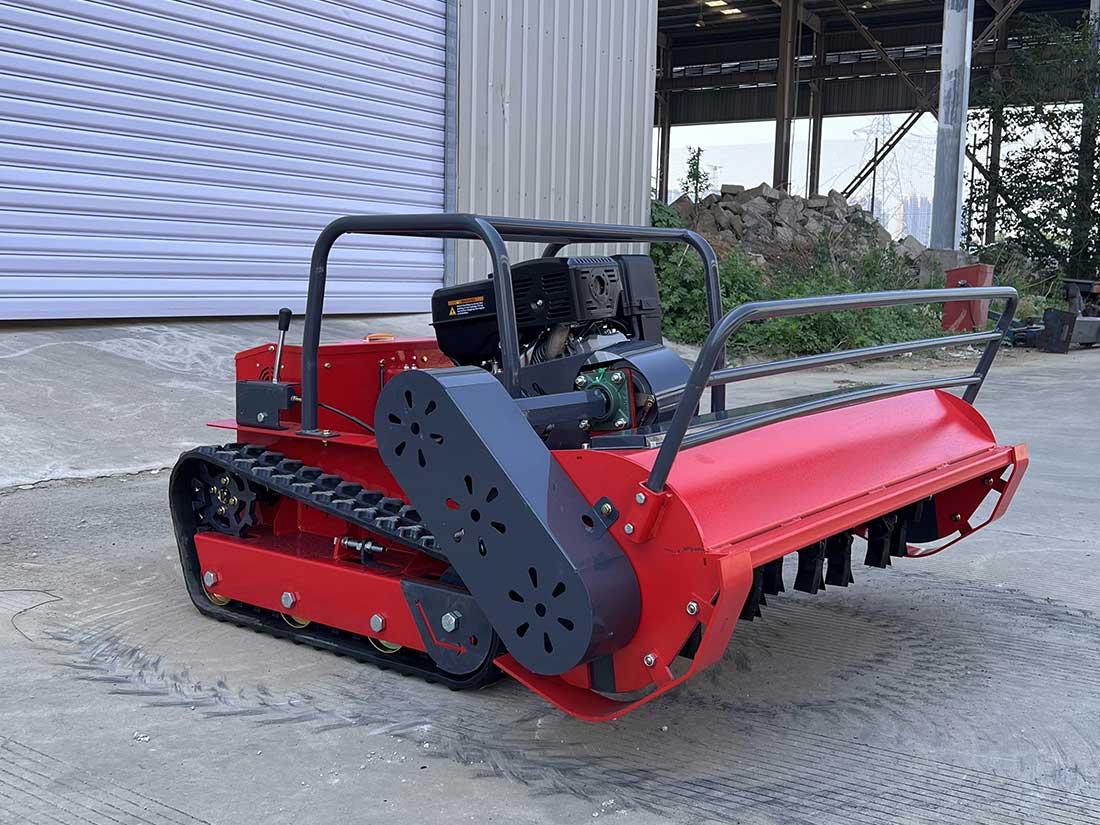
1. The Challenge: Mowing Steep Slopes and Uneven Terrain
Consider a vegetation maintenance contractor responsible for roadside banks, drainage channels, sloping grassland, and uneven property boundaries. The team needs to maintain vegetation regularly while minimizing unnecessary labor, downtime, and operational risks.
Several factors complicate the work.
Steep slopes and machine stability
A slope changes how a lawn mower interacts with the ground. The machine's center of gravity, track or wheel design, surface grip, and direction of travel can all affect stability.
Wet grass, loose soil, gravel, and hidden depressions may increase the risk of slipping or losing control. Equipment suitable for gentle gradients may not be appropriate for steep embankments.
A remote-controlled slope mower designed for this environment may offer improved access, but operators must always follow the manufacturer's specified slope limits and operating instructions.
Uneven ground and hidden obstacles
Uneven terrain can include bumps, shallow ditches, exposed roots, rocks, and sudden changes in ground level. These conditions may affect cutting height, traction, and machine movement.
A suitable lawn mower should have a chassis and cutting system designed for the intended terrain. Before work begins, the site should be inspected for obstacles that could damage blades, tracks, or other components.
Tall grass and dense vegetation
Grass and weeds often grow more vigorously in neglected areas, particularly along roadsides and property boundaries. Dense vegetation can increase cutting resistance and make it harder to maintain a consistent finish.
Selecting a lawn mower with an appropriate cutting system and sufficient power is important. Depending on the vegetation, a rotary deck or flail cutting attachment may be more suitable. Buyers should confirm the manufacturer's recommendations for grass height, brush density, and other vegetation types.
Labor and access limitations
On difficult ground, workers may spend considerable time repositioning equipment, accessing narrow areas, and preparing the worksite. Conventional mowing methods can also place operators in less favorable positions when the terrain is challenging.
Remote-controlled mowing equipment may help address some of these difficulties by changing the operator's position and allowing controlled movement in suitable work zones.
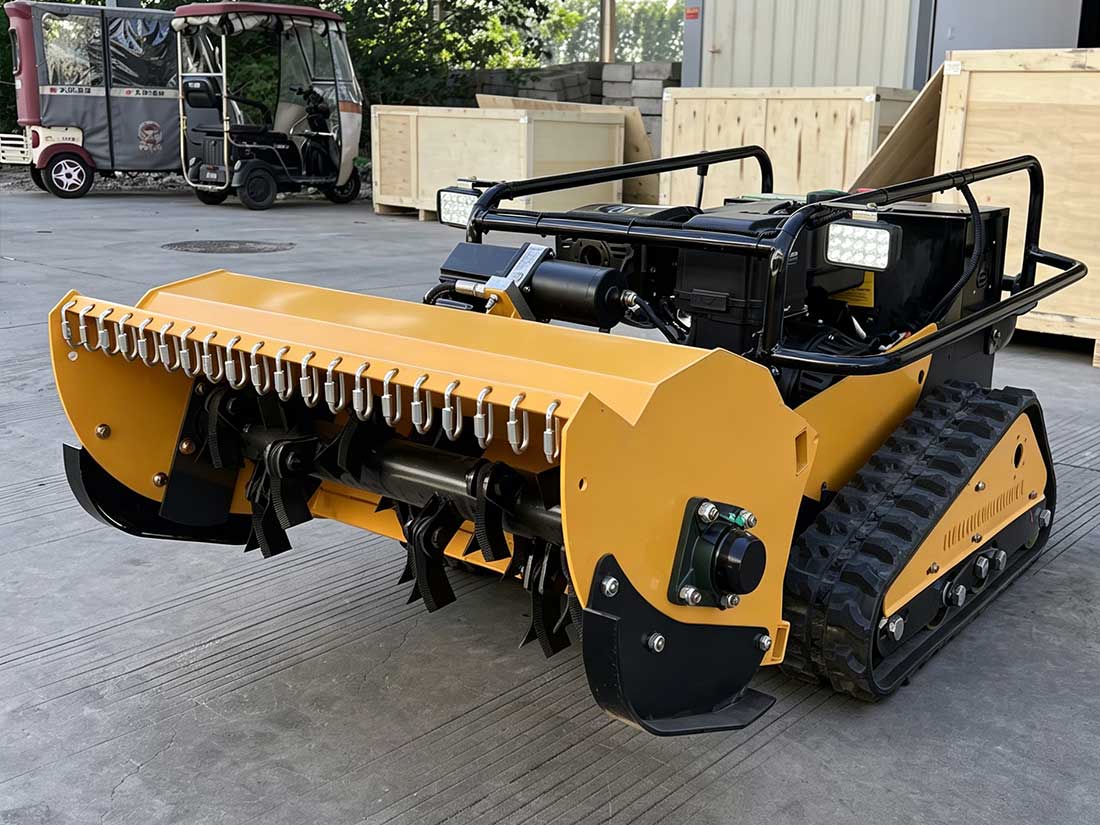
2. The Solution: Selecting a Remote-Controlled Lawn Mower
For the illustrative contractor, the first step is not simply to purchase a remote-controlled lawn mower. It is to determine which machine specifications match the actual site conditions.
Professional equipment selection should consider at least five factors.
Track design and traction
Tracked lawn mower models are often considered for challenging terrain because their track systems can provide useful ground contact on suitable surfaces. However, performance depends on track width, tread design, machine weight distribution, soil conditions, and slope direction.
Buyers should verify the machine's rated gradient and determine whether the specification applies to straight travel, cross-slope operation, or both. These limits should never be assumed to be interchangeable.
Cutting deck and vegetation type
Different cutting systems are designed for different tasks.
Rotary cutting systems: Often suitable for routine grass maintenance where the vegetation and ground conditions match the deck's capabilities.
Flail cutting systems: Can be appropriate for certain tougher grass and weed management applications, depending on the design and manufacturer specifications.
Specialized attachments: May support particular vegetation management tasks but require confirmation of compatibility and operating limits.
A lawn mower should be selected according to the vegetation it needs to cut, not simply the width of its deck.
Engine or battery power
Gasoline-powered equipment may suit long working periods and demanding applications where refueling is practical. Battery-powered equipment can offer different maintenance and operating characteristics, but runtime and charging requirements must be evaluated carefully.
The right power system depends on daily workload, cutting resistance, transport arrangements, noise considerations, and access to fuel or charging facilities.
Remote-control system
Operators should evaluate control responsiveness, operating range, visibility, signal reliability, and emergency-stop functionality. The control system should support precise maneuvering without encouraging operation beyond the machine's safe limits.
Maintenance and technical support
Professional buyers should also consider spare-parts availability, maintenance access, service documentation, and supplier support. A technically capable lawn mower delivers limited business value if it is frequently unavailable because of preventable maintenance problems.
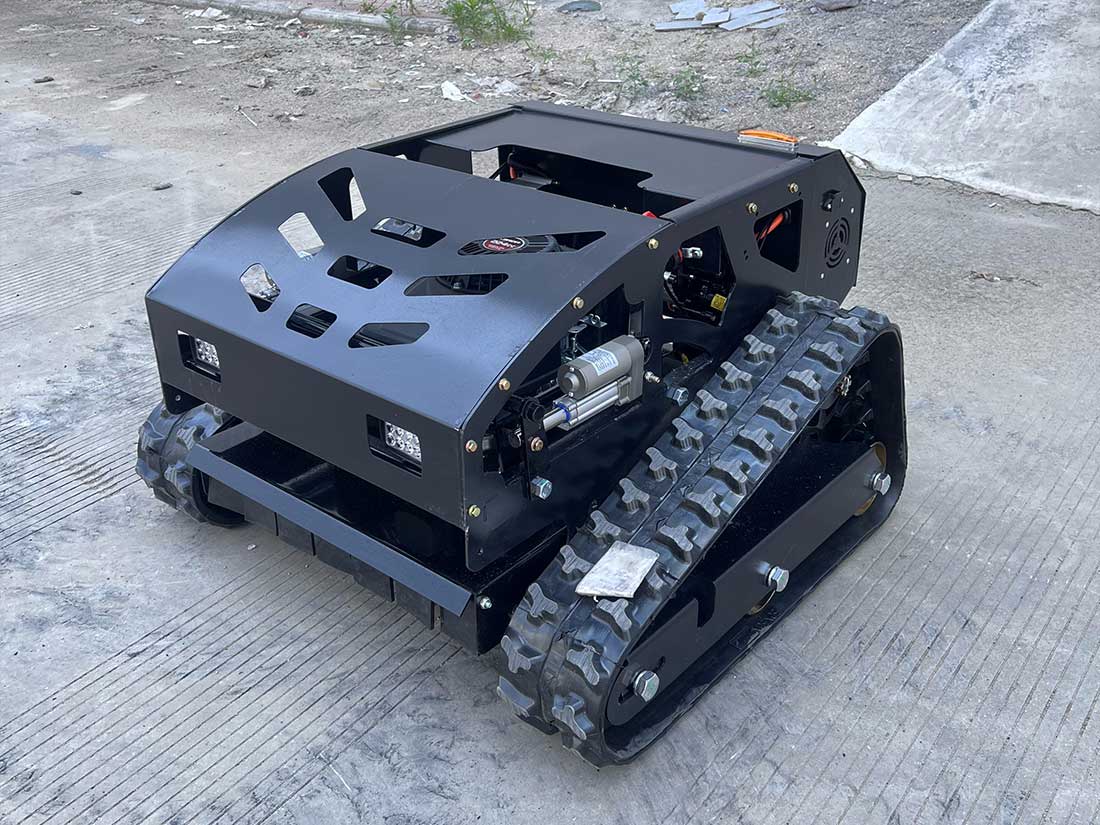
3. The Case Study in Practice: A Structured Mowing Process
Once the equipment has been selected, the contractor establishes a consistent workflow to improve control and measure performance.
Step 1: Assess the worksite
Before bringing the machine onto the slope, the team inspects the terrain, identifies hazards, and checks the expected vegetation conditions.
The assessment should cover:
Slope gradient and changes in elevation
Ground firmness, moisture, and traction
Ditches, drop-offs, rocks, and concealed obstacles
Grass height and vegetation density
Access routes and machine transport requirements
Bystanders, vehicles, and other site activities
If the conditions exceed the machine's permitted operating limits, an alternative method must be used.
Step 2: Divide the site into manageable sections
Rather than treating the entire property as one mowing area, the team separates it into work zones based on slope, access, and vegetation.
A lawn mower may operate efficiently on a broad, accessible section but require a different cutting strategy in a narrow or irregular area. Planning the work zones helps reduce unnecessary repositioning and makes it easier to identify sections requiring special attention.
Step 3: Complete pre-operation checks
Before starting the remote-controlled lawn mower, operators inspect the cutting components, tracks, guards, control system, and visible mechanical connections according to the manufacturer's checklist.
They should verify that emergency-stop features function correctly and that the working area is clear. Damaged blades, loose components, or abnormal track wear should be addressed before the machine is used.
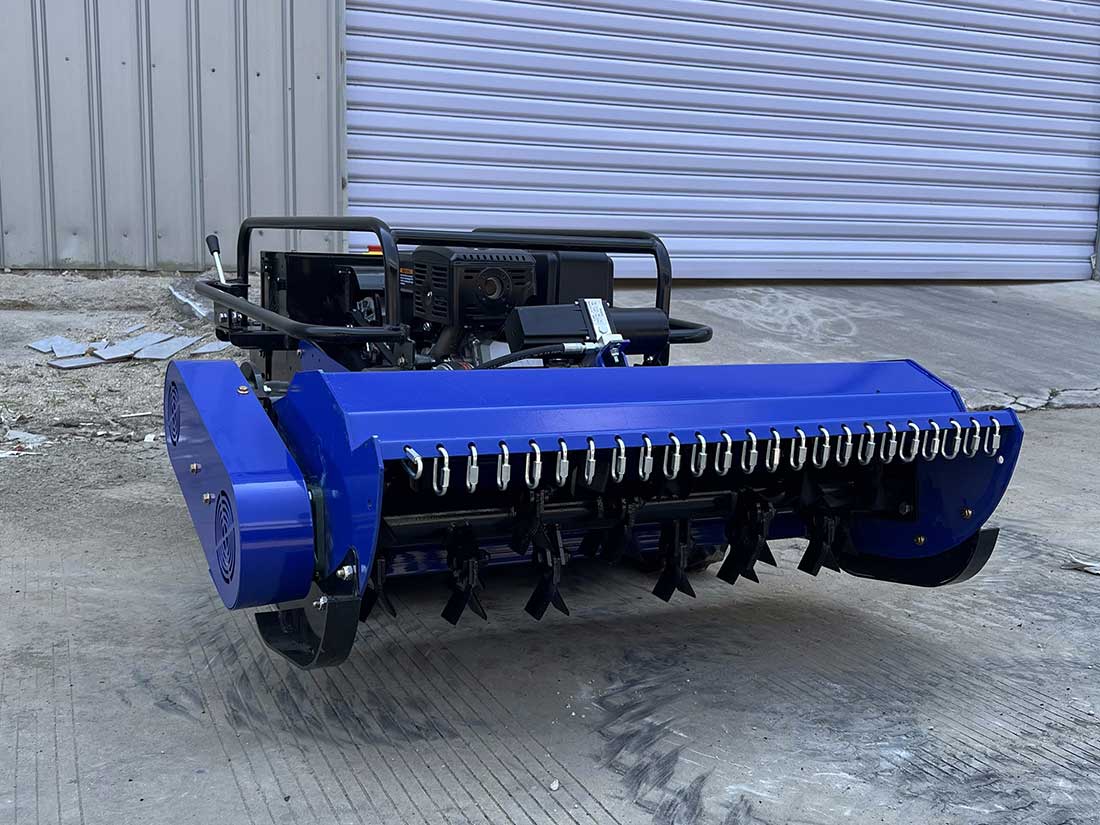
Step 4: Use a controlled cutting strategy
The operator chooses a suitable travel speed and cutting height based on vegetation density and the equipment's capabilities.
Tall or dense grass may require slower movement or more than one pass. On uneven ground, maintaining an appropriate speed and avoiding abrupt changes in direction can help preserve cutting consistency and control.
The operator must remain within the manufacturer's approved operating envelope and avoid maneuvers that could compromise traction or stability.
Step 5: Inspect the finished area
After each section is completed, the team checks the cutting quality, remaining vegetation, and any areas that need additional attention.
This final inspection helps establish whether the chosen lawn mower and cutting strategy meet the project's requirements. It also identifies potential adjustments for subsequent work.
4. How Remote-Controlled Mowing Can Improve Operations
Remote-controlled mowing technology can offer practical advantages in suitable working environments. The size of those advantages depends on the machine, operator, site, and work schedule.
Improved operator positioning
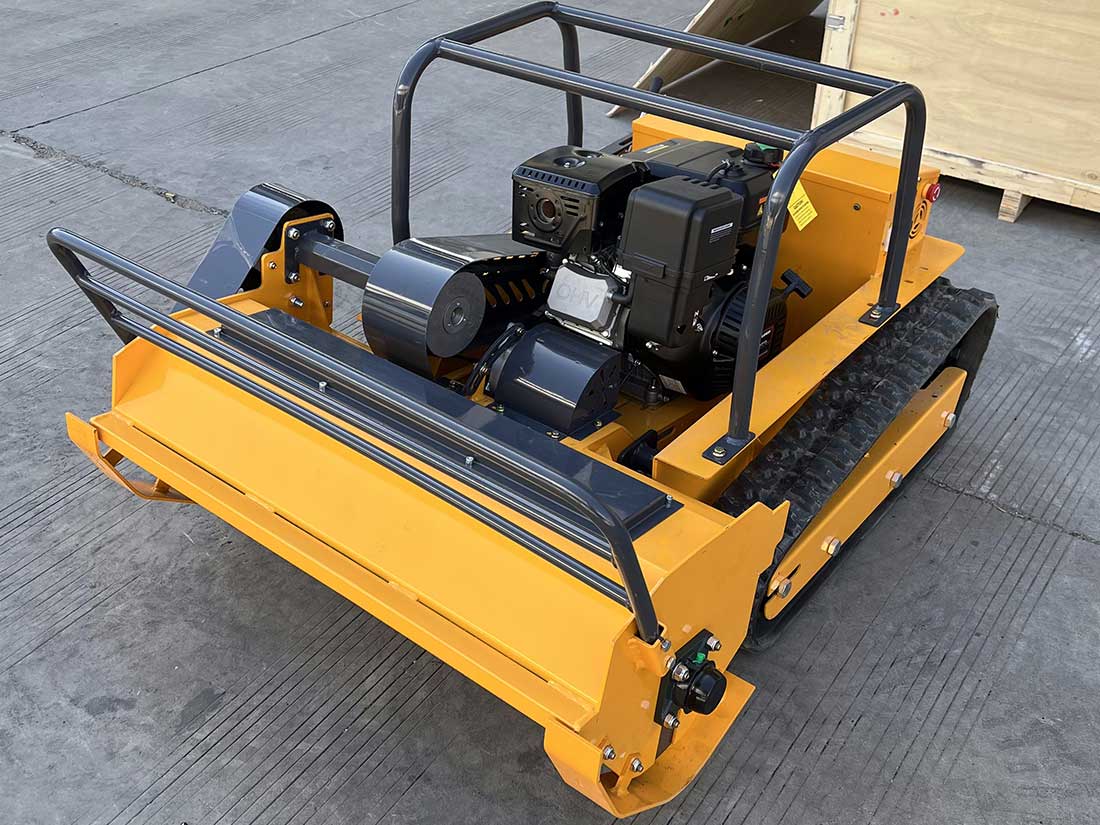
A remote-controlled lawn mower allows the operator to control the machine from a separate position rather than sitting on it or walking directly behind it.
On suitable sites, this can reduce the need for the operator to travel directly over every section of difficult ground. However, the operator still needs adequate visibility, a safe working position, and a clear understanding of the surrounding hazards.
More flexible access to difficult areas
Purpose-built remote-controlled equipment can be useful on certain slopes, embankments, and irregular surfaces that are challenging for conventional mowing machines.
The key is matching the machine to the site's actual gradient and surface conditions. A tracked chassis alone does not guarantee safe operation on every steep slope.
Potentially more efficient work planning
Remote operation may help the team position the machine and organize work across suitable sections. When the contractor combines this capability with a planned route and sensible cutting strategy, it may reduce unnecessary movement and improve the use of working time.
The result should be verified through actual job records rather than assumed from the equipment type alone.
Consistent cutting performance
A suitable lawn mower, equipped with the correct cutting system and operated at an appropriate speed, can deliver a more consistent result across the intended vegetation.
Consistency depends on several factors, including blade condition, cutting height, ground contours, vegetation density, and operator technique. Remote control is a useful operating feature, not a substitute for correct equipment selection.
Reduced exposure to certain hazards
Operating a machine remotely can change the operator's exposure to hazards associated with direct machine operation on difficult terrain. This can be valuable when planning suitable slope-mowing tasks.
Nevertheless, remote-controlled equipment introduces no guarantee of risk-free operation. Flying debris, loss of traction, machine instability, and unexpected obstacles remain concerns. Site-specific risk assessments, protective measures, and operator training are still essential.
5. Performance Evaluation: Measuring the Results
A credible case study should distinguish between potential benefits and measured outcomes. For the contractor in this illustrative scenario, performance is assessed using consistent indicators.
| Performance indicator | What to measure | Why it matters |
|---|---|---|
| Area completed per hour | Total area divided by working hours | Shows practical mowing productivity |
| Labor hours per job | Total staff time required | Helps assess labor efficiency |
| Repositioning time | Time spent moving between sections | Identifies avoidable delays |
| Fuel or electricity use | Consumption over a defined workload | Supports operating-cost analysis |
| Maintenance downtime | Hours unavailable for work | Shows equipment reliability in practice |
| Cutting quality | Uniformity and repeat-pass requirements | Measures whether the result meets the specification |
| Safety observations | Incidents, near misses, and identified hazards | Supports continuous improvement |
For a fair comparison, the team should record baseline results using its existing method and then repeat the measurements under comparable conditions with the remote-controlled lawn mower.
Terrain, weather, grass height, operator experience, and worksite layout can all affect the outcome. Comparing jobs without accounting for these differences may produce misleading conclusions.
6. Conventional vs. Remote-Controlled Lawn Mowers
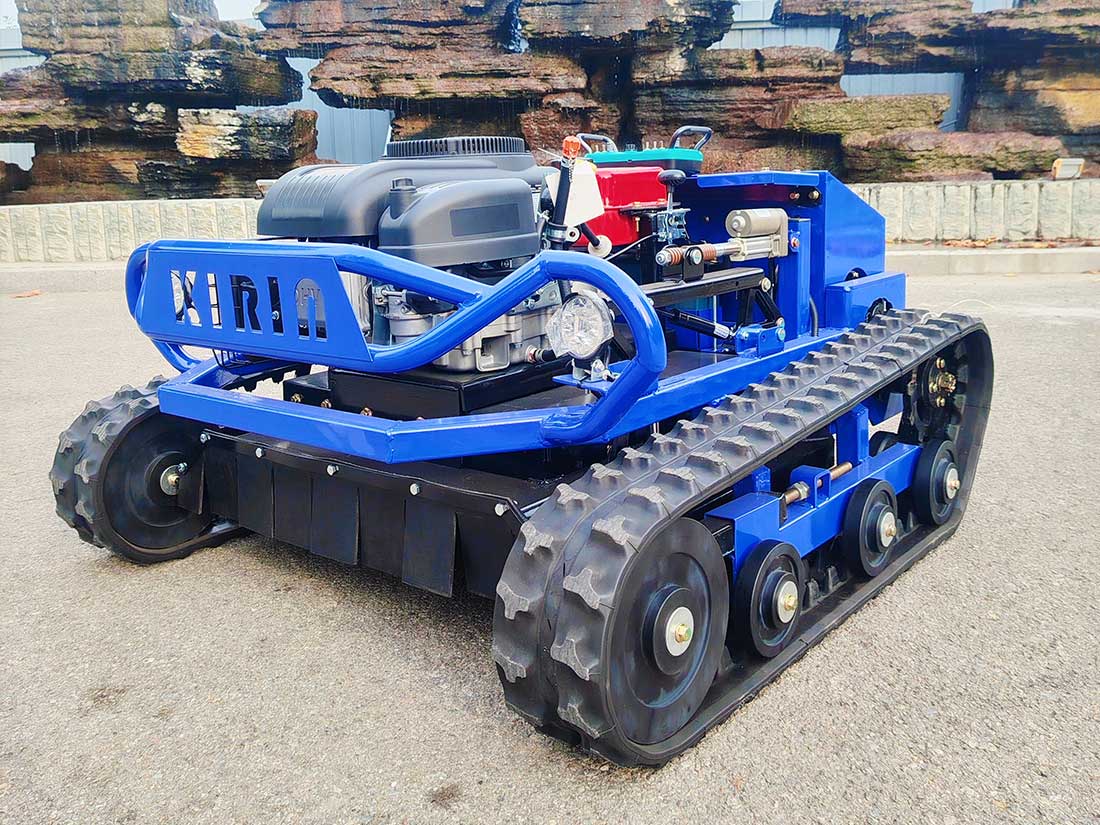
Both conventional and remote-controlled mowing equipment have useful applications. The most appropriate choice depends on the work to be completed.
| Factor | Conventional lawn mower | Remote-controlled lawn mower |
|---|---|---|
| Flat, open lawns | Often practical and economical | May be suitable, depending on workload |
| Steep embankments | Depends on machine type and permitted slope | Purpose-built models may suit approved slope applications |
| Uneven terrain | Performance depends on chassis and ground conditions | Certain tracked models are designed for challenging surfaces |
| Operator positioning | Usually rides on or walks behind the machine | Operator controls the machine remotely |
| Cutting options | Depends on available deck and attachments | Depends on model and compatible cutting system |
| Operating costs | Depend on purchase, labor, energy, and maintenance | Must be assessed using the same total-cost criteria |
| Safety | Requires appropriate equipment and procedures | Changes operator positioning but does not eliminate hazards |
A conventional lawn mower can remain the better choice for straightforward, level areas. Remote-controlled equipment is worth evaluating when difficult terrain, restricted access, or specific operator-positioning requirements create recurring operational challenges.
7. Calculating the Financial Value of Remote-Controlled Equipment
For commercial buyers, the decision should be based on total cost of ownership rather than purchase price alone.
Relevant expenses include:
Initial equipment investment and financing
Transport, setup, and operator training
Fuel or electricity
Routine servicing and replacement cutting components
Track, blade, and control-system maintenance
Repairs, spare parts, and downtime
Labor and site preparation
A useful productivity formula is:
Mowing productivity = Completed area ÷ Total working hours
For cost comparisons, businesses should use the same definition of working hours across equipment types. Including setup and repositioning time often gives a more realistic view of operational efficiency than recording cutting time alone.
The contractor can then estimate annual savings by comparing the existing method with the proposed remote-controlled lawn mower:
Annual net benefit = Annual operating cost savings − Additional annual ownership costs
If the investment generates a positive and reasonably stable annual net benefit, a simple payback estimate can be calculated by dividing the additional initial investment by that annual benefit.
Actual costs and performance data should support the calculation. No specific percentage improvement or payback period should be assumed without evidence from the intended application.
8. Common Mistakes When Choosing a Lawn Mower for Slopes
Professional buyers can avoid unnecessary expense by checking the following issues before purchase.
Ignoring the rated slope limit. Confirm the permitted gradient and any restrictions on cross-slope travel, surface conditions, or direction of movement.
Assuming tracks solve every traction problem. Track design helps determine ground contact, but mud, loose soil, wet vegetation, and machine weight distribution still influence performance.
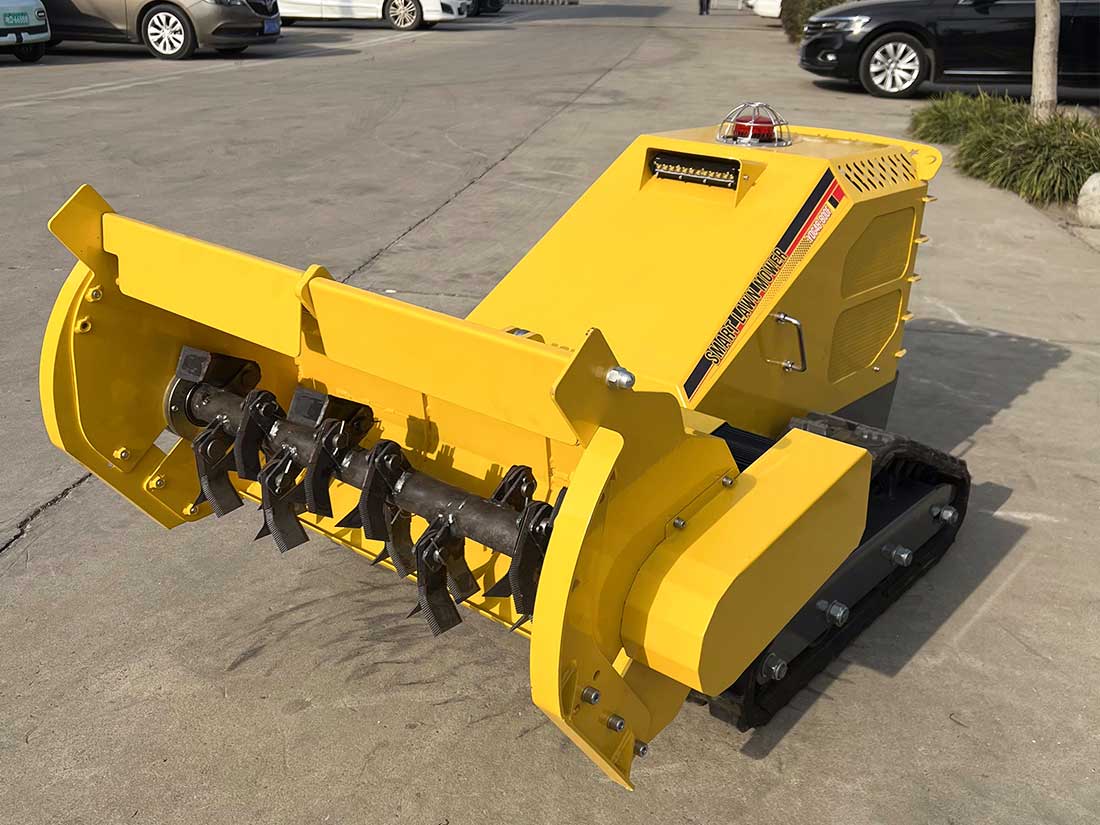
Choosing the wrong cutting system. Match the mower deck or attachment to the vegetation and the required finish.
Overlooking transport and access. Machine dimensions, weight, loading arrangements, and access to the worksite affect daily productivity.
Failing to plan maintenance. Routine inspection and timely replacement of worn components help protect equipment availability.
Treating remote control as a complete safety solution. Operators still need training, safe working distances, hazard controls, and compliance with manufacturer instructions.
9. Explore Remote-Controlled Mowing Solutions from JY Lawn Mower
Finding the right equipment starts with understanding the worksite. Landscaping contractors, agricultural businesses, roadside maintenance teams, and property managers should compare lawn mower options against their actual terrain, vegetation, operating schedule, and maintenance requirements.
JY Lawn Mower offers a starting point for exploring remote-controlled mowing equipment for professional grass cutting and vegetation management.
Before choosing a model, ask the supplier about:
Intended applications and approved slope limits
Track configuration and traction characteristics
Cutting width, cutting height, and vegetation suitability
Power system and expected operating endurance
Remote-control functions and emergency-stop features
Routine servicing, spare parts, and technical support
Visit the official website at https://www.jylawnmower.com/ to explore available equipment and identify a remote-controlled lawn mower that may suit your operating requirements.
Conclusion: A Smarter Approach to Difficult-Terrain Mowing
Steep slopes and uneven terrain demand more than a powerful cutting deck. Successful mowing depends on machine stability, traction, cutting-system selection, operator training, and a well-planned workflow.
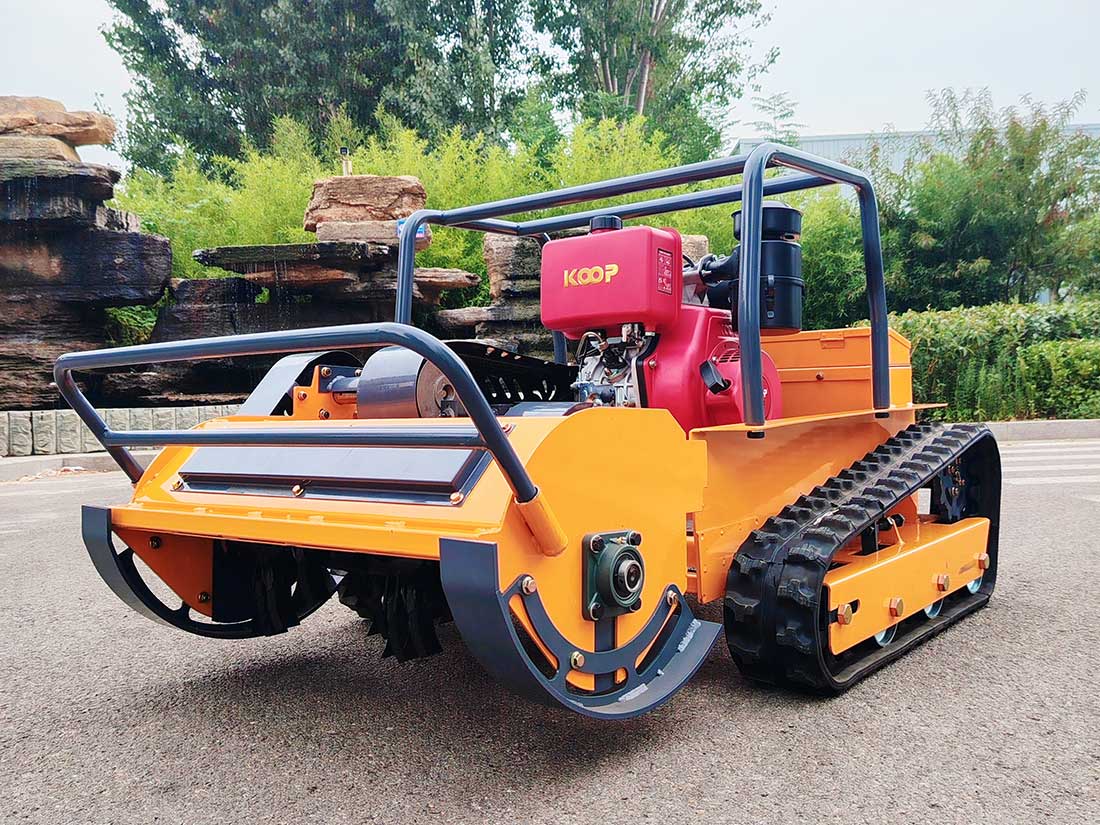
A purpose-built remote-controlled lawn mower may help professional teams manage suitable challenging areas, improve operator positioning, and organize mowing operations more effectively. However, performance depends on the machine's specifications and the conditions in which it operates.
For a reliable purchasing decision, assess the site carefully, compare equipment against manufacturer limits, and measure productivity and operating costs using real job data.
To explore remote-controlled mowing equipment for challenging landscapes, visit JY Lawn Mower and review the available solutions for your professional mowing needs.