 English
 Spanish
 Portuguese
 French
 Italian
 Remote Mower
The lawn care industry is changing as professional operators look for safer, more flexible, and more efficient ways to manage grass and vegetation. Among the technologies attracting growing attention is the remote controlled lawn mower.
Unlike conventional mowing equipment that requires an operator to walk directly behind or beside the machine, a remote controlled lawn mower can be operated from a distance using a wireless control system. This creates new possibilities for professional landscaping, agriculture, roadside vegetation management, large properties, and challenging terrain.
The growing popularity of the remote controlled lawn mower is part of a wider movement toward modern remote-controlled mowing equipment that combines mobility, traction, cutting performance, and operator control.
What Is a Remote Controlled Lawn Mower?
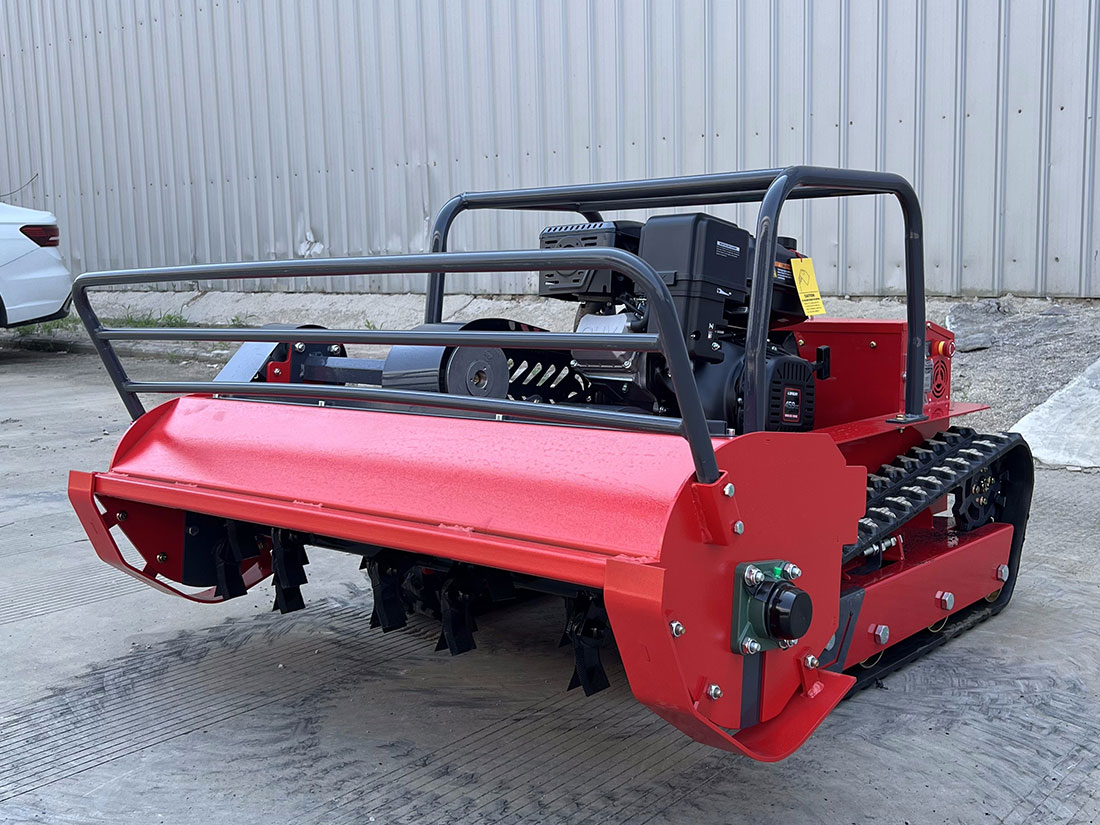
A remote controlled lawn mower is a mowing machine that allows the operator to control its movement and mowing functions remotely.
Instead of remaining physically connected to the machine during operation, the operator can stand at an appropriate location and use a remote controller to manage the equipment while maintaining visual contact with the working area.
This operating method can be particularly useful when conventional mowing becomes difficult because of:
Slopes and embankments.
Uneven terrain.
Tall or dense vegetation.
Large areas.
Obstacles.
Difficult-access locations.
Agricultural land.
Roadside vegetation.
However, the remote-control system is only one component of a professional machine. A reliable remote controlled lawn mower also needs appropriate traction, stability, maneuverability, cutting capability, and machine configuration for the intended application.
Why Is Remote Technology Changing Lawn Care?
Traditional lawn care has relied heavily on walk-behind mowers, ride-on machines, tractors, and other conventional equipment.
These machines remain valuable for many applications. However, professional mowing conditions are not always simple.
Modern contractors may be responsible for maintaining a mixture of flat lawns, slopes, roadside areas, agricultural land, parks, and difficult terrain.
A remote controlled lawn mower gives operators another way to approach these conditions.
Instead of designing every job around the physical position of the operator, remote operation allows the operator to select a suitable control position while the machine performs the mowing task.
This can make remote-controlled mowing equipment particularly relevant to professional vegetation management.
Remote Controlled Lawn Mower for Difficult Terrain
Difficult terrain is one of the strongest applications for remote mowing technology.
Slopes, uneven ground, embankments, and areas with limited access can create operational challenges for conventional mowing equipment.
A remote controlled lawn mower can allow the operator to control the machine without having to remain directly beside it.
For example, when maintaining a sloped area, the operator can assess the terrain first and then select an appropriate operating position from which to control the machine.
However, professional users should understand that remote operation does not make every slope automatically safe.
Before operating a remote controlled lawn mower, users should evaluate:
Ground conditions.
Slope characteristics.
Machine operating limits.
Traction requirements.
Obstacles.
Visibility.
Weather conditions.
People and animals in the work area.
The manufacturer's operating instructions should always be followed.
The Importance of Traction
For professional mowing equipment, cutting performance is only part of the equation.
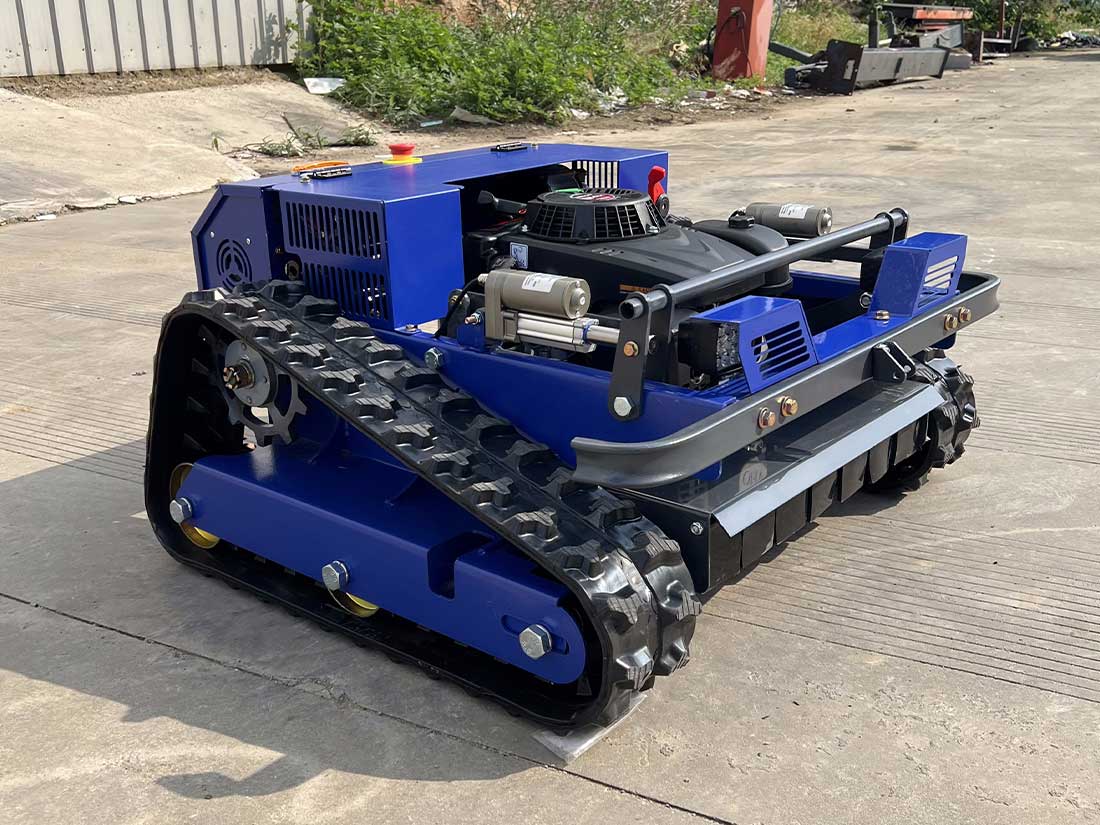
A remote controlled lawn mower must also be capable of moving effectively across the intended terrain.
Traction is especially important when operating on slopes or uneven surfaces. Poor traction can reduce maneuverability and make it more difficult for the operator to maintain the desired mowing path.
This is why professional buyers should evaluate the complete equipment system rather than focusing on engine or motor power alone.
A practical evaluation should include:
Traction + stability + maneuverability + cutting system + remote control
When these components are properly matched to the application, the remote controlled lawn mower can become a versatile tool for professional mowing operations.
How Remote Mowing Can Improve Work Organization
One of the major changes introduced by a remote controlled lawn mower is the way operators organize their work.
With conventional equipment, the operator's position is closely connected to the machine.
Remote-controlled mowing equipment creates greater separation between the operator and the machine, allowing the operator to select a position that provides an appropriate view of the working area.
This can be useful around:
Trees.
Drainage channels.
Fences.
Embankments.
Property boundaries.
Uneven ground.
Areas with dense vegetation.
The operator can adjust the machine's direction and mowing path while observing how the equipment responds to the terrain.
For professional users, this flexibility can be as important as the machine's cutting capacity.
Remote Controlled Lawn Mower for Landscaping
Professional landscaping is becoming increasingly diverse.
A landscaping contractor may maintain residential properties, commercial facilities, public parks, resorts, industrial sites, and large private estates.
These locations can contain different types of grass, slopes, obstacles, and terrain conditions.
A remote controlled lawn mower can provide an additional equipment option for areas where conventional machines are less convenient.
The goal is not necessarily to replace traditional lawn mowers.
Instead, remote-controlled mowing equipment can complement existing machinery by handling specific applications where remote operation provides practical advantages.
This makes the remote controlled lawn mower particularly relevant for contractors managing large or varied landscapes.
Applications in Agriculture
Agriculture is another important application area.
Farmers and agricultural contractors often need to control vegetation around orchards, field boundaries, internal roads, drainage areas, and other parts of agricultural properties.
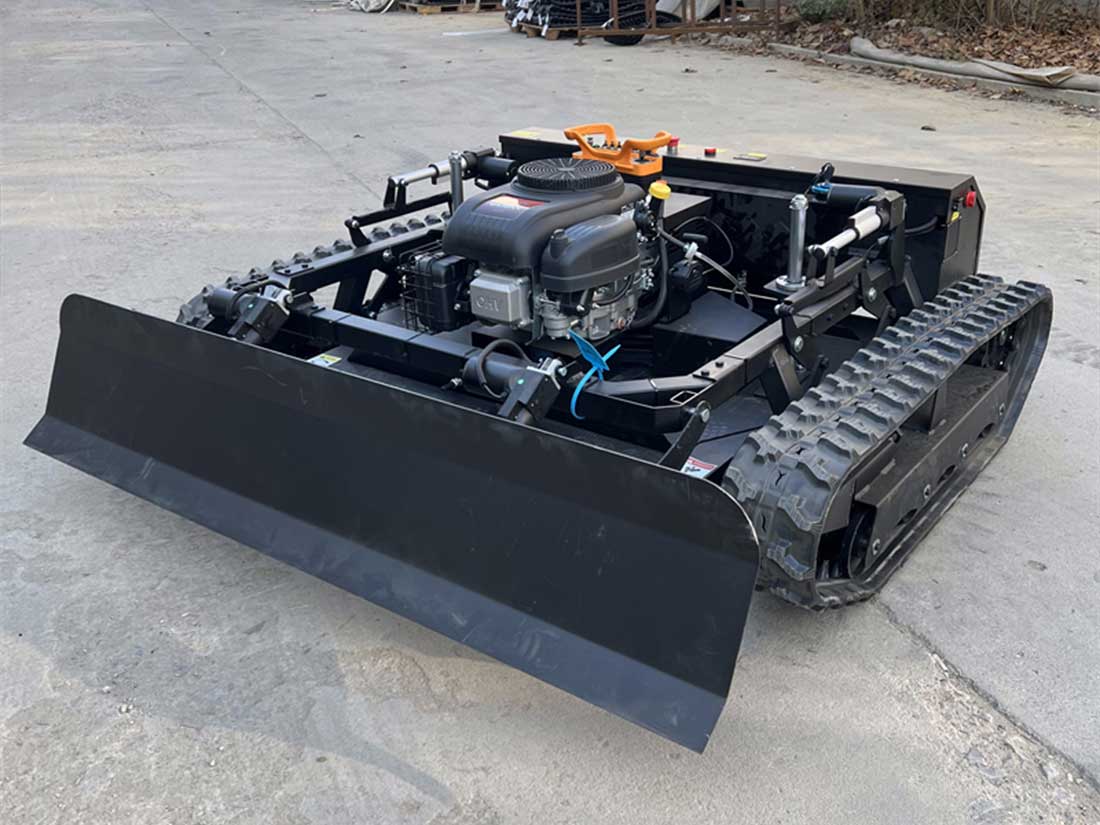
A remote controlled lawn mower can be considered when terrain, vegetation, or access conditions make conventional mowing more difficult.
The correct machine should be selected according to the actual application.
Important factors include:
Type of vegetation.
Vegetation height.
Ground conditions.
Terrain slope.
Required cutting width.
Frequency of mowing.
Required cutting finish.
Professional equipment selection should always begin with the working environment rather than simply choosing the machine with the highest power specification.
Roadside Vegetation Management
Roadside maintenance can require specialized mowing solutions.
Road edges, drainage channels, embankments, and slopes may create conditions that are different from ordinary lawn maintenance.
A remote controlled lawn mower can be part of a broader remote-controlled mowing equipment strategy for professional vegetation management.
However, mowing near roads requires additional planning.
Operators need to consider traffic conditions, work-zone management, visibility, obstacles, and applicable local safety procedures.
The machine's mowing performance is only one part of a successful roadside maintenance operation.
The Cutting System Still Matters
Remote operation should not distract buyers from one of the most important components of any mower: the cutting system.
A remote controlled lawn mower used for fine grass on a maintained landscape may require a different cutting configuration from equipment used for tall grass or heavier vegetation.
Before purchasing equipment, professionals should consider:
Grass type.
Vegetation density.
Cutting height.
Required finish.
Working width.
Cutting frequency.
Terrain conditions.
Compatibility with attachments.
A well-designed remote controlled lawn mower should match its cutting system to the intended application.
The best equipment is not necessarily the machine with the most impressive specification. It is the machine whose overall configuration fits the actual working conditions.
Remote Controlled Lawn Mower and Operator Safety
Safety is one of the main reasons professionals are interested in remote-controlled mowing equipment.
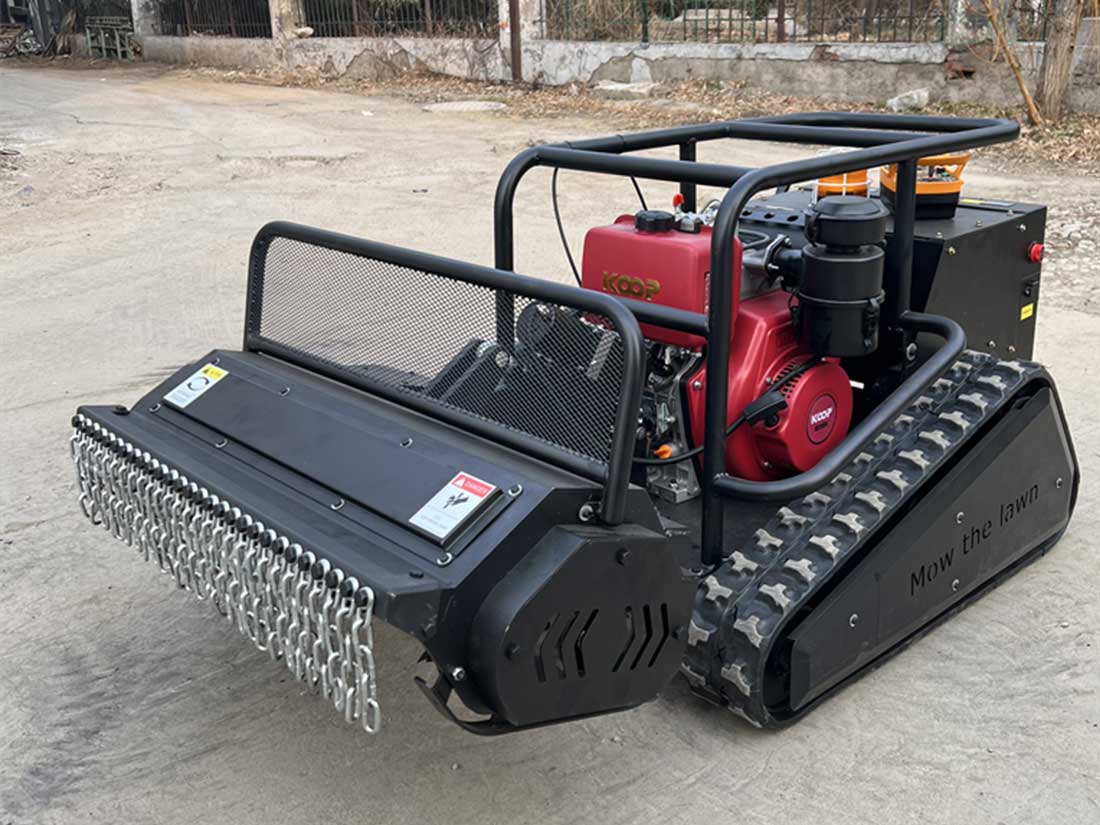
A remote controlled lawn mower can allow the operator to control the machine from a different position, which may be useful in certain challenging environments.
However, remote control does not eliminate operational risks.
Professional users should always:
Inspect the work area before mowing.
Identify slopes, obstacles, and unstable surfaces.
Maintain appropriate visual control.
Keep people and animals away from the operating area.
Respect manufacturer operating limits.
Follow appropriate protective and safety procedures.
Stop work when conditions become unsuitable.
Remote technology should support professional safety practices rather than replace them.
Remote Controlled Lawn Mower vs Traditional Mowers
Traditional mowing equipment continues to be highly effective for many applications.
Flat, open, and easily accessible lawns may not require remote operation.
However, when a project includes difficult terrain, slopes, large areas, dense vegetation, or restricted access, a remote controlled lawn mower may provide a different operating approach.
For professional buyers, the question should therefore not simply be whether remote equipment is newer.
The more useful question is:
Does remote-controlled mowing technology solve a specific problem in my operation?
If the answer is yes, integrating a remote controlled lawn mower into an existing equipment fleet may provide additional flexibility.
How to Choose the Right Remote Controlled Lawn Mower
Professional buyers should follow a structured evaluation process.
1. Analyze the terrain
Determine whether the machine will operate on flat ground, slopes, uneven terrain, embankments, or mixed surfaces.
2. Identify the vegetation
Consider grass height, density, type of vegetation, and the required cutting finish.
3. Determine the workload
Estimate the size of the working area and the frequency of mowing.
4. Evaluate mobility
Check traction, stability, maneuverability, and the machine's suitability for the intended terrain.
5. Examine the cutting system
Make sure the mower's cutting configuration matches the vegetation.
6. Evaluate the remote-control system
The controls should be practical and precise for the operator and the working environment.
7. Consider maintenance
Check service requirements, wear components, spare parts, and technical support.
This approach allows businesses to select a remote controlled lawn mower based on real operational requirements rather than marketing claims alone.
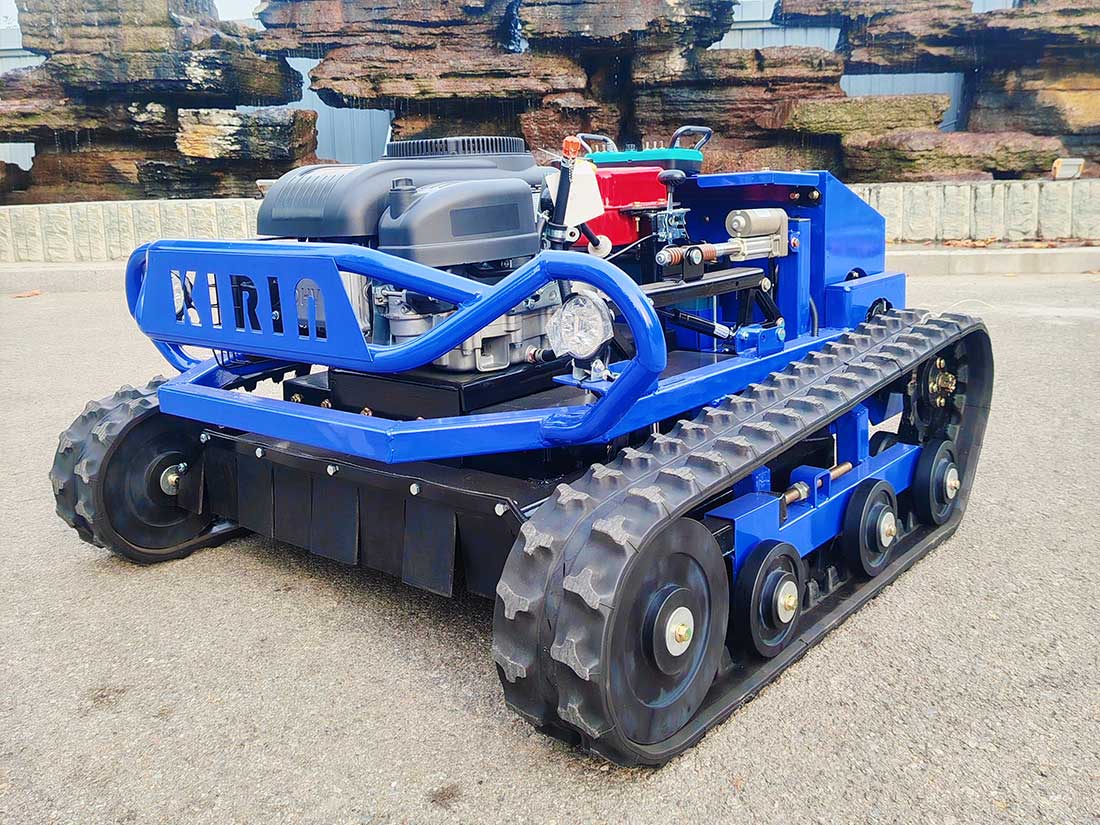
Maintenance of Remote-Controlled Mowing Equipment
Even advanced equipment requires regular maintenance.
A remote controlled lawn mower should be inspected according to the manufacturer's maintenance recommendations.
Operators should pay attention to:
Cutting components.
Tracks or wheels.
Moving parts.
Fasteners.
Structural components.
Protective systems.
Remote-control equipment.
Powertrain components.
After mowing tall or dense vegetation, accumulated grass and debris should be removed appropriately so that the machine can be inspected.
Preventive maintenance can help identify wear early and keep remote-controlled mowing equipment ready for future operations.
The Future of Lawn Care Is More Flexible
The development of the remote controlled lawn mower reflects a broader change in professional lawn care.
The industry is moving toward equipment that can adapt to different working environments rather than relying on a single machine for every application.
Remote operation, improved mobility, specialized cutting systems, and application-specific configurations are becoming increasingly important considerations.
The future of lawn care will therefore not necessarily be defined by automation alone.
Instead, the combination of experienced operators and advanced machinery may prove especially valuable.
The remote controlled lawn mower represents this combination by allowing an operator to remain actively involved in the mowing process while controlling the machine from a distance.
Why Professionals Are Paying Attention
The growing interest in the remote controlled lawn mower comes from a practical need.
Professional users want equipment that can handle more diverse working environments while providing greater flexibility in how mowing operations are organized.
For landscaping contractors, agricultural operators, municipalities, roadside maintenance teams, and commercial property managers, remote-controlled mowing equipment can offer another tool for specific challenging applications.
The technology is therefore not simply about replacing traditional mowing.
It is about expanding the range of situations where professional mowing equipment can be used effectively.
Conclusion
Remote technology is changing lawn care by giving professional operators a new way to control mowing equipment.
The remote controlled lawn mower combines wireless operation with professional cutting equipment, creating possibilities for slopes, uneven terrain, agriculture, landscaping, roadside vegetation management, and large green spaces.
Its effectiveness depends on more than the remote controller. Traction, stability, maneuverability, cutting performance, safety procedures, maintenance, and application suitability must all work together.
For businesses exploring modern remote-controlled mowing equipment, choosing a machine based on actual terrain and vegetation conditions is essential.
If you are looking for professional remote controlled lawn mower solutions and want to explore modern mowing equipment for challenging applications, visit JY Lawn Mower to learn more about available solutions.
As professional lawn care continues to evolve, the remote controlled lawn mower is becoming an increasingly relevant technology for businesses seeking more flexible and efficient approaches to modern vegetation management.