English
 Spanish
 Portuguese
 French
 Italian
 Remote Mower
Introduction: The Growing Demand for Smarter Lawn Maintenance
Lawn maintenance is evolving rapidly as property owners, landscaping professionals, agricultural operators, and facility managers look for more efficient ways to manage outdoor spaces. Traditional mowing methods often require significant manual labor, long operating hours, and considerable physical effort, especially when maintaining large properties or challenging terrain. As technology advances, the robotic lawn mower is becoming an increasingly attractive solution for modern lawn care.
Today's robotic lawn mower technology goes beyond simple automated grass cutting. Remote-controlled mowing equipment combines intelligent operation, powerful cutting systems, durable construction, and precise maneuverability to help operators maintain grass more efficiently. These machines are particularly valuable for steep slopes, uneven ground, roadside vegetation, orchards, and other areas where conventional lawn mowers may struggle.
For professional landscaping businesses and property managers, choosing the right robotic lawn mower can improve operational efficiency, reduce operator exposure to hazardous working conditions, and support more consistent lawn maintenance.
1. Why Robotic Lawn Mowers Are Transforming Modern Lawn Care
The growing popularity of the robotic lawn mower reflects a broader shift toward intelligent outdoor maintenance equipment. Businesses increasingly recognize that efficient mowing is not simply about cutting grass quickly. It also involves improving safety, controlling labor costs, maintaining consistent results, and reducing unnecessary operational effort.
Traditional lawn mowers generally require operators to walk behind or ride on the equipment. Although these machines remain suitable for many ordinary lawns, they can present challenges when working on steep slopes, narrow pathways, rough terrain, or areas with dense vegetation.
A modern remote-controlled robotic lawn mower offers a different approach. Operators can control the machine remotely, maintaining a safer distance while guiding the cutting equipment through demanding working environments.
Key advantages include:
Improved operational safety: Remote operation helps operators avoid standing directly beside moving cutting equipment, particularly on steep or uneven terrain.
Greater working efficiency: Powerful cutting systems help maintain large grass-covered areas with less manual intervention.
Better terrain adaptability: Specialized tracked designs provide improved traction and stability on challenging surfaces.
Reduced physical workload: Remote-controlled operation minimizes the need for continuous walking and pushing.
Flexible applications: Suitable models can support landscaping, agricultural maintenance, roadside vegetation management, and commercial groundskeeping.
These advantages explain why the robotic lawn mower is attracting increasing attention among professional users.
2. Remote-Controlled Technology Makes Difficult Terrain Easier to Manage
One of the most important developments in robotic lawn mower technology is the integration of remote-control systems. This feature is especially valuable when maintaining steep embankments, hillsides, drainage channels, and uneven landscapes.
Conventional mowing equipment may experience reduced traction or stability on inclined surfaces. In some situations, operators must work in physically demanding positions or expose themselves to additional risks while attempting to maintain difficult areas.
Remote-controlled mowing equipment addresses many of these challenges through several engineering features.
Tracked mobility systems
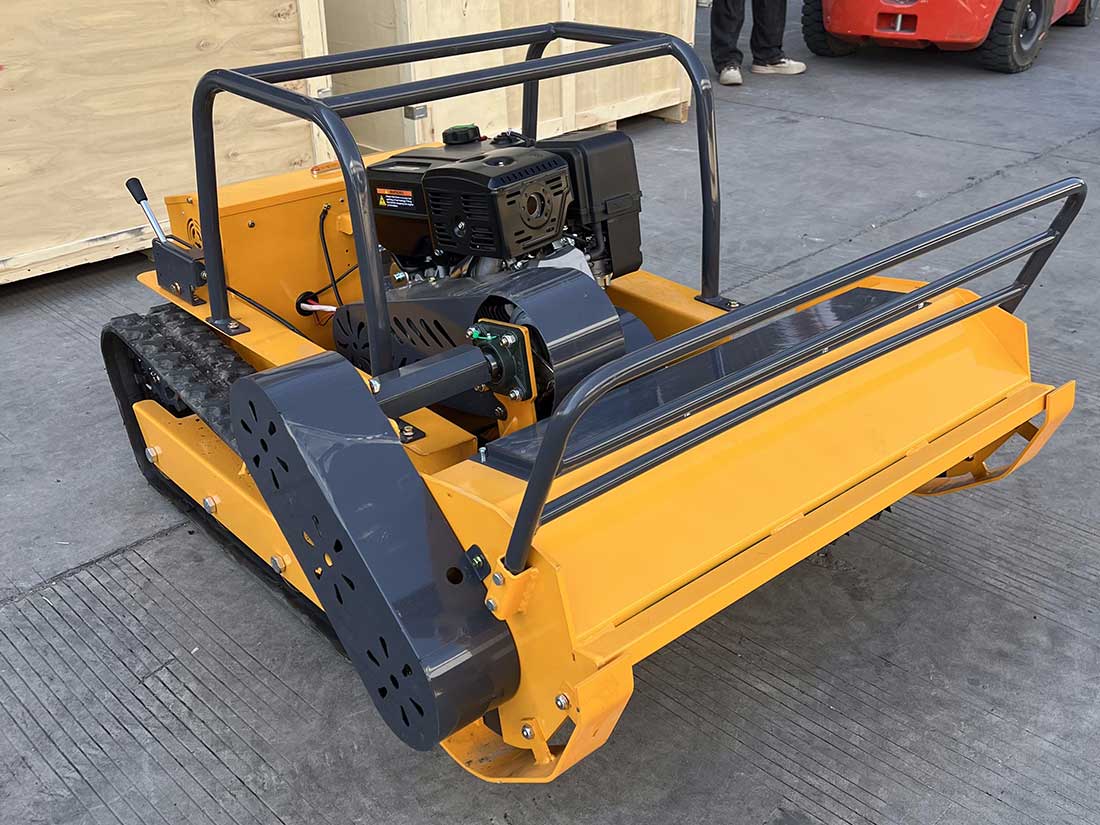
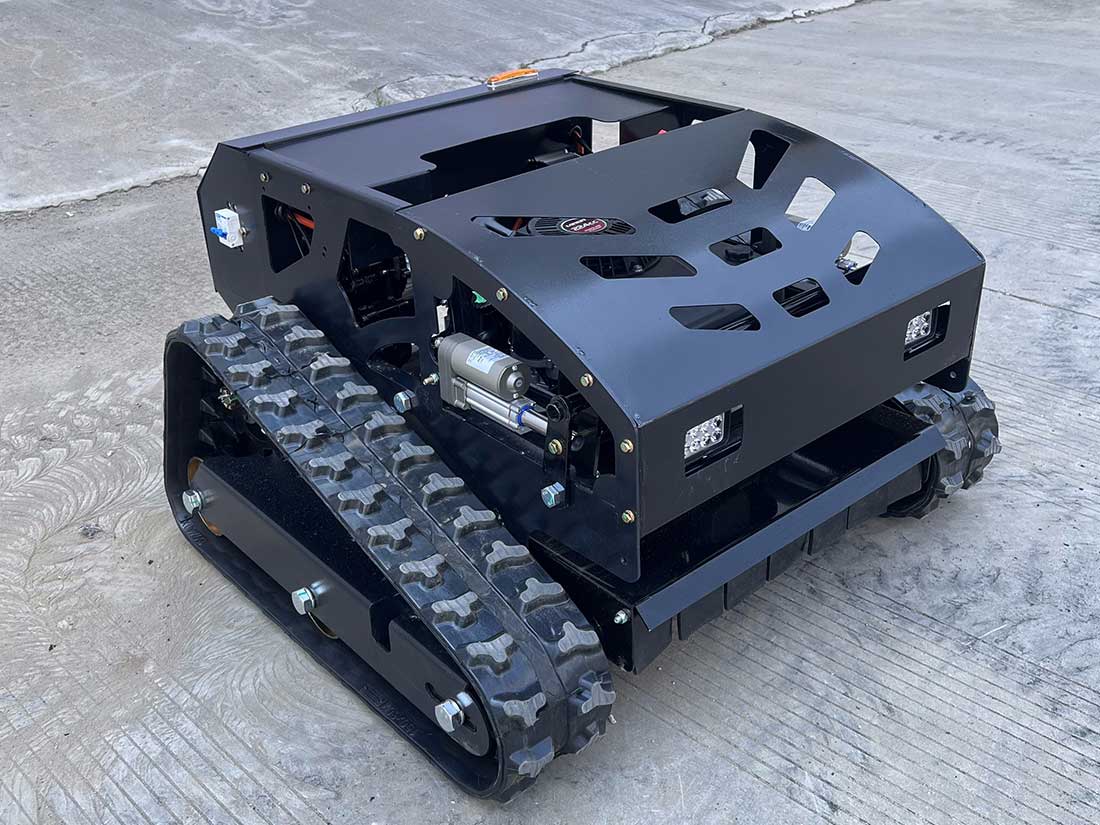
Many professional remote-controlled lawn mowers use rubber tracks instead of conventional wheels. Tracks distribute the machine's weight across a larger contact area, helping improve traction and stability on uneven or sloped surfaces.
Powerful cutting mechanisms
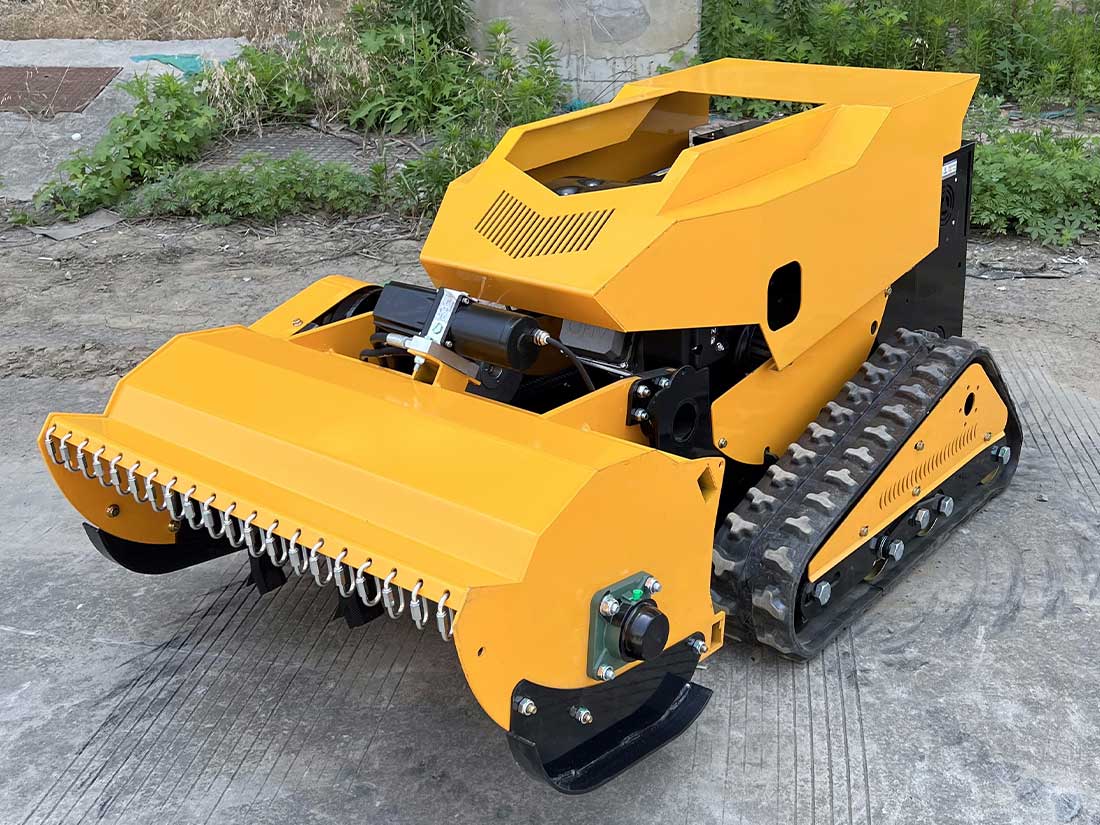
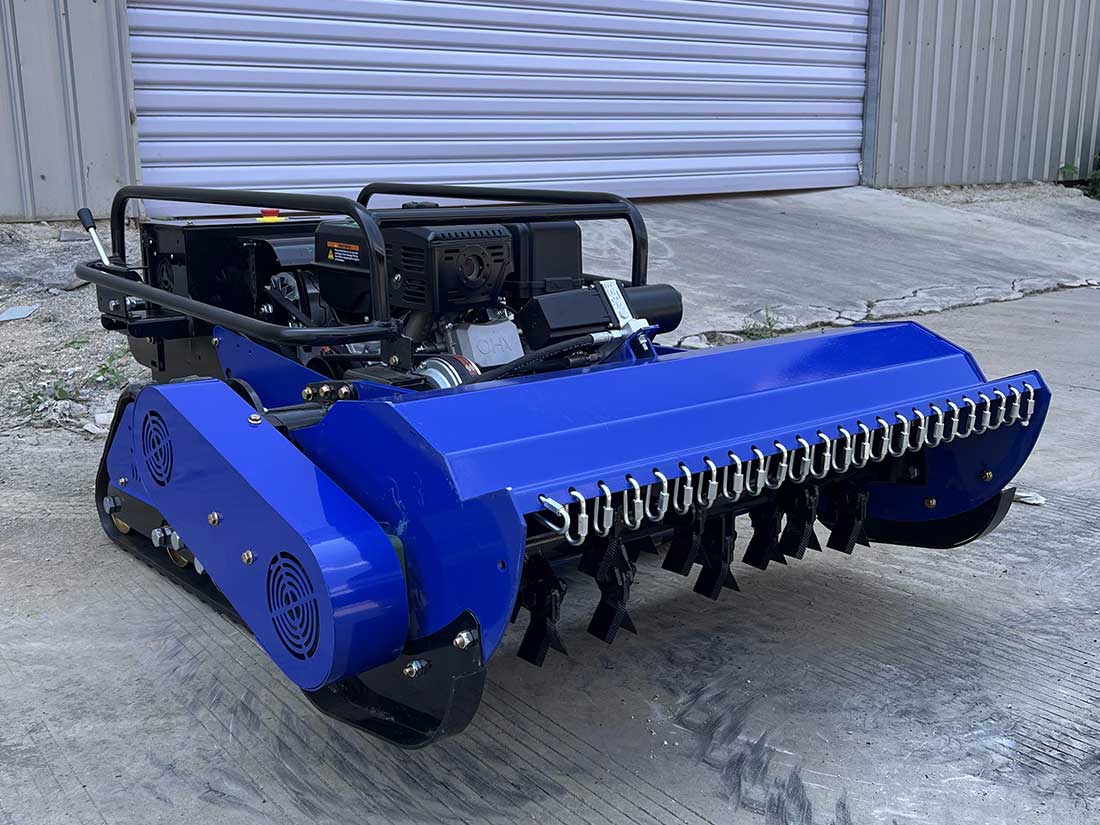
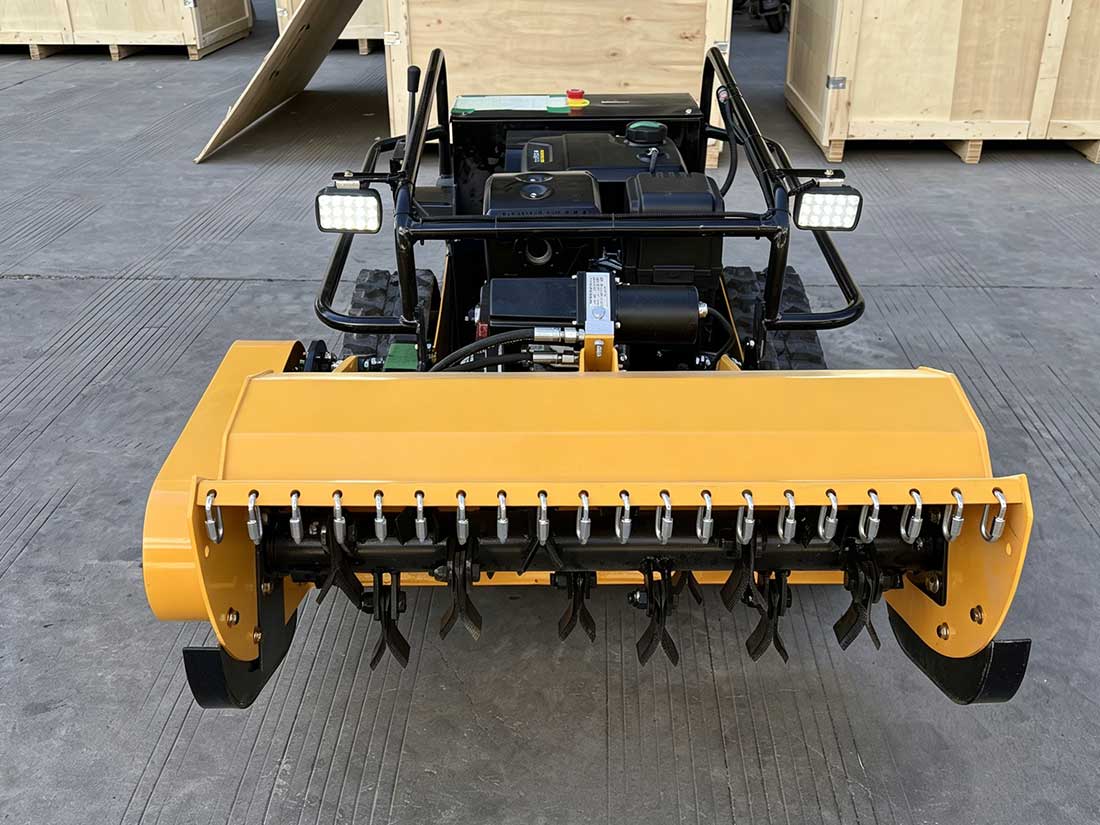
Depending on the machine configuration, cutting systems may include rotary blades or flail mower assemblies. Rotary systems are generally suitable for regular grass maintenance, while flail systems can be better suited to tougher vegetation and thicker growth.
Responsive remote operation
Remote-control systems allow operators to adjust movement, direction, and cutting operations without physically following the machine across hazardous ground.
Compact and maneuverable construction
A compact robotic lawn mower can access certain narrow or restricted areas that may be difficult for larger ride-on machines to reach.
Together, these features make remote-controlled equipment an important option for professional grass maintenance, particularly where conventional mowing methods are less practical.
3. Improving Efficiency and Reducing Lawn Maintenance Costs
Efficiency is one of the strongest reasons businesses consider investing in a robotic lawn mower. Large properties, commercial facilities, agricultural land, and public green spaces require regular maintenance. Relying entirely on manual labor can increase operating expenses and make scheduling more complicated.
A remote-controlled robotic lawn mower can help streamline these operations.
First, remote operation allows workers to control the machine while remaining at a suitable operating position. This can reduce unnecessary physical movement and make difficult mowing tasks more manageable.
Second, professional mowing equipment is designed to handle demanding working conditions. A suitable cutting system can process dense grass and vegetation more effectively than equipment designed exclusively for small residential lawns.
Third, consistent mowing performance can help maintenance teams establish more predictable work schedules.
However, the actual financial benefits depend on several factors, including machine purchase price, fuel or electricity consumption, maintenance requirements, cutting width, working speed, terrain conditions, and operator experience.
Professional buyers should evaluate the total cost of ownership rather than considering the initial purchase price alone.
A well-selected robotic lawn mower can become a valuable long-term investment when its performance matches the site's maintenance requirements.
4. Applications Across Multiple Industries
The versatility of a robotic lawn mower makes it useful in a wide range of professional environments. Different industries have different vegetation management requirements, and selecting the right remote-controlled equipment is essential for achieving reliable results.
Agricultural Land and Orchards
Orchards and agricultural properties often contain uneven soil, narrow passages, tree roots, and dense grass. A compact tracked robotic lawn mower can help operators maintain vegetation between rows while reducing the physical demands of manual mowing.
Remote-controlled equipment is particularly useful where maneuverability and traction are important.
Roadside and Embankment Maintenance
Roadside slopes, riverbanks, and highway embankments can be difficult and potentially dangerous to maintain using conventional mowing equipment.
A remote-controlled robotic lawn mower allows operators to manage vegetation from a safer working position. Tracked chassis designs can provide improved grip on suitable inclined surfaces.
Solar Farms
Solar farms require regular vegetation management to prevent excessive grass and weed growth around solar panels and service routes.
Specialized low-profile remote-controlled mowers can help maintain these areas while navigating restricted spaces. Selecting suitable equipment requires consideration of ground clearance, machine dimensions, cutting width, and vegetation density.
Commercial Landscaping and Public Green Spaces
Hotels, parks, resorts, golf course facilities, and commercial properties require consistent lawn maintenance to maintain their appearance.
A suitable robotic lawn mower can help landscaping teams manage recurring mowing tasks, improve productivity, and reduce the amount of manual work required.
5. Important Features to Consider When Choosing a Robotic Lawn Mower
Not every robotic lawn mower is suitable for every working environment. Professional buyers should evaluate the machine's technical specifications and match them to actual operating conditions.
Here are several important considerations.
1. Cutting width
Cutting width directly influences the amount of grass a machine can process in each pass. Wider cutting decks can improve productivity across large open areas, while narrower equipment may be more suitable for restricted spaces.
2. Maximum slope capability
For hillside mowing, buyers should examine the manufacturer's stated slope capacity. Actual performance depends on soil conditions, grass moisture, machine configuration, and operating direction. Always follow the manufacturer's safety recommendations.
3. Track design and traction
Rubber tracks can provide better ground contact and traction on many uneven surfaces. Buyers should consider track width, chassis balance, ground clearance, and the type of terrain being maintained.
4. Cutting system
Rotary and flail cutting systems serve different purposes. Rotary blades are commonly used for regular grass cutting, while flail systems can be appropriate for heavier vegetation and tougher mowing applications.
5. Remote-control performance
The operating distance, control responsiveness, emergency-stop function, and visibility of the working area are important factors when evaluating remote-controlled mowing equipment.
6. Maintenance and spare parts
Regular inspection of blades, tracks, drive components, filters, and other wear parts helps maintain machine performance. Access to technical support and replacement components is also important for professional operations.
By comparing these specifications, buyers can identify a robotic lawn mower that offers the right balance of performance, durability, and operating efficiency.
6. How JUYOU Supports the Development of Remote-Controlled Mowing Equipment
As demand for professional vegetation management equipment continues to grow, manufacturers are focusing on developing machines that address real-world mowing challenges.
JUYOU provides remote-controlled mowing equipment designed for applications such as steep slopes, orchards, roadside vegetation management, and other challenging outdoor environments.
Its product range includes different machine configurations, including tracked remote-controlled mowers and flail mowing equipment. These options allow professional buyers to consider different requirements involving cutting width, terrain, vegetation type, and working conditions.
Some important equipment considerations include:
Tracked mower platforms: Designed to provide traction and maneuverability on suitable uneven surfaces.
Remote-control operation: Allows operators to control mowing operations from a distance.
Multiple machine configurations: Different chassis and cutting systems support different professional applications.
OEM customization: Options such as machine color, branding, and export packaging can support distributors and project buyers.
Application-based selection: Equipment recommendations can be matched to terrain, grass height, working area, and other project requirements.
jylawnmower.com
For example, the JUYOU JY-C550 is presented as a compact tracked remote-control mower for orchards, slopes, and roadside maintenance. Its published product information lists a 550 mm cutting width and a specified slope range of 0–45 degrees. Actual operating suitability should always be confirmed against site conditions and the manufacturer's instructions.
For buyers evaluating a robotic lawn mower for professional applications, working directly with an experienced equipment manufacturer can help ensure that the selected configuration meets the demands of the project.
Visit the official website to explore available products and equipment solutions:
7. The Future of Robotic Lawn Mower Technology
The future of the robotic lawn mower industry will likely involve continued improvements in automation, remote-control systems, energy efficiency, and intelligent machine management.
Several technological developments are particularly important.
Smarter control systems: Improved control interfaces can make equipment easier to operate and help operators manage complex mowing tasks more precisely.
Battery-powered solutions: Advances in battery technology are creating additional opportunities for quieter, lower-emission mowing equipment in suitable applications.
Improved terrain adaptability: Manufacturers are continuing to develop tracked chassis, optimized weight distribution, and specialized cutting decks for challenging environments.
Intelligent monitoring: Future equipment may increasingly incorporate operating data, maintenance alerts, and machine monitoring functions to help businesses manage their equipment more effectively.
It is also important to distinguish between fully autonomous robotic lawn mowers and remote-controlled lawn mowers. Fully autonomous machines generally rely on navigation systems and programmed mowing routes, whereas remote-controlled models depend on direct operator commands. Both technologies have valuable applications, but they address different operational requirements.
For large properties, steep slopes, and demanding vegetation management projects, remote-controlled mowing equipment remains an important solution.
Conclusion: A Smarter Approach to Professional Lawn Maintenance
The growing demand for efficient vegetation management is changing the way businesses approach lawn maintenance. A modern robotic lawn mower offers opportunities to improve productivity, reduce physical workloads, and make difficult mowing operations more manageable.
Remote-controlled mowing equipment is particularly valuable for professional applications involving steep slopes, orchards, roadside vegetation, solar farms, and uneven terrain. By combining tracked mobility, suitable cutting systems, and responsive remote operation, these machines provide practical alternatives to conventional mowing methods in challenging environments.
However, choosing the right robotic lawn mower requires careful consideration of terrain, vegetation density, cutting width, slope capability, maintenance requirements, and operating costs.
For landscaping contractors, agricultural operators, distributors, and commercial property managers, investing in appropriately configured equipment can support more efficient long-term maintenance operations.
JUYOU is committed to providing remote-controlled mowing equipment for demanding professional applications. If you are looking for a reliable robotic lawn mower solution for slopes, farms, orchards, or large outdoor areas, explore the available products and technical information at www.jylawnmower.com.
The future of lawn maintenance is becoming smarter, safer, and more efficient, and remote-controlled mowing technology is an important part of that transformation.