 English
 Spanish
 Portuguese
 French
 Italian
 Remote Mower
Introduction: The Changing Landscape of Modern Lawn Maintenance
Lawn maintenance has evolved significantly as property owners, landscaping contractors, agricultural operators, and commercial facility managers seek more efficient ways to manage grass and vegetation. Traditional lawn mowers have served the industry for decades, but advances in automation and remote-control technology are changing expectations for modern mowing equipment.
Today, the robotic lawn mower is becoming an increasingly popular option for users who want to improve mowing efficiency, reduce physical labor, and manage challenging outdoor environments. In particular, remote-controlled robotic lawn mowers offer practical advantages when maintaining steep slopes, uneven ground, orchards, roadside embankments, and other difficult areas.
However, does a robotic lawn mower always perform better than a traditional mower? The answer depends on the working environment, vegetation conditions, equipment specifications, and maintenance requirements.
This article compares robotic lawn mower technology with traditional mowing equipment to help professional buyers and property owners make informed decisions.
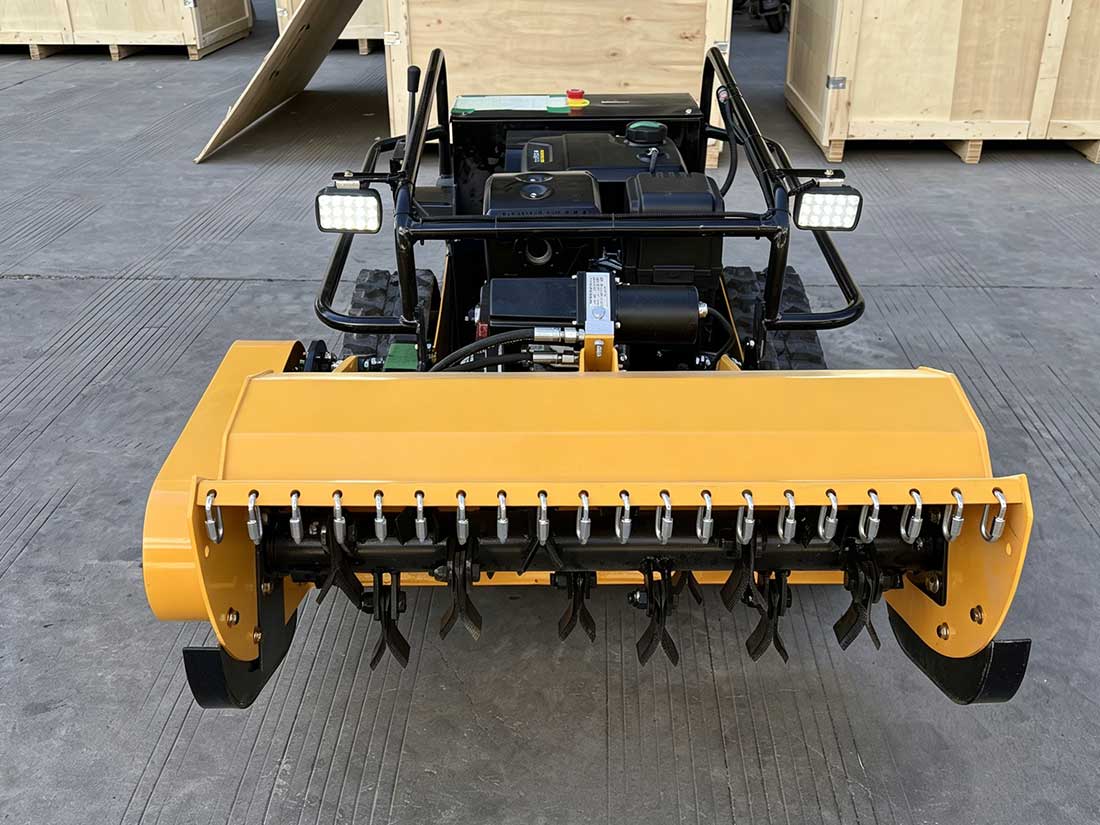
1. Understanding the Difference Between Robotic and Traditional Lawn Mowers
Before comparing their performance, it is important to understand how these two categories of equipment operate.
What Is a Robotic Lawn Mower?
A robotic lawn mower is a machine designed to reduce manual mowing effort through automated or remotely controlled operation.
There are two important categories:
Fully autonomous robotic mowers: These machines use navigation systems, sensors, boundary configurations, or programmed routes to perform mowing tasks with limited direct operator involvement.
Remote-controlled lawn mowers: These machines are operated directly by a person using a remote-control system, allowing precise control over movement and cutting functions.
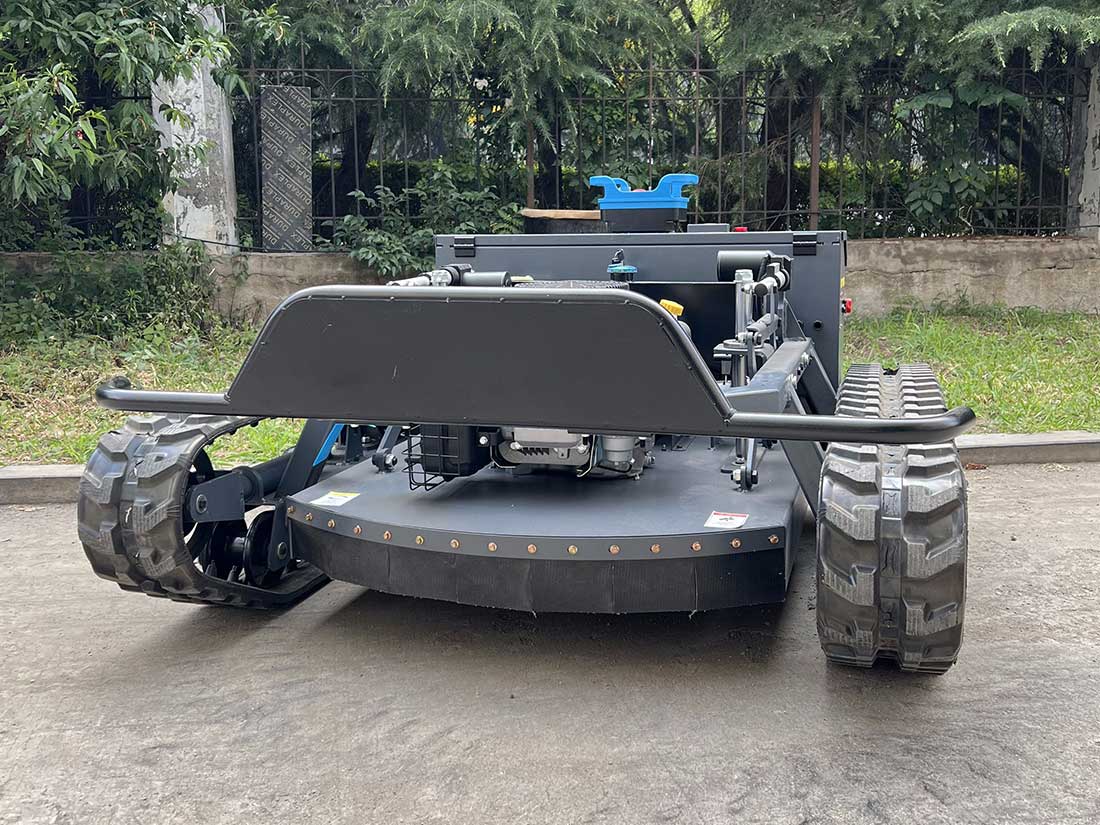
Professional remote-controlled mowing equipment often features tracked chassis designs, powerful cutting systems, and durable construction for challenging outdoor applications.
What Is a Traditional Lawn Mower?
Traditional lawn mowers generally include walk-behind, self-propelled, and ride-on machines.
These machines are commonly used for residential gardens, parks, sports fields, and commercial landscaping.
They are often effective on relatively flat and accessible ground, but certain models may be less suitable for steep slopes, rough terrain, and restricted working areas.
The main difference is that a robotic lawn mower can offer automated or remote operation, while traditional mowing equipment generally requires an operator to walk behind or ride on the machine.
2. Performance Comparison: Robotic Lawn Mower vs. Traditional Mower
Performance is one of the most important considerations when choosing professional mowing equipment.
Both machine types offer advantages, but their suitability depends on the working environment.
Mowing Efficiency
Traditional ride-on mowers can cover large, relatively flat lawns efficiently because of their wide cutting decks and high working speeds.
However, remote-controlled robotic lawn mowers can provide advantages in difficult locations where conventional equipment may require additional manual effort.
For example, tracked remote-controlled machines can help operators maintain embankments, orchards, and uneven agricultural properties without needing to walk across every part of the working area.
The most efficient option therefore depends on the terrain and the type of mowing operation.
Cutting Performance
Cutting performance depends on blade design, cutting width, engine or motor power, vegetation density, and machine configuration.
Traditional rotary mowers are suitable for regular grass maintenance.
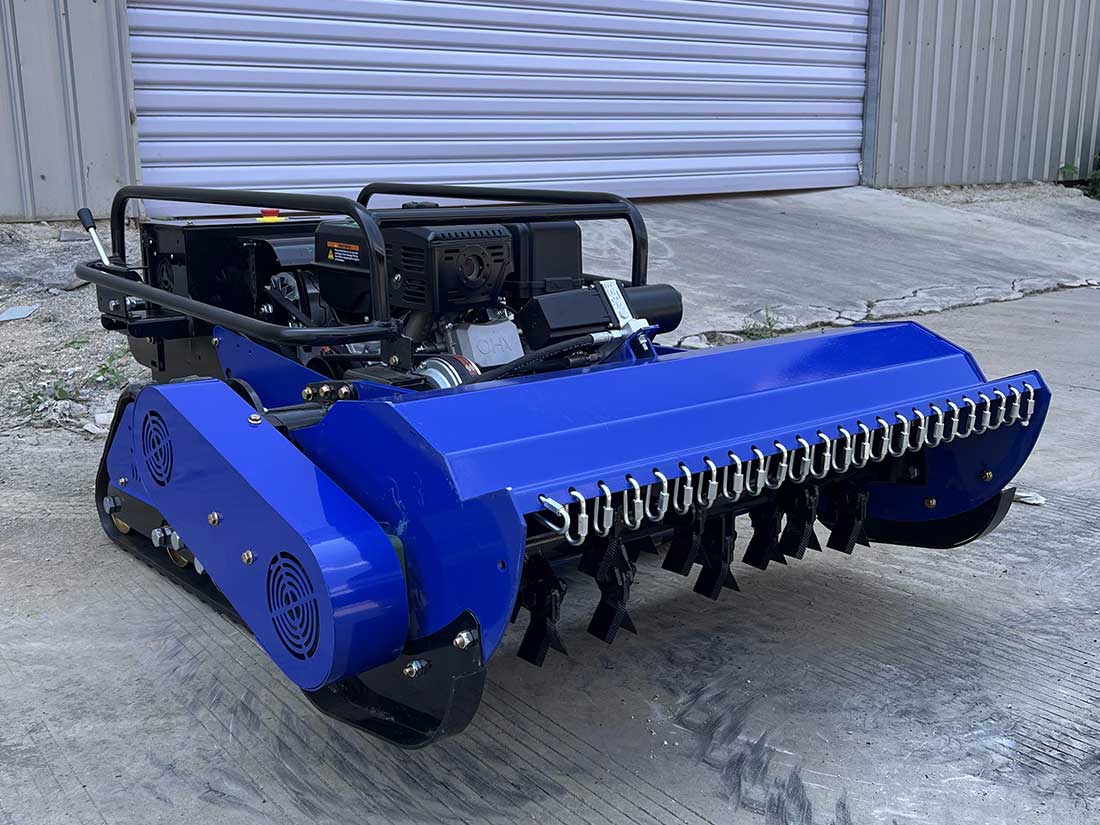
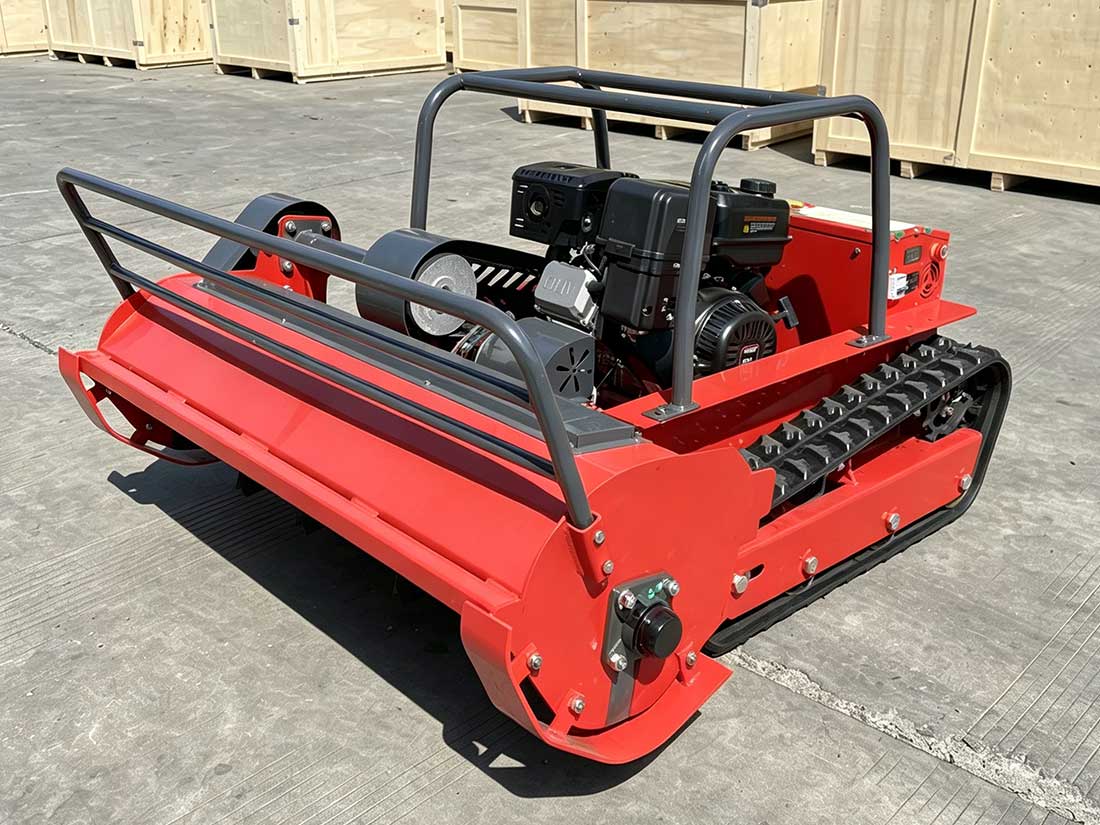
Professional remote-controlled robotic lawn mowers may also use rotary cutting systems or flail mower assemblies.
Rotary blades are generally suitable for maintaining ordinary grass, while flail systems can be more appropriate for thicker grass and tougher vegetation.
Choosing the correct cutting system is essential for achieving consistent results.
Maneuverability
Traditional lawn mowers perform well in open areas with relatively simple layouts.
However, narrow passages, irregular surfaces, tree obstacles, and steep slopes can create additional difficulties.
A compact tracked robotic lawn mower can offer greater flexibility in certain restricted environments.
Remote-control operation also allows the operator to adjust the machine's direction and movement without physically accompanying it across the entire mowing area.
3. Safety: An Important Advantage of Remote-Controlled Mowing Equipment
Safety is a major consideration in professional vegetation management.
Traditional mowing equipment requires operators to remain on or close to the machine during operation. On steep slopes or uneven ground, this can create additional risks.
A remote-controlled robotic lawn mower allows the operator to control the machine from a suitable working position away from the moving cutting equipment.
Important safety-related advantages include:
Reduced need for operators to walk directly across steep mowing surfaces.
Greater separation between the operator and the cutting mechanism.
Improved control when maintaining certain difficult-to-access areas.
Reduced physical demands during extended mowing operations.
Better suitability for some roadside and embankment maintenance tasks.
Tracked remote-controlled mowers can also provide improved traction on suitable surfaces.
Nevertheless, remote operation does not eliminate all risks. Operators must maintain visibility, follow the manufacturer's instructions, respect the machine's rated slope capability, and use emergency-stop functions when necessary.
For professional contractors, selecting suitable equipment and establishing proper operating procedures are both essential.
4. Which Mower Is Better for Steep Slopes and Uneven Terrain?
This is where the differences between traditional and remote-controlled mowing equipment become especially important.
Traditional Mowers on Difficult Terrain
Conventional lawn mowers are generally designed for stable and accessible working environments.
On steep inclines, wet grass, loose soil, or uneven surfaces, traditional wheeled machines may experience reduced traction or handling difficulties.
Ride-on equipment also requires operators to remain on the machine, which may not be appropriate for every sloped working environment.
Robotic Lawn Mowers on Difficult Terrain
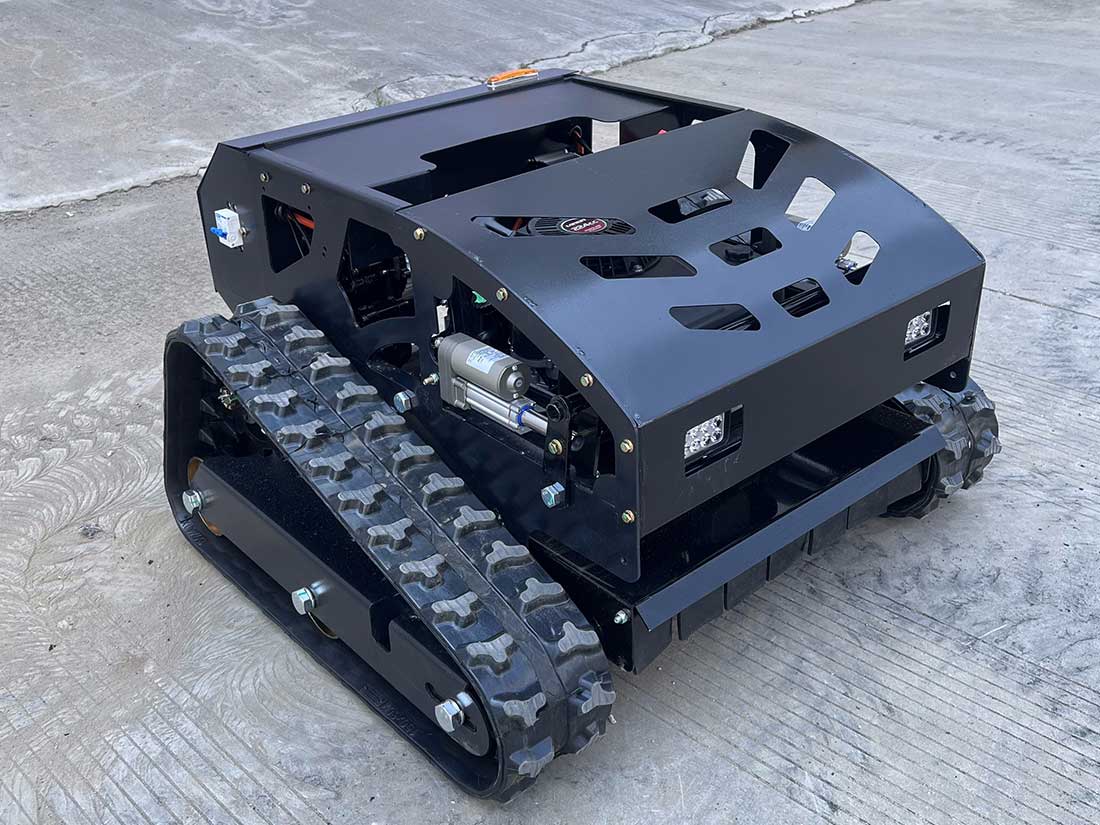
A professional tracked robotic lawn mower can provide a more suitable alternative for many demanding applications.
Its advantages may include:
Tracked mobility: Rubber tracks help distribute machine weight and improve ground contact.
Remote operation: Operators can guide the mower from a suitable position instead of physically following it across the slope.
Compact construction: Smaller machine dimensions can help access restricted areas.
Specialized cutting systems: Depending on the model, rotary or flail cutting mechanisms can handle different types of vegetation.
For contractors maintaining roadside embankments, orchards, hillsides, and agricultural properties, remote-controlled mowing equipment can offer significant practical benefits.
However, not every robotic lawn mower is designed for steep terrain. Buyers should verify the manufacturer's maximum slope rating and operating restrictions before purchasing.
5. Operating Costs: Which Option Offers Better Long-Term Value?
Initial purchase price is only one part of the overall equipment investment.
Professional buyers should consider total operating costs, including labor, fuel or electricity, maintenance, replacement parts, and machine service life.
| Cost factor | Traditional mower | Remote-controlled robotic mower |
|---|---|---|
| Initial investment | Varies by machine type | Often higher for specialized professional models |
| Labor requirements | Operator-dependent | Remote operation reduces physical workload |
| Fuel or energy | Depends on engine type | Depends on engine or motor configuration |
| Maintenance | Blades, engine, tires, and other components | Blades, tracks, drive systems, and other components |
| Difficult terrain | May require additional equipment or labor | Designed for suitable challenging applications |
| Long-term value | Strong for ordinary lawn maintenance | Potentially valuable for demanding mowing environments |
A remote-controlled robotic lawn mower may help reduce labor demands and improve productivity on challenging terrain.
However, traditional mowers can remain more economical for straightforward residential and commercial lawns.
Businesses should calculate the expected return on investment based on actual working hours, labor costs, mowing frequency, and maintenance requirements.
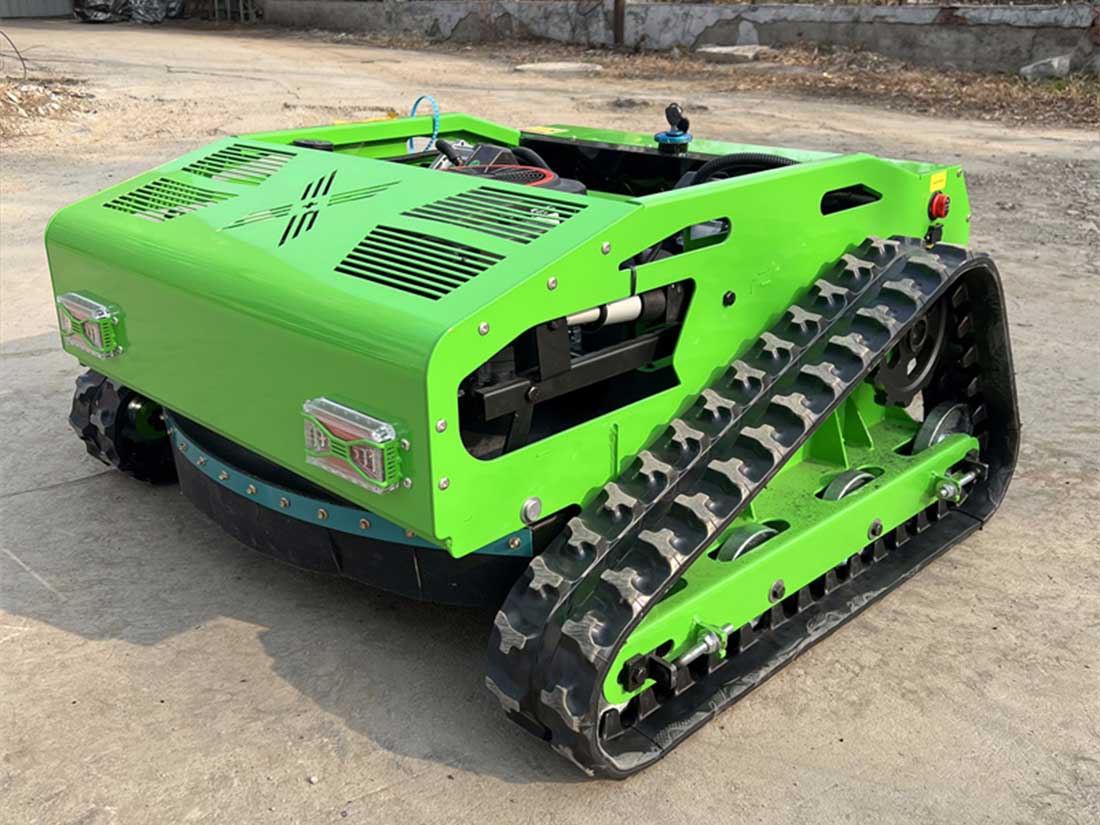
6. Application Comparison Across Different Industries
Different mowing environments require different equipment configurations.
Residential Gardens
For small, flat residential lawns, traditional walk-behind mowers and autonomous robotic lawn mowers are both practical options.
A specialized remote-controlled robotic lawn mower may be unnecessary unless the property includes steep slopes or difficult terrain.
Commercial Landscaping
Commercial landscaping companies often manage multiple properties with different ground conditions.
Traditional ride-on mowers are efficient for large, open lawns, while remote-controlled robotic lawn mowers can help address difficult sections that require specialized equipment.
Agricultural Properties and Orchards
Agricultural properties frequently contain uneven ground, tree roots, narrow spaces, and dense vegetation.
Compact tracked remote-controlled mowing equipment can help maintain grass between orchard rows and around agricultural facilities.
Roadside and Embankment Maintenance
Roadside slopes and embankments are among the most challenging areas for conventional mowing operations.
A professional robotic lawn mower with remote-control functionality can provide an alternative approach by allowing operators to maintain suitable slopes from a safer working position.
Solar Farms
Solar farms require consistent vegetation control around panels, access roads, and equipment installations.
Specialized remote-controlled mowers can help maintain grass in areas where machine dimensions and maneuverability are important.
7. How to Choose the Right Robotic Lawn Mower
Selecting the best robotic lawn mower requires a clear understanding of the intended application.
Professional buyers should consider the following specifications.
1. Maximum slope capability
Check the manufacturer's stated maximum operating angle. Actual performance depends on terrain, soil conditions, moisture, and vegetation.
2. Cutting width
A wider cutting deck can improve productivity across large areas, while a compact cutting width may be more appropriate for restricted spaces.
3. Power configuration
Evaluate engine output, motor performance, and fuel or energy requirements according to the expected workload.
4. Track design
For difficult terrain, consider rubber track construction, ground clearance, weight distribution, and traction.
5. Cutting mechanism
Choose rotary cutting systems for suitable grass-maintenance applications and consider flail systems for tougher vegetation.
6. Remote-control performance
Check operating distance, responsiveness, emergency-stop functionality, and ease of use.
7. After-sales support
Reliable spare-parts availability, technical support, and maintenance guidance are important for professional operations.
A carefully selected robotic lawn mower should match the actual working conditions rather than simply offer the highest specifications.
8. JUYOU: Remote-Controlled Mowing Solutions for Professional Applications
As demand for specialized mowing equipment increases, professional users are looking for manufacturers that understand the challenges of difficult terrain and commercial vegetation management.
JUYOU provides remote-controlled mowing equipment for applications including steep slopes, orchards, roadside vegetation management, and agricultural maintenance.
Its product range includes tracked remote-controlled mowers and different cutting configurations designed for various working requirements.
Some important characteristics of its equipment include:
Tracked chassis designs: Help provide traction and mobility on suitable uneven surfaces.
Remote-control operation: Allows operators to manage mowing operations from a distance.
Different cutting configurations: Support different grass and vegetation maintenance requirements.
Professional applications: Suitable models can be considered for orchards, embankments, agricultural properties, and commercial landscaping.
Equipment customization: Business buyers and distributors can discuss suitable configurations and branding requirements.
For example, the JUYOU JY-C550 is a compact tracked remote-controlled mower designed for applications such as orchard mowing, slope maintenance, and roadside vegetation management. Its published specifications include a 550 mm cutting width and a stated slope capability of 0–45 degrees. Actual operating suitability should be confirmed with the manufacturer according to site conditions.
For buyers comparing a robotic lawn mower with traditional mowing equipment, working with an experienced supplier can help identify the most appropriate machine configuration.
Explore JUYOU's professional remote-controlled mowing equipment at:
9. The Future of Robotic Lawn Mower Technology
The lawn maintenance industry is moving toward smarter, more efficient equipment.
Several developments are expected to influence the future of robotic lawn mower technology.
Improved Automation
More advanced navigation systems and intelligent controls may make autonomous mowing increasingly practical for suitable lawn environments.
Better Remote-Control Systems
Improvements in control responsiveness, operating interfaces, and monitoring capabilities can make professional remote-controlled equipment easier to manage.
Energy Efficiency
Developments in battery technology and engine efficiency may help reduce operating costs and environmental impact.
Stronger Terrain Adaptability
Manufacturers are continuing to improve track systems, chassis structures, and cutting mechanisms to address challenging mowing conditions.
More Specialized Applications
As remote-controlled mowing equipment develops, its applications may expand across agriculture, solar farms, roadside maintenance, and commercial landscaping.
The future will not necessarily eliminate traditional lawn mowers. Instead, different technologies will serve different operating environments.
Conclusion: Which Mower Is Better for Modern Lawn Care?
The comparison between a robotic lawn mower and a traditional mower shows that both technologies have important advantages.
Traditional mowers remain effective, practical, and economical for many residential gardens and large, relatively flat lawns.
However, a professional remote-controlled robotic lawn mower can offer important benefits when working on steep slopes, uneven terrain, roadside embankments, orchards, and other challenging landscapes.
Its tracked mobility, remote operation, and specialized cutting systems can help improve operational efficiency, reduce physical workload, and make difficult mowing tasks more manageable.
For professional landscaping contractors, agricultural operators, and commercial property managers, the best choice depends on terrain, vegetation type, working area, and long-term operating costs.
JUYOU provides remote-controlled mowing equipment designed for demanding professional applications. If you are looking for a suitable robotic lawn mower for difficult terrain or specialized vegetation management, visit www.jylawnmower.com to explore available products and learn more about its equipment solutions.
Choosing the right mowing technology today can help build a safer, more efficient, and more productive lawn maintenance operation for the future.