 English
 Spanish
 Portuguese
 French
 Italian
 Remote Mower
The Lawn mower industry is changing rapidly as property owners, landscapers, agricultural contractors, municipalities, and professional maintenance teams look for safer and more flexible ways to manage vegetation. While traditional mowing machines remain useful for many applications, remote-controlled mowing equipment is attracting increasing attention for difficult terrain and demanding professional work.
A modern Lawn mower is no longer simply a machine designed to cut grass. Professional users increasingly evaluate mobility, operator control, cutting capability, terrain adaptability, safety, maintenance, and overall operating efficiency.
This is one reason why the remote-controlled Lawn mower has become an increasingly interesting solution for professional vegetation management.
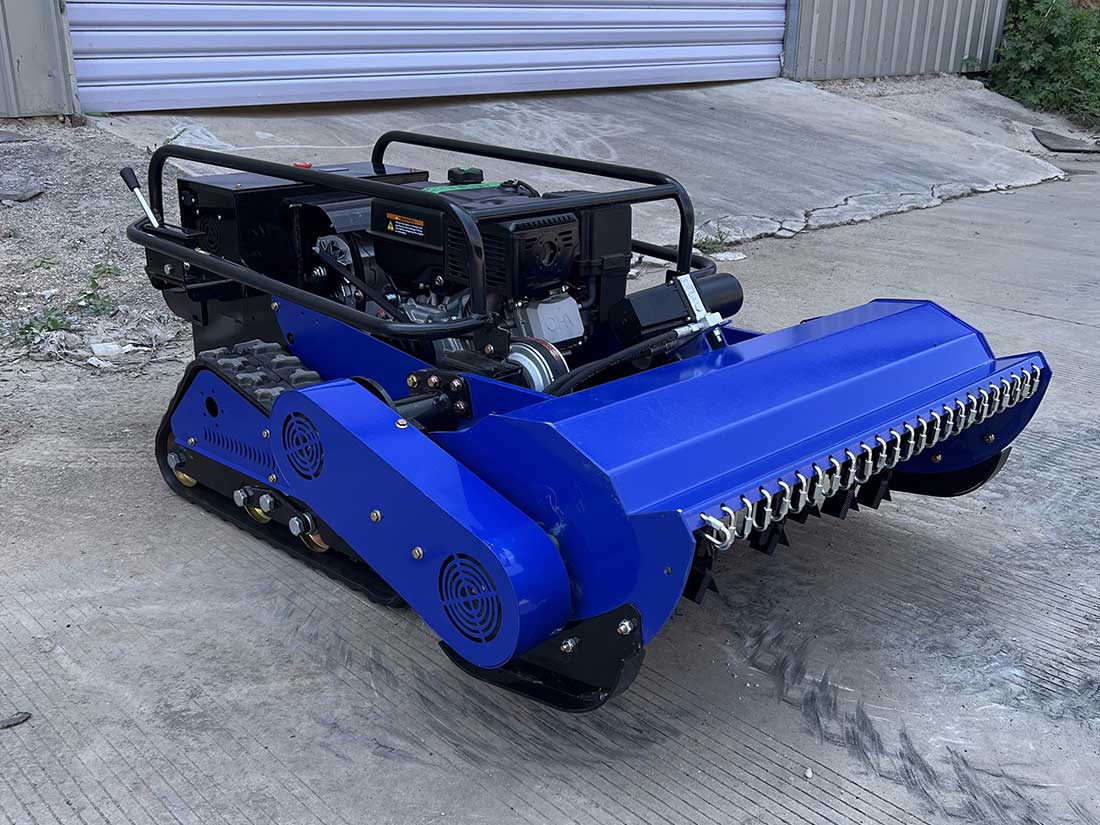
What Is a Remote-Controlled Lawn mower?
A remote-controlled Lawn mower is a mowing machine operated from a distance using a wireless remote-control system. Instead of sitting directly on the machine, the operator controls important functions remotely while maintaining a clear view of the working area.
This configuration is particularly valuable when conventional mowing equipment is difficult to position safely or efficiently.
Remote-controlled mowing equipment can be used for applications such as:
- slopes and embankments;
- uneven terrain;
- roadside vegetation;
- agricultural land;
- orchards;
- parks and large green spaces;
- areas with dense vegetation;
- difficult-to-access maintenance zones.
The professional value of a remote-controlled Lawn mower therefore comes from the combination of machine mobility, cutting performance, and remote operation.
Why Are Remote-Controlled Lawn mower Models Gaining Attention?
Several factors are contributing to the growing interest in remote-controlled mowing equipment.
1. Better Operator Positioning
One of the most important advantages of a remote-controlled Lawn mower is that the operator does not need to remain directly on or beside the machine during operation.
This can be particularly useful on challenging terrain. Instead of positioning the operator in the most difficult part of the work area, the machine can be controlled from a more suitable location.
However, remote operation does not eliminate workplace hazards. Professional users must still evaluate terrain conditions, obstacles, machine limitations, and operating procedures before beginning work.
2. Difficult Terrain
A conventional Lawn mower is often most effective on relatively accessible and predictable surfaces. Professional vegetation management, however, frequently involves uneven or challenging terrain.
Slopes, drainage channels, roadside areas, rough grass, and irregular surfaces can make mowing more complicated.
Remote-controlled mowing equipment is designed to address these challenges by combining tracked or specialized mobility with remote operation.
For contractors working on difficult ground, a remote-controlled Lawn mower can therefore provide a practical alternative to conventional mowing equipment.
3. Greater Control
Professional mowing is not only about cutting grass quickly. Operators need to control machine movement, cutting direction, speed, and positioning according to the working environment.
A remote-controlled Lawn mower allows the operator to manage the machine from a distance while maintaining direct visual contact with the work area.
This can be particularly useful when navigating around obstacles, working along uneven ground, or managing vegetation near infrastructure.
Lawn mower Technology for Professional Applications
The development of modern Lawn mower technology has expanded the range of applications available to professional users.
A professional remote-controlled mowing system may combine:
- a robust mobile platform;
- remote-control technology;
- specialized cutting equipment;
- tracked mobility;
- durable components;
- safety systems;
- maintenance-friendly construction.
The exact configuration should always be selected according to the intended application.
For example, mowing ordinary grass on a maintained property has very different requirements from clearing dense vegetation along a roadside or managing difficult agricultural terrain.
This is why professional buyers should evaluate the complete Lawn mower system rather than focusing on a single specification.
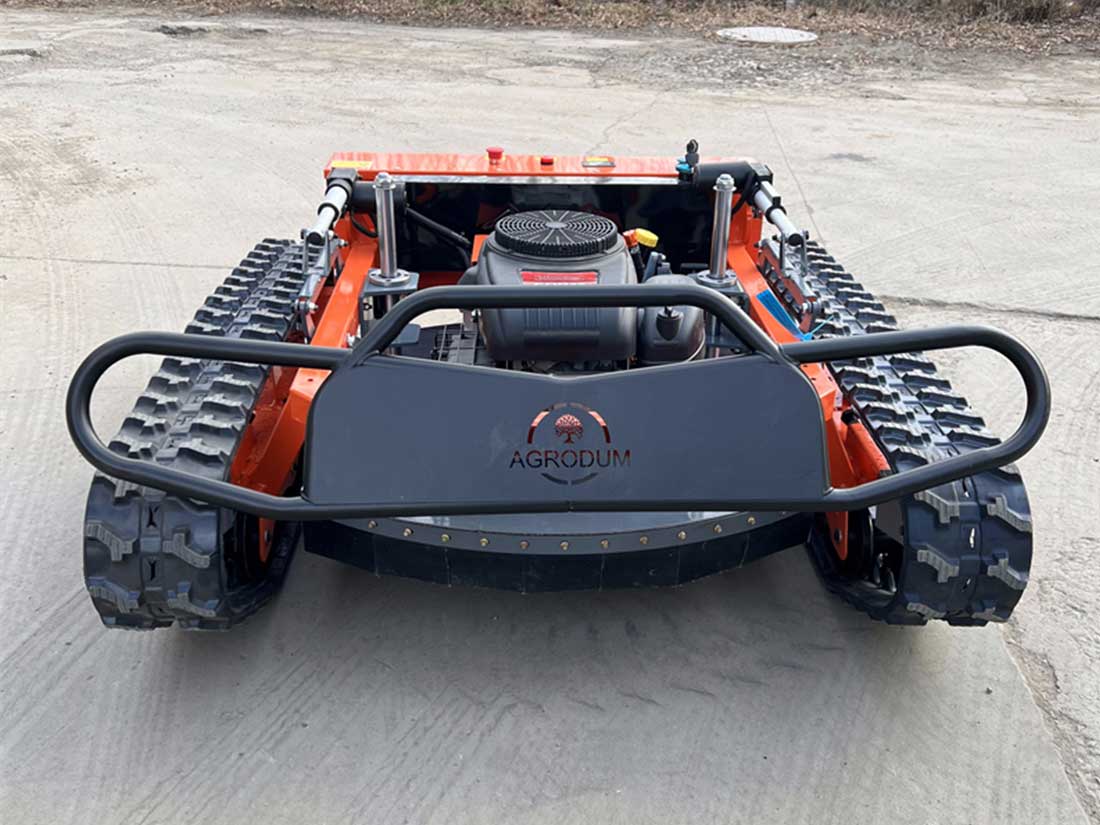
Lawn mower Solutions for Roadside Maintenance
Roadside vegetation management is a particularly demanding application. Maintenance teams may need to control vegetation along highways, rural roads, drainage areas, and embankments.
The source material highlights roadside mowing equipment as an important solution for municipalities, landscaping companies, and agricultural contractors working on vegetation management.
A remote-controlled Lawn mower can be valuable in these environments because it provides remote operation and allows the machine to access areas that may be difficult to handle with conventional equipment.
For roadside applications, however, professional teams must follow local traffic-management, safety, visibility, and work-zone requirements.
Lawn mower Applications in Agriculture
Agricultural vegetation management often requires equipment that can work across changing terrain and different vegetation conditions.
A remote-controlled Lawn mower can be considered for:
- grass management;
- orchard maintenance;
- field edges;
- overgrown areas;
- slopes;
- agricultural access areas.
The correct cutting system is particularly important. Grass, weeds, dense vegetation, and brush can require different cutting configurations.
Experienced equipment buyers therefore evaluate the combination of Lawn mower platform and cutting attachment instead of treating the machine as a one-size-fits-all product.
Lawn mower for Uneven Ground
Uneven terrain creates several challenges for mowing operations. The machine must maintain appropriate traction, stability, and control while following the terrain.
A remote-controlled Lawn mower can offer advantages in these conditions because the operator can remain away from the machine while controlling its movement.
For professional applications, the selection process should consider:
- Terrain conditions
- Slope characteristics
- Vegetation density
- Required cutting system
- Working area size
- Machine mobility
- Remote-control range and visibility
- Maintenance requirements
These factors are more meaningful than simply choosing a Lawn mower based on advertised power or appearance.
Safety Should Come Before Productivity
The growing popularity of remote-controlled mowing equipment should not lead users to overlook basic operating safety.
A professional Lawn mower should always be operated according to the manufacturer's instructions and within its specified operating limits.
Before mowing, operators should inspect the work area for:
- people and animals;
- rocks and hidden objects;
- holes and unstable ground;
- obstacles;
- steep or changing terrain;
- infrastructure and roadside hazards.
The operator should also maintain an appropriate safety distance and keep unauthorized people away from the working area.
Remote-controlled operation can improve operator positioning, but responsible operation remains essential.
Choosing the Right Lawn mower
There is no single Lawn mower configuration that is ideal for every application.
Professional buyers should begin with the working environment rather than the machine itself.
Consider the Terrain
Determine whether the machine will work on flat lawns, uneven fields, slopes, embankments, orchards, or roadside areas.
Consider the Vegetation
Grass and light vegetation may require a different cutting solution from thick weeds or brush.
Consider the Cutting Width
A wider cutting system can be useful for large open areas, while a more compact configuration may provide better maneuverability around obstacles.
Consider Maintenance
Professional users should examine how easily the Lawn mower can be inspected, cleaned, serviced, and maintained.
Consider the Complete Equipment System
The remote-control system, drive system, chassis, cutting attachment, and maintenance requirements should be evaluated together.
Remote-Controlled Mowing Equipment vs Traditional Lawn mower
Traditional mowing equipment remains an effective choice for many applications. The objective is not necessarily to replace every conventional Lawn mower.
Instead, remote-controlled mowing equipment provides another option for situations where terrain, safety, accessibility, or operating conditions create additional challenges.
For flat residential lawns, a traditional Lawn mower may be entirely appropriate.
For professional applications involving slopes, rough ground, roadside vegetation, large green areas, or difficult access, a remote-controlled system may offer advantages worth considering.
The best choice ultimately depends on the actual working conditions.
Why Professional Experience Matters
Choosing a Lawn mower for professional use requires more than comparing product photographs and headline specifications.
Experienced operators understand that real-world mowing performance depends on the interaction between terrain, vegetation, machine configuration, operator technique, and maintenance.
A machine that performs well on one property may not be the right solution for another.
This is why professional equipment selection should begin with a clear assessment of the work environment and then match the Lawn mower configuration to those requirements.
The Future of Lawn mower Technology
The future of the Lawn mower industry is likely to involve greater integration between remote control, specialized mobility, cutting technology, and professional vegetation-management practices.
Remote-controlled mowing equipment is already attracting attention because it addresses several important challenges faced by modern maintenance teams.
As demand grows for safer, more flexible, and more professional approaches to vegetation management, remote-controlled Lawn mower technology is likely to remain an important area of development.
For companies and contractors looking for professional remote-controlled mowing equipment, choosing an experienced equipment supplier is an important part of the purchasing process.
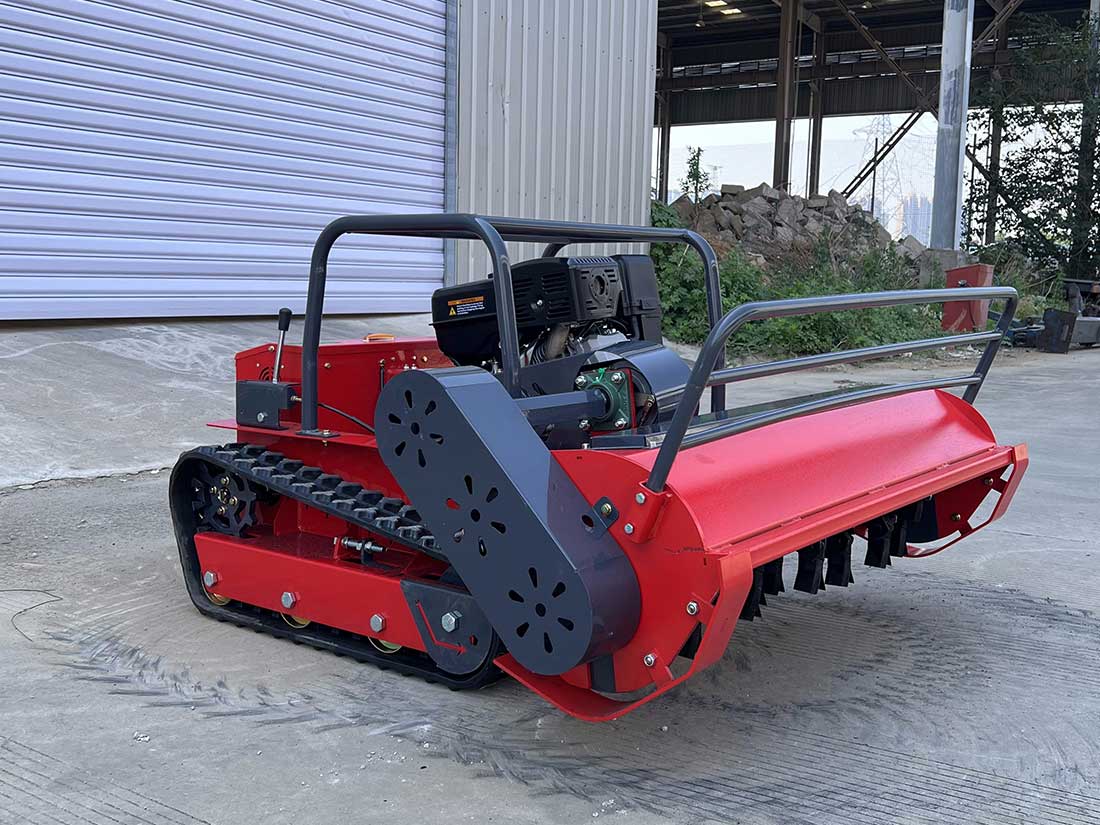
Explore Professional Remote-Controlled Lawn mower Solutions
If you are evaluating a remote-controlled Lawn mower for slopes, uneven terrain, agriculture, landscaping, roadside maintenance, or other demanding applications, it is important to choose equipment based on the actual working conditions.
JY Lawn Mower provides professional mowing equipment solutions designed for demanding vegetation-management applications. You can explore available remote-controlled mowing equipment and learn more about suitable configurations on the official website.
Conclusion
The Lawn mower market is evolving beyond traditional grass-cutting equipment. Remote-controlled mowing equipment is gaining attention because it combines remote operation, machine mobility, and professional cutting capabilities for challenging working environments.
For slopes, uneven terrain, roadside vegetation, agricultural areas, parks, and other difficult locations, a remote-controlled Lawn mower can provide a practical option when properly selected and operated.
The key is not simply choosing the most powerful Lawn mower, but selecting the right combination of machine, cutting system, mobility, remote control, safety procedures, and maintenance support for the job.
For professional users who want to explore modern remote-controlled mowing equipment, JY Lawn Mower is a useful place to start.