 English
 Spanish
 Portuguese
 French
 Italian
 Remote Mower
Mowing slopes is one of the more demanding tasks in professional vegetation management. Uneven ground, changing gradients, loose soil, obstacles, tall vegetation, and limited operator access can all affect mowing efficiency and equipment selection.
For these applications, a conventional grass mower may not always provide the operational flexibility required by professional contractors. This is one reason remote-controlled mowing equipment is gaining attention.
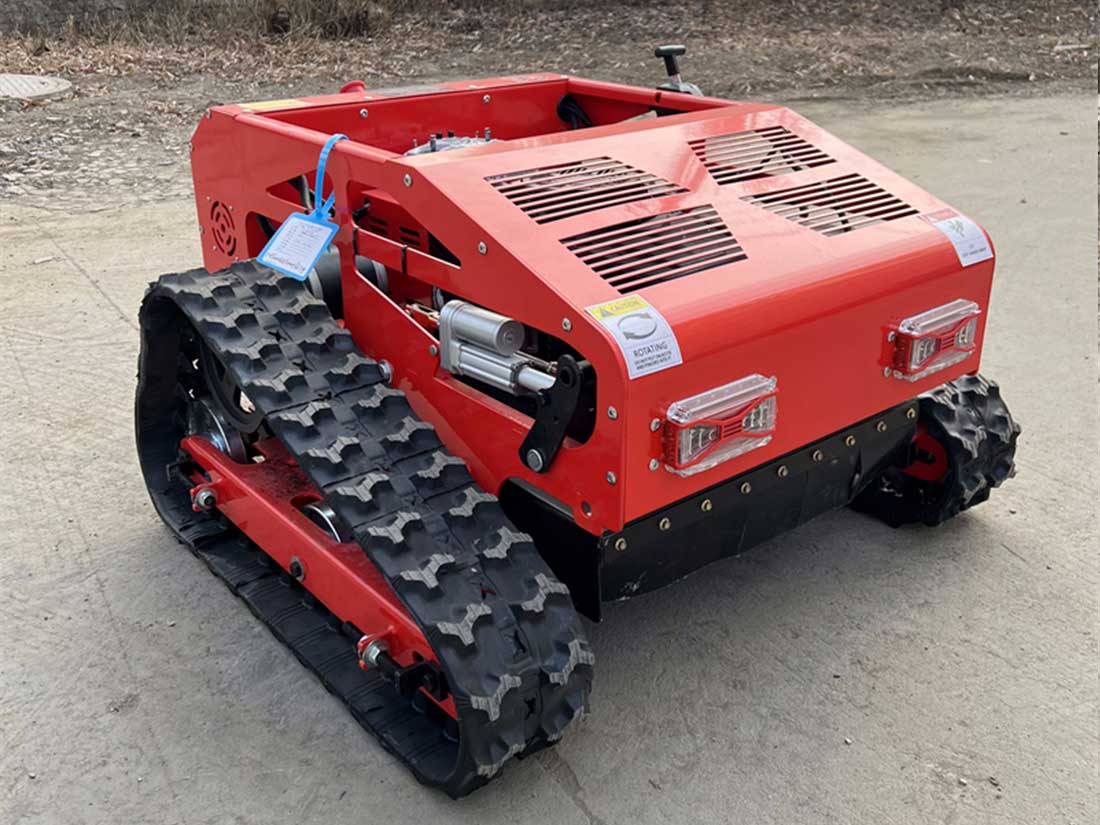
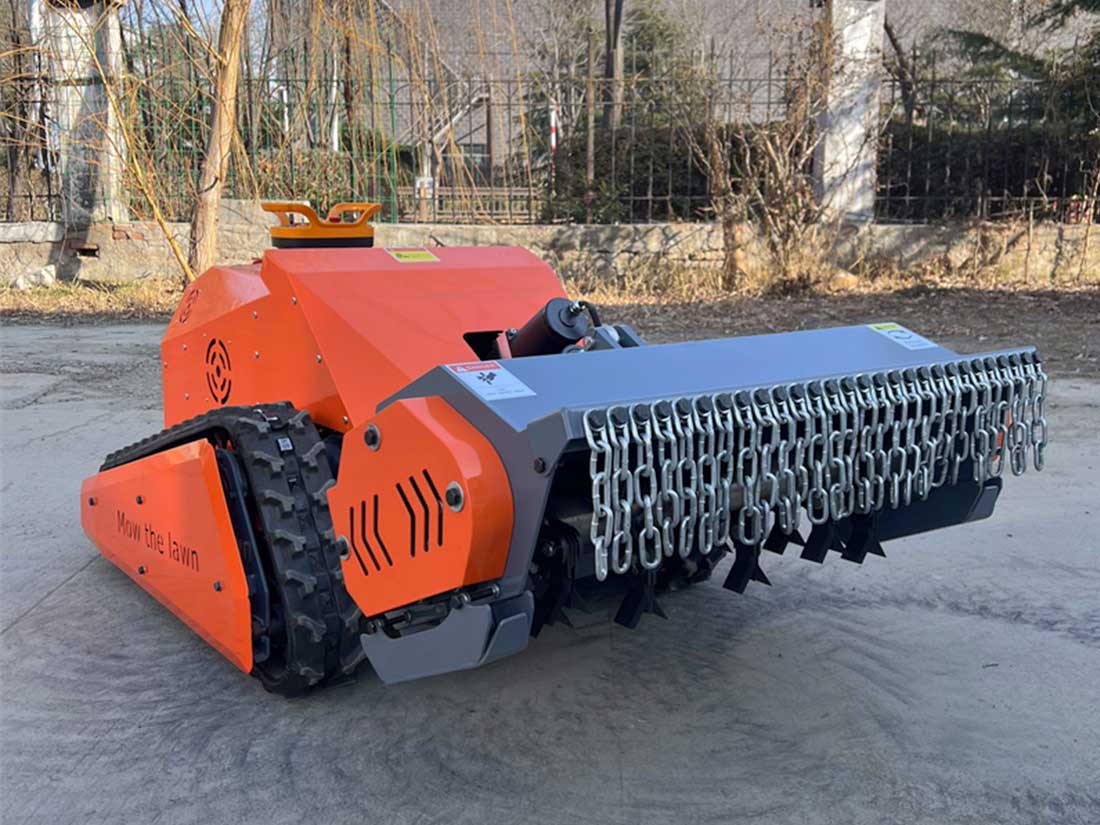
A modern remote-controlled grass mower combines a cutting system with a mobile platform and wireless operator control. When properly matched to the terrain and vegetation, this equipment can provide a practical solution for slopes, embankments, difficult terrain, roadside vegetation, orchards, parks, and other challenging areas.
For professional users, however, choosing a slope-capable grass mower requires more than looking at engine power. Traction, stability, maneuverability, cutting performance, operator visibility, maintenance, and operating limits must all be considered.
Why Is Slope Mowing More Challenging?
A flat lawn provides relatively predictable operating conditions. Slopes are different.
When a grass mower works on an incline, several factors become more important:
Ground traction
Machine stability
Weight distribution
Steering response
Surface conditions
Vegetation density
Operator positioning
Obstacles and terrain changes
A slope can also contain areas with different ground conditions within a relatively short distance. Grass may be short in one section and tall or dense in another. The surface may change from firm soil to loose material, wet grass, stones, or uneven ground.
This means a professional grass mower must be evaluated as a complete working system rather than simply as a cutting machine.
How Remote Control Changes Professional Slope Mowing
The main difference between a conventional machine and a remote-controlled grass mower is the relationship between the operator and the equipment.
With a traditional mower, the operator generally needs to remain close to the machine.
With remote-controlled mowing equipment, the operator can control the machine from a selected position while maintaining visual contact with the working area.
This can provide greater flexibility when mowing certain slopes and difficult-to-access areas.
The advantage is not simply convenience. Remote operation can change how a professional team approaches the worksite.
Instead of requiring the operator to remain directly beside the grass mower, the operator can select a position that provides an appropriate view of the machine and working environment.
The Importance of Traction on Slopes
For any slope-capable grass mower, traction is a fundamental consideration.
The machine must maintain sufficient contact with the ground to move and maneuver predictably.
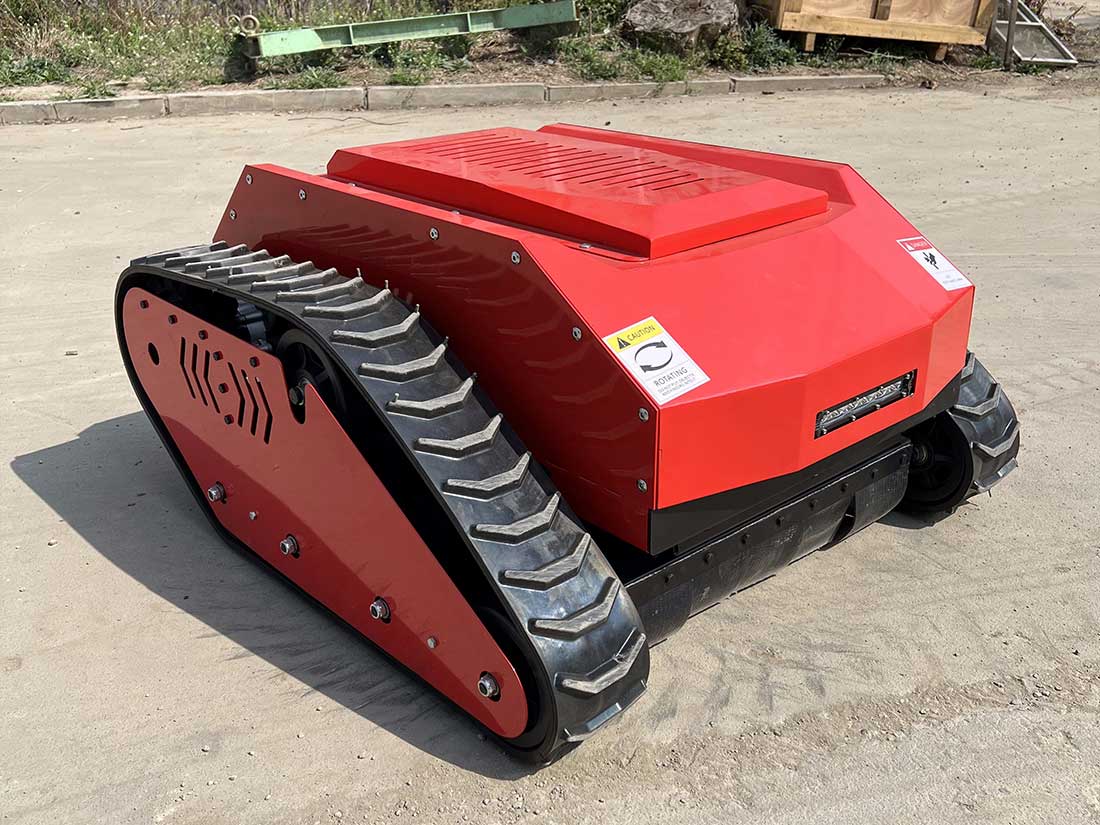
Tracked mowing equipment is often considered for difficult terrain because the tracked platform is designed around continuous ground contact and controlled movement.
However, traction performance depends on the actual terrain.
Wet grass, loose soil, mud, stones, vegetation, surface irregularities, and changing gradients can all influence machine behavior.
Professional users should therefore evaluate the actual working environment rather than assuming that one traction system will perform identically on every slope.
A remote-controlled grass mower should be selected according to the terrain, manufacturer specifications, and intended application.
Stability Is Equally Important
Traction alone does not determine whether a grass mower is appropriate for slopes.
Stability is another critical consideration.
Machine design, center of gravity, track or wheel configuration, weight distribution, and operating direction can all influence stability.
When selecting remote-controlled mowing equipment, professional buyers should review the manufacturer's stated operating limitations and determine whether the equipment is designed for the intended terrain.
Operators should also consider changing conditions during the job.
A slope that appears manageable when dry may behave differently after rainfall. Vegetation, soil moisture, surface erosion, and hidden obstacles can affect operating conditions.
For this reason, professional slope mowing should always begin with a site assessment.
Remote Control Improves Operator Positioning
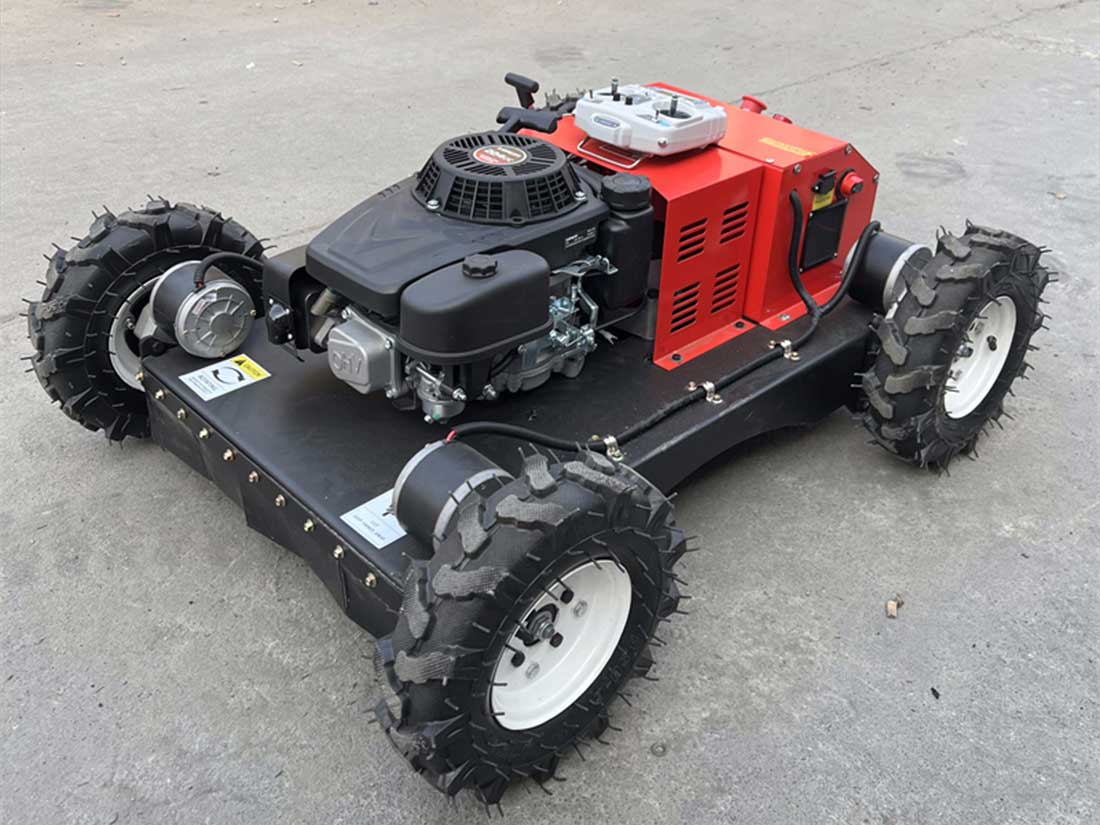
One of the most practical advantages of a remote-controlled grass mower is improved operator positioning.
The operator can control the machine from a location selected according to the terrain and visibility requirements.
This can be particularly useful when the mower is working:
On embankments
Along drainage channels
On roadside slopes
Around obstacles
In orchards
On uneven agricultural land
Across large landscaped areas
The operator still needs to maintain clear visual contact with the machine and follow all applicable safety procedures.
Remote control provides additional flexibility; it does not remove the need for professional supervision.
Grass Mower Performance on Dense Vegetation
Slope mowing often involves more than simply cutting short lawn grass.
Professional sites can contain tall grass, weeds, brush, thick vegetation, and mixed plant material.
For this reason, the cutting system of a grass mower is particularly important.
Before choosing equipment, operators should consider:
Vegetation height
Vegetation density
Material thickness
Desired cutting finish
Cutting width
Cutting frequency
Terrain conditions
Required working speed
A machine designed primarily for fine lawn maintenance may not be suitable for rough vegetation.
Likewise, a heavy-duty grass mower designed for dense vegetation may not be necessary for a carefully maintained lawn.
The cutting system should therefore be matched to the actual application.
Grass Mower Applications for Embankments
Embankments are a common example of where remote-controlled mowing equipment can provide additional operational flexibility.
Roadside and infrastructure embankments may combine steep gradients, uneven surfaces, tall vegetation, drainage channels, and restricted access.
A professional grass mower used in these areas must provide suitable mobility and cutting capability while allowing the operator to maintain appropriate control.
Remote operation can allow the operator to remain in a more suitable position rather than continuously walking directly alongside the machine.
For contractors responsible for roadside or infrastructure maintenance, this can make remote-controlled mowing equipment an important option to consider when developing their equipment fleet.
Grass Mower Solutions for Landscaping
Professional landscaping projects often involve mixed terrain.
A park, commercial property, estate, or public green area may contain flat lawns as well as slopes, banks, uneven ground, and areas with dense vegetation.
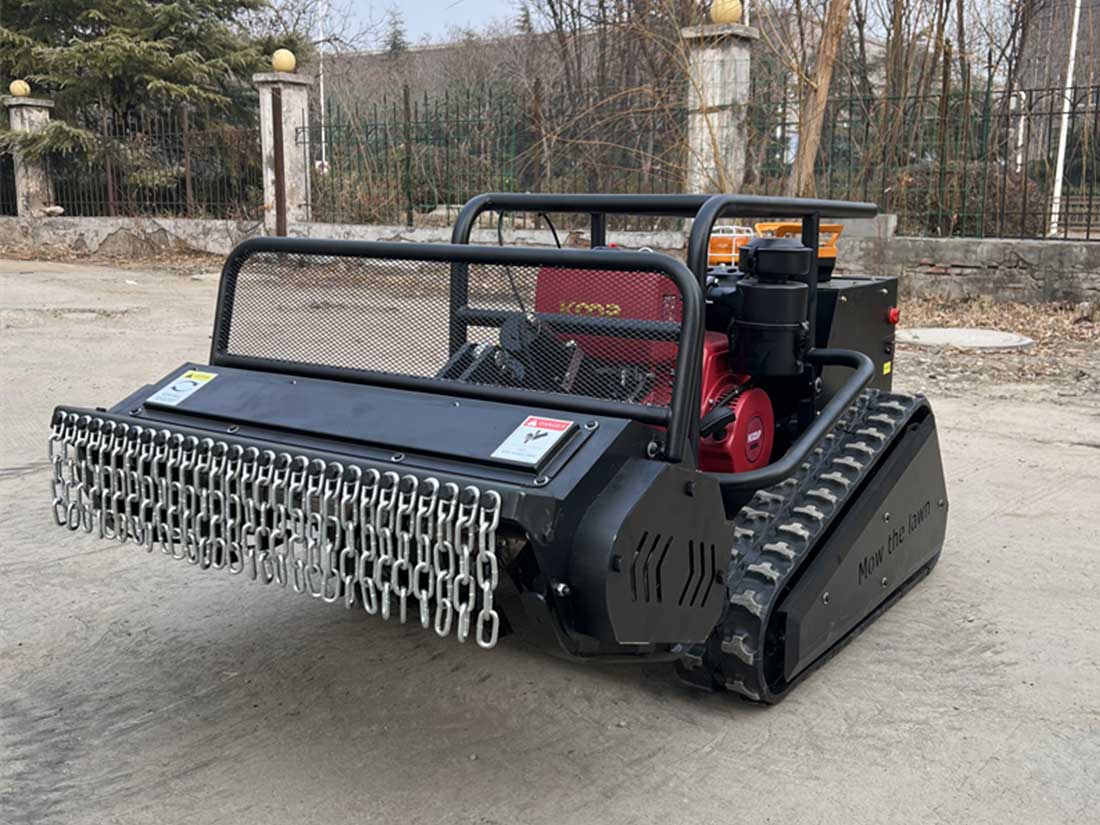
A versatile grass mower can help contractors adapt to these different conditions.
Remote-controlled mowing equipment can be used as a specialized solution for areas where conventional mowing equipment is less convenient.
The objective is not necessarily to replace every conventional mower.
Instead, the remote-controlled grass mower can complement existing equipment and provide another solution for challenging terrain.
Agriculture and Orchard Applications
Agricultural and orchard environments can present similar challenges.
Grass and vegetation may grow between rows, around boundaries, along access roads, or across sloped areas.
A remote-controlled grass mower can provide an option for managing vegetation where terrain and accessibility are important factors.
Professional agricultural users should evaluate:
Terrain and slope characteristics
Ground conditions
Vegetation type
Working width
Machine dimensions
Turning requirements
Traction
Cutting configuration
Maintenance requirements
Selecting the right machine based on these factors can help ensure that the equipment matches the actual work rather than simply meeting a nominal power requirement.
Safety Considerations for Remote-Controlled Slope Mowing
Safety must remain central to any professional grass mower operation.
Remote control changes the operator's position, but it does not eliminate hazards associated with slopes.
Before operating a remote-controlled mower, professionals should:
Inspect the terrain.
Identify unstable ground.
Check for rocks, holes, and other obstacles.
Assess vegetation density.
Confirm operating limits.
Maintain visual contact with the machine.
Keep people and animals away from the working area.
Understand emergency-stop procedures.
Follow the manufacturer's operating instructions.
Stop work if conditions become unsuitable.
Weather conditions should also be considered.
Rain can change ground traction and stability, while poor visibility can make remote operation more difficult.
Professional experience shows that good equipment selection and good operating procedures must work together.
How to Choose a Grass Mower for Slopes
Choosing a grass mower for slope work should follow a structured process.
1. Evaluate the Slope
Determine the gradient, surface condition, terrain profile, and accessibility of the working area.
2. Identify the Vegetation
Understand whether the mower will cut maintained grass, tall grass, weeds, brush, or mixed vegetation.
3. Check Traction
Evaluate whether the machine's tracks or wheels are appropriate for the expected ground conditions.
4. Check Stability
Review the manufacturer's operating specifications and limitations for slope applications.
5. Evaluate Remote-Control Range and Operation
The control system should provide precise machine movement and allow the operator to maintain an appropriate working position.
6. Examine the Cutting System
The cutting mechanism should match the type and density of vegetation.
7. Consider Maintenance
Professional mowing equipment must be easy to inspect and maintain.
8. Evaluate the Complete System
Do not evaluate a grass mower only by horsepower.
Consider the complete combination of:
Traction + Stability + Cutting Performance + Maneuverability + Remote Control + Maintenance
This is a more practical approach to professional equipment selection.
Maintenance of a Remote-Controlled Grass Mower
A remote-controlled grass mower requires regular maintenance just like conventional professional mowing equipment.
After working on slopes or in dense vegetation, operators should inspect the machine for grass accumulation, debris, loose components, and signs of wear.
Important inspection areas may include:
Cutting components
Tracks
Drive components
Fasteners
Protective structures
Remote-control system
Hydraulic components where applicable
Electrical and power components
Routine maintenance should always follow the manufacturer's recommendations.
Preventive maintenance can help identify developing problems before they affect the next mowing operation.
Remote-Controlled Mowing Equipment as Part of a Professional Fleet
Professional contractors do not necessarily need to choose between traditional equipment and remote-controlled equipment.
A more practical strategy can be to build a fleet around different applications.
A conventional grass mower can remain highly effective on accessible flat areas.
Remote-controlled mowing equipment can then be used for slopes, embankments, rough vegetation, difficult-access areas, and other applications where remote operation provides additional flexibility.
This application-based approach allows professional teams to select the right equipment for the right working conditions.
The Future of Slope Mowing Technology
The development of the professional grass mower is increasingly connected with smarter equipment design.
Remote-control systems, tracked platforms, specialized cutting attachments, improved mobility, and more application-focused machine configurations are expanding the possibilities of professional vegetation management.
The future of slope mowing will likely focus not only on cutting power but also on:
Operator control
Machine stability
Mobility
Cutting quality
Safety
Maintenance
Versatility
Application-specific design
The goal is to create equipment capable of delivering predictable performance under real working conditions.
Why Professional Users Are Looking at Remote-Controlled Grass Mowers
The growing interest in remote-controlled mowing equipment is driven by a practical need.
Professionals working on slopes and difficult terrain need equipment that can adapt to conditions rather than forcing the working method to adapt to the limitations of the machine.
A remote-controlled grass mower can provide an additional level of operational flexibility by separating the operator's position from the machine.
When combined with appropriate traction, stability, cutting capability, and maintenance practices, this technology can become a valuable part of a professional mowing strategy.
Conclusion
A grass mower designed for slopes must provide more than cutting power.
Professional slope mowing requires careful consideration of traction, stability, maneuverability, cutting performance, operator control, terrain conditions, and maintenance.
Remote-controlled mowing equipment provides a practical way to improve operator positioning and operational flexibility in selected slope-mowing applications.
For landscaping contractors, agricultural operators, roadside maintenance teams, municipalities, and other professionals, a remote-controlled grass mower can complement traditional equipment and provide a specialized solution for difficult terrain.
The most effective approach is to select equipment according to the actual job requirements rather than focusing on a single specification.
If you are looking for professional remote-controlled mowing equipment for slopes, embankments, uneven terrain, agriculture, landscaping, and other demanding applications, explore the solutions available from JY Lawn Mower.
With the right combination of grass mower technology, remote control, mobility, cutting performance, and professional operating practices, challenging slope-maintenance tasks can be approached with greater flexibility and control.