 English
 Spanish
 Portuguese
 French
 Italian
 Remote Mower
Uneven ground presents one of the biggest challenges in professional vegetation management. Slopes, bumps, shallow depressions, rough grass, stones, and changing ground conditions can make conventional mowing slower, less consistent, and more demanding on both the machine and operator.
For this reason, the flail mower vs rotary mower comparison becomes especially important when choosing equipment for rough fields, embankments, roadside vegetation, orchards, and large properties with irregular terrain.
Both mowing systems have proven applications, but their cutting mechanisms, operating characteristics, and suitability for difficult terrain are different. When combined with modern remote-controlled mowing equipment, they can also provide professional users with additional flexibility for challenging mowing operations.
Understanding the Flail Mower vs Rotary Mower Difference
Before comparing performance on uneven ground, it is useful to understand how each machine cuts vegetation.
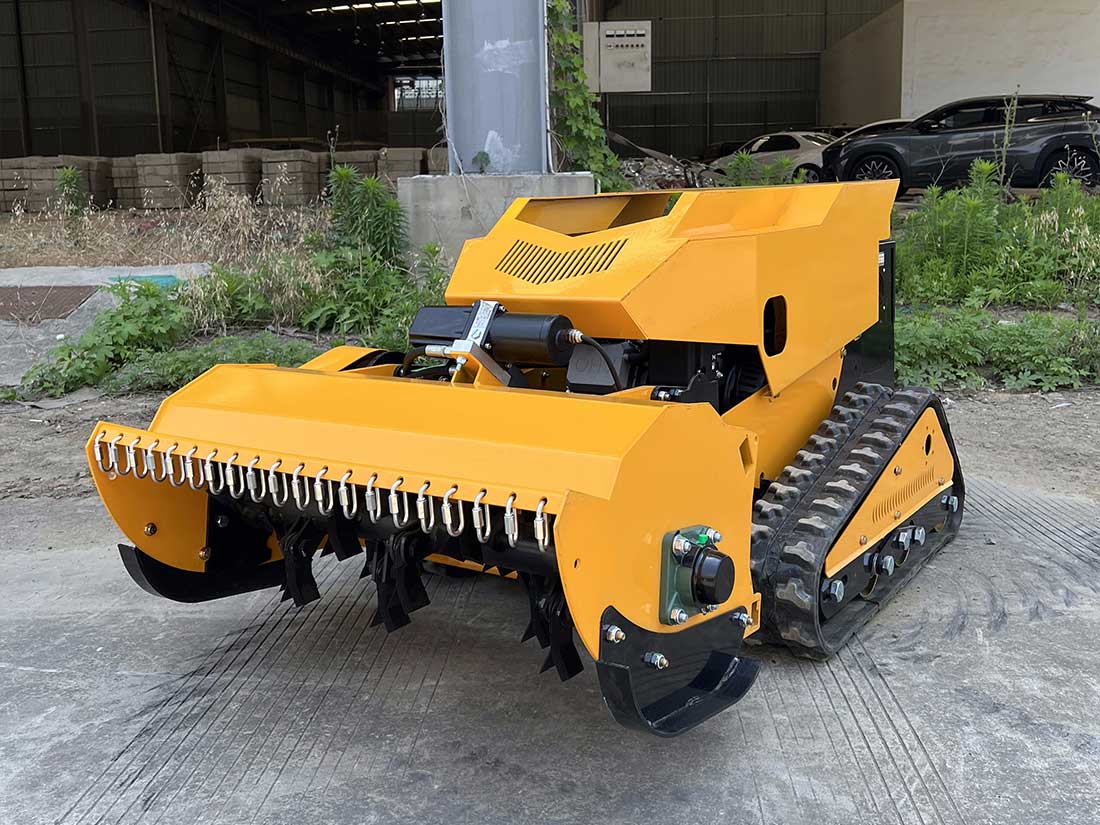
A flail mower uses a rotating horizontal rotor equipped with numerous flails or hammer-style cutting tools. As the rotor turns, the flails cut and process vegetation inside the mowing chamber.
A rotary mower generally uses one or more horizontally rotating blades beneath a deck. The blades cut vegetation through high-speed rotation.
This fundamental difference influences how each system performs in different environments.
In the flail mower vs rotary mower comparison, neither system is universally superior. The right choice depends on terrain, vegetation, desired finish, machine configuration, and operating conditions.
Why Uneven Ground Is Challenging
Uneven terrain creates several problems for mowing equipment.
A machine operating across irregular ground must cope with:
- Changes in elevation
- Bumps and depressions
- Slopes
- Loose soil
- Rocks and debris
- Tall or inconsistent vegetation
- Limited traction
On flat lawn surfaces, these challenges are relatively minor. On rough ground, however, they can have a significant impact on cutting consistency and machine stability.
This is why the flail mower vs rotary mower decision should always consider the actual working environment rather than relying solely on engine power or cutting width.
Flail Mower Performance on Uneven Ground
A flail mower is commonly associated with rough vegetation management.
Its multiple cutting tools allow the rotor to process grass, weeds, and some types of light vegetation across challenging areas.
This makes a flail mower particularly attractive for:
- Rough fields
- Overgrown grass
- Roadside banks
- Embankments
- Orchards
- Vegetation-covered slopes
In the flail mower vs rotary mower comparison, the flail system can offer advantages where vegetation is irregular and the goal is effective vegetation control rather than a highly manicured finish.
However, performance still depends on the specific machine's design, cutting head, suspension or deck configuration, and operating limits.
Rotary Mower Performance on Uneven Ground
Rotary mowers are widely used because they can provide efficient grass cutting and a clean finish under appropriate conditions.
On moderately uneven ground, a well-designed rotary mower can deliver excellent productivity.
However, particularly rough terrain can introduce challenges. The mower deck may encounter sudden changes in ground elevation, while uneven surfaces can affect cutting height and consistency.
When considering flail mower vs rotary mower for uneven ground, professionals should therefore assess how severe the terrain actually is.
A rotary mower may be an excellent choice for gently rolling terrain, while a flail mower may be more suitable for rougher vegetation-management applications.
Cutting Quality Comparison
Cutting quality means different things depending on the application.
A rotary mower is often preferred when the objective is a relatively clean, lawn-style finish.
A flail mower focuses more on cutting and processing vegetation efficiently.
For example, consider an overgrown field containing tall grass, weeds, and scattered rough vegetation.
A flail mower may provide a more appropriate cutting solution because the system is designed to process mixed vegetation.
For regularly maintained grass on moderately uneven ground, a rotary mower may offer excellent productivity and a suitable finish.
Therefore, the flail mower vs rotary mower decision should begin with the desired result.
Flail Mower vs Rotary Mower on Slopes
Slopes add another layer of complexity.
As the angle increases, traction and machine stability become increasingly important. Wet grass, loose soil, and uneven surfaces can further affect performance.
A flail mower may be well suited to many slope-maintenance applications, especially when it is mounted on specialized equipment designed for difficult terrain.
Remote-controlled mowing equipment can provide an additional operational advantage by allowing the operator to control the machine from a distance.
However, the maximum slope capability varies significantly between machines. Operators should always follow the manufacturer's specifications and conduct a site-specific risk assessment.
The Role of Remote-Controlled Mowing Equipment
Remote-controlled mowing equipment is changing how professionals approach difficult terrain.
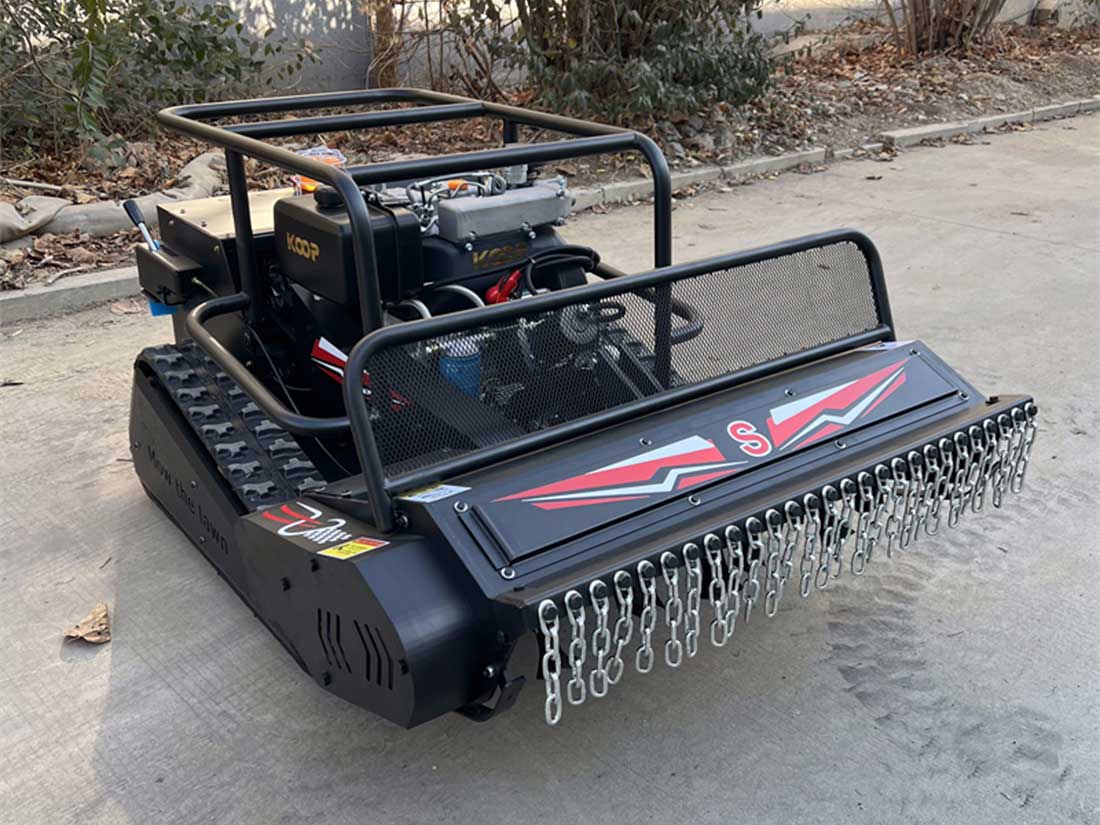
A remote-controlled mower allows an operator to control the machine using a wireless controller rather than riding on it or walking directly behind it.
Depending on the equipment, the operator may control:
- Steering
- Forward and reverse travel
- Speed
- Cutting operation
- Machine positioning
- Emergency stop functions
When a suitable cutting system is combined with remote operation, the result can be particularly useful for challenging landscapes.
A remote-controlled flail mower, for example, can combine the vegetation-processing capabilities of a flail system with the flexibility of remote operation.
Why Remote Operation Matters on Uneven Ground
Operating mowing equipment on rough terrain can be physically demanding.
On steep or difficult surfaces, the operator may have to navigate around obstacles while maintaining control of the machine.
Remote operation allows the operator to remain in a more suitable position while observing the mower.
This can be particularly useful for:
- Steep embankments
- Rough slopes
- Drainage channels
- Difficult roadside areas
- Overgrown fields
Remote-controlled technology does not eliminate all hazards, but it can change how the operator interacts with the equipment.
Traction and Stability
One of the most important considerations in the flail mower vs rotary mower debate is actually not the cutting system itself—it is the underlying machine platform.
A mower must maintain sufficient traction and stability for the terrain.
Important design factors include:
Weight Distribution
Proper weight distribution can influence machine stability on slopes and uneven surfaces.
Drive System
Tracks or specialized tires may provide different levels of traction depending on soil and terrain.
Ground Clearance
Adequate clearance can help reduce the risk of components contacting uneven ground.
Machine Width
A narrower mower may be easier to maneuver around obstacles, while a wider machine can potentially increase productivity on open terrain.
These characteristics should be considered alongside the cutting mechanism.
A Practical Uneven-Ground Scenario
Consider a contractor maintaining a large property with a combination of flat grassland, uneven fields, and several sloped areas.
The property contains tall grass and weeds that are not always cut on a strict schedule.
Rotary Mower Application
The rotary mower performs efficiently on the flatter sections where grass growth is relatively uniform.
Its cutting system provides a clean finish and allows the contractor to cover large areas quickly.
Flail Mower Application
The flail mower is used in rougher sections where vegetation is taller and more mixed.
Its cutting system is better suited to processing dense vegetation and rough growth.
Remote-Controlled Application
On the steeper sections, remote-controlled mowing equipment provides another option.
A remote-controlled flail mower can allow the operator to work from a safer and more practical position while maintaining control over the machine.
This example demonstrates an important point: professional contractors do not necessarily need to choose only one mowing technology.
Different machines can complement each other across different areas of the same property.
Productivity Considerations
Productivity should be measured by completed work rather than simply maximum travel speed.
When comparing flail mower vs rotary mower, consider:
- Cutting width
- Travel speed
- Vegetation density
- Number of passes
- Terrain
- Turning requirements
- Fuel or battery capacity
- Maintenance downtime
A rotary mower may cover open grass rapidly.
A flail mower may be more productive in rough vegetation if it reduces the number of passes required.
The most productive solution is therefore the machine that completes the entire job efficiently under real-world conditions.
Maintenance Requirements
Both systems require regular maintenance.
For a flail mower, operators should inspect:
- Flails
- Rotor
- Bearings
- Belts or drivetrain
- Guards
- Fasteners
For a rotary mower, attention should be given to:
- Blades
- Spindles
- Deck
- Belts
- Bearings
- Guards
Remote-controlled mowing equipment also requires inspection of its control system, batteries, wiring, drive components, and safety functions.
Regular preventive maintenance is essential for professional equipment operating on uneven terrain.
How Professionals Should Choose
The best way to approach the flail mower vs rotary mower decision is to evaluate the entire application.
Ask these questions:
- How uneven is the terrain?
- What type of vegetation needs to be cut?
- Is a manicured finish required?
- Are slopes involved?
- How large is the property?
- How frequently will mowing occur?
- Are there obstacles or restricted access areas?
- Would remote operation improve operational flexibility?
- What maintenance resources are available?
The answers will usually make the most appropriate mowing system clearer.
Explore Remote-Controlled Mowing Equipment
For professionals dealing with uneven ground, steep slopes, overgrown vegetation, and difficult access, remote-controlled mowing equipment can provide a valuable alternative to conventional machinery.
JY Lawn Mower offers remote-controlled mowing solutions designed for challenging vegetation-management applications.
JY Lawn Mower — Remote-Controlled Mowing Equipment
Professionals can explore the available equipment and evaluate solutions based on terrain, vegetation, operating requirements, and project scale.
The Future of Mowing on Difficult Terrain
The development of remote-controlled mowing equipment is contributing to a broader transformation in professional vegetation management.
Future systems may incorporate:
- Improved remote communication
- Advanced sensors
- Obstacle detection
- Smarter navigation
- Automated safety functions
- More efficient power systems
These technologies could make specialized mowing equipment increasingly capable of handling difficult landscapes.
The flail mower vs rotary mower comparison will remain relevant because different vegetation and terrain conditions require different cutting approaches.
Conclusion
The flail mower vs rotary mower debate has no universal winner.
Rotary mowers can be highly effective for regularly maintained grass and applications where productivity and a clean finish are priorities. Flail mowers are particularly attractive for tall grass, weeds, mixed vegetation, and rougher terrain.
When uneven ground or steep slopes are involved, the machine's traction, stability, design, and operating limits become just as important as the cutting mechanism.
For particularly challenging environments, remote-controlled mowing equipment can add another level of flexibility. A properly configured remote-controlled flail mower can combine specialized vegetation processing with remote operation, making it a valuable option for professional land management.
Ultimately, the best flail mower vs rotary mower choice is determined by the specific job. By evaluating vegetation, terrain, productivity, safety, and maintenance requirements, professionals can select equipment that delivers reliable results across demanding landscapes.