 English
 Spanish
 Portuguese
 French
 Italian
 Remote Mower
Introduction: The Shift Toward Smarter Lawn Maintenance
Lawn maintenance is an essential part of managing commercial properties, agricultural land, public green spaces, and professional landscaping projects. However, traditional mowing methods often require considerable labor, fuel consumption, and operating time. These challenges become even more significant when maintaining large areas, steep slopes, and difficult terrain.
As technology advances, the robotic lawn mower is becoming an increasingly attractive alternative to conventional mowing equipment. In particular, remote-controlled mowing equipment offers professional users a practical way to improve productivity, reduce physical workloads, and manage challenging landscapes more efficiently.
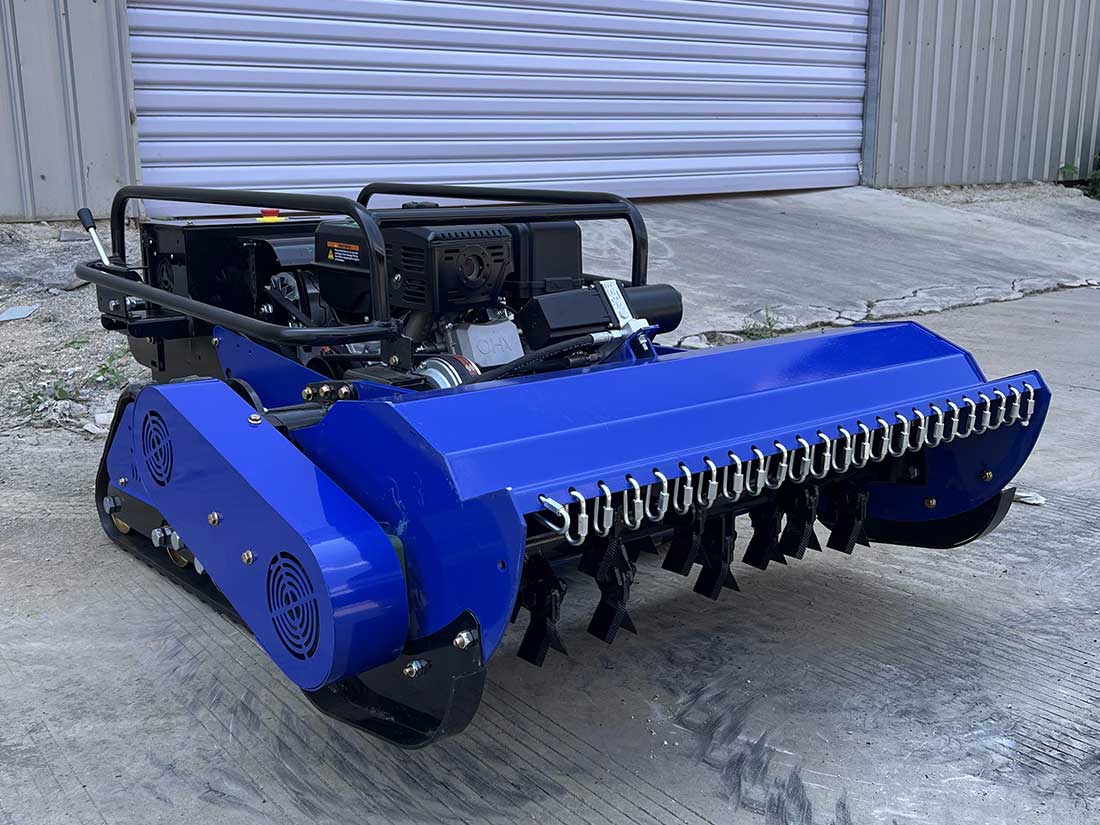
Unlike conventional walk-behind or ride-on mowers, a remote-controlled robotic lawn mower allows operators to control machine movement and cutting operations from a suitable distance. Combined with tracked mobility and powerful cutting systems, this technology is transforming how professional landscaping and vegetation management businesses approach daily operations.
This case study explores how switching from traditional mowing methods to a robotic lawn mower can help improve cost efficiency, reduce labor requirements, and support more productive lawn maintenance operations.
1. The Challenges of Traditional Mowing Operations
Traditional lawn mowers remain widely used because they are practical and effective for many ordinary lawn maintenance tasks. However, businesses managing extensive outdoor areas frequently encounter operational challenges.
High Labor Costs
Traditional mowing often requires operators to walk behind or ride on the machine throughout the working process.
For large properties, multiple workers may be needed to complete maintenance tasks within an acceptable timeframe. Labor costs can therefore become a significant part of the overall maintenance budget.
Time-Consuming Operations
Uneven surfaces, dense vegetation, narrow passages, and difficult terrain can slow down conventional mowing operations.
Workers may also need additional time for manual trimming and finishing around obstacles.
Difficult Terrain Management
Traditional wheeled mowers may experience reduced traction on steep slopes, loose soil, and uneven ground.
Maintaining these areas can require additional equipment and more complicated operating procedures.
Physical Workload and Safety Concerns
Extended mowing operations can create physical demands for workers.
When maintaining steep embankments or difficult landscapes, operators may also face additional safety risks associated with working near moving machinery on unstable surfaces.
These challenges encourage professional landscaping businesses to consider alternative mowing technologies.
2. Case Study: Replacing Traditional Mowing with Remote-Controlled Equipment
Consider a representative commercial landscaping company responsible for maintaining several large outdoor properties.
Its maintenance responsibilities include:
Large grass-covered commercial areas.
Uneven ground and sloped sections.
Dense grass around property boundaries.
Vegetation along access roads.
Difficult-to-reach landscape sections.
Previously, the company relied on traditional mowing equipment and manual trimming.
Although this approach delivered acceptable results in accessible areas, the management team identified several opportunities for improvement.
The main objectives were to reduce labor requirements, improve working efficiency, simplify difficult terrain maintenance, and control long-term operating expenses.
After evaluating different equipment options, the company decided to introduce a professional remote-controlled robotic lawn mower for suitable working areas.
Step 1: Evaluating Existing Maintenance Costs
Before making the investment, the company reviewed its existing mowing operations.
The evaluation included:
Number of workers involved in each mowing task.
Total operating hours per maintenance cycle.
Fuel and equipment expenses.
Maintenance and replacement-part costs.
Time spent on difficult terrain.
Frequency of manual trimming.
This assessment provided a baseline for comparing the performance of traditional equipment with the new robotic lawn mower.
Step 2: Selecting Suitable Equipment
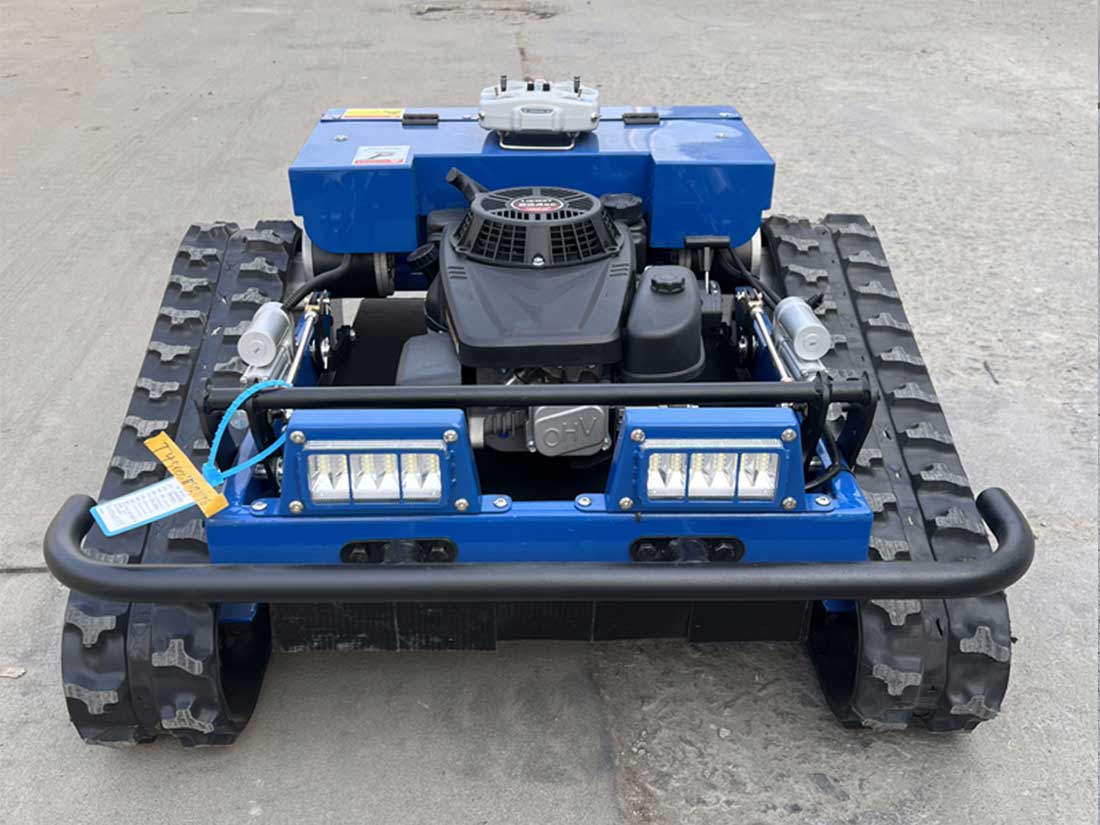
The company evaluated several technical specifications before selecting its remote-controlled mowing equipment.
Important considerations included cutting width, engine performance, track design, remote-control distance, maximum slope capability, and cutting-system configuration.
A tracked robotic lawn mower was considered particularly suitable for the property's uneven sections.
The company also evaluated whether rotary or flail cutting technology would better match its vegetation conditions.
Step 3: Introducing the New Mowing Process
Instead of immediately replacing all traditional equipment, the company introduced the remote-controlled robotic lawn mower in selected areas.
Operators received training on remote-control functions, emergency-stop procedures, maintenance requirements, and safe operating practices.
The company then compared operating efficiency between the new machine and its existing mowing equipment.
This gradual implementation helped reduce investment risk while allowing the team to understand the practical advantages and limitations of the new technology.
3. How a Robotic Lawn Mower Helps Reduce Labor Costs
Labor efficiency is one of the most important reasons professional businesses consider remote-controlled mowing equipment.
A conventional mower generally requires continuous physical operation by a worker. In contrast, a remote-controlled robotic lawn mower allows operators to control the equipment without walking directly behind it.
This can make certain mowing tasks less physically demanding.
Reduced Physical Labor
Remote-control operation minimizes the need for continuous walking and pushing.
For demanding applications, this can help reduce operator fatigue and make routine maintenance more manageable.
More Efficient Task Management
Operators can guide the robotic lawn mower through suitable working areas while maintaining an appropriate operating position.
This can help simplify mowing operations on certain slopes, embankments, and uneven surfaces.
Reduced Need for Additional Equipment
A specialized tracked robotic lawn mower may access some difficult areas that would otherwise require alternative mowing equipment or additional manual work.
However, the actual savings depend on the property's layout and the machine's capabilities.
Better Labor Allocation
When suitable mowing tasks become easier to manage, landscaping companies may be able to allocate workers to other maintenance responsibilities, such as landscaping, trimming, irrigation, and site inspections.
The financial benefits should be evaluated using actual labor hours and project requirements rather than assuming that remote-controlled equipment eliminates the need for operators.
4. Improving Work Efficiency with Remote-Controlled Mowing Technology
In addition to labor savings, a robotic lawn mower can improve operational efficiency through its specialized design.
Tracked Mobility for Difficult Terrain
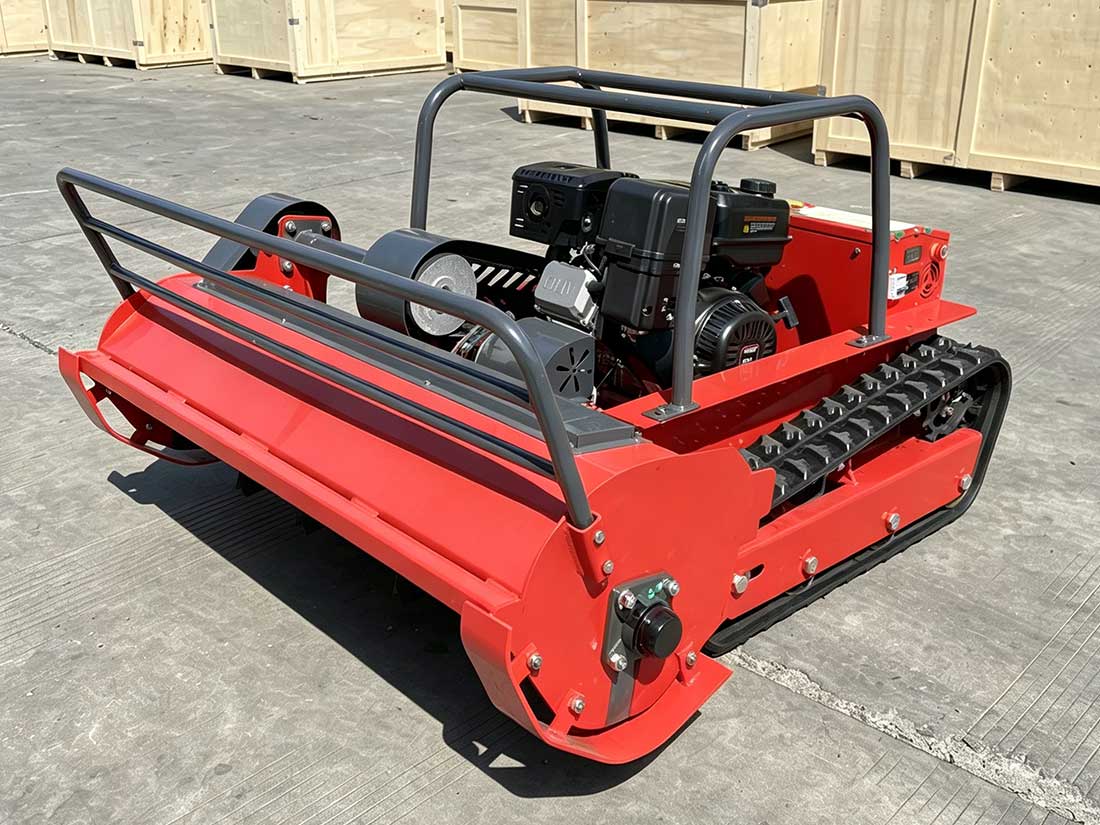
Many professional remote-controlled mowers use rubber tracks instead of conventional wheels.
Tracks distribute the machine's weight over a larger contact area, helping improve traction on suitable uneven surfaces.
This is especially useful for:
Steep embankments.
Agricultural land.
Orchard grass maintenance.
Uneven commercial properties.
Roadside vegetation management.
Actual slope performance depends on ground conditions, machine configuration, and the manufacturer's operating specifications.
Powerful Cutting Systems
Professional remote-controlled mowing equipment can be equipped with different cutting systems.
Rotary blades are generally suitable for ordinary grass maintenance, while flail cutting systems can handle thicker grass and tougher vegetation.
Choosing the right cutting system can help improve mowing performance and avoid unnecessary strain on the equipment.
Flexible Remote Operation
Remote-control systems allow operators to manage machine movement and cutting functions from a suitable working position.
This is particularly useful when maintaining narrow areas, irregular landscapes, and locations where direct physical operation is less practical.
Consistent Maintenance Scheduling
A properly selected robotic lawn mower can help businesses establish more predictable mowing routines.
Regular vegetation management can also prevent grass from becoming excessively overgrown, reducing the difficulty of subsequent maintenance operations.
5. Cost Comparison: Traditional Mowers vs. Robotic Lawn Mowers
When evaluating a new mowing machine, businesses should consider total ownership costs rather than focusing exclusively on the purchase price.
The following comparison highlights important financial factors.
| Cost factor | Traditional mower | Remote-controlled robotic mower |
|---|---|---|
| Initial investment | Often lower for basic models | Often higher for specialized professional models |
| Labor requirements | Continuous operator involvement | Remote operation reduces physical workload |
| Fuel or energy | Depends on engine configuration | Depends on engine or motor configuration |
| Maintenance | Engine, tires, blades, and other components | Engine, tracks, blades, drive system, and other components |
| Difficult terrain | May require additional labor or equipment | Specialized models can handle suitable challenging areas |
| Productivity | Effective on accessible ground | Offers advantages in selected difficult environments |
| Long-term value | Strong for ordinary lawn maintenance | Potentially attractive for demanding professional applications |
A remote-controlled robotic lawn mower may provide a stronger return on investment when it significantly reduces labor hours or improves access to difficult mowing areas.
However, traditional mowers may remain the more economical choice for small, flat, and easily accessible lawns.
Understanding Return on Investment
Businesses can estimate the payback period using a straightforward calculation:
Payback Period = Initial Investment ÷ Annual Net Operating Savings
For example, if a company invests in a new robotic lawn mower, it should compare the additional equipment investment with annual savings from labor, operating time, and other measurable expenses.
The calculation should also account for maintenance, fuel or electricity, spare parts, financing, and depreciation.
This provides a more realistic picture of the machine's financial value.
6. Where Remote-Controlled Robotic Lawn Mowers Deliver the Greatest Value
Not every mowing environment requires specialized remote-controlled equipment. However, several industries can benefit significantly from this technology.
Commercial Landscaping
Landscaping contractors managing large properties can use a robotic lawn mower to improve productivity in suitable areas.
Remote-controlled machines are particularly useful when projects involve slopes, uneven ground, or difficult-to-access sections.
Agricultural Properties and Orchards
Agricultural land often contains narrow passages, tree roots, and irregular surfaces.
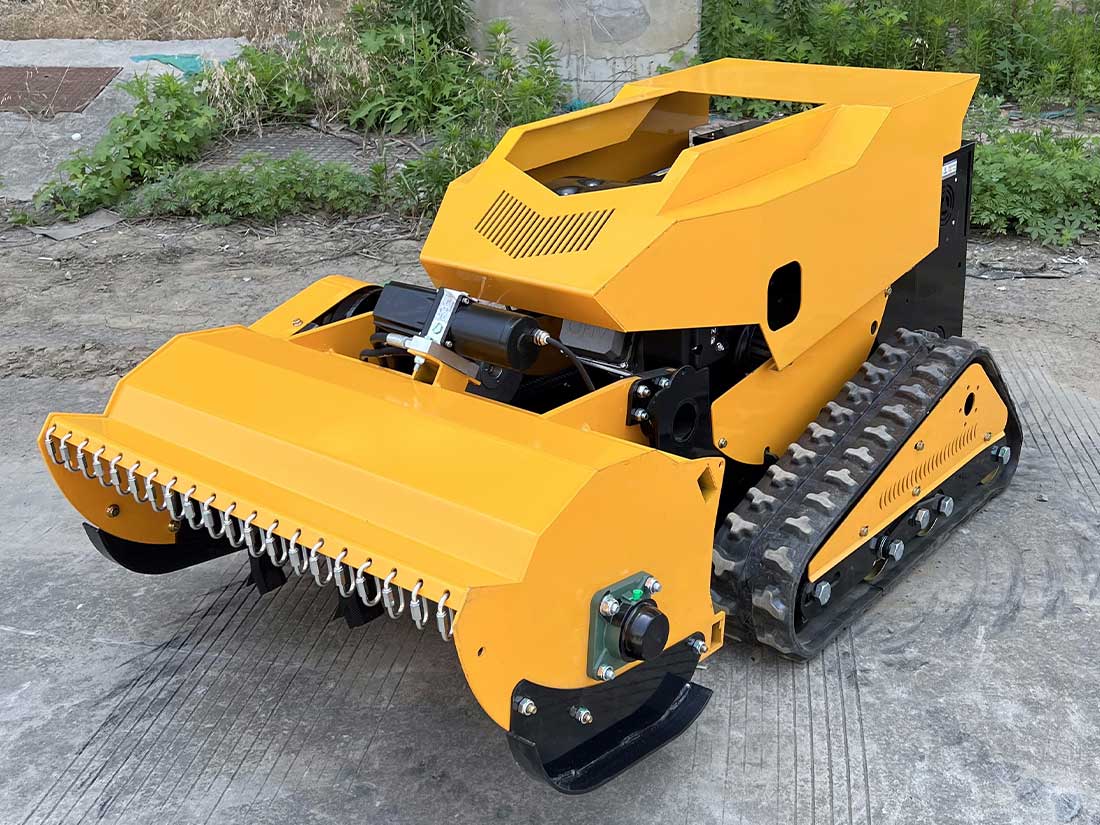
Compact tracked remote-controlled mowers can help maintain vegetation between orchard rows and around agricultural facilities.
Roadside and Embankment Maintenance
Roadside vegetation management often involves steep slopes and restricted working areas.
Remote-controlled mowing equipment allows operators to manage suitable areas from a safer position.
Solar Farms
Solar farms require regular vegetation control around panels, equipment, and access routes.
Specialized robotic lawn mowers can help maintain these areas while navigating restricted spaces.
Parks and Public Green Spaces
Public green spaces require regular maintenance to maintain their appearance and accessibility.
Professional remote-controlled mowing equipment can support maintenance teams working across large or uneven landscapes.
7. Important Factors When Choosing a Robotic Lawn Mower
Selecting the right robotic lawn mower is essential for achieving the expected efficiency improvements.
Professional buyers should evaluate the following features.
Cutting width: A wider cutting deck can increase productivity in open areas, while a narrower configuration may be more suitable for restricted spaces.
Maximum slope capability: Check the manufacturer's stated operating angle and confirm that the equipment matches the actual terrain conditions.
Track construction: Rubber track quality, ground clearance, and chassis balance influence mobility and traction.
Engine performance: Sufficient power is important when cutting dense grass or operating on demanding terrain.
Remote-control functions: Operating distance, responsiveness, control accuracy, and emergency-stop functionality should be considered.
Cutting system: Rotary and flail cutting systems serve different vegetation-management requirements.
Maintenance support: Spare-parts availability, technical assistance, and maintenance accessibility are important for long-term reliability.
A carefully selected robotic lawn mower should match the actual working environment rather than simply offering the highest specifications.
8. JUYOU: Professional Remote-Controlled Mowing Equipment for Greater Efficiency
Choosing an experienced equipment supplier is another important factor when investing in modern mowing technology.
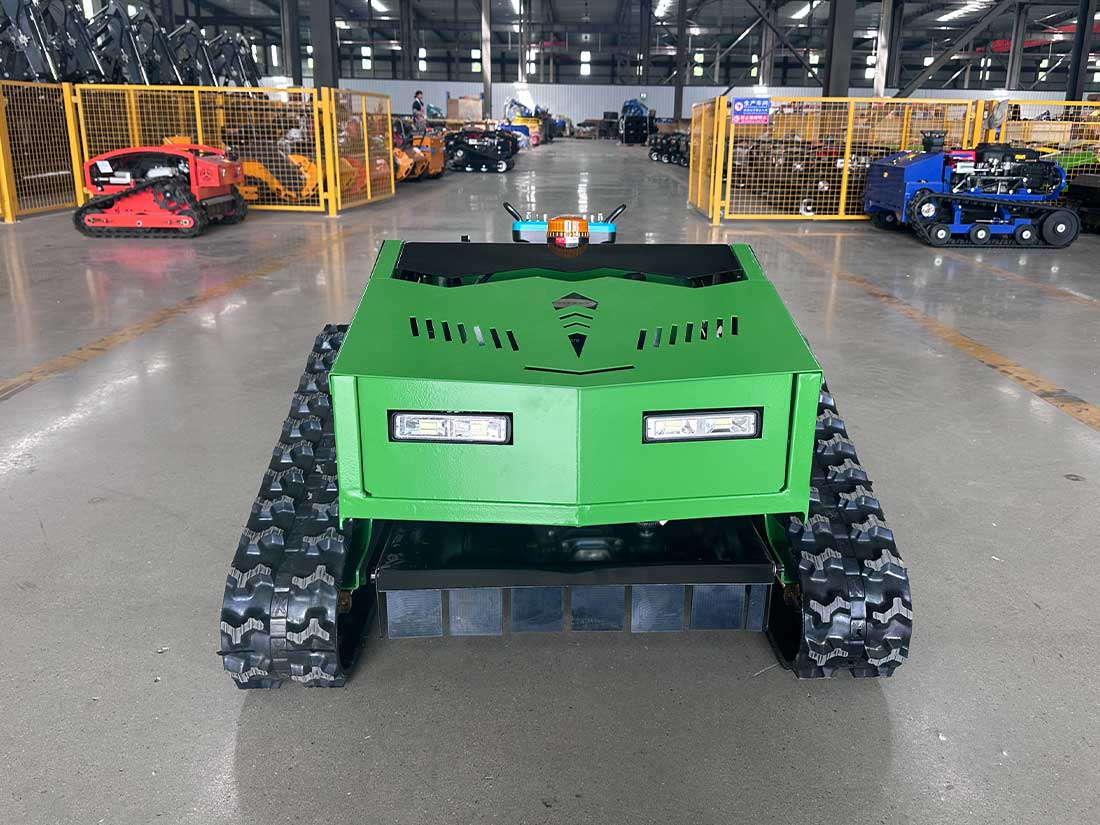
JUYOU provides remote-controlled mowing equipment designed for professional applications involving steep slopes, orchards, agricultural properties, roadside vegetation management, and commercial landscaping.
Its product range includes tracked remote-controlled mowers and different cutting configurations for varying terrain and vegetation requirements.
Several equipment characteristics are particularly relevant to businesses looking to improve mowing efficiency.
Tracked Chassis Design
Tracked construction helps provide traction and maneuverability on suitable uneven surfaces.
Remote-Controlled Operation
Operators can manage machine movement and cutting functions from a distance, reducing the need to physically follow the mower.
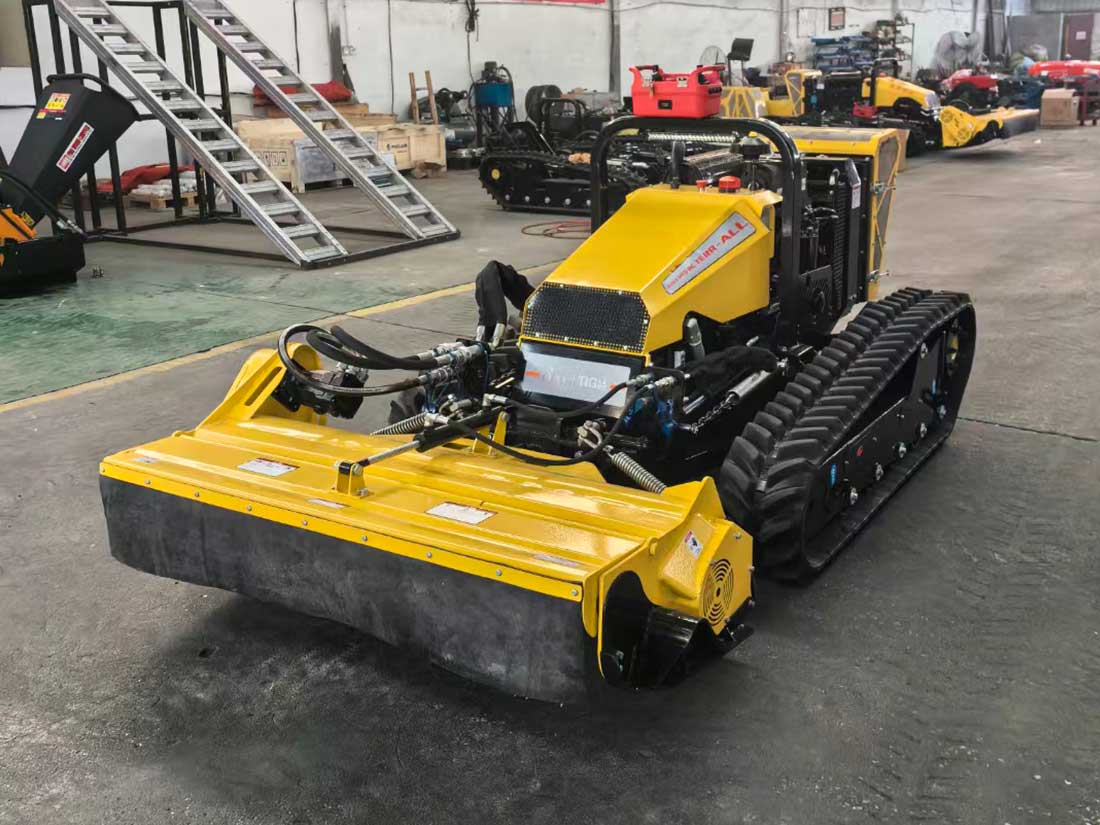
Different Cutting Configurations
Various cutting systems can accommodate ordinary grass maintenance and tougher vegetation management tasks.
Professional Applications
Suitable models can be considered for orchards, embankments, agricultural properties, solar farms, and commercial landscaping projects.
Equipment Selection and Customization
Professional buyers and distributors can discuss machine specifications, application requirements, branding, and suitable product configurations.
For example, the JUYOU JY-C550 is a compact tracked remote-controlled mower designed for applications including orchard maintenance, slope mowing, and roadside vegetation management.
Its published specifications include a 550 mm cutting width and a stated slope capability of 0–45 degrees. Buyers should confirm operating limitations and site suitability directly with the manufacturer.
For businesses comparing traditional mowing equipment with a robotic lawn mower, working with a specialized supplier can help identify the most suitable solution.
Explore JUYOU's products and professional mowing solutions at:
9. Best Practices for Maximizing Cost Savings and Work Efficiency
Purchasing a robotic lawn mower is only the first step. Proper equipment management is essential for achieving long-term operating benefits.
Professional operators should follow several best practices.
Plan Mowing Operations
Divide large properties into manageable working sections and establish mowing schedules based on grass growth and seasonal conditions.
Train Equipment Operators
Ensure operators understand remote-control functions, emergency-stop procedures, slope limitations, and safe operating distances.
Conduct Regular Inspections
Check cutting blades, tracks, engine components, filters, and other wear parts according to the manufacturer's maintenance schedule.
Monitor Operating Costs
Record labor hours, fuel or energy consumption, maintenance expenses, and completed mowing areas.
These records help determine whether the robotic lawn mower is delivering the expected financial benefits.
Match Equipment to Vegetation Conditions
Avoid using unsuitable cutting systems for excessively dense or tough vegetation. Selecting the correct machine configuration can improve performance and reduce unnecessary component wear.
10. The Future of Cost-Efficient Lawn Maintenance
The development of robotic lawn mower technology is expected to continue changing the professional landscaping industry.
Several trends are likely to influence future equipment design.
Smarter control systems: Improved remote-control interfaces can make equipment easier to operate.
Greater energy efficiency: Advances in engine and battery technology may help reduce operating expenses.
Improved terrain adaptability: Better track systems and chassis designs can support demanding working conditions.
Intelligent monitoring: Equipment monitoring and maintenance alerts may help businesses reduce unexpected downtime.
More specialized applications: Professional mowing equipment will continue evolving for agriculture, solar farms, embankments, and commercial landscaping.
It is important to distinguish fully autonomous robotic mowers from remote-controlled mowing machines. Autonomous models use navigation systems and programmed routes, while remote-controlled models rely on direct operator commands.
Both technologies offer advantages, but remote-controlled equipment remains particularly valuable when precise operator supervision is required on challenging terrain.
Conclusion: Investing in Smarter Mowing Technology
The transition from traditional mowing to remote-controlled robotic lawn mowers represents an important development in professional lawn maintenance.
As this case study illustrates, a suitable robotic lawn mower can help businesses reduce physical workloads, improve operational efficiency, and manage difficult mowing environments more effectively.
While traditional mowers remain practical for many ordinary lawns, remote-controlled mowing equipment offers additional advantages for steep slopes, uneven ground, orchards, roadside areas, and large commercial properties.
The most successful investment decisions are based on actual operating requirements, including labor costs, working hours, terrain conditions, cutting performance, maintenance expenses, and expected equipment service life.
JUYOU focuses on remote-controlled mowing equipment designed for demanding professional vegetation-management applications.
If you are looking for a robotic lawn mower that can help improve productivity and reduce the challenges of difficult terrain maintenance, visit www.jylawnmower.com to explore available products and professional equipment solutions.
With the right equipment and operating strategy, businesses can move beyond traditional mowing limitations and build a more efficient, productive, and cost-conscious lawn maintenance operation.