 English
 Spanish
 Portuguese
 French
 Italian
 Remote Mower
Professional vegetation management is becoming increasingly complex. Landscapers, agricultural contractors, municipalities, roadside maintenance teams, and property managers often need to maintain areas that combine slopes, uneven terrain, dense vegetation, obstacles, and difficult access.
In these conditions, choosing the right grass mower is about much more than cutting speed or engine power.
A professional grass mower must provide the right combination of traction, stability, maneuverability, cutting performance, operator control, and maintenance accessibility. For challenging landscapes, remote-controlled mowing equipment can provide an additional level of operational flexibility.
This case study presents a representative professional application scenario showing how a remote-controlled grass mower can be integrated into a modern mowing operation.
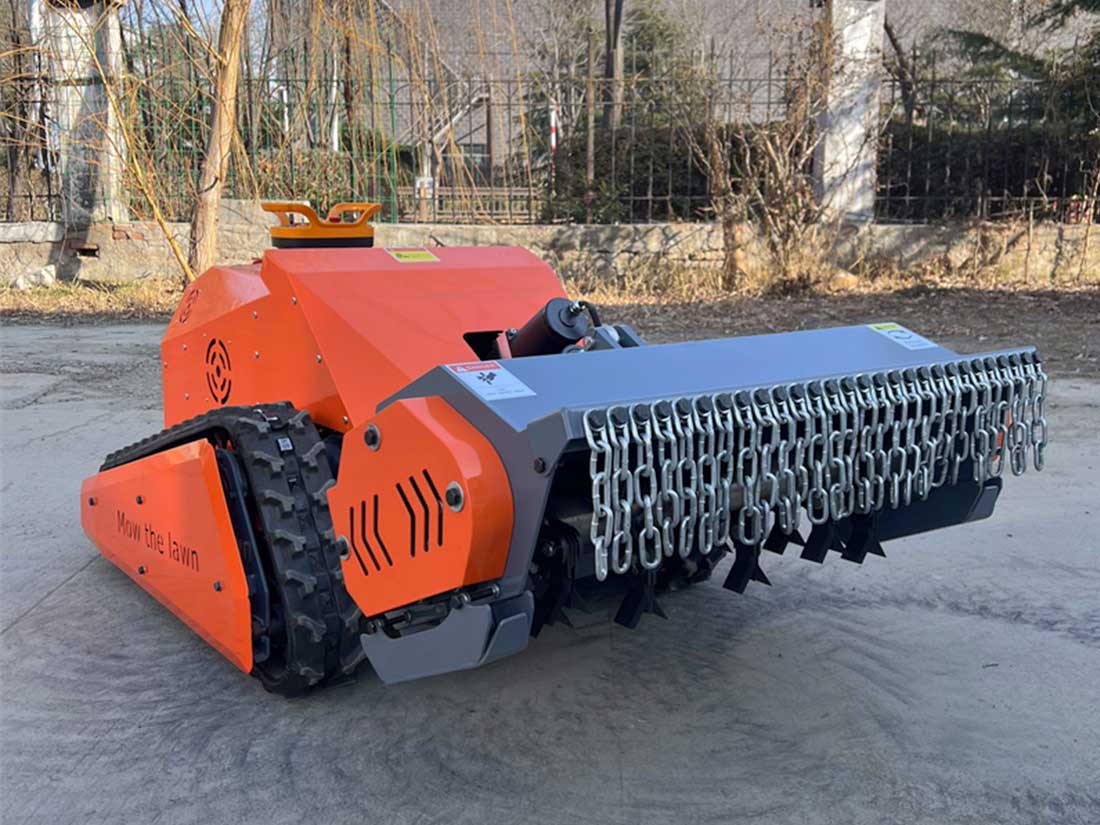
The Challenge: Maintaining a Complex Landscape
Imagine a professional landscaping contractor responsible for a large property containing several different terrain conditions.
The site includes:
Sloping grass areas
Uneven ground
Embankments
Dense and tall vegetation
Trees and other obstacles
Narrow-access sections
Large open green areas
A conventional grass mower may work effectively on the accessible flat sections, but the more difficult areas can require a different approach.
Slopes can make operator positioning more challenging. Uneven terrain can affect traction and maneuverability. Dense vegetation can place additional demands on the cutting system.
Instead of expecting one machine to perform every task in exactly the same way, an experienced contractor can divide the site according to operating conditions and select appropriate equipment for each area.
This is where remote-controlled mowing equipment becomes particularly relevant.
Why Choose a Remote-Controlled Grass Mower?
A remote-controlled grass mower allows the operator to control the machine wirelessly while maintaining visual contact with the equipment and working area.
This changes the relationship between the operator and the machine.
On suitable terrain, the operator can select a position that provides an appropriate view and control of the mower rather than remaining immediately beside it throughout the operation.
For challenging landscapes, this can provide useful flexibility.
However, remote control is only one component of a professional mowing system. A reliable grass mower must also be designed around the actual terrain, vegetation, and operating requirements.
Key factors include:
Traction
Stability
Maneuverability
Cutting performance
Machine dimensions
Remote-control response
Maintenance requirements
Operating limitations
Case Study Area 1: Slopes and Embankments
The first section of the representative site contains sloping ground and embankments.
These areas create different requirements from a flat lawn.
When a grass mower operates on a slope, traction and stability become critical considerations.
The operator must understand how the machine responds to the terrain and work within the manufacturer's specified operating limits.
With remote-controlled mowing equipment, the operator can control the machine from a selected position while maintaining visual contact.
This can provide a practical alternative for applications where walking directly alongside the machine is inconvenient.
However, remote operation does not remove the risks associated with slopes.
Before using a remote-controlled grass mower, professionals should assess:
Slope characteristics
Ground stability
Surface moisture
Traction conditions
Obstacles
Vegetation density
Visibility
Weather conditions
The machine should always be operated according to manufacturer requirements and established site-safety procedures.
Case Study Area 2: Uneven Terrain
The second section contains irregular ground with changes in elevation and surface conditions.
For this type of application, a grass mower needs to combine cutting capability with reliable mobility.
A machine that performs well on flat ground may not necessarily be suitable for uneven terrain.
Professional operators should evaluate how the mower handles:
Ground irregularities
Changes in elevation
Loose soil
Grass-covered surfaces
Small obstacles
Narrow passages
Remote-controlled mowing equipment can provide additional control over machine movement, allowing the operator to guide the equipment while observing how it responds to changing terrain.
For difficult landscapes, mobility can be just as important as cutting power.
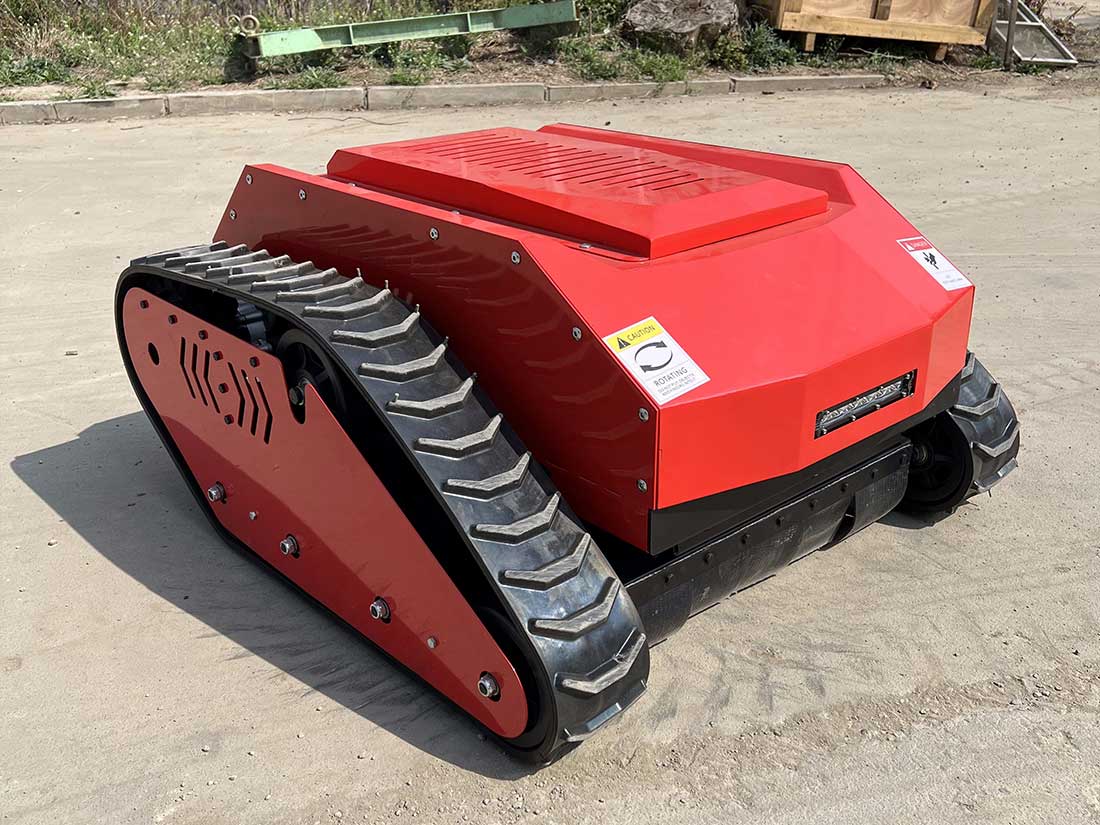
Case Study Area 3: Dense Vegetation
The third area of the representative site contains tall and dense vegetation.
This introduces another important consideration: the cutting system.
Not every grass mower is designed for the same type of vegetation.
A machine intended for regularly maintained lawn grass may have different requirements from equipment used for rough grass, weeds, dense vegetation, or agricultural areas.
Before selecting equipment, professionals should consider:
Vegetation height
Vegetation density
Material thickness
Desired cutting finish
Cutting width
Working frequency
Terrain conditions
A remote-controlled grass mower should therefore be selected according to the actual cutting application rather than remote-control capability alone.
Case Study Area 4: Obstacles and Restricted Access
The representative landscape also contains trees, boundaries, drainage areas, and other obstacles.
In these areas, maneuverability becomes important.
A professional grass mower needs to move predictably around obstacles while maintaining an appropriate cutting path.
Remote operation can give the operator greater flexibility when positioning the machine around difficult-access sections.
However, the operator must maintain clear visibility and remain aware of the machine's surroundings.
Remote-controlled mowing equipment should never be treated as autonomous equipment unless it is specifically designed and approved for autonomous operation.
The operator remains responsible for maintaining appropriate control throughout the mowing process.
How Remote Control Supports Professional Efficiency
Efficiency in professional mowing should not be measured only by cutting speed.
Experienced contractors consider the entire workflow.
A remote-controlled grass mower can potentially improve operational flexibility in several ways.
More Flexible Operator Positioning
Remote operation allows the operator to control the machine from a selected location.
This can be useful when working around slopes, embankments, dense vegetation, and difficult-access areas.
Better Adaptation to Different Terrain
A mixed landscape may require different operating strategies in different zones.
A versatile grass mower can be used as part of a broader equipment strategy, with remote-controlled equipment assigned to applications where it provides a practical advantage.
Reduced Dependence on Direct Machine Access
Certain areas may be inconvenient for an operator to enter directly.
Remote-controlled mowing equipment can allow the operator to remain outside the immediate path of the machine while maintaining control and visual awareness.
More Application-Specific Equipment Planning
Instead of selecting equipment based solely on horsepower, professional teams can evaluate the complete working environment.
This results in a more structured approach to equipment selection.
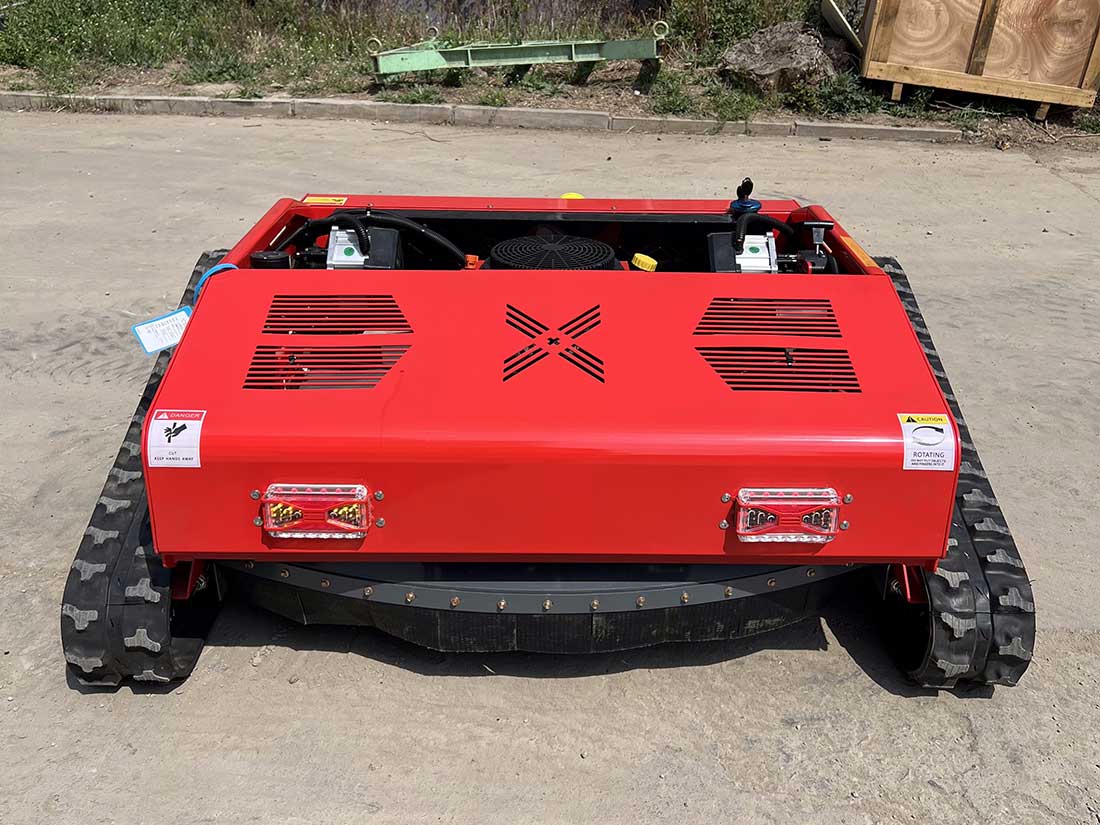
Traction: A Critical Factor in Challenging Landscapes
A powerful grass mower is not necessarily the best solution for every landscape.
Traction determines how effectively the machine can move across the working surface.
For difficult terrain, professionals should evaluate:
Track or wheel configuration
Ground contact
Surface conditions
Weight distribution
Turning behavior
Terrain changes
Tracked remote-controlled mowing equipment can be particularly relevant for certain demanding applications because the platform is designed around controlled ground contact.
Nevertheless, actual performance depends on the specific terrain.
Wet grass, mud, loose soil, stones, steep gradients, and vegetation can all affect traction.
The manufacturer's specifications should always be used when determining whether a grass mower is suitable for a particular application.
Stability and Machine Control
Stability is another major consideration.
When a grass mower works on uneven or sloping terrain, machine stability can influence both productivity and operating safety.
Professionals should examine:
Machine center of gravity
Platform configuration
Track or wheel design
Weight distribution
Operating direction
Manufacturer slope limitations
Remote control can improve operator positioning, but it does not change the physical limitations of the machine.
A responsible equipment selection process therefore considers both technology and terrain.
Grass Mower Selection: A Professional Approach
For challenging landscapes, choosing a grass mower should follow a structured evaluation.
Step 1: Analyze the Terrain
Determine whether the machine will operate on flat ground, slopes, embankments, uneven surfaces, or mixed terrain.
Step 2: Identify the Vegetation
Establish whether the machine will cut maintained grass, tall grass, weeds, brush, or dense vegetation.
Step 3: Evaluate Accessibility
Identify narrow areas, obstacles, drainage channels, trees, boundaries, and other access restrictions.
Step 4: Evaluate Mobility
Review traction, stability, maneuverability, turning capability, and ground contact.
Step 5: Evaluate the Cutting System
The cutting system should be appropriate for the actual vegetation and desired result.
Step 6: Review Remote-Control Operation
The control system should provide precise movement and allow the operator to maintain visual awareness.
Step 7: Consider Maintenance
A professional grass mower should be practical to inspect, clean, service, and maintain.
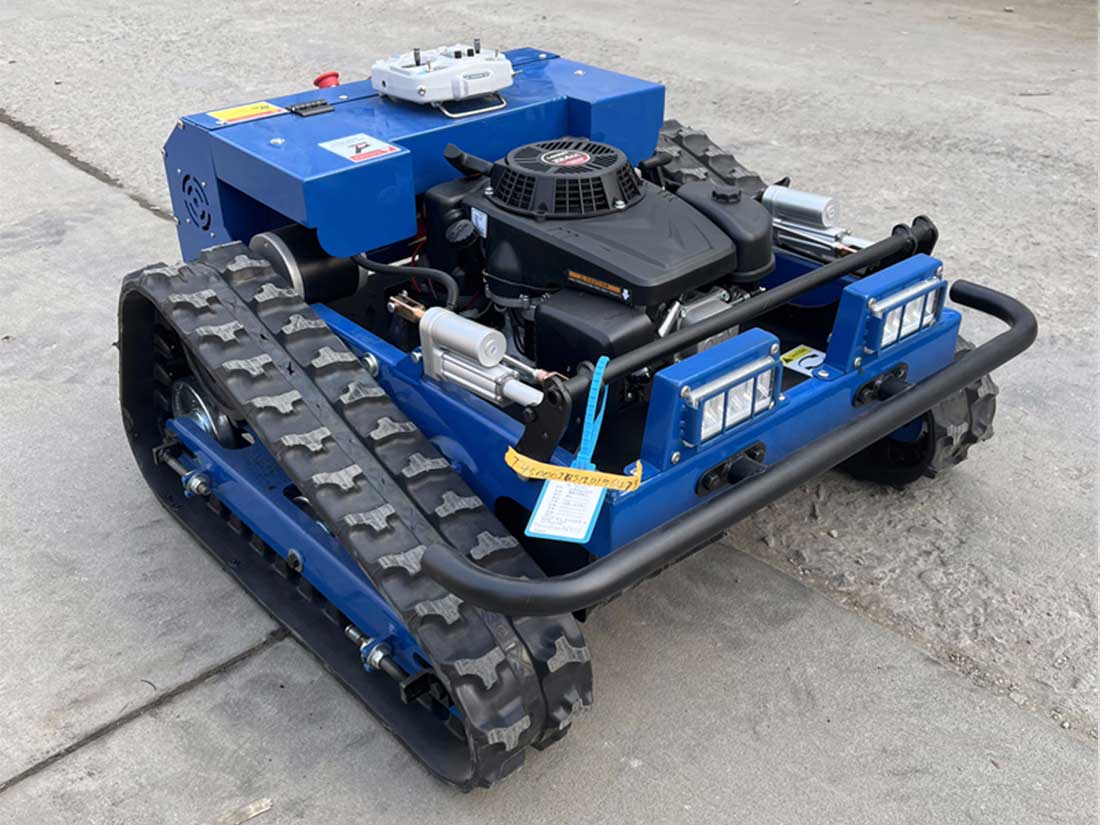
Safety During Remote-Controlled Mowing
Safety must remain a central part of any professional mowing operation.
Remote control can change the operator's position, but it does not eliminate the hazards associated with moving machinery, cutting systems, slopes, obstacles, or unstable surfaces.
Before operating a remote-controlled grass mower, professionals should:
Inspect the work area.
Identify unstable ground.
Check for rocks, holes, branches, and other obstacles.
Keep people and animals away from the operating area.
Maintain visual contact with the machine.
Understand emergency-stop procedures.
Follow the manufacturer's operating limits.
Stop work if conditions become unsuitable.
For roadside or public-area applications, appropriate work-zone and traffic-safety procedures must also be followed.
Maintenance for Consistent Grass Mower Performance
Maintenance is an essential part of professional equipment management.
A grass mower operating in challenging landscapes can encounter grass residue, dust, moisture, vibration, stones, and other debris.
After demanding mowing operations, operators should inspect:
Cutting components
Tracks or wheels
Drive components
Fasteners
Protective structures
Remote-control components
Hydraulic components where applicable
Electrical and power systems
Grass and debris should be removed appropriately so that important components can be inspected.
Preventive maintenance can help identify wear, loose components, or other potential problems before they affect future operations.
For professional contractors, equipment reliability is closely connected to maintenance discipline.
Remote-Controlled Mowing Equipment as Part of a Larger Fleet
The representative case also demonstrates that remote-controlled mowing equipment does not necessarily need to replace conventional machines.
A conventional grass mower can remain highly effective on accessible flat lawns.
A remote-controlled mower can then be assigned to:
Slopes
Embankments
Uneven terrain
Dense vegetation
Difficult-access areas
Certain roadside applications
Agricultural land
Orchards
This approach allows professional teams to match the machine to the application.
The result is an equipment strategy based on working conditions rather than a one-machine-fits-all philosophy.
What This Case Study Demonstrates
This representative grass mower case study highlights several lessons that are important for professional mowing operations.
First, challenging landscapes require more than cutting power.
Second, remote control can provide greater flexibility in operator positioning and machine management.
Third, traction, stability, maneuverability, and cutting capability must work together.
Fourth, the cutting system must be selected according to vegetation type.
Finally, safety and maintenance remain essential regardless of whether the machine is remotely controlled.
Remote-controlled mowing equipment should therefore be viewed as part of a complete professional mowing strategy.
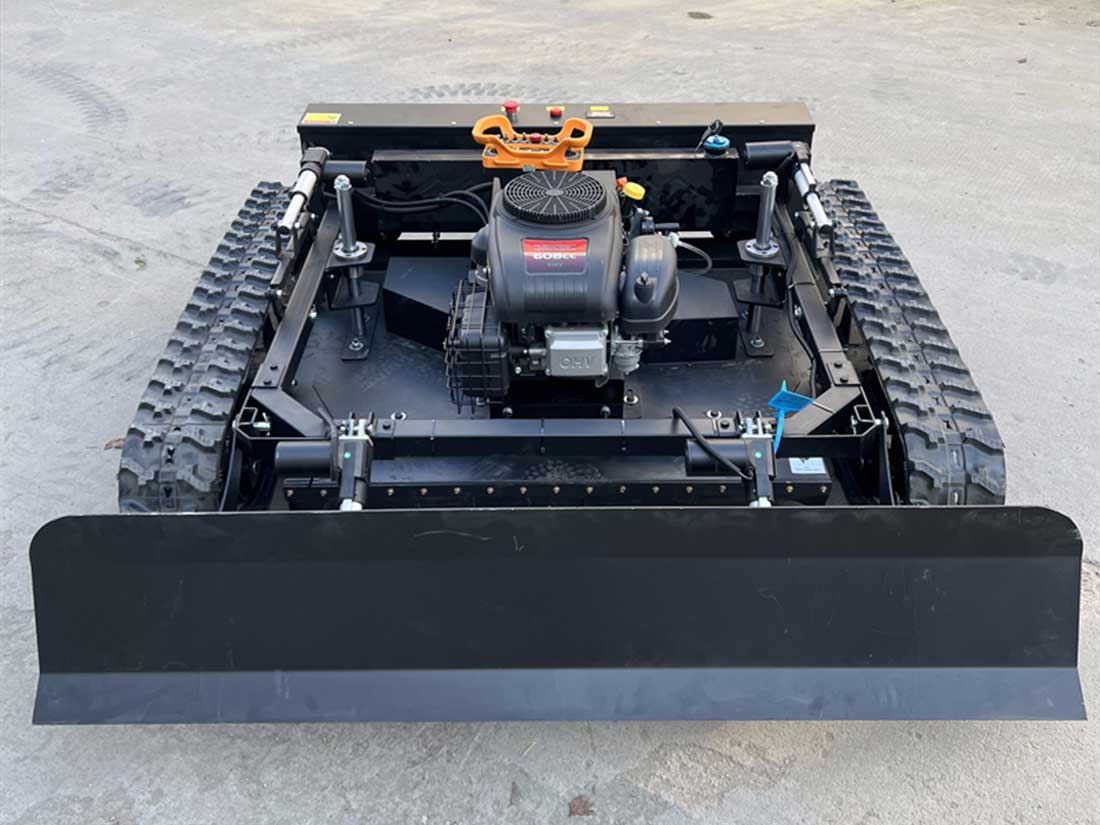
Why JY Lawn Mower Is Relevant to Professional Applications
Professionals looking for a grass mower for challenging landscapes should evaluate the complete equipment system rather than focusing on a single specification.
The right solution depends on the terrain, vegetation, working area, operating method, and maintenance requirements.
JY Lawn Mower provides remote-controlled mowing equipment for applications where mobility, controlled operation, and professional vegetation management are important considerations.
You can explore available solutions and learn more about remote-controlled mowing equipment at JY Lawn Mower.
Conclusion
This representative grass mower case study shows why remote-controlled mowing equipment is becoming an important option for challenging landscape maintenance.
Slopes, embankments, uneven terrain, dense vegetation, obstacles, agricultural areas, orchards, and difficult-access locations all require careful equipment selection.
A remote-controlled grass mower can provide greater operator positioning flexibility while combining professional cutting capability with specialized mobility.
The most important consideration is not simply whether a mower has remote control.
The real question is whether the complete grass mower system is properly matched to the terrain, vegetation, working conditions, safety requirements, and maintenance strategy.
For contractors and professional vegetation-management teams, this application-focused approach can help create a more flexible and practical mowing operation.
When remote control, traction, stability, cutting performance, maneuverability, safety, and maintenance are considered together, remote-controlled mowing equipment can become a valuable component of modern professional landscape management.