 English
 Spanish
 Portuguese
 French
 Italian
 Remote Mower
Maintaining vegetation on difficult terrain is one of the most demanding tasks for professional landscaping and vegetation management teams. Steep slopes, uneven ground, dense grass, obstacles, and limited access can make conventional mowing methods more complicated and labor-intensive.
This professional application case study examines how a remote controlled lawn mower can be integrated into a mowing operation involving difficult and uneven terrain.
The scenario reflects common requirements faced by professional landscapers, agricultural contractors, property maintenance teams, and vegetation management operators. It also demonstrates why remote-controlled mowing equipment is receiving increasing attention in professional applications.
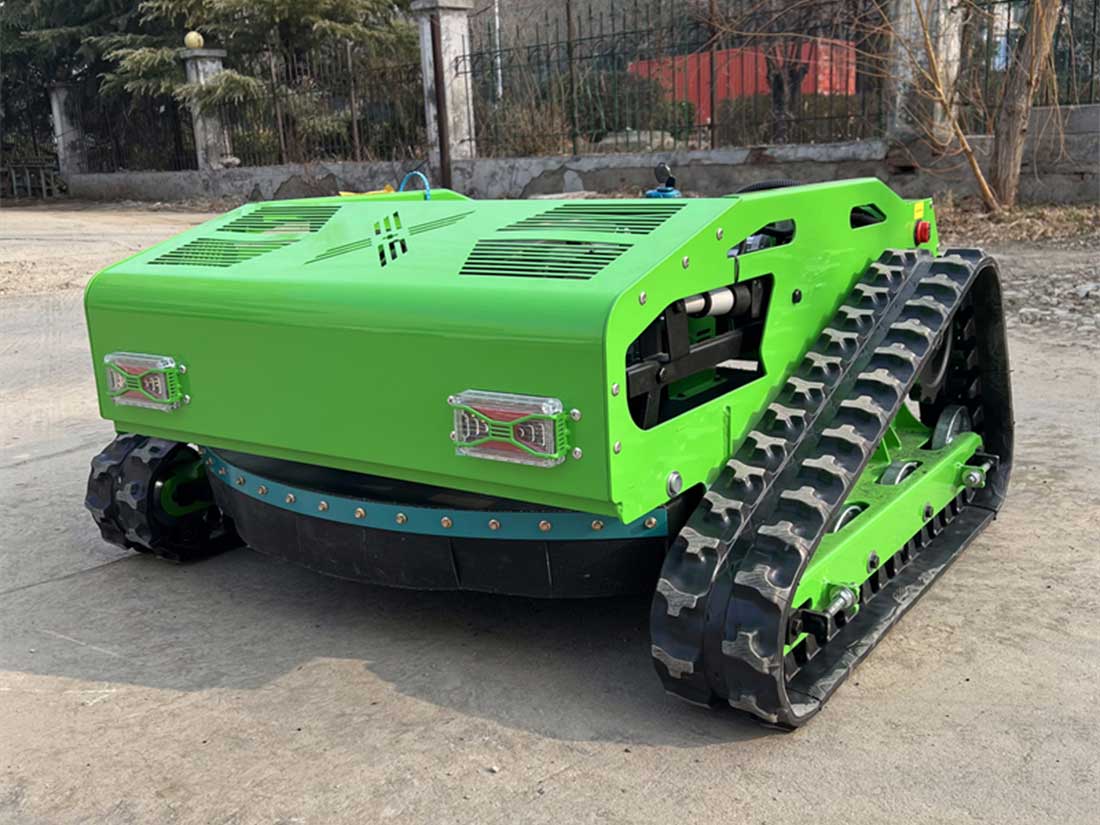
The Challenge: Mowing Difficult Terrain
Consider a professional maintenance team responsible for managing a large property containing a mixture of open grassland, uneven terrain, sloped areas, and sections with dense vegetation.
The main challenge is not simply cutting grass.
The team must also manage:
Changes in terrain elevation
Uneven ground conditions
Slopes and embankments
Dense or tall vegetation
Trees and other obstacles
Limited access areas
Operator positioning
Machine stability
Cutting consistency
Regular maintenance requirements
With conventional mowing equipment, the operator may need to remain close to the machine or physically travel across difficult sections of the property.
For some applications, this can make the mowing process less flexible.
A remote controlled lawn mower provides another operating approach by allowing the operator to control the machine remotely while maintaining visual contact with the equipment.
Case Study Scenario: A Mixed-Terrain Property
In this professional application scenario, the work area contains several different terrain conditions.
The property includes relatively flat grass, a sloped section, rough vegetation, and areas where obstacles make direct machine access more complicated.
Rather than treating the entire property as one uniform mowing area, the maintenance team divides the work according to terrain and vegetation conditions.
This is an important principle in professional vegetation management.
A remote controlled lawn mower should not be selected simply because remote operation is available. The machine must be matched to the actual working environment.
The team first evaluates the terrain, vegetation, access routes, and potential hazards before determining where remote-controlled mowing equipment can provide the most practical value.
Step 1: Evaluating the Terrain
Before operating a remote controlled lawn mower, the team inspects the working area.
The assessment focuses on:
Slope characteristics
Ground stability
Surface irregularities
Obstacles
Drainage channels
Access points
Vegetation density
Potential hazards
This initial assessment is essential because machine performance depends on the relationship between terrain and equipment design.
A machine with strong cutting performance may still be unsuitable if its traction, stability, or maneuverability does not match the working conditions.
For difficult terrain, professional equipment selection should therefore consider the complete machine rather than one isolated specification.
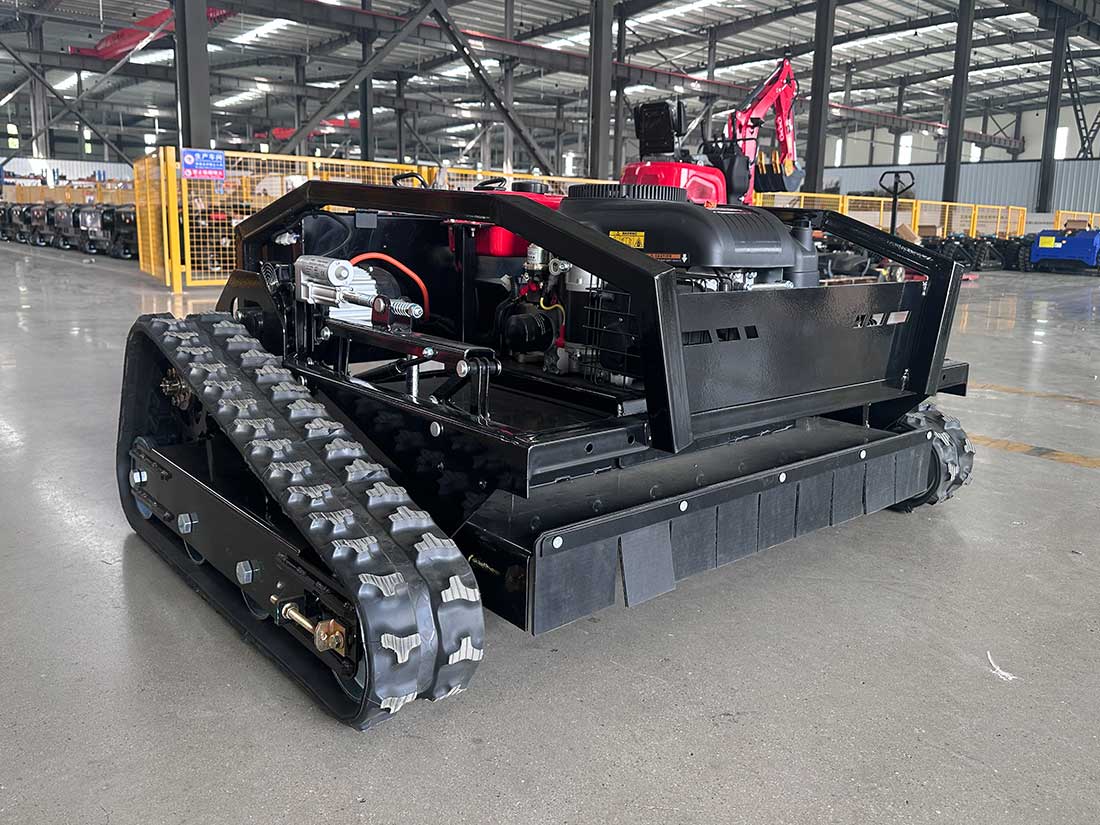
Step 2: Selecting Remote-Controlled Mowing Equipment
Once the working conditions are understood, the team evaluates suitable remote-controlled mowing equipment.
The remote controlled lawn mower is considered as part of an integrated mowing system.
Important considerations include:
Traction + Stability + Maneuverability + Cutting System + Remote Control
These characteristics determine how effectively the equipment can respond to changing terrain conditions.
The remote-control system is particularly important because the operator needs to control machine movement and cutting operations while maintaining a suitable position outside the machine's immediate path.
However, remote operation should always be combined with direct visual observation and appropriate operating procedures.
Step 3: Starting With Accessible Areas
Professional mowing operations often benefit from establishing a logical work sequence.
The team can begin with more accessible sections of the property before moving toward more difficult areas.
This allows operators to understand vegetation conditions and confirm that the selected cutting configuration is appropriate.
The remote controlled lawn mower can then be introduced into areas where its remote operation and mobility provide practical advantages.
This approach also helps reduce unnecessary machine movement and creates a more organized mowing workflow.
Step 4: Working on Slopes
The sloped section represents the most demanding part of the application.
Slope mowing requires careful consideration of machine stability, traction, direction of travel, ground conditions, and operating limits.
A remote controlled lawn mower allows the operator to control the machine from a position selected according to the terrain.
This changes the relationship between the operator and the equipment.
Instead of physically following the machine across every section of the slope, the operator can remain at a suitable observation point while maintaining visual contact with the remote controlled lawn mower.
This can provide greater operational flexibility in applications where direct operator positioning is inconvenient.
Nevertheless, remote control does not eliminate the risks associated with slopes.
Operators must follow the manufacturer's slope limitations, inspect the terrain, maintain safe distances, control access to the working area, and follow established safety procedures.
Step 5: Handling Uneven Ground
Uneven terrain presents a different challenge from a consistent slope.
Ground conditions may change over short distances, with bumps, depressions, exposed soil, stones, roots, or changes in vegetation.
A remote controlled lawn mower used in such an environment must have mobility characteristics appropriate for the application.
From a professional equipment perspective, the operator should pay attention to machine response, traction, turning behavior, and stability as the surface changes.
The objective is not simply to keep the cutting system moving.
The objective is to maintain controlled machine movement while achieving an appropriate mowing result.
This is one reason why remote-controlled mowing equipment is increasingly considered for specialized vegetation management.
Step 6: Managing Dense Vegetation
Difficult terrain often comes with difficult vegetation.
Tall grass, weeds, brush, and dense growth can place greater demands on the cutting system.
The correct remote controlled lawn mower configuration should therefore be selected according to the type and density of vegetation.
Professional buyers should evaluate:
Cutting technology
Cutting width
Blade or cutting-system configuration
Vegetation height
Material density
Expected operating frequency
Terrain conditions
A powerful machine alone does not guarantee the right result.
The cutting system must be compatible with the material being processed.
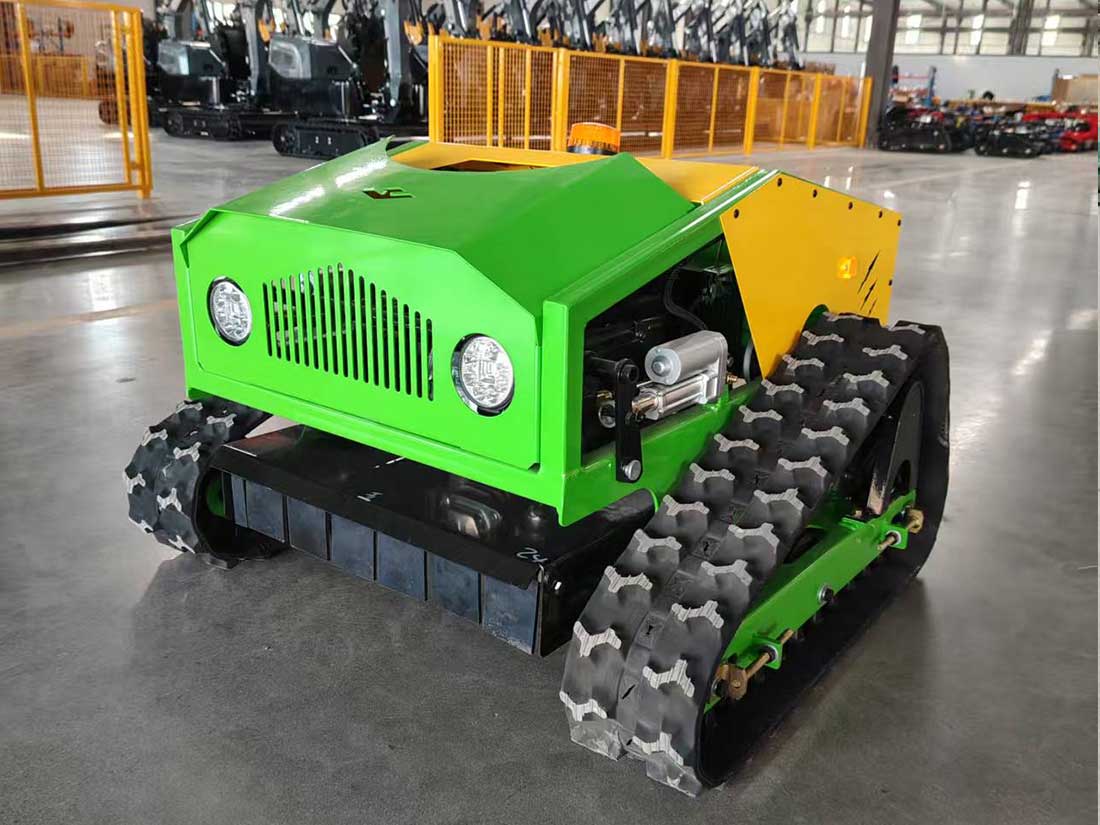
Operator Positioning and Visibility
One of the most important differences between conventional equipment and a remote controlled lawn mower is operator positioning.
Remote operation gives the operator greater flexibility when selecting where to stand.
In the case-study scenario, this can be useful when the machine is working near slopes, drainage areas, obstacles, or sections of difficult terrain.
The operator can select an observation position that provides a clear view of the machine and its surroundings.
Maintaining visual contact is essential.
Remote operation should never be interpreted as an invitation to operate the machine without adequate awareness of its movement or surrounding environment.
Safety Management During the Operation
Professional experience shows that equipment technology is only one part of safe mowing.
The team should establish a clear working area before operating the remote controlled lawn mower.
Safety procedures may include:
Inspecting the terrain before starting.
Identifying obstacles and unstable ground.
Establishing an exclusion zone.
Keeping people and animals away from the machine.
Maintaining direct visual contact.
Following manufacturer operating limitations.
Checking the machine before operation.
Stopping work when unexpected conditions occur.
These procedures are particularly important when working on slopes or around dense vegetation.
The value of remote-controlled mowing equipment comes from combining technology with disciplined professional operation.
How the Mowing Workflow Changes
The most significant benefit in this application scenario is not simply remote control.
It is the ability to reorganize the mowing workflow around terrain conditions.
With conventional equipment, the operator's physical position can influence how a difficult section is approached.
With a remote controlled lawn mower, the operator can control the machine from a selected position while observing its movement.
This can make it easier to divide a complex property into manageable working zones.
For professional contractors, this type of workflow planning can be particularly useful when different sections of the same property require different mowing strategies.
Remote Controlled Lawn Mower for Landscaping
The same principle can be applied to professional landscaping.
Large commercial properties, parks, estates, resorts, and public green spaces may contain a mixture of flat lawns, slopes, rough grass, trees, and inaccessible areas.
A remote controlled lawn mower can serve as a specialized machine for the sections where remote operation and terrain adaptability are important.
It does not necessarily replace every conventional mower.
Instead, remote-controlled mowing equipment can complement existing equipment fleets.
This approach allows professional teams to select the appropriate machine for each part of the property.
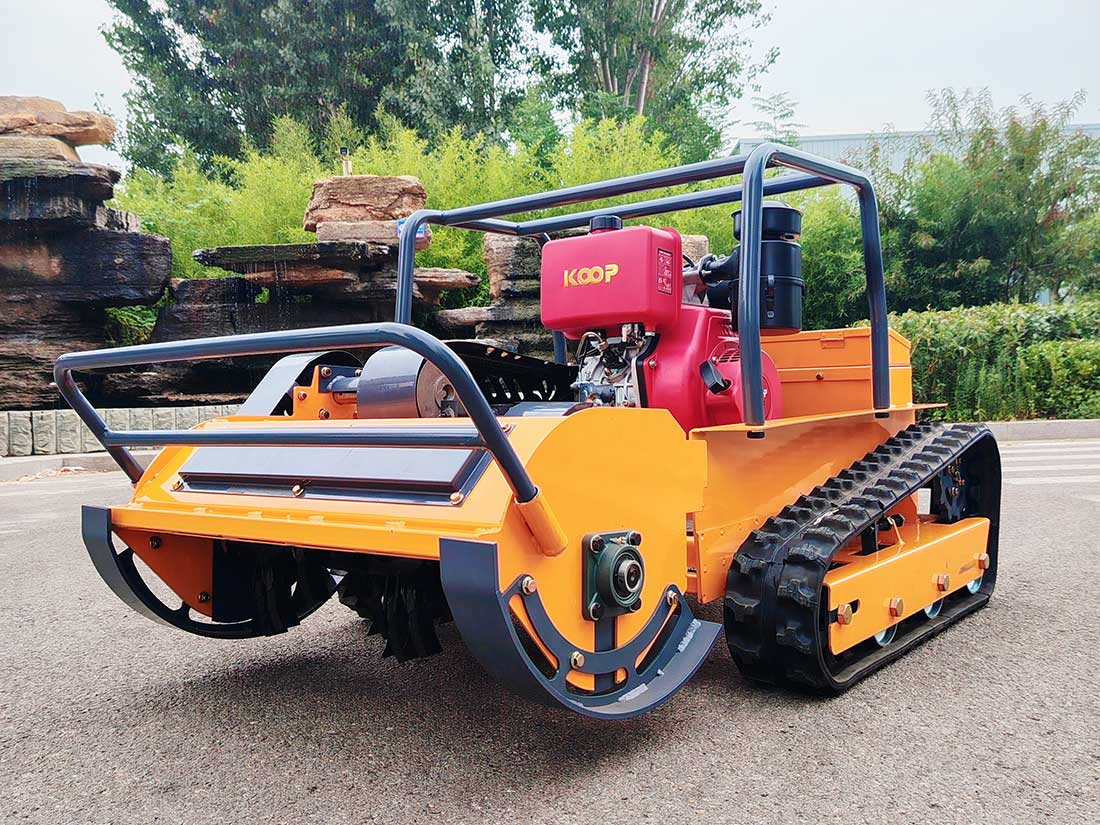
Remote Controlled Lawn Mower for Agriculture
Agricultural contractors face similar challenges.
Vegetation may need to be managed around orchards, field boundaries, access roads, drainage areas, and other rural spaces.
A remote controlled lawn mower can be considered when the working area includes uneven ground or difficult access.
For orchard maintenance, maneuverability can be particularly important because the machine may need to work around trees and other fixed obstacles.
However, the correct configuration should always be determined by vegetation type, soil conditions, terrain, access requirements, and the intended mowing application.
Remote Mowing for Roadside and Embankment Maintenance
Roadside vegetation management creates another demanding application.
Roadside areas can contain:
Slopes
Embankments
Ditches
Drainage channels
Tall grass
Dense vegetation
Restricted access
A remote controlled lawn mower can provide a useful option for selected roadside vegetation management tasks.
In these applications, professional teams must also consider traffic safety, work-zone management, visibility, local regulations, and the separation of machinery from road users.
Remote-controlled mowing equipment should therefore be integrated into a broader roadside maintenance plan.
Maintenance After Difficult-Terrain Operation
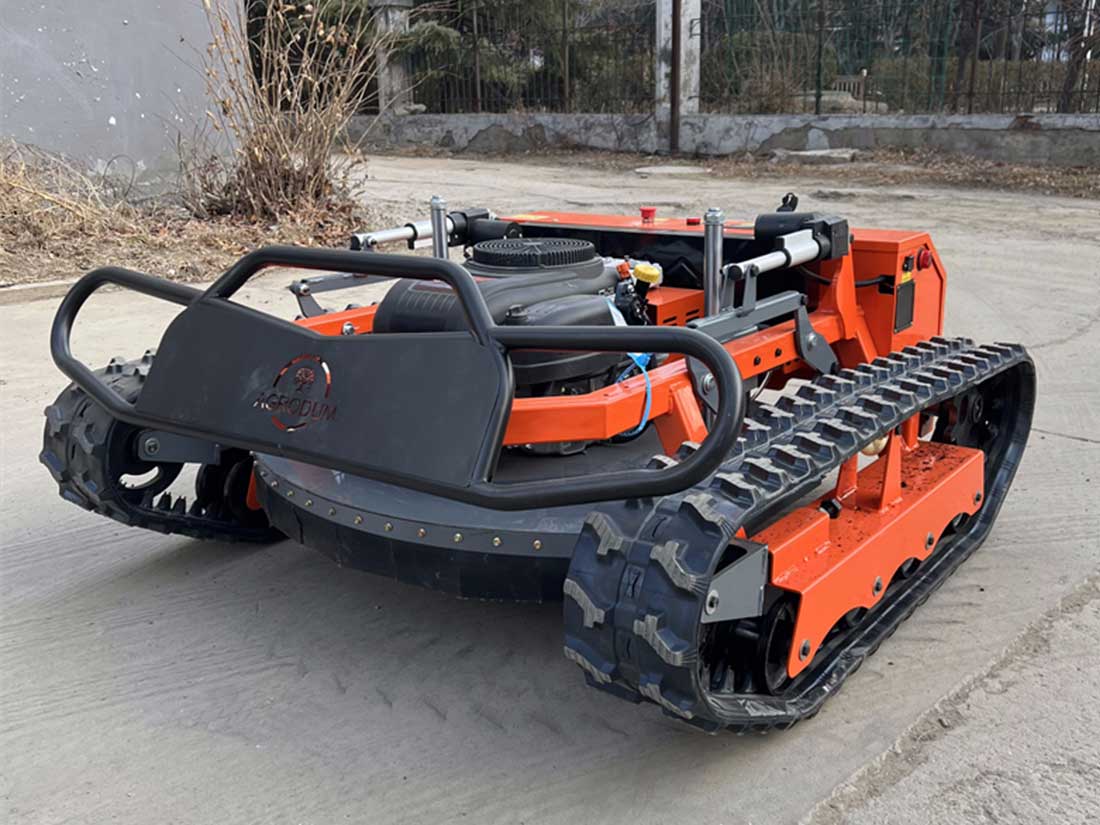
After completing demanding mowing work, the team should inspect the remote controlled lawn mower.
Particular attention should be given to:
Cutting components
Tracks or wheels
Drive components
Fasteners
Protective structures
Remote-control equipment
Machine frame
Accumulated vegetation
Dense vegetation can collect around machine components, while uneven terrain can place additional demands on moving and structural parts.
Routine inspection and preventive maintenance help professional operators identify wear or damage before the next operation.
For contractors who depend on their equipment regularly, maintenance is an essential part of productivity management.
What This Case Study Demonstrates
This professional application scenario highlights several important principles.
First, difficult terrain requires more than a powerful engine.
Second, remote operation can provide greater flexibility in how the operator interacts with the machine.
Third, cutting performance must be considered together with traction, stability, maneuverability, and terrain requirements.
Fourth, safety procedures remain essential regardless of whether the machine is remotely operated.
Finally, a remote controlled lawn mower is most valuable when it is selected according to the actual job rather than treated as a universal replacement for conventional mowing equipment.
How Professionals Should Evaluate a Remote Controlled Lawn Mower
Before investing in a remote controlled lawn mower, professional buyers should ask several practical questions:
What terrain will the machine handle?
Determine whether the equipment will work on flat ground, slopes, embankments, rough terrain, or mixed surfaces.
What vegetation will be cut?
Grass, weeds, brush, and dense vegetation can place different demands on the cutting system.
How frequently will the machine operate?
Professional intensive use may require different equipment specifications and maintenance planning from occasional use.
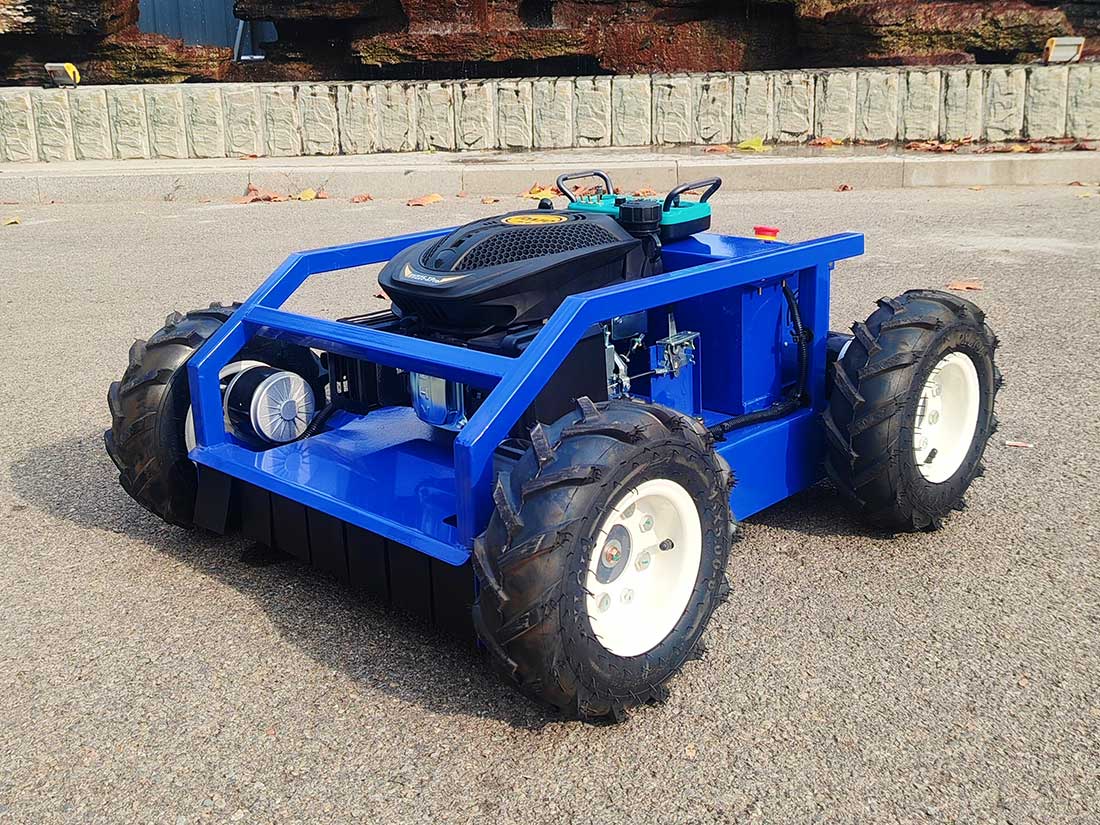
What mobility is required?
Consider traction, stability, maneuverability, and the machine's ability to move through the intended working area.
What remote-control capabilities are needed?
The control system should provide practical operation and allow the operator to maintain clear visual contact with the machine.
What maintenance support is available?
Replacement parts, service accessibility, maintenance requirements, and supplier support should all be considered before purchasing professional equipment.
Conclusion: A Practical Approach to Difficult-Terrain Mowing
This case study demonstrates why a remote controlled lawn mower can be an effective addition to professional mowing operations when difficult terrain is involved.
Its value comes from the combination of remote operation, mobility, cutting capability, and professional workflow planning.
For slopes, uneven ground, dense vegetation, agricultural properties, landscaping projects, roadside areas, and other challenging applications, remote-controlled mowing equipment can provide an alternative approach to conventional mowing.
The key is proper equipment selection.
A remote controlled lawn mower should be matched to the terrain, vegetation, operating conditions, safety requirements, and maintenance strategy of the actual job.
If you are researching professional remote controlled lawn mower solutions for difficult terrain, slopes, agriculture, landscaping, roadside maintenance, or large properties, explore the professional mowing equipment and remote-controlled solutions available from JY Lawn Mower.
With the right combination of machine configuration, operator training, safety procedures, and maintenance, remote-controlled mowing equipment can become a valuable part of a modern professional vegetation-management strategy.